How Do Cats Play? Reading Feline Play Behavior
By Dr. Zubair Khalid, DVM, MS, PhD ·
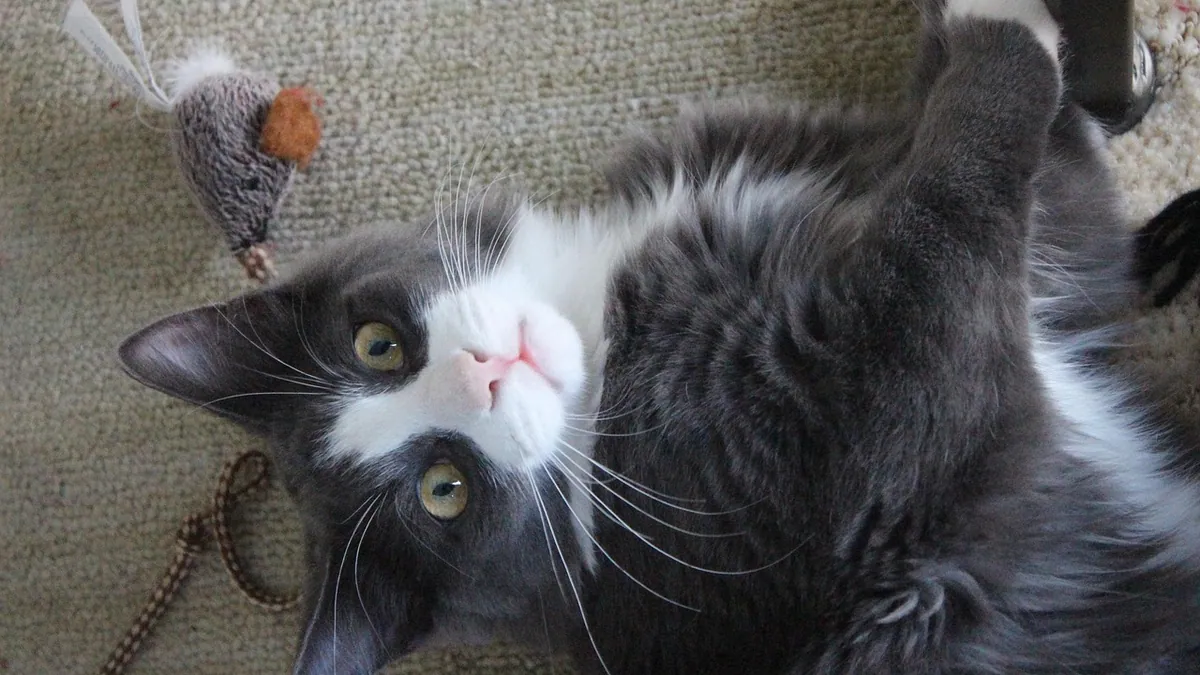
Cats play by stalking, chasing, pouncing, wrestling, and batting at objects or other cats, usually in short bursts that mimic hunting. Play is how cats practice predatory skills, burn energy, and build social bonds, and it looks different in every household. This article is educational and is not a substitute for veterinary diagnosis or treatment.
Quick Answer
- Play behavior in cats grows out of predation and social interaction, so chasing, grabbing, and biting during play are normal [1].
- Cats often signal play with a play face, exaggerated movements, and role reversal, where the cat being chased turns and chases back.
- Real fighting usually involves flattened ears, hissing, yowling, fur flying, and one cat trying to escape or hide.
- Two short play sessions a day, plus food puzzles and climbing spaces, meet most cats' physical and mental needs.
- Never punish a cat for play biting. Redirect the energy to a toy instead.
Why Cats Play: The Normal Reasons
Play is a normal, healthy part of feline life. In cats, play behavior shares a common basis with predation and social interactions, which is why a game of chase can look a lot like a hunt [1]. Kittens practice stalking, pouncing, and grabbing, and adult cats keep those skills sharp through play.
Cats are also more social than many people assume. Although many people think of cats as solitary animals, they are very sociable in the right circumstances, and many get along well in groups [2]. Play is one of the ways friendly cats interact. The basic feline social unit is the mother cat and her kittens, and kittens stay with their mother or her extended social group for the first 12 to 18 months of life in stable outdoor groups [2]. That long window gives kittens plenty of time to learn social play.
How do cats initiate play?
Cats invite play in ways that are easy to miss. A cat may crouch, stare, wiggle the rear end, or bat at another cat's neck or shoulder. Some cats bring a toy to you or meow near a toy. In one study, cats meowed significantly more when they could see and smell a toy but could not reach it, which suggests meowing can express a playful motivational state [1].
With people, cats often initiate play by running past you, swatting your ankle, or staring at a wand toy on the shelf. With other cats, one cat usually starts by approaching, then freezing or pouncing.
How do cats play with each other?
Social play between cats often includes chasing, wrestling, batting, and biting. Researchers studying close-contact interactions between cats found that play and agonism can overlap within a single bout, for example when one cat wants to stop playing but the other wants to keep going [3]. That overlap is why some play sessions tip into conflict.
Healthy cat-to-cat play usually has these features:
- Both cats take turns being the chaser and the chased.
- Bites are soft and mouths stay open instead of clamped down.
- Claws are usually sheathed or only lightly used.
- There are pauses, and either cat can walk away without being followed.
- Body posture stays loose, with tails up or gently waving.
If one cat is always the target and never gets a turn, the interaction is not truly playful. When one cat chases another that does not want to be chased, the general interaction should not be considered playful [4].
Cat Play vs Fighting: How to Tell the Difference
Owners often struggle to tell rough play from a real fight. Even professionals can have trouble distinguishing rough-and-tumble play from true agonism [3]. The clearest sign is whether both cats are willing participants.
Signs of play:
- Ears forward or slightly sideways
- Soft, silent mouthing
- Pauses and reversals
- Both cats return for more
- No hiding or avoidance afterward
Signs of fighting:
- Ears flattened back
- Hissing, yowling, or loud screaming
- Fur standing up, fur flying
- One cat pinned and unable to leave
- One cat hides, stops eating, or avoids the other afterward
If you see fighting signs, separate the cats calmly with a barrier, not your hands. Then give each cat its own quiet space.
Medical Causes to Rule Out Before You Blame Behavior
Some sudden changes in play or aggression have a medical trigger. Pain, dental disease, arthritis, thyroid problems, and vision or hearing loss can all make a cat crankier or less interested in play. A cat that suddenly stops playing, plays less, or reacts aggressively when touched should see a veterinarian.
Hormones matter too. Urine marking, roaming, and fighting with other cats can be influenced by androgens, and neutering may prevent or resolve these problems [5]. Castration of male cats eliminates sexual behavior and considerably decreases urine marking, intermale fighting, and roaming [5]. If your cat is intact, talk with your veterinarian about neutering.
Social and environmental stress can also look like a behavior problem. Cats are strongly influenced by scents and may respond by marking with urine, feces, or scratching, or by rubbing their cheek glands on the environment or other cats [5]. A new cat, a move, or a change in routine can all shift how much your cat plays and how it plays.
When Play Becomes a Problem
Play aggression is the most common play-related complaint from owners. It happens when a cat directs hunting-style behavior at hands, ankles, or another cat with too much intensity. The cat is not being mean. It is doing what play is designed to do, but the target is wrong.
Play aggression in cats often looks like this:
- Ambushing ankles from under furniture
- Biting hands during petting
- Chasing a resident cat relentlessly
- Waking you at night by attacking feet under blankets
- Pouncing on a cat that is eating or using the litter box
Intercat conflict is a related problem. When one cat wants to end a play bout and the other keeps pushing, the interaction can provoke more overt agonistic behavior [3]. Over time, the stressed cat may hide, stop using shared resources, or start marking.
Fear and temperament also play a role. Sex and neuter status, social play, and fearfulness were consistent predictors of intercat aggression in one large behavior survey [6]. That means a shy cat may be more likely to react defensively when play gets rough.
What to Do: A Step-by-Step Plan
1. Set a daily play routine
Aim for two sessions a day, morning and evening, of about 10 to 15 minutes each. Cats are crepuscular, so dawn and dusk often match their natural energy peaks. End each session with a small treat or meal so the hunt has a finish.
2. Use toys that mimic prey
Wand toys with feathers or fabric, laser pointers used carefully, and small balls that roll work well. Rotate toys weekly so they stay interesting. If you want ideas, see Best Interactive Cat Toys: Keep Your Feline Active and Engaged.
3. Let the cat win
Move the toy away, let your cat catch it, then pause. A catch-and-release pattern mimics a real hunt and reduces frustration. Always put the toy away after play so your cat does not treat it as a solo chew toy.
4. Add food puzzles and climbing space
Puzzle feeders, treat balls, and cat trees give cats mental and physical outlets between play sessions. Vertical space matters in multi-cat homes because it lets a cat leave an interaction without running across the floor.
5. Separate cats during rough play
If one cat is pinned or hiding, end the session. Use a baby gate, a closed door, or a towel to block the cats from each other. Then play with each cat separately so both get exercise.
6. Reward calm behavior
When your cat plays gently or walks away from a tense moment, offer a treat or praise. Cats learn quickly when the payoff is immediate.
7. Keep the environment predictable
Feed at set times, scoop litter daily, and give each cat its own food, water, litter box, and resting spot. Predictable routines lower stress and reduce the odds of play turning into conflict.
What Not to Do
Never punish a cat for play biting or scratching. Hitting, yelling, or spraying water can make a cat fearful and more defensive, and it does not teach the cat what to do instead.
Do not use your hands or feet as toys, even when your kitten is small. A kitten that learns hands are prey becomes an adult that bites hands.
Do not assume two cats wrestling means they are fighting. Rough play with pauses, soft mouths, and role reversal is normal. Do not separate cats that are playing well, because interrupting play can create tension.
Do not ignore a sudden change in play behavior. A cat that stops playing, hides, or hisses when approached may be in pain or stressed.
Do not rely on punishment-based tools like shock collars or air cans for play aggression. They can increase fear and make the behavior worse.
When to Call a Veterinarian or Behavior Professional
Call your veterinarian if your cat's play behavior changes suddenly, if play aggression causes bites that break skin, or if one cat in the home is hiding, not eating, or avoiding the litter box. A certified behavior professional (a veterinary behaviorist or a certified applied animal behaviorist) can help with ongoing intercat conflict or play aggression that does not improve with routine changes.
If a cat bite breaks human skin, wash the wound well and contact a healthcare provider. Cat bites can become infected quickly.
Limitations and When to Contact a Veterinarian
This article covers general patterns. Every cat is an individual, and your veterinarian needs to examine your cat to rule out medical causes and set a plan for your pet.
Contact your veterinarian the same day if:
- Your cat suddenly stops playing or becomes withdrawn
- A cat in the home is hiding, not eating, or avoiding the litter box
- You see limping, drooling, or pain when your cat moves
- Play aggression causes a bite that breaks skin
Go to an emergency clinic now if:
- A cat is struggling to breathe, choking, or gagging (see How To Know If Your Cats Choking)
- A fight causes heavy bleeding, a deep wound, or a collapsed cat
- A cat cannot walk or is dragging a limb
- A cat is straining to urinate, especially a male cat
Schedule a routine visit if:
- Play aggression has been going on for weeks
- Two cats in the home are fighting regularly
- Your cat is intact and you want to discuss neutering [5]
- You want help building a play and enrichment plan
Frequently Asked Questions
How do I know if my cats are playing or fighting?
Watch for role reversal, pauses, and soft mouths. If both cats take turns chasing and neither hides afterward, it is likely play. If you see flattened ears, hissing, yowling, or one cat pinned and unable to leave, treat it as a fight and separate them calmly.
Why does my cat attack my ankles?
Ankle attacks are a common form of play aggression. Your cat is treating moving feet as prey, often because it has extra energy and no better outlet. Add two daily wand-toy sessions and avoid moving your feet under blankets, which triggers the chase.
Can cats play with each other safely?
Yes, many cats play safely together, especially when they grew up together or were introduced slowly. Healthy play includes chasing, wrestling, and batting with soft bites. Watch for one cat always being the target, which is a sign the play is one-sided.
Do cats meow when they want to play?
Sometimes. Cats meowed significantly more when they could see and smell a toy but could not reach it in one study [1]. Meowing at you near a toy, or leading you to a toy, is a common play invitation.
Should I get a second cat so my cat has a playmate?
Not always. Some indoor cats prefer living alone, and many get along well in groups only when introductions are done carefully [2]. A second cat can help a bored cat, but it can also create conflict if the cats are not compatible. Talk with your veterinarian or a behavior professional before adding a cat.
How much play does an adult cat need each day?
Most adult cats do well with two short sessions of about 10 to 15 minutes each day, plus food puzzles and climbing space. Kittens and young cats often need more. Adjust based on your cat's energy, weight, and health.
Is it normal for cats to play with their food?
Yes. Cats are natural hunters, and play behavior shares a common basis with predation [1]. Puzzle feeders and treat balls let your cat "hunt" for food, which is both normal and enriching. If your cat suddenly stops eating or plays with food instead of eating, call your veterinarian.
If you enjoy watching cat behavior online, Cat Meme Culture: What Viral Videos Teach Us About Feline Behavior breaks down what those clips really show.
Related Articles
- How To Know If Your Cats Choking
- Best Interactive Cat Toys: Keep Your Feline Active and Engaged
- Cat Meme Culture: What Viral Videos Teach Us About Feline Behavior
- Why Are Cats So Cute? The Science Behind Feline Adorableness
- How Often Do Cats Go Into Heat? Feline Estrous Cycle & Signs Guide
- OR Cat: Understanding Logical Health Decisions for Your Feline
- How to Get Your Cat to Play: Toys, Timing and Techniques
- Play Aggression in Cats: Why It Happens and How to Stop It
- Is It Normal for Cats to Fight? Play vs Real Fights
References
- Vocal signals produced by the domestic cat (Felis silvestris catus) in highly motivating contexts. Journal of comparative psychology (Washington, D.C. : 1983), 2026.
- Normal Social Behavior in Cats - Cat Owners. Merck Veterinary Manual.
- An ethological analysis of close-contact inter-cat interactions determining if cats are playing, fighting, or something in between. Scientific reports, 2023.
- Are These Cats Playing? A Closer Look at Social Play in Cats and Proposal for a Psychobiological Approach and Standard Terminology. Frontiers in veterinary science, 2021.
- Social Behavior of Cats - Behavior. Merck Veterinary Manual.
- Potential Risk Factors for Aggression and Playfulness in Cats: Examination of a Pooling Fallacy Using Fe-BARQ as an Example. Frontiers in veterinary science, 2020.