How to Get Cat Pee Out of Carpet: A Vet-Reviewed Method
By Dr. Zubair Khalid, DVM, MS, PhD ·
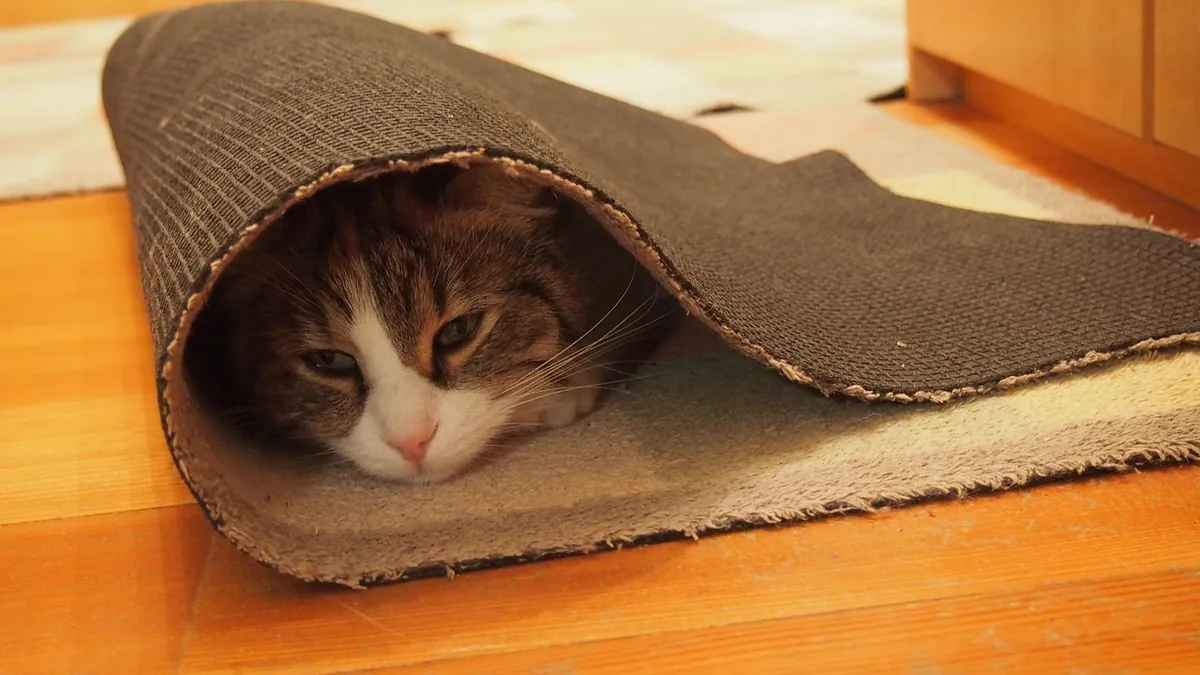
Cat pee out of carpet takes more than a spray bottle and a towel. Urine soaks through the carpet fibers into the backing and the padding below, and if you only clean the surface, the odor keeps pulling your cat back to the same spot. You need an enzyme cleaner, enough volume to reach the padding, and time for it to work.
This article is educational and is not a substitute for veterinary diagnosis or treatment.
Quick Answer
- Blot fresh urine right away, then apply an enzyme-based cleaner made for pet urine. Do not use ammonia, because urine contains ammonia and it can attract your cat back to the spot.
- You must saturate the carpet and the padding underneath. Surface cleaning leaves odor deep in the pad, and cats can smell what you cannot.
- Cover the wet area with plastic and let the cleaner sit for the full time on the label, often several hours. Enzyme products need contact time to break down uric acid crystals.
- Pull up the carpet and replace or treat the padding if the stain is old, repeated, or you can still smell it after two cleanings.
- Sudden house-soiling is often a medical or litter box problem, not a stain problem. Cats who mark also use their litter boxes normally, so urine in the box does not rule out marking elsewhere [1].
How to Get Cat Pee Out of Carpet: Step by Step
Step 1: Find every spot, not just the wet one
Cat urine glows under ultraviolet light. In a dark room, run a blacklight over the carpet. Mark each spot with painter's tape so you do not lose track. Old spots that have dried are the ones most likely to keep your cat coming back.
Step 2: Blot fresh urine
Press clean towels or paper towels onto the spot and stand on them. Do not rub, because rubbing pushes urine deeper into the backing. Keep blotting with fresh towels until no more moisture transfers.
Step 3: Choose the right cleaner
Use an enzyme-based cleaner labeled for cat urine. These products contain bacteria or enzymes that break down uric acid, the sticky crystal that holds odor in carpet. Household disinfectants and steam alone do not remove uric acid, and hot water extraction without a urine-specific product can set the odor in.
Do not use ammonia-based cleaners. Cat urine contains ammonia, and a lingering ammonia smell can read as a bathroom invitation to your cat.
Step 4: Saturate the carpet and the padding
This is the step most owners skip. Pour or inject enough cleaner to reach the padding, not just mist the surface. A syringe, a turkey baster, or a watering can with a narrow spout helps you deliver liquid under the carpet. For cat pee under carpet, you often need to lift a corner of the carpet, peel it back, and treat the pad directly.
If the padding is soaked and smells, replace that section. Padding is cheap compared with months of repeat soiling. Cut out the damaged piece, treat the subfloor with an enzyme cleaner, let it dry completely, then install new padding and re-stretch the carpet.
Step 5: Cover and wait
Place a sheet of plastic over the treated area and weight it down with books or a heavy pan. This keeps the cleaner from drying out before it finishes working. Leave it for the full contact time on the label, which is often several hours. Enzyme products need moisture and time.
Step 6: Blot and air dry
Remove the plastic and blot up the remaining liquid. Run fans and open windows. Do not walk on the area until it is fully dry, because damp carpet wicks odor back to the surface.
Step 7: Repeat if needed
If you can still smell urine after the carpet dries, repeat the process. Two rounds handle most fresh spots. If a third round does not work, the pad or subfloor is likely still contaminated and needs to come out.
Step 8: Address the reason
Cleaning fixes the carpet. It does not fix the cause. If your cat keeps returning to the same spot, the trigger is still there. That could be a urinary problem, a litter box your cat dislikes, or stress in the home.
Cleaning Schedule and Checklist
| Timing | Action |
|---|---|
| Within minutes | Blot fresh urine with towels, do not rub |
| Same day | Apply enzyme cleaner, saturate carpet and padding, cover with plastic |
| After label contact time | Blot, air dry with fans |
| 24 to 48 hours later | Check for odor with your nose and a blacklight |
| If odor remains | Repeat cleaning or replace the padding section |
| Ongoing | Clean the litter box daily, scoop twice a day if you can |
| Ongoing | Recheck all past spots monthly with a blacklight |
Is It Behavioral or Medical?
This is the question that decides whether cleaning alone will ever work.
Medical causes
Cats with urinary tract disease, bladder stones, urethral obstruction, or kidney problems often urinate outside the box. They may pee in small amounts in several places, strain, cry, or lick their genital area. Male cats with a urethral blockage cannot pass urine at all, and that is a life-threatening emergency. A cat with a blocked urethra can become azotemic, meaning waste products build up in the blood, and this needs immediate veterinary care [2].
Blood in the urine is another red flag. If you see pink or red urine, or your cat is straining, read Cat Peeing Blood: What Should You Do? and Cat Straining To Pee. Both situations need a veterinarian, not a carpet cleaner.
Behavioral causes
Urine marking is different from simply peeing in the wrong place. Cats mark to leave messages for other cats, because they avoid face-to-face conflict and communicate indirectly [1]. Marking is usually a small amount of urine on a vertical surface, like a wall or the side of a couch. Inappropriate elimination is usually a full bladder emptied on a horizontal surface, like carpet or a bed.
Cats who mark also use their litter boxes for normal voiding, so finding urine in the box does not rule out marking elsewhere [1]. That is why you cannot judge the problem by the litter box alone.
House-soiling is the most common behavior problem cat owners face and a leading reason cats are surrendered to shelters [3]. The good news is that litter box setup matters a lot. Cats in one study preferred boxes measuring at least 50 cm (about 20 inches) and clumping clay litter, and giving them that combination improved house-soiling and reduced unhappy behaviors during elimination [3].
If your cat started soiling suddenly, read Why Is My Cat Suddenly Peeing on the Carpet?. If you are not sure whether the cause is physical or behavioral, Cat Peeing Outside the Litter Box: Medical or Behavioral? walks through the differences.
Signs That Something Is Wrong
Call your veterinarian if you notice any of these along with the carpet soiling:
- Straining to urinate, or squatting with little or no urine coming out
- Crying or yowling while urinating
- Blood in the urine
- Peeing in many small spots instead of one large one
- Licking the genital area more than usual
- Hiding, pacing, or refusing food
- Soiling that started suddenly in a cat with a previously clean record
- Soiling that continues after you have cleaned every spot and fixed the litter box setup
Any cat who cannot urinate needs emergency care the same day. This is most common in male cats and is fatal within a day or two if untreated.
Common Mistakes
- Using ammonia-based cleaners. Urine contains ammonia, so the smell can draw your cat back.
- Only cleaning the surface. If the pad is wet, the job is not done.
- Rubbing instead of blotting. Rubbing spreads urine and pushes it deeper.
- Skipping the wait time. Enzyme cleaners need hours of contact, not minutes.
- Sealing the carpet with a waterproof spray before the odor is gone. That traps the smell underneath.
- Assuming the litter box is fine because your cat uses it sometimes. Cats who mark still use their box [1].
- Waiting to see a vet. A urinary blockage is an emergency, and azotemia from an obstruction can be detected with testing your veterinarian performs [2].
- Replacing the carpet without treating the subfloor. Odor in the subfloor soaks into new padding.
Supplies and Setup That Matter for Health
Cleaning supplies
- Enzyme-based cleaner labeled for cat urine
- Blacklight (UV flashlight)
- Clean white towels or paper towels
- Plastic sheeting and something heavy to weigh it down
- Syringe, baster, or narrow-spout watering can
- Fans for drying
- Gloves
Litter box setup
- At least one box per cat, plus one extra
- Boxes at least 50 cm (about 20 inches) long, since cats prefer larger boxes [3]
- Clumping clay litter, which cats in the same study preferred [3]
- Boxes in quiet spots with more than one exit route
- Scoop daily, full change and wash weekly
Health monitoring
Watch for changes in how often your cat urinates, how much comes out, and whether the urine looks or smells different. A cat with a lower urinary tract problem may show up first as carpet soiling, not as a dramatic illness. Your veterinarian can run urine tests, bloodwork, and imaging to sort out the cause. If a blockage or ureteral obstruction is found, some cats need surgical management such as a subcutaneous ureteral bypass system, which has been shown to reduce creatinine and other waste products after surgery [4]. That is a serious procedure for a serious problem, and it is not something you can treat at home.
Young kittens can also have urinary problems from other causes. One report described kittens with phimosis, a condition where the penis cannot be extruded through the prepuce, who had trouble urinating and needed surgery [5]. If you have a kitten who is straining or soiling, do not wait.
Limitations and When to Contact a Veterinarian
Cleaning advice cannot tell you why your cat is soiling. Only a veterinarian can examine your cat, test the urine, and check for blockage, infection, stones, or kidney disease. Individual cases need a veterinarian, and no article can replace that exam.
Contact a veterinarian the same day if your cat is straining to urinate, crying while urinating, has blood in the urine, or is peeing in many small spots. Go to an emergency clinic immediately if your cat is a male, is squatting with no urine coming out, is vomiting, is lethargic, or is hiding and will not eat. A urethral obstruction can kill within 24 to 48 hours.
Schedule a routine visit if the soiling is new, if it continues after you have cleaned thoroughly and improved the litter box setup, or if your cat has any change in appetite, weight, or water intake. Bring a fresh urine sample if you can collect one, and note when and where the soiling happens.
Frequently Asked Questions
How do I know if the urine reached the padding?
If the spot is more than a few hours old, or if you can smell urine when you press your nose close to the carpet, it almost certainly reached the padding. Fresh urine on a shallow pile carpet may stay near the surface, but most cat urine soaks through. Lift a corner of the carpet and check the pad with your hand and nose.
Can I use vinegar or baking soda instead of an enzyme cleaner?
Vinegar and baking soda can reduce surface odor, but they do not break down uric acid crystals the way enzyme cleaners do. Those crystals are what keep the smell alive and what your cat can still detect. Use an enzyme product for the real fix, and save vinegar for a final rinse if you like.
Will steam cleaning remove cat urine?
Steam cleaning alone can push odor deeper and set it if the urine is still present. Heat and moisture can also spread contamination. If you use a hot water extractor, pretreat with an enzyme cleaner first and use a urine-specific product in the machine.
How long does it take to fully remove cat pee from carpet?
Fresh spots treated the same day often improve within one or two cleanings, with full drying between rounds. Old or repeated spots can take several rounds, and if the padding is saturated, replacement is faster and more reliable than repeated cleaning. Plan on checking with a blacklight after each round.
Should I replace the carpet or just the padding?
Replace the padding if it is soaked, crumbly, or still smells after treatment. Replace the carpet too if the backing is stained through or the odor returns after the pad is swapped. Treat the subfloor before anything new goes down, or the smell will come back.
Related Articles
- Why Is My Cat Suddenly Peeing on the Carpet?
- Cat Peeing Blood: What Should You Do?
- Cat Straining To Pee
- Cat Urinary Tract Infection Care
- Cat Peeing Outside the Litter Box: Medical or Behavioral?
- Cat Peeing on the Bed: Medical or Behavioral?
- Cat Pee on Wood Floors: Stains, Smell, and Fixes
- How to Stop Your Cat Peeing on Beds and Floors
- Does Vinegar Remove Cat Pee Smell? What Works
References
- Urine Marking in Cats. ASPCA Animal Poison Control Center.
- Evaluation of salivary urea nitrogen test in cats with lower urinary tract outflow obstructions. The Canadian veterinary journal = La revue veterinaire canadienne, 2025.
- Litter box size and litter type preference and their associated behavioral changes in cats. The Journal of veterinary medical science, 2025.
- Use of the subcutaneous ureteral bypass system (SIDUS) in dogs and cats: a case series study. Brazilian journal of veterinary medicine, 2026.
- Surgical technique for the management of acquired phimosis in 3 kittens. Journal of the American Veterinary Medical Association, 2026.