Why Does My Cat Lay on My Chest? Meaning and Safety
By Dr. Zubair Khalid, DVM, MS, PhD ·
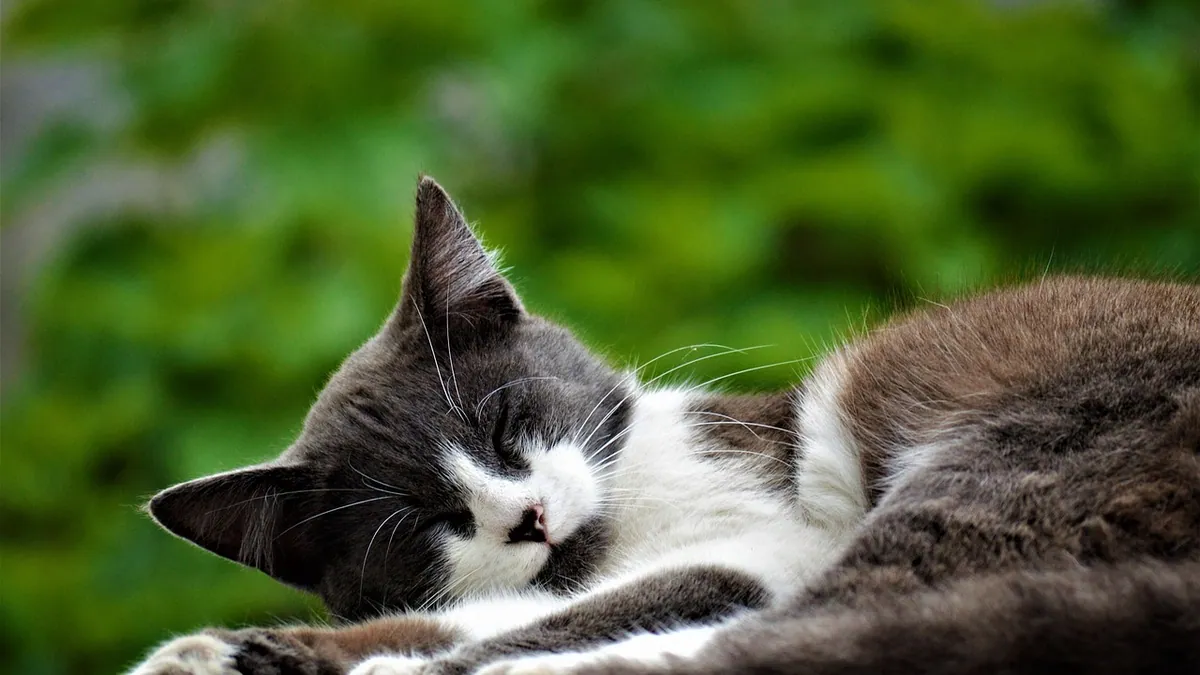
Cats lay on your chest because your body is warm, your breathing and heartbeat are steady, and you are a known safe place. For most cats this is normal bonding behavior, but it can also reflect anxiety, pain, or a need for comfort. This article is educational and is not a substitute for veterinary diagnosis or treatment.
Quick Answer
- Chest-sitting is usually about warmth, security, and social contact, not dominance or control.
- Passive, gentle contact tends to raise oxytocin and lower cortisol in cats, while forced or unwanted handling does the opposite [1].
- A sudden increase in chest-sitting, especially with hiding, pacing, or appetite changes, can signal stress or pain and needs a vet visit.
- You can sleep with a cat on your chest if you are a still sleeper and the cat can move away freely, but this is risky for infants and for people who take sedating medication.
- Never punish the behavior. Redirect it with a cat bed, a heated pad, or a blanket on your lap instead.
Why Does My Cat Lay on My Chest?
Warmth and a steady heartbeat
Your chest is one of the warmest spots in the house, and cats seek heat. Your breathing rhythm and heartbeat also give a constant, predictable pattern that many cats find soothing. This is one reason kittens pile onto their mother and littermates, and why an adult cat may treat you the same way.
Security and social bonding
Cats form attachment styles with their owners, much like the patterns seen in other social animals. In one study, cats classified as securely attached showed more positive hormonal responses to human interaction, while insecure cats showed higher cortisol or a weaker positive response [1]. A cat that chooses your chest may be using you as a safe base.
Positive hormones from calm contact
Gentle, passive interaction is linked to higher oxytocin and lower cortisol in cats [1]. Urinary oxytocin in domestic cats also rises with more frequent tactile and auditory communication from owners, and this pattern is more common in younger cats [2]. In other words, quiet petting and talking can be genuinely calming for your cat.
Why does my cat insist on laying on my chest?
Insistence usually means the cat has learned that your chest delivers a reliable reward: warmth, attention, or the sound of your voice. If you have ever petted the cat every time it climbed on you, that pattern is now reinforced. Cats repeat what works.
Why does my kitten lay on my chest?
Kittens are small, lose heat quickly, and are still learning that the world is safe. Your chest offers warmth and a heartbeat, which mimics the litter environment. This is normal and usually fades as the kitten grows and finds other sleeping spots.
Why does my cat sleep on my chest?
Sleeping on your chest often means the cat has picked you as its preferred resting place. Cats sleep a large part of the day, and they choose spots that feel protected. Your chest is elevated, warm, and guarded by your presence.
Breed, age, and personality
Some cats are simply more social. Younger cats tend to interact more with their owners, and that shows up in hormone measures [2]. A cat with a secure attachment style is more likely to seek close contact and respond well to it [1].
Medical Causes to Rule Out
Most chest-sitting is normal. A change in the behavior is what matters.
Pain or discomfort
A cat in pain may seek warmth and pressure against a body. Watch for a cat that suddenly wants to be on you constantly, kneads hard, or refuses to settle. Dental pain, arthritis, and urinary problems are common hidden causes. A cat sleeping in the litter box, for example, can be a sign of urinary pain and anxiety, which you can read about here: Why Is My Cat sleeping in litter box? FLUTD Pain and Anxiety Response.
Anxiety and stress
An anxious cat may cling more, not less. Problem behaviors such as fear, marking, and trouble living with other cats can harm the human-animal bond and signal welfare problems [3]. If your cat is also hiding, that combination deserves attention. See Why Is My Cat Hiding?.
Skin, breathing, or heart issues
A cat that is itchy, congested, or short of breath may pace and then flop onto you. Itching has many causes, from parasites to allergies, and is covered here: Why Is My Cat So Itchy?. Breathing changes are an emergency.
Hormonal and reproductive conditions
Unspayed females can show nesting and clinging behavior around heat cycles or pregnancy. Dystocia, or difficulty giving birth, affects roughly 3 to 8 percent of pregnancies in purebred cats, and the rate in nonpedigree cats is unknown [4]. If your cat is pregnant and acting distressed, call your vet.
When Does Chest-Sitting Become a Problem?
The behavior itself is rarely the problem. The problem is what comes with it.
- You cannot sleep, or you wake with chest pressure and shortness of breath.
- The cat will not eat, play, or rest anywhere except on you.
- The cat vocalizes, paces, or pants while on your chest.
- The cat guards you and hisses or swats at other pets or people who approach.
- The behavior started suddenly in an older cat with no prior habit.
Any of these point to a medical or behavioral issue that needs a professional look.
What to Do Step by Step
Rule out pain first
Book a veterinary exam if the behavior is new, intense, or paired with appetite, litter box, or activity changes. Your vet will decide what testing is needed. There is no home test that replaces this step.
Build a better resting spot
Place a soft cat bed or a folded blanket next to you on the couch or bed. Warm it slightly with a microwave heat pack wrapped in cloth, or use a pet-safe heated pad. Reward the cat with a treat and calm praise the moment it settles there.
Practice short, calm sessions
Start with two to three minutes of chest time, then gently move the cat to its bed. Keep your voice low and your hands still. Passive contact is the type linked to higher oxytocin and lower cortisol, while forced or unwanted interaction raises cortisol [1]. Let the cat choose to leave.
Add daily enrichment
Play with a wand toy for two short sessions a day. Offer food puzzles, window perches, and vertical space. A tired, mentally busy cat is less likely to cling out of boredom. More tactile and auditory communication from you is linked to higher oxytocin in cats, so talk to your cat and pet it calmly during the day [2].
Check the environment
Cats are sensitive to change. New pets, moved furniture, a new baby, or loud construction can all trigger clingy behavior. Pheromone diffusers are used in some behavior programs, and one study used a commercial feline pheromone complex as part of its design [3]. Ask your vet whether a pheromone product fits your situation.
Set a sleep plan
If you want the cat off your chest at night, close the bedroom door or set up a cozy bed in another room with water, a litter box, and a perch. Do this gradually over a week or two. A sudden lockout can increase anxiety.
What Not to Do
- Do not punish, yell at, or push the cat away roughly. Aversive handling raises cortisol and can damage trust [1].
- Do not assume the cat is trying to dominate you. Cats do not run households through chest-sitting.
- Do not ignore sudden clinginess in a cat that was previously independent.
- Do not use a crate or carrier as punishment.
- Do not give any human medication for anxiety or pain. Doses for cats are calculated by a veterinarian based on weight and health, and many human drugs are toxic to cats.
- Do not rely on internet myths about "alpha" cats or "claiming" behavior. There is no evidence for them.
When to Involve a Veterinarian or Behavior Professional
Call your vet if the behavior changes, if your cat shows pain signs, or if you cannot sleep safely. A certified behavior professional can help if the cat guards you, if there is aggression toward other pets, or if anxiety is affecting daily life. Problem behaviors in cats can harm both the cat's welfare and your bond, which is exactly what behavior assessment tools are designed to measure [3].
Limitations and When to Contact a Veterinarian
This article cannot diagnose your cat. Individual cases need a veterinarian who can examine your cat and review its history.
Contact your veterinarian the same day if your cat:
- Stops eating or drinking
- Vomits repeatedly or has diarrhea
- Strains to urinate, cries in the litter box, or produces no urine
- Is limping, hiding, or reluctant to move
- Has a sudden change in chest-sitting or clinginess
Go to an emergency clinic now if your cat:
- Breathes with an open mouth, pants, or has blue gums
- Collapses, has a seizure, or cannot stand
- Is choking, gagging, or has trouble swallowing. See Why Was My Cat Choking and How To Know If Your Cats Choking
- Has a swollen, painful belly or is in active labor with no kitten delivered after strong contractions
Schedule a routine visit if the behavior is new but your cat is otherwise eating, drinking, and using the litter box normally.
Frequently Asked Questions
Is it safe to sleep with my cat on my chest?
For most healthy adults, yes, if you are a still sleeper and your cat can get up and leave on its own. The risk rises if you take sedating medication, drink alcohol, or have sleep apnea. Infants and very young children should never sleep with a cat on their chest.
Why does my cat lay on my chest and purr?
Purring usually means the cat is relaxed and content. It can also be a self-soothing behavior during stress or pain. If the purring comes with hiding, appetite loss, or restlessness, have your vet check your cat.
Does my cat laying on my chest mean it loves me?
It is a strong sign of trust and preference. Cats choose warm, safe, familiar places, and your chest fits all three. Bonding hormones rise with calm, gentle contact, which supports the idea that your cat finds you comforting [1][2].
Why did my cat suddenly start laying on my chest?
A sudden change often points to stress, pain, or a change in the home. Think about new pets, schedule changes, weather, or recent vet visits. If nothing obvious changed, book an exam.
Can I train my cat to stop laying on my chest?
Yes, with patience. Reward the cat for using a bed next to you, keep sessions short, and stay calm. Never punish the cat, because aversive handling raises stress hormones and can make the behavior worse [1].
Do cats lay on your chest when you are sick?
Some cats do seek out people who are resting or warm. There is no reliable evidence that cats detect illness. If you are sick and your cat is newly clingy, treat it as a possible stress response and mention it to your vet.
Related Articles
- Why Was My Cat Choking
- Why Is My Cat sleeping in litter box? FLUTD Pain and Anxiety Response
- Why Is My Cat So Itchy?
- How To Know If Your Cats Choking
- Why Is My Cat Hiding?
- Why Is My Cat Scratching Its Ears?
- Why Does My Cat Lay on Me? Affection or Something Else
- Why Does My Cat Sleep at My Feet?
- Sick Cat Sleeping Positions: What They Tell You
References
- EXPRESS: The hormonal effects of owner-cat interactions on pet cats of different potential attachment styles. Journal of feline medicine and surgery, 2026.
- Physiological Assessment of the Health and Welfare of Domestic Cats-An Exploration of Factors Affecting Urinary Cortisol and Oxytocin. Animals : an open access journal from MDPI, 2022.
- Development of a Cat Behaviour Issues Assessment Scale (CABIAS) Assessing Problem Behaviours in Cats. Animals : an open access journal from MDPI, 2023.
- A retrospective study on dystocia in the cat, evaluation of 111 cases. Acta veterinaria Scandinavica, 2025.