Sick Cat Sleeping Positions: What They Tell You
By Dr. Zubair Khalid, DVM, MS, PhD ·
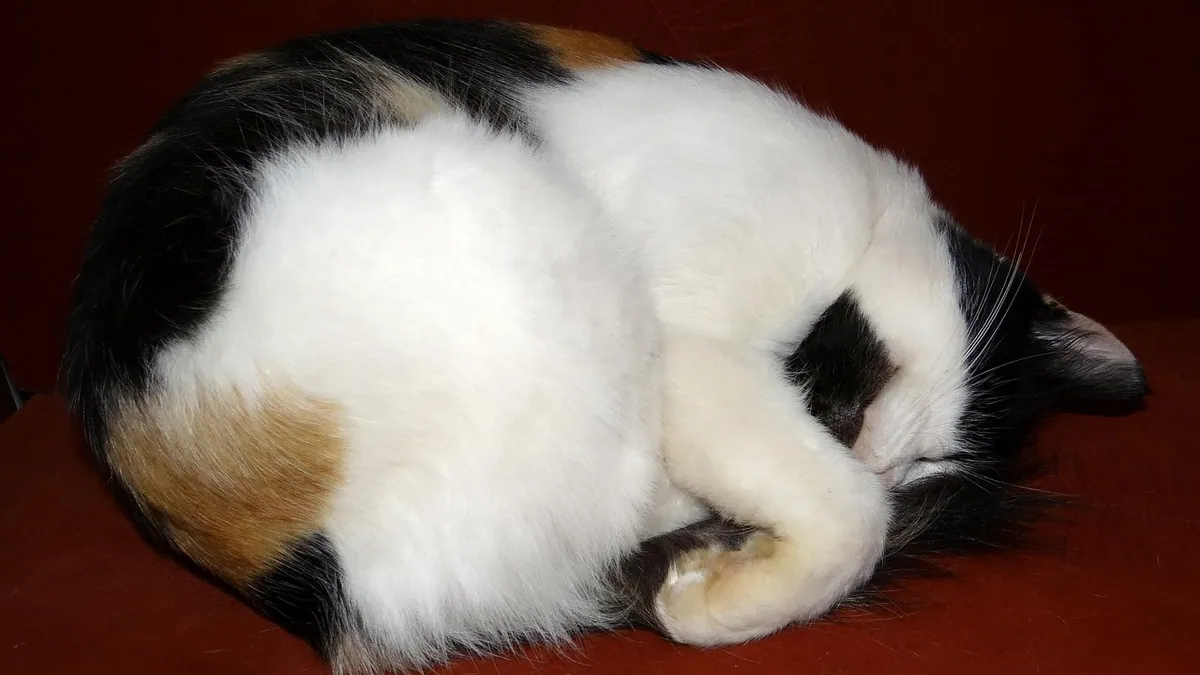
A sick cat sleeping position often looks different from a normal one. Healthy cats sprawl, curl loosely, or stretch out, while a cat in pain tends to hunch over, tuck its head, or press its face into a surface. This article explains what those changes mean and when a new posture deserves a call to your veterinarian.
This article is educational and is not a substitute for veterinary diagnosis or treatment.
Quick Answer
- A hunched, tucked, or head-pressed sleeping posture is a body-language clue, not a diagnosis. It means your cat may be uncomfortable or unwell.
- Cats hide pain well, and people are not good at reading feline stress from posture alone, so trust your gut when something looks off [1].
- A cat that sleeps hunched and also stops eating, hides, or vocalizes needs to be seen the same day.
- Face pressing, open-mouth breathing, or a cat that cannot settle at all is an emergency. Go now.
- Never give human pain medicine to a cat. Your veterinarian calculates any dose from your cat's weight and health.
What a Sick Cat Sleeping Position Looks Like
A normal sleeping cat is relaxed. The body is soft, the head rests naturally, and the cat shifts position during sleep. Some cats sleep on their side, some curl into a ball, and some stretch out flat. Research has not found a reliable left or right preference in how cats lie down, so there is no "correct" side to sleep on [2].
A sick cat sleeping position looks stiff or guarded. Common patterns include:
- Hunched posture. The cat sits or lies with its back arched upward and its belly tucked under. This is often called a meatloaf position taken to an extreme.
- Tucked head. The chin drops toward the chest and stays there, even when the cat is resting.
- Head pressing. The cat pushes its forehead or face against a wall, furniture, or the floor. This is different from a cat resting its chin on a pillow.
- Tight curl with paws under the body. The cat keeps all limbs pulled in and does not stretch out.
- Sleeping in odd places. A cat that suddenly sleeps in a closet, behind the toilet, or under a bed may be hiding because it feels vulnerable.
A lowered head position is a recognized pain behavior in cats. In one study of cats recovering from eye surgery, a lowered head was one of the postures recorded before and after pain relief [3]. That does not mean every tucked head is pain, but it is a signal worth watching.
Why Posture Changes When a Cat Is Sick
Cats are wired to hide weakness. In the wild, a cat that looks sick becomes a target. So a cat in pain often does not cry or limp. It goes quiet, holds its body still, and changes how it rests.
People are not naturally skilled at spotting this. In one study, 1,950 people watched videos of cats in relaxed, tense, and fearful states. Accuracy was better than guessing but still fairly low, and female participants and people who had owned cats did better [1]. The lesson is simple. If your cat looks wrong to you, that observation matters, even if you cannot name what changed.
Main Causes of a Hunched or Tucked Sleeping Position
| Cause | Typical clues | How urgent |
|---|---|---|
| Abdominal pain (pancreatitis, gastrointestinal upset, foreign body) | Hunched back, belly guarded, not eating, vomiting, crying when picked up | Same day, emergency if repeated vomiting or unproductive retching |
| Urinary blockage (especially male cats) | Hunched in the litter box, straining, dribbling, no urine, yowling | Emergency now |
| Dental or oral pain | Tucked head, drooling, dropping food, bad breath, chewing on one side | Same day to 48 hours |
| Eye or facial pain | Lowered head, squinting, pawing at the face, avoiding light | Same day |
| Arthritis or spinal pain | Stiff rising, tucked posture, reluctance to jump, sleeping in one spot | Routine visit, sooner if sudden |
| Fever or infection | Hiding, hunched, warm ears, poor appetite, lethargy | Same day |
| Neurologic disease | Head pressing against walls, circling, disorientation, seizures | Emergency now |
| Nausea | Lip licking, drooling, hunched over water bowl, vomiting | Same day |
A few notes on this table. Head pressing against a wall is not the same as a cat resting its head on a soft surface. True head pressing points toward a neurologic problem and needs emergency care. A male cat that hunches in the litter box and produces little or no urine may have a urethral obstruction, which is life threatening within hours.
If your cat is also sleeping more than usual and seems slow to respond, see our guide to cat lethargy for a fuller picture of what that combination can mean.
Sick Kitten Sleeping Positions
Kittens sleep a lot, often 16 to 20 hours a day, so sleep alone is not a warning sign. What matters is the shape of the sleep and the kitten's behavior when awake.
A sick kitten sleeping position often looks like a tight ball with the head tucked and the body pressed into a corner. A healthy kitten flops, sprawls, and stretches. A sick kitten stays small and still.
Kittens get sick faster than adults. Their small bodies lose fluid and body heat quickly. A kitten that is hunched, cool to the touch, limp, or not waking to eat needs to be seen right away. Do not wait to see if it improves overnight.
Red Flags That Make It an Emergency
Go to an emergency clinic now if you see any of these:
- Head pressing against a wall or hard surface
- Open-mouth breathing, or breathing that looks labored while resting
- A male cat straining in the litter box with no urine produced
- Repeated vomiting, or retching with nothing coming up
- Collapse, seizures, or a cat that will not wake normally
- A kitten that is limp, cold, or unresponsive
- Sudden inability to use the back legs
- A cat that cries out when touched or moved
If your cat is breathing fast while asleep and also looks unwell, that combination deserves urgent attention. Our article on cat breathing fast while sleeping explains how to count breaths and what rate is too high.
What You Can Do at Home While You Wait
You cannot treat pain at home in a cat. What you can do is gather information and keep your cat safe until the appointment.
- Do not give any human pain medication. Ibuprofen, acetaminophen, and aspirin can be toxic to cats. Your veterinarian will calculate any dose from your cat's weight and health.
- Write down what you see. Note when the posture started, whether your cat is eating, drinking, urinating, and pooping, and any vomiting or vocalizing. This history speeds up the exam.
- Keep your cat indoors and quiet. Set up a warm, soft bed in a low-traffic room with easy access to a litter box and water.
- Offer water and a small amount of usual food. Do not force-feed. Do not switch foods suddenly.
- Take a photo or short video. A cat often stops hunching at the clinic because of stress or adrenaline. A recording of the posture at home is genuinely useful.
- Check the litter box. Count urine clumps and note the size. This is especially important for male cats.
If your cat has a skin wound or sore that you are also watching, our guide to cat hot spots can help you tell a minor irritation from something that needs treatment.
What Your Veterinarian Will Check
Your veterinarian will start with a full physical exam. They will feel your cat's abdomen, check the mouth and teeth, look at the eyes, and press gently along the spine and limbs to find tender areas. They will also take your cat's temperature, heart rate, and breathing rate.
Depending on what they find, they may recommend:
- Blood work. A complete blood count and chemistry panel can show infection, organ problems, dehydration, and electrolyte changes.
- Urinalysis. This checks for crystals, blood, infection, and how well the kidneys are concentrating urine.
- Imaging. X-rays or ultrasound can find blockages, stones, fluid, masses, or joint changes.
- Blood pressure and eye exam. These help rule out causes of head pressing and vision loss.
- Pain scoring. Tools such as the Feline Grimace Scale and the UNESP-Botucatu feline pain scale help veterinarians measure pain in a structured way [3].
Position matters during some procedures, and your veterinarian may adjust how your cat is placed for comfort or safety. In one study of cats having perineal urethrostomy surgery, researchers compared cats positioned on their sternum with cats positioned on their back and looked at anesthetic and kidney values [4]. That level of detail is a normal part of surgical planning and is not something you need to manage at home.
Prevention and Monitoring
You cannot prevent every illness, but you can catch problems earlier.
- Know your cat's normal. Learn how your cat usually sleeps, eats, and uses the litter box. Changes stand out against a baseline.
- Weigh your cat monthly. A kitchen scale works. Losing weight is one of the earliest signs of illness in cats.
- Watch the litter box. Note urine clumps and stool daily. A change in either is worth a call.
- Keep up with wellness visits. Dental disease, arthritis, and kidney disease are common in older cats and are easier to manage when found early.
- Reduce stress during illness. Sick cats need quiet, warmth, and easy access to food, water, and litter.
- Track the posture. If you notice a hunched or tucked sleep position, take a photo each day. Improvement or worsening over time helps your veterinarian judge the response to treatment.
If allergies or itching are part of your cat's health picture, our article on hypoallergenic cats explains what is real and what is marketing.
Limitations and When to Contact a Veterinarian
Posture is a clue, not a diagnosis. A hunched cat may have mild stomach upset or a life-threatening blockage, and the two can look similar at home. People also tend to underrate feline stress and pain from visual cues alone [1]. That is why a veterinarian exam matters.
Call your veterinarian the same day if your cat:
- Holds a hunched, tucked, or head-lowered posture for more than a few hours
- Eats less than half its normal amount for a day
- Vomits more than once, or has diarrhea for more than a day
- Hides, avoids touch, or vocalizes when moved
- Has bad breath, drooling, or trouble chewing
Go to an emergency clinic now if your cat:
- Presses its head against a wall
- Breathes with an open mouth or struggles to breathe
- Strains to urinate with little or no urine, especially a male cat
- Collapses, seizes, or cannot be woken
- Cries out in pain or cannot stand
Schedule a routine visit if the change is mild and your cat is still eating, drinking, and using the litter box normally. Bring your notes and any photos.
Every cat is different, and only a veterinarian who examines your cat can decide what is wrong and what treatment is safe.
Frequently Asked Questions
Is a hunched sleeping position always a sign of pain?
No, but it is a common pain posture and should not be ignored. Some cats hunch when they are cold, nauseated, or simply resting deeply. The difference is whether the posture is new, whether it lasts, and whether your cat is eating and behaving normally.
Can a cat sleep in a tucked position and still be healthy?
Yes. Many healthy cats tuck their paws and curl up, especially in cool rooms. A tucked position becomes concerning when it comes with a lowered head, a guarded belly, hiding, poor appetite, or a cat that will not stretch out even when warm and relaxed.
Why does my cat press its head against the wall?
Head pressing against a hard surface is a neurologic warning sign and needs emergency care. It is different from resting the chin on a soft pillow or leaning into your hand for petting. Do not wait to see if it passes.
Should I give my cat pain medicine while I wait for the vet?
No. Never give human pain relievers to a cat, because several common ones are toxic. Your veterinarian will choose a safe drug and calculate the dose from your cat's weight and health. Keep your cat warm, quiet, and hydrated until the appointment.
How long can I safely watch a new sleeping posture before calling?
If the posture is new and lasts more than a few hours, call the same day. If your cat is also not eating, hiding, vomiting, or straining in the litter box, treat it as urgent and call right away. Kittens and senior cats should be seen sooner because they decline faster.
Related Articles
- Hypoallergenic Cats: Fact or Fiction? A Health Guide
- Cat Breathing Fast While Sleeping: When to Worry
- Cat Hot Spot or Something Else? How to Tell and What to Do
- Cat Lethargy
- Cat Lethargy: When to Worry and What to Do
- Cat Hissing at Nothing: When to Worry About Hallucinations or Medical Issues
- How to Tell If Your Cat Is Sick
- Sick Cat Body Language: Signs Your Cat Is Unwell
- How Much Do Cats Sleep? Normal Hours Explained
References
- Human recognition of feline stress-related behavioral states from visual cues depends on observer characteristics. Scientific reports, 2026.
- No evidence for lateralized bias or preference in the sleeping positions of domestic cats. Laterality, 2026.
- Keeping an eye on pain: Characterization of pain behaviours in cats undergoing ophthalmic surgery. Veterinary journal (London, England : 1997), 2026.
- Effect of intraoperative positioning on anesthetic variables in cats undergoing a perineal urethrostomy. Journal of feline medicine and surgery, 2026.