Why Does My Cat Sleep at My Feet?
By Dr. Zubair Khalid, DVM, MS, PhD ·
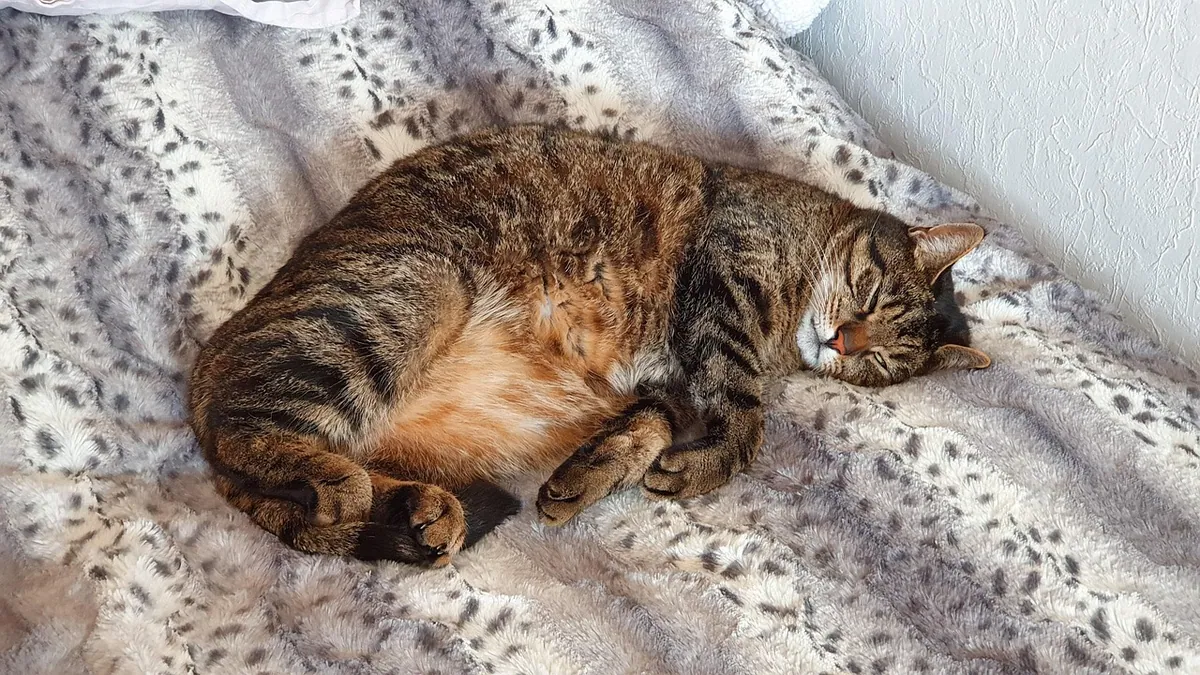
Cats often sleep at their owner's feet because the spot is warm, safe, and close to you without the full contact of a lap. It lets a cat stay near its favorite person while keeping an easy exit and a bit of independence. This article is educational and is not a substitute for veterinary diagnosis or treatment.
Quick Answer
- Sleeping at your feet is normal cat behavior in most cases. It combines warmth, security, and a preference for closeness without being pinned down.
- A sudden change in sleeping spot, especially with limping, hiding, or crying at night, can point to pain or stress and deserves a closer look.
- Cats that sleep between your legs are usually seeking the same warmth and contact, just with more body-to-body closeness.
- Co-sleeping with a cat is linked to higher well-being scores in adult owners in at least one large survey, so the habit is not automatically a problem [1].
- Never punish a cat for choosing a sleeping spot. Redirect, adjust the environment, and check for health issues first.
Why Does My Cat Sleep at My Feet?
Warmth and body heat
Your feet and legs give off steady heat, and cats seek out warm surfaces. A bed with a person in it stays warmer than most other spots in the house. The foot of the bed or the space against your calves holds that heat well, so it becomes a favorite sleeping zone.
Security with an escape route
Cats like to feel safe, but they also like options. Sleeping at your feet keeps you within reach while leaving a clear path to get up and move. That mix of closeness and freedom fits how many cats prefer to rest. Research on owner-cat interactions shows that calm, passive contact tends to raise oxytocin and lower cortisol in cats, which supports the idea that quiet proximity feels good to them [2].
Independence and personal space
Some cats want to be near you but not on you. The feet are close enough for comfort and far enough to avoid being trapped under a blanket or rolled onto. This is often why a cat picks the foot of the bed instead of your chest.
Why does my cat only sleep at my feet?
If your cat only sleeps at your feet and nowhere else on you, that is usually about temperature and control. The feet are cooler than the torso in some homes and warmer in others, and the cat can leave without disturbing you. Some cats also learn that the foot area is the one spot where they are not moved during the night.
Why does my cat sleep between my legs?
Sleeping between your legs is a variation on the same theme. The space between your legs is warm, enclosed, and close to your core heat. Cats that choose this spot often want more contact and more warmth than foot sleepers. It can also be a way to claim a secure, tucked-in position.
Bonding and attachment style
Not every cat bonds the same way. Cats classified as securely attached tend to show more positive hormonal responses to human contact, while insecure cats may show more stress signals [2]. A cat that sleeps at your feet may be showing comfortable, low-pressure attachment. A cat that avoids you entirely or hides may be showing something different.
Medical Causes to Rule Out
Most foot sleeping is behavioral, but a change in habit can be a health clue.
Pain and mobility problems
A cat with sore joints, a soft tissue injury, or back pain may pick a new sleeping spot to avoid being touched or jostled. If your cat has stopped jumping onto the bed and now sleeps only on the floor at your feet, or if you notice stiffness, look at Why Is My Cat Limping? for the signs that need a vet.
Urinary and litter box issues
Cats in urinary pain sometimes sleep in odd places, including the litter box. If your cat is sleeping in the litter box or avoiding it, that is a red flag for FLUTD and needs prompt care. See Why Is My Cat sleeping in litter box? FLUTD Pain and Anxiety Response.
Nighttime vocalizing and restlessness
A cat that cries at night and paces instead of settling at your feet may be bored, anxious, or uncomfortable. Why Is My Cat Crying at Night? covers the common causes and what to check first.
Dental and mouth pain
Mouth pain can change how a cat rests and eats. If your cat has bad breath along with a new sleep pattern, Why Does My Cat's Breath Smell? explains what dental disease looks like at home.
Weight and body condition
Body condition affects comfort and mobility. In one study of privately owned adult cats, 35% were classified as heavy or obese, and owners of those cats were more attached to them and perceived them as less active [3]. Extra weight can make certain sleeping positions uncomfortable, so a cat may shift to the floor or the foot of the bed.
Heart and structural findings
Some cats have incidental heart findings found on ultrasound. In a study of 200 cats, left ventricular bands were detected in 199 of them, a prevalence of 99.5%, with a median of 4 bands per cat [4]. These bands are common and usually incidental, but they show why a full exam matters when a cat's behavior or activity level changes. This finding does not explain foot sleeping on its own.
When Does Sleeping at Your Feet Become a Problem?
The behavior itself is rarely a problem. The problem is usually what comes with it.
- Your sleep is disrupted most nights, and you feel exhausted during the day.
- Your cat guards the spot and swats or bites when you move.
- Your cat stops using the bed at all and hides instead.
- Your cat shows pain signs, such as limping, stiffness, or reluctance to jump.
- Your cat vocalizes, paces, or pants at night.
- Your cat starts sleeping in the litter box or another unusual spot.
Co-sleeping research is mixed. One large survey found that adult dog co-sleepers had higher well-being scores than non-owners, while no significant link appeared in the youth sample [1]. Cat co-sleeping was part of the same study, and the overall message is that subjective satisfaction and objective sleep disruption can point in different directions [1]. In other words, your cat may love the arrangement while you lose sleep.
What to Do Step by Step
1. Check for pain and illness first
Watch for limping, stiffness, changes in appetite, litter box changes, or hiding. If you see any of these, book a veterinary visit before you work on training. Behavior plans do not fix pain.
2. Set up a comfortable alternative
Give your cat a warm bed or blanket near your feet, on the floor or on a low stool. Add a heated pad on a low setting if your cat likes warmth. Place it where your cat can still see you.
3. Build a bedtime routine
Play with your cat before bed, then offer a small meal or a treat. Cats often sleep after a hunt-eat-groom cycle. A short play session can reduce nighttime activity.
4. Keep the bedroom predictable
Keep the room at a comfortable temperature, reduce loud noises, and avoid moving your cat abruptly. If you need your cat off the bed, use a consistent cue and guide your cat to the alternative bed instead of pushing or scolding.
5. Add daytime enrichment
Food puzzles, window perches, cat trees, and short training sessions give your cat something to do during the day. A tired cat settles more easily at night.
6. Manage your own sleep
If your cat wakes you, avoid feeding or playing at that moment, since that rewards the waking. Keep the response boring and quiet. If you cannot sleep with your cat in the room, a closed door with a comfortable setup on the other side is a fair option.
7. Track changes
Note when the behavior started and what else changed. A written log helps your veterinarian sort out behavior from illness.
What Not to Do
- Do not punish your cat. Punishment can increase stress and make the behavior worse.
- Do not push or shove your cat off the bed. That can create a negative association with you and with the bed.
- Do not assume the behavior is spite or dominance. Cats do not plan to annoy you.
- Do not ignore sudden changes. A new sleeping spot plus pain signs is a medical question, not a training question.
- Do not rely on myths about cats "stealing your breath" or "sensing illness." There is no evidence for those claims in published veterinary research.
When to Involve a Veterinarian or Behavior Professional
Call your veterinarian if your cat shows pain, stops eating, changes litter box habits, hides more, or vocalizes at night. A certified behavior professional can help if your cat guards the sleeping spot, bites, or shows anxiety that does not improve with home changes. If your cat is peeing outside the box, especially in front of you, that can be a stress or medical sign. See Why Is My Cat Peeing on the Floor Right in Front of Me?.
Limitations and When to Contact a Veterinarian
This article cannot diagnose your cat. Every cat needs an individual exam, and your veterinarian sets any treatment plan based on your cat's weight and health.
Contact a veterinarian the same day if your cat:
- Limps, cries when touched, or refuses to jump.
- Stops eating or drinking.
- Has trouble urinating, strains, or cries in the litter box.
- Vomits repeatedly or has diarrhea with lethargy.
Go to an emergency clinic now if your cat:
- Breathes with an open mouth or struggles to breathe.
- Collapses, has a seizure, or cannot stand.
- Cries out in pain and cannot be comforted.
- Has a swollen, painful belly or a known trauma.
Schedule a routine visit if your cat:
- Slowly changes sleeping spots over days to weeks.
- Gains or loses weight.
- Has new bad breath or drooling.
- Seems restless at night without other signs.
If you are not sure which category fits, call your veterinarian's office and describe what you see. They can tell you whether to come in now or wait.
Frequently Asked Questions
Is it normal for my cat to sleep at my feet every night?
Yes, this is normal for many cats. The spot offers warmth, closeness, and a quick exit. It becomes a concern only if the habit changes suddenly or comes with pain, hiding, or nighttime distress.
Does my cat sleeping at my feet mean it does not love me?
No. Sleeping at your feet is a sign of comfort and trust for many cats. Some cats prefer contact without being held or covered, and the foot of the bed fits that preference.
Should I let my cat sleep in my bed?
That depends on your sleep and your cat's health. Co-sleeping has been linked to higher well-being scores in adult owners in one survey, but it can also disrupt sleep [1]. If you wake often or have allergies or asthma, a separate sleeping spot may work better.
Can a new sleeping position mean my cat is sick?
Sometimes, yes. A cat in pain may avoid the bed or pick a spot that protects a sore area. Watch for limping, stiffness, appetite changes, or litter box changes, and call your veterinarian if you see them.
Will closing my bedroom door hurt my cat?
It can cause stress at first, especially for a cat used to sleeping with you. Set up a warm, comfortable bed outside the door and keep the routine consistent. If your cat cries or scratches for more than a few nights, talk with your veterinarian about a behavior plan.
Related Articles
- Why Is My Cat Crying at Night?
- Why Is My Cat sleeping in litter box? FLUTD Pain and Anxiety Response
- Why Is My Cat Limping?
- Why Does My Cat's Breath Smell?
- Why Is My Cat Peeing on the Floor Right in Front of Me?
- Why Is My Cat Peeing on the Couch? Medical and Behavioral Causes
- Why Does My Cat Not Sleep With Me Anymore?
- How to Help Your Cat Sleep at Night
- Why Does My Cat Lay on Me? Affection or Something Else
References
- Pet Co-Sleeping and Well-Being: Evidence from Two Cross-Sectional Online Surveys of Youths and Adults. Clocks & sleep, 2026.
- EXPRESS: The hormonal effects of owner-cat interactions on pet cats of different potential attachment styles. Journal of feline medicine and surgery, 2026.
- Feline obesity is associated with stronger owner attachment, while indoor confinement increases risk of obesity at an early age in domestic shorthaired cats. Frontiers in veterinary science, 2026.
- EXPRESS: Echocardiographic prevalence and attachment-site patterns of left ventricular bands in cats. Journal of feline medicine and surgery, 2026.