Why Does My Cat Growl? Normal or Warning Sign?
By Dr. Zubair Khalid, DVM, MS, PhD ·
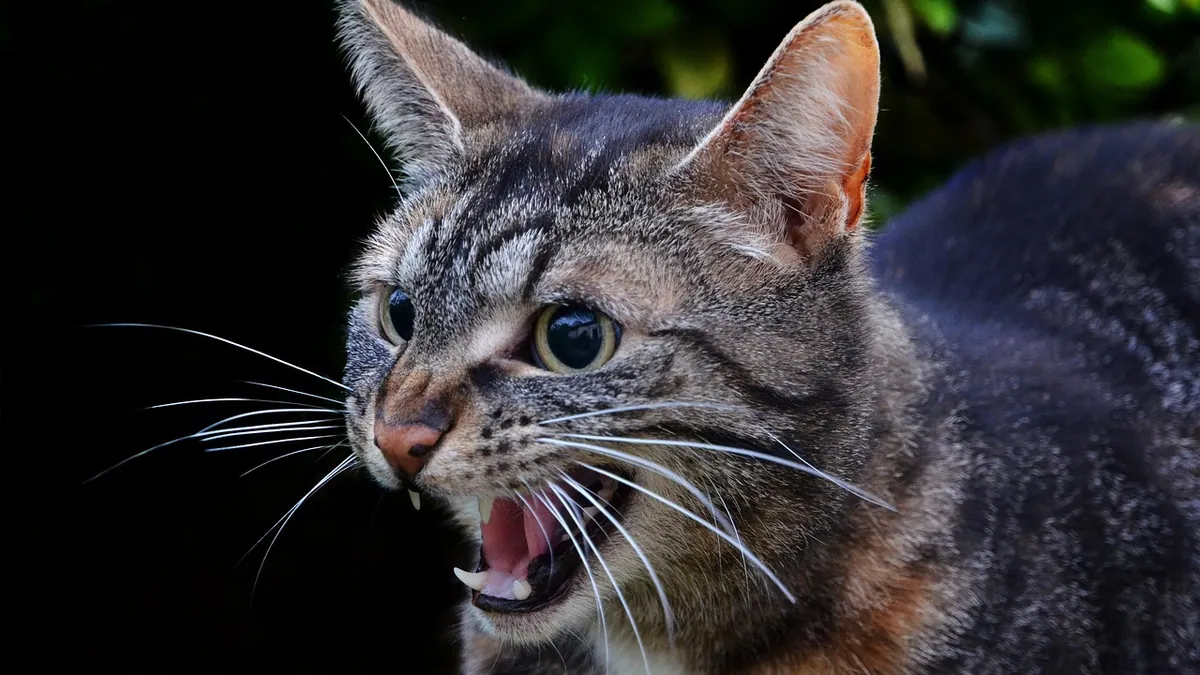
Is it normal for cats to growl? Yes, sometimes. Growling is a normal feline vocalization that can show up during play, during a tense standoff, or when a cat feels threatened, and it is not always a sign of aggression [1][2]. What matters is the context, the body language that comes with it, and whether the behavior is new or getting worse.
This article is educational and is not a substitute for veterinary diagnosis or treatment.
Quick Answer
- Growling during active play, with loose body posture and no injuries, is usually normal and not a cause for alarm.
- Growling with a stiff body, flattened ears, hissing, or swatting is a warning. Stop what you are doing and give your cat space [2].
- Kittens growl too. It can appear during play or when they feel unsure, and early social exposure shapes how they handle these moments as adults [3][4].
- Sudden growling in a cat that never growled before deserves a veterinary visit to rule out pain, illness, or stress [5].
- Never punish growling. It removes a useful warning signal and can lead to biting with no warning.
Why Does My Cat Growl?
Growling is one sound in a larger feline vocabulary. Cats use it to communicate distance, discomfort, or excitement. The meaning depends on what else the cat is doing with its body.
Normal reasons cats growl
Play is the most common harmless reason. Cats wrestling, chasing, and pouncing may growl as part of the mock battle. Watch the body. A playing cat has relaxed whiskers, ears that move freely, and takes turns being the chaser and the chased. If both cats keep coming back for more, the growling is part of the game.
Territorial warning is another normal reason. Cats defend space, and both males and females can show territorial aggression [2]. A cat may growl at another cat, a dog, or a person who enters a room the cat considers its own. Some cats guard the whole house. Others guard one chair or one hallway [2].
Fear and anxiety also produce growling. A cornered cat that cannot escape will growl to keep a threat away. Fear, anxiety, and stress are among the most common behavioral problems in cats, and growling is one way those emotions come out [5].
Mother cats growl at kittens or at other animals near the litter. This is a normal protective response tied to the basic feline social unit of queen and kittens [1].
Is it normal for cats to growl while playing?
Yes, growling during play is common and usually normal. Play growling tends to be short and mixed with other play sounds. The cats pause, reset, and go again. You may see one cat on its back, paws up, then the other cat walks away and comes back.
Play can tip into real conflict. Signs that play has turned serious include yowling, flattened ears, puffed fur, one cat hiding, or any scratch or bite that breaks skin. Separate the cats calmly if you see these signs.
Is it normal for kittens to growl?
Kittens growl during play and when they feel overwhelmed. Socialization in the first months of life shapes how kittens read other cats and people, and most owners have never heard of formal kitten socialization programs [4]. Early, gentle exposure to people helps kittens grow into friendly adults [3].
A kitten that growls while eating or guarding a toy may be showing early resource guarding. A kitten that growls when picked up may be in pain or may simply not be used to handling. Either way, do not force the interaction.
Medical Causes to Rule Out
Growling that starts suddenly, or growling that comes with other changes, can have a medical trigger. Pain is the big one. A cat with dental disease, arthritis, an injured paw, or abdominal pain may growl when touched, lifted, or approached.
Handling-induced aggression is common in cats with an underlying medical problem. In one study of owner-directed aggression, grooming was the most frequent trigger, affecting 56% of cats [6]. That number points to how often touch and pain overlap.
Other medical possibilities include:
- Dental pain or oral masses
- Arthritis or back pain
- Ear infections or ear pain
- Hyperthyroidism or other hormonal disease
- Vision or hearing loss that makes a cat startle easily
- Neurologic problems
Stress also plays a role. Cats that hide and vocalize excessively tend to have higher hair cortisol levels, a marker of chronic stress [7]. Growling can be one piece of that stress picture.
If your cat's growling is new, or if it comes with hiding, appetite changes, limping, or crankiness when touched, book a veterinary exam. See Cat Sudden Aggression: What Could It Mean? and Why Is My Cat Suddenly Aggressive? Medical Causes to Rule Out for more on this pattern.
When Growling Becomes a Problem
Growling is a problem when it happens often, when it targets people or other pets in the home, or when it comes with threats or injuries. Much feline aggression is subtle and passive, so the true frequency is likely underestimated [3].
Ask yourself these questions:
- Does the growling happen every day?
- Does your cat growl at you when you pet, groom, or move near it?
- Has your cat bitten or scratched anyone?
- Is another pet in the home hiding, eating less, or avoiding the litter box?
- Has your cat started growling in places it used to relax?
A yes to any of these means the behavior needs a plan, not just patience. Growling is information. It tells you the cat's needs are not being met, or that something hurts.
What to Do Step by Step
Step 1: Read the whole cat
Look at ears, tail, pupils, whiskers, and body posture. A growling cat with a stiff body, ears rotated back, and a puffed tail is in offensive or defensive mode [2]. A growling cat with soft eyes and a wiggly body is likely playing.
Step 2: Stop the trigger
If the growling started when you picked up your cat, put it down gently. If it started when another cat walked in, separate them with a door or a baby gate. Do not scold. Do not grab.
Step 3: Give the cat control
Cats need security, hiding places, perching spots, scratching areas, and chances to hunt and play [3]. A cat that can retreat and watch from a high shelf often stops growling because it no longer feels trapped.
Step 4: Build a cat-friendly home
Indoor cats do well when owners provide litter boxes, hiding places, vertical spaces, and predatory play opportunities [7]. Add one more litter box than you have cats. Add shelves, cat trees, and covered beds. Feed part of the daily food in puzzle toys or toss kibble for your cat to chase [3].
Step 5: Use play to drain tension
Two short play sessions a day with a wand toy can reduce growling tied to boredom or built-up energy. Let your cat stalk, pounce, and bite the toy. End with a meal or a treat so the hunt has a finish [3].
Step 6: Manage multi-cat tension
If two cats growl at each other, they may need a slow reintroduction. Keep them in separate rooms with separate resources. Swap bedding so they get used to each other's scent. Feed them on opposite sides of a closed door, then a cracked door, then a gate. Move at the pace of the slower cat.
If a new baby is in the home and your cat has started growling, see Cat Hissing and Growling at New Baby: How to Manage. If your cat has suddenly become afraid of you, see Why Is My Cat Suddenly Afraid of Me?.
Step 7: Track the pattern
Write down when growling happens, who is nearby, and what happened right before. This log helps your veterinarian or behavior professional find the trigger. Patterns are easier to see on paper than in memory.
What Not to Do
Do not punish growling. Punishment can suppress the warning without fixing the emotion behind it. A cat that stops growling may bite instead, and bites cause injury and infection.
Do not use your hands as toys. Hands should mean petting and gentle care, not wrestling. Use wand toys and balls for play.
Do not force interaction. Picking up a growling cat, holding it through a growl, or cornering it to "show who is boss" raises fear and makes the next encounter worse.
Do not assume growling is always aggression. It can be pain, fear, overstimulation, or play. Treating every growl as a dominance issue leads owners in the wrong direction.
Do not rely on myths. Cats are not solitary by nature. Many get along well in groups, and outdoor cats form stable social groups when food is available [1]. The idea that cats are loners who never need social skills is outdated.
Do not skip the vet visit. Behavior changes are often the first sign of a medical problem. A growling cat that also hides, eats less, or avoids touch needs an exam.
When to Involve a Veterinarian or Behavior Professional
Call your veterinarian if growling is new, frequent, or directed at people. Call sooner if your cat has bitten someone, if a child or older adult is in the home, or if another pet is being injured or hiding.
A veterinarian can check for pain, dental disease, arthritis, and other medical causes. If the exam is normal, your vet may refer you to a veterinary behaviorist or a certified applied animal behaviorist. These professionals build a behavior plan for your cat and your home.
Medication is sometimes part of the plan for severe cases. Drugs such as fluoxetine are used in serious owner-directed aggression, and side effects like short-term appetite loss can make owners hesitant to start [6]. If medication is suggested, your veterinarian calculates the dose from your cat's weight and health. Never give human medication or supplements to a cat without veterinary guidance.
Limitations and When to Contact a Veterinarian
This article covers common patterns. It cannot tell you what is happening with your individual cat. Only a veterinarian who examines your cat can do that.
Contact a veterinarian the same day if:
- Your cat growls when you touch a specific body area, such as the mouth, belly, or hip
- Your cat stops eating, hides constantly, or seems painful
- Growling started after a fall, fight, or accident
- Your cat growls at a new baby or a visiting child
Go to an emergency clinic now if:
- Your cat has bitten a person and the wound is deep, on a hand, or on the face
- Your cat is panting, collapsing, or showing sudden weakness along with growling
- Your cat cannot walk or use the litter box normally
- Your cat's gums are pale, blue, or white
Call your regular veterinarian for a routine visit if:
- Growling has slowly increased over weeks
- Your cat growls during grooming or nail trims
- Two cats in the home growl at each other daily
- You feel afraid to handle your own cat
If you suspect your cat ate something toxic, call the ASPCA Animal Poison Control Center at (888) 426-4435 or the Pet Poison Helpline at (855) 764-7661. These lines may charge a consultation fee.
Frequently Asked Questions
Should I ever ignore growling?
You can ignore growling when it happens during obvious play and both cats stay relaxed. Ignoring growling that comes with a stiff body, flattened ears, or hiding is risky. That kind of growling is a warning that deserves a response.
Can a cat growl at a toy?
Yes. A cat may growl while carrying, guarding, or "killing" a toy. This is often part of predatory play. If your cat growls when you reach for the toy, leave it alone and let the cat finish. Repeated guarding of toys or food can be an early sign of resource guarding that a behavior professional can help with.
Does growling mean my cat is aggressive?
No. Growling is a communication tool, not a diagnosis. Cats growl during play, fear, pain, and territorial defense [2]. Aggression is a pattern of behavior, and a single growl does not define your cat.
Will neutering stop my cat from growling?
Neutering reduces some male-to-male aggression tied to mating competition, but it does not erase all growling [2]. Territorial and fear-based growling can continue after neutering. Behavior and environment still matter.
Can stress cause growling in indoor cats?
Yes. Indoor cats with fewer resources, such as hiding spots and vertical space, can show more stress-related behaviors [7]. Growling may be one sign. Adding enrichment and predictable routines often helps.
How long does it take to reduce growling?
There is no fixed timeline. It depends on the cause, your cat's history, and how consistently you follow the plan. Mild play growling needs no treatment. Fear or pain-based growling often improves once the trigger is removed or treated. Your veterinarian can set expectations for your cat.
Related Articles
- Cat Hissing and Growling at New Baby: How to Manage
- Why Is My Cat Suddenly Afraid of Me?
- Why Is My Cat Shaking Her Head And Ears
- Cat Sudden Aggression: What Could It Mean?
- Why Is My Cat Suddenly Aggressive? Medical Causes to Rule Out
- Cat Excessive Meowing: What Is Your Cat Trying to Say?
- Why Is My Cat Hissing? What It Means and How to Respond
- Why Is My Kitten Growling? Play, Food, and Warning Signs
- Is It Normal for Cats to Hiss While Playing?
References
- Normal Social Behavior in Cats - Cat Owners. Merck Veterinary Manual.
- Aggression in Cats. ASPCA Animal Poison Control Center.
- Behavior Problems in Cats - Cat Owners. Merck Veterinary Manual.
- Socialising kitties: A quantitative survey of US cat owner attitudes towards kitten and adult cat socialisation programmes. Animal welfare (South Mimms, England), 2025.
- Tools for the Approach of Fear, Anxiety, and Stress in the Domestic Feline: An Update. Veterinary medicine international, 2025.
- Owner-Directed Feline Aggression in Thailand: Characteristics, Associated Factors, and a Clinical Comparison of Treatments. Life (Basel, Switzerland), 2026.
- Stress in Indoor and Outdoor Cats: Association between Hair Cortisol Levels, Housing Style, and Guardians' Perceptions of Behavior. Journal of applied animal welfare science : JAAWS, 2026.