Legbar Chickens: Cream Legbar Care and Egg Guide
By Dr. Zubair Khalid, DVM, MS, PhD ·
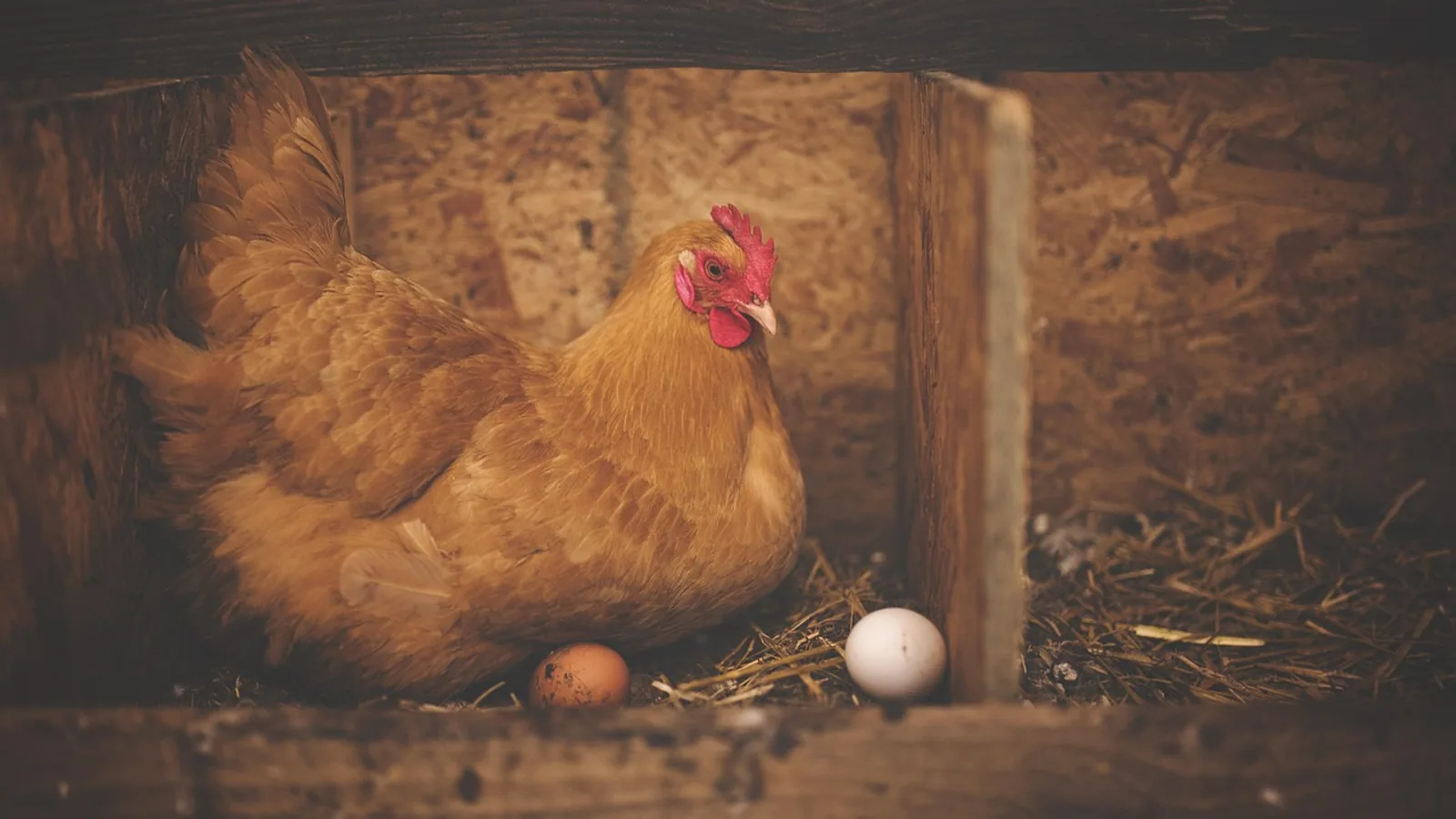
The Cream Legbar is a light, active British layer breed kept almost entirely for one reason: it lays a genuinely blue egg. A healthy Cream Legbar hen produces roughly 180 to 200 eggs per year, each weighing around 60 grams, with the first eggs arriving near 18 to 22 weeks of age. The breed is small to medium in size, alert and busy rather than docile, and it tolerates both cold and heat reasonably well. It suits keepers who want steady production and a colored egg basket, and who are willing to manage a flighty, high-energy bird in a secure run. The blue shell is the breed's defining feature, and the genetics behind that shell are worth understanding before you buy birds, because the trait behaves differently from the sex-linked barring that many keepers confuse it with.
This article is educational and is not a substitute for veterinary diagnosis or treatment.
At a Glance
| Trait | Typical Cream Legbar |
|---|---|
| Class | Light, active layer breed |
| Body size | Small to medium |
| Adult weight | Hens roughly 1.8 to 2.3 kg (4 to 5 lb), roosters slightly heavier |
| Comb and wattles | Moderate, often with a small crest |
| Plumage | Cream, gray, and gold patterning in hens, with barred hackles |
| Eggshell color | Blue to blue-green |
| Egg weight | About 60 g |
| Annual production | Roughly 180 to 200 eggs per hen |
| Age at first egg | About 18 to 22 weeks |
| Temperament | Alert, active, flighty, good forager |
| Broodiness | Low |
| Climate tolerance | Good in cold and moderate heat with shade and ventilation |
| Grooming needs | Minimal, routine parasite checks |
| Trainability | Low, not a lap bird |
| Good with children | Only with calm, supervised handling |
| Good with other pets | Variable, needs secure fencing |
| Lifespan | Commonly 5 to 8 years with good care |
| Common issues | Feather pecking, eggshell quality decline with age, respiratory disease in poorly ventilated housing |
Weight and lifespan figures are general husbandry ranges for light layer breeds. The egg production, egg weight, and onset of lay figures reflect the breed's standard performance as a productive layer.
Origin and Purpose of the Cream Legbar
The Cream Legbar belongs to the group of chickens known as Legbars, which were developed in Britain in the twentieth century as autosexing utility birds. The goal was a chicken that laid well, produced a colored egg, and could be sorted by sex at hatch without waiting weeks for adult feathering to develop. The breed's ancestry combines layer genetics with the blue egg trait, and that combination is what makes the Cream Legbar distinctive among backyard breeds.
The blue egg trait itself did not originate in Britain. It is found in native chickens of Chile, including the Mapuche fowl, and in some of their descendants in European and North American modern breeds [1]. Genetic work has traced the trait to a specific retroviral insertion, which is discussed below. The Cream Legbar is one of the European breeds that carries this insertion, and it is the reason the breed's eggs are blue rather than brown or white.
Because the breed was built for production rather than exhibition, Cream Legbars are practical birds. They are not heavily feathered, they do not carry the extreme body mass of dual-purpose breeds, and they convert feed into eggs efficiently. That efficiency is the point of the breed, and it shapes almost everything about how they should be housed and fed.
Blue Egg Genetics: What Actually Causes the Color
The blue eggshell trait in Legbars is an autosomal dominant trait, usually written as the oocyan gene, O. Autosomal means the gene sits on a non-sex chromosome, so both hens and roosters can carry it, and a single copy is enough to produce blue shells. Dominant means one copy produces the trait. This is the single most misunderstood point about Legbar genetics, so it is worth stating plainly: the blue egg gene is not sex-linked, and it is not the same mechanism as the sex-linked barring gene used for auto-sexing chicks.
The molecular basis of the trait has been identified. Blue eggshell in chickens is caused by an endogenous avian retroviral insertion, EAV-HP, in the 5' flanking region of the SLCO1B3 gene [2]. That insertion acts as a regulatory element and drives expression of SLCO1B3 in the shell gland, the uterus of the oviduct. In blue-shelled hens, SLCO1B3 is expressed in the uterus, while it is not expressed there in non-blue-shelled hens [2]. The same insertion has been identified in oocyan Mapuche fowl and in European breeds, with 100 percent retroviral identity between the Mapuche and European insertions, and quantitative PCR confirms over-expression of SLCO1B3 in the shell gland and oviduct of European oocyan chickens [1].
The insertion sits in the promoter region and includes regulatory elements that modulate expression of the adjacent gene. Work in Yimeng chickens showed that the insertion significantly modulated expression of SLCO1B3 specifically, without major effects on the neighboring SLCO1C1 and SLCO1B1 genes [3]. High SLCO1B3 expression was detected in the shell gland, magnum, isthmus, and vagina of the oviduct in female blue-eggshell chickens, and ectopic expression appeared in the testes of males [3]. The same study found that the insertion reduces SLCO1B3 expression in the liver, where the gene is normally highly expressed, which may affect bile acid metabolism [3].
Why the Shell Is Blue and Not Green
The blue color comes from biliverdin, a bile pigment produced by heme degradation and deposited in the shell by the shell gland [4]. Biliverdin is the pigment responsible for blue-green eggshell color across birds [4]. The intensity and hue of the final shell depend on how much biliverdin is deposited and whether protoporphyrin, the brown pigment, is present at the same time.
Studies of blue-shelled chicken lines show this clearly. In Changshun blue eggshell chickens, the relative expression of HO-1, an enzyme in the heme degradation pathway, was significantly higher in greenish-brown and light blue groups than in dark blue and brown groups, and FECH expression was significantly lower in the light blue group than in the other groups [5]. Shell color measurements track pigment content: L* values are negatively correlated with protoporphyrin-IX, b* values are positively correlated with total pigment content, and a* values are positively correlated with protoporphyrin-IX but negatively with biliverdin [6]. All four blue-eggshell subtypes in that study were homozygous for SLCO1B3, with SLCO1B3 mRNA expression in shell glands significantly higher than in white and brown groups [6].
The practical takeaway for a Legbar owner is that blue is the base color, and any green or olive tint comes from brown pigment laid on top of it. A Cream Legbar hen that lays a greenish egg is still expressing the blue trait. The variation you see between hens, and even between eggs from the same hen, reflects differences in pigment deposition rather than a different gene.
Auto-Sexing Is a Separate Trait
Cream Legbar chicks can be sexed at hatch by the head spot and leg color. This is a separate genetic system from the blue egg gene. Auto-sexing in Legbars depends on the barring gene and the interaction between chick down pattern and leg color, which is why the two traits are often confused. The blue egg gene is autosomal dominant and has nothing to do with the chick's head spot. If you are selecting breeding stock, you are selecting for two independent traits, and you should track them separately.
Selection for shell color is not trivial. Work on a black-bone blue eggshell line found that selection on visual scoring of eggshell color was difficult, and that selection on colorimeter measurements and a shell color index produced more reliable results, with the first selection cycle significantly changing colorimeter means and reducing phenotypic variance [7]. Heritabilities for blue-green egg color in a wild bird population were low to moderate, with low evolutionary potential, which suggests the trait does not shift quickly under selection [8]. For a backyard breeder, this means consistent, uniform blue eggs take several generations of deliberate pairing.
Appearance and Breed Traits


Cream Legbar hens carry a cream and gray ground color with gold in the neck and barred feathering in the hackles. Many have a small crest, and the comb is moderate in size. The body is light and somewhat upright, built for foraging rather than for meat. Roosters show more pronounced barring and a larger crest.
The breed's most useful physical feature is its light frame. A light layer breed runs cooler in summer and needs less feed per egg than a heavy dual-purpose bird. That same frame means less insulation in severe cold, so winter management focuses on draft protection and dry bedding rather than on bulk.
Temperament and Behavior
Cream Legbars are alert, active, and quick. They forage constantly and are good at finding their own food in a large run or pasture. They are not a calm lap breed. Hens often avoid handling, and roosters can be assertive. In a mixed flock, they tend to stay near the top of the pecking order because of their speed and alertness rather than their size.
This activity level has two consequences for owners. First, they need space. A confined, bare run produces boredom, and bored light breeds are the ones most likely to develop feather pecking. Second, they are capable flyers for their size. Standard low fencing may not hold them, and a covered run is the practical solution.
Broodiness
Broodiness in Cream Legbars is low. The breed was selected for continuous laying, and hens rarely sit. If you want chicks, you will usually need an incubator or a broody hen of another breed. The upside is that you do not spend the season breaking broody hens out of nest boxes.
Climate Tolerance
Cream Legbars handle cold well if they are kept dry and out of drafts, and they handle moderate heat well if they have shade and constant water. The crest offers little protection, so in freezing rain or wet snow, birds with larger crests can get chilled. In hot weather, the light body helps, but any chicken can overheat when humidity is high and ventilation is poor.
Common Behavioral Issues
Feather pecking is the most common management problem in this breed. It is a multifactorial behavior linked to crowding, insufficient foraging opportunity, nutritional gaps, and the stress of a bare environment. It is not a breed defect, but light, active breeds show it more readily when their environment is wrong. The fix is environmental: more space, more litter to scratch, more enrichment, and a review of the diet. Once feather pecking becomes established, it is difficult to stop, so prevention matters more than correction.
Housing and Management
Housing for Cream Legbars should prioritize space, ventilation, and security. These are light, flighty birds, and they are more vulnerable to aerial and ground predators than heavier breeds.
Space and Run Design
Provide more space per bird than the minimum you would give a heavy breed. The extra room serves two purposes: it reduces the crowding that triggers feather pecking, and it gives active birds room to move. A covered run is the most practical design because it addresses both flight and predator pressure from above. Hardware cloth, not chicken wire, is the appropriate material for the lower portion of any run, because chicken wire fails against determined predators.
Perches should be placed high enough that birds can use them and low enough that heavy landing is not a problem. Nest boxes should be in the darkest, most protected part of the coop and lined with clean bedding. Because Cream Legbars lay frequently, nest box hygiene matters. Dirty nesting material is a direct route to dirty eggs and to bacterial contamination of the shell.
Ventilation and Litter
Ventilation is the single most important housing variable for respiratory health. Ammonia accumulates in closed coops with wet litter, and ammonia exposure damages the respiratory lining and predisposes birds to respiratory disease. The standard approach is high vents that move air above the birds' heads without creating a draft at bird level. Deep litter that is turned and topped up stays drier and produces less ammonia than a thin layer that is scraped clean frequently.
Biosecurity and Flock Introduction
New birds are the most common route for disease into a backyard flock. Any new chicken should be kept separate from the existing flock for a period of observation before introduction, with separate feed and water containers and separate footwear for the person caring for each group. This is standard biosecurity practice and is emphasized in poultry health guidance from veterinary organizations. The exact quarantine duration should be discussed with your veterinarian based on the source of the birds and the diseases of concern in your area.
Predator and Rodent Control
Feed storage should be in metal containers with tight lids. Spilled feed attracts rodents, and rodents bring their own disease and parasite problems. Rodent control also reduces the risk of feed contamination and of predators that follow rodent activity into the coop area.
Feeding and Nutrition
Cream Legbars are productive layers, and their diet should reflect that. A laying hen putting out nearly an egg a day has high demands for energy, protein, and calcium.
The Laying Diet
The foundation of the diet is a complete layer ration formulated for laying hens. This provides the protein, energy, vitamins, and minerals the bird needs. The most critical nutrient for a hen laying 180 to 200 eggs per year is calcium, because each shell is largely calcium carbonate. A hen that cannot meet her calcium demand will pull calcium from her own bones, which leads to bone weakness over time and to poor shell quality.
Calcium can be offered as a separate source so that hens regulate their own intake. Oyster shell is the common form. Hens that need more calcium will take it, and hens that do not will leave it. This is more reliable than trying to guess the correct amount in a mixed ration.
Protein and Amino Acids
Protein quality matters as much as quantity. A laying ration should supply the amino acids needed for egg white production. In a flock where feather pecking is a problem, review the diet with your veterinarian, because nutritional imbalance is one of several contributing factors.
Water
Water intake is directly tied to feed intake and to egg production. Hens that do not drink enough will reduce feed intake and slow production. Water should be clean, available at all times, and not allowed to freeze in winter or heat up in summer. In hot weather, water consumption rises sharply and the risk of heat stress increases if water is limited.
Treats and Scratch
Treats should be a small fraction of the diet. Scratch grains and kitchen scraps dilute the balanced ration and can push a hen into a nutrient deficit if they make up too much of her intake. The practical rule is that the complete ration is the diet, and everything else is a minor addition.
Egg Production and Egg Quality
A Cream Legbar hen begins laying around 18 to 22 weeks of age and then produces roughly 180 to 200 eggs per year, each about 60 grams. Those numbers describe a healthy hen in a good environment. Actual production depends on nutrition, lighting, stress, parasite load, and age.
Eggshell Quality Changes With Age
Eggshell quality declines as hens age. A study of Xinyang blue-shelled laying hens examined birds at 35, 55, 75, and 85 weeks of age and found that egg weight, eggshell weight, and eggshell surface area increased with age, while eggshell stiffness decreased [9]. As age advanced, eggshell organic matter content declined, and the effective layer ratio, mammillae density, porosity, and total pore area in the mammillary layer all decreased, while the ratio of the mammillary layer increased [9]. In other words, older hens lay larger eggs with thinner, less stiff shells, and the shell's internal structure changes in ways that affect its mechanical properties.
This is relevant to Legbar owners because the breed lays at a high rate, and high output over time adds up. A hen in her third or fourth laying year will produce eggs with weaker shells than she did in her first. This is normal aging, not a disease. It does mean that older hens benefit from careful calcium management and from handling that reduces egg breakage.
Shell Color Variation
Shell color in blue-egg breeds is often not uniform. That variability has been studied directly, and the molecular mechanisms behind it involve pigment deposition pathways rather than a single switch. Transcriptome work comparing uteruses of blue-green eggshell chickens and commercial brown layers found that blue-green eggshell chickens had lower egg production and less uniform shell color than commercial layers, and identified gene modules and hub genes associated with both shell color index and egg number [10]. Other work on Changshun blue eggshell chickens found that microRNAs and circular RNAs are involved in pigment deposition, with miR-192-x targeting SLC16a7 and with metabolic pathways involving BLVRA and HMOX1 detected in dark and light blue eggshell groups [11].
For an owner, the practical point is simple. Color variation between eggs from the same hen is expected. Color variation between hens is expected. A sudden change in shell color in an individual hen, especially a change to pale or chalky shells, is worth a veterinary conversation because it can reflect reproductive tract or nutritional problems.
Egg Handling and Storage
Eggs should be collected promptly, especially in hot weather. Nest boxes should be kept clean and the bedding changed regularly. Dirty eggs should be discarded rather than washed and stored, because washing can drive contamination through the shell. Refrigerate eggs that will be stored, and use clean, uncracked eggs first.
Health and Common Problems
Backyard poultry health is largely a matter of prevention. The diseases and conditions that affect Cream Legbars are the same ones that affect other backyard chickens, with a few breed-specific considerations.
Respiratory Disease
Respiratory disease is common in backyard flocks and is strongly associated with poor ventilation and ammonia buildup. Signs include sneezing, nasal discharge, swollen eyes, and labored breathing. Because several respiratory pathogens cause similar signs, diagnosis requires veterinary assessment. Improving ventilation and reducing litter moisture are the first management steps in any coop with a respiratory problem.
Parasites
Both external and internal parasites affect backyard chickens. Mites and lice cause irritation, feather damage, and reduced production. Internal parasites, including roundworms and coccidia, can cause weight loss, diarrhea, and poor growth in young birds. Coccidiosis is particularly important in chicks and young birds, and it is a common cause of diarrhea and mortality in that age group. Diagnosis and treatment decisions should be made with a veterinarian, and routine fecal testing is a reasonable part of flock management.
Feather Pecking and Cannibalism
Feather pecking is covered above as a behavioral issue, but it is also a welfare and health issue. Pecked birds develop open wounds, which attract further pecking and can escalate to cannibalism. Affected birds should be separated while wounds heal, and the underlying environmental problem should be corrected. This is one of the most common reasons backyard flocks need veterinary input.
Reproductive Problems
Hens that lay at a high rate are prone to reproductive conditions including egg binding, prolapse, and internal laying. These are emergencies. A hen that is straining, sitting in the nest box for extended periods, or showing a swollen abdomen needs prompt veterinary attention. Do not attempt to manipulate a suspected egg-bound hen at home.
Eggshell and Skeletal Issues
Because high-producing hens mobilize calcium for shell formation, they are at risk of bone weakness over time. Adequate calcium, adequate vitamin D, and appropriate exercise all support skeletal health. A hen that is reluctant to move, has a wobbly gait, or produces persistently thin-shelled eggs should be evaluated by a veterinarian.
Marek's Disease and Vaccination
Marek's disease is a common viral disease of chickens that causes tumors and neurological signs. Vaccination at hatch is standard practice in commercial production and is available for backyard chicks. Whether to vaccinate is a decision to make with your veterinarian or hatchery, and it depends on your flock's risk profile and history.
Biosecurity and Reportable Disease
Highly pathogenic avian influenza is a reportable disease in the United States. Owners should be aware of the signs of sudden, high mortality in a flock and should contact their state veterinarian or the USDA if they suspect it. The AVMA maintains resources for backyard flock owners on biosecurity and disease reporting, and state animal health authorities are the correct point of contact for suspected reportable disease.
Screening and Preventive Care
There is no breed-specific genetic screening panel for Cream Legbars in the way there is for some dog breeds. Preventive care for a backyard flock is practical and observational.
- Establish a baseline by handling birds regularly and knowing what normal looks like for each one.
- Check body condition and feather cover monthly, especially over the keel and vent.
- Inspect for external parasites at least monthly, particularly around the vent and under the wings.
- Submit fecal samples for parasite testing on a schedule your veterinarian recommends.
- Review the coop for ventilation, litter moisture, and ammonia at every cleaning.
- Keep records of production per hen, because a drop in an individual hen's output is often the first sign of a problem.
- Isolate any bird showing respiratory signs, diarrhea, or a sudden drop in activity.
- Discuss vaccination and quarantine protocols with your veterinarian before adding birds.
Lifespan and Long-Term Care
A well-managed Cream Legbar commonly lives 5 to 8 years. Production peaks in the first two laying years and declines afterward. Older hens lay fewer, larger eggs with weaker shells, consistent with the age-related shell changes documented in blue-shelled laying hens [9]. Retirement planning for a hen means deciding in advance whether she stays as a non-laying pet, and adjusting her diet so she does not carry excess weight once she stops laying.
Finding Responsible Breeding Stock or Rescues
The blue egg trait is easy to claim and harder to verify. A responsible seller should be able to tell you the eggshell color of the parent hens, show you the parent flock, and explain how the birds were selected. Ask directly whether the breeder selects for blue shell color and how they measure it, because visual scoring alone is unreliable and objective measurement is more dependable [7].
Auto-sexing is a separate claim. Ask whether the chicks are sexed by head spot and leg color, and ask what the seller's accuracy rate is. A seller who cannot explain the difference between the blue egg gene and the barring gene is not a reliable source of breeding stock.
For rescues, contact local poultry rescues and farm animal sanctuaries. Many take in surrendered hens, including production breeds, and a rescued hen can be a good fit for a keeper who wants eggs and companionship without breeding.
Who Should Not Get Cream Legbars
Cream Legbars are a poor fit for keepers who want a calm, handleable pet chicken. They are active and often avoid contact. They are a poor fit for very small, bare runs, because confinement and boredom drive feather pecking. They are a poor fit for households that cannot commit to secure, predator-proof housing, because their light build makes them vulnerable. They are also a poor fit for anyone who wants a broody hen to hatch chicks, because broodiness is low in this breed.
They are a good fit for keepers who want steady production of a colored egg, who have space and secure housing, and who enjoy watching active birds forage.
Limitations and When to Contact a Veterinarian
This article is educational and is not a substitute for veterinary diagnosis or treatment. Individual birds vary, and a veterinarian who can examine your flock is the only reliable source of diagnosis and treatment.
Contact a veterinarian promptly if you see any of the following:
- Sudden death in more than one bird, or any sudden death with no prior signs.
- Labored breathing, gasping, or discharge from the eyes or nostrils.
- A hen straining, sitting in the nest box for hours, or showing a swollen, distended abdomen.
- Bloody diarrhea, or diarrhea with weight loss or lethargy.
- A wound from feather pecking that is open, bleeding, or enlarging.
- A sudden drop in egg production across the flock, or a sudden change in shell quality in an individual hen.
- Neurological signs such as a twisted neck, circling, or an inability to stand.
- Any bird that is off feed and isolated from the flock for more than a day.
For suspected reportable disease, including highly pathogenic avian influenza, contact your state veterinarian or the USDA. Do not move birds off the property while you wait for guidance.
Frequently Asked Questions
How many eggs does a Cream Legbar lay per year?
A healthy Cream Legbar hen lays roughly 180 to 200 eggs per year. Production is highest in the first two laying years and declines with age.
What color eggs do Cream Legbars lay?
Cream Legbars lay blue to blue-green eggs. The blue color comes from biliverdin deposited in the shell by the shell gland, driven by the oocyan trait.
Are Cream Legbar eggs blue because of a sex-linked gene?
No. The blue eggshell trait is autosomal dominant, not sex-linked. It is a separate genetic system from the sex-linked barring used for auto-sexing chicks.
At what age do Cream Legbar hens start laying?
Cream Legbar hens typically begin laying around 18 to 22 weeks of age. Nutrition, lighting, and stress can shift that window.
How big are Cream Legbar eggs?
Cream Legbar eggs weigh about 60 grams on average. Egg size increases with hen age, and shell stiffness tends to decrease as hens get older.
Can you sex Cream Legbar chicks at hatch?
Yes. Cream Legbar chicks can be sexed at hatch by the head spot and leg color. This auto-sexing trait is separate from the blue egg gene.
Are Cream Legbars broody?
No. Broodiness is low in Cream Legbars. Hens rarely sit on eggs, so hatching usually requires an incubator or a broody hen of another breed.
Do Cream Legbars do well in cold weather?
Cream Legbars handle cold reasonably well if they are kept dry and out of drafts. Their light build means they need protection from wet cold more than from dry cold.
Related Articles
- Raising Chickens for Eggs: Breed Selection, Care, and Egg Production
- Why Have My Chickens Stopped Laying Eggs?
- How Many Eggs Do Backyard Chickens Lay?
- Parasites of Poultry: Chicken Parasites in Eggs and Meat
- Parasites in Poultry Eggs: Risks and Prevention
- Parasites in Poultry Meat and Eggs: A Comprehensive Guide
- How Long Do Fresh Eggs Last in the Fridge?
- ISA Brown Chicken: Breed Traits and Egg Yield
- How to Tell If an Egg Is Still Good: 4 Safe Tests
Sources
- Endogenous Retrovirus EAV-HP Linked to Blue Egg Phenotype in Mapuche Fowl
- An EAV-HP Insertion in 5′ Flanking Region of SLCO1B3 Causes Blue Eggshell in the Chicken
- An EAV-HP insertion in the 5ʹ flanking region of SLCO1B3 is associated with its tissue-expression profile in blue-eggshell Yimeng chickens (Gallus gallus)
- Comparative transcriptome analysis provides clues to molecular mechanisms underlying blue-green eggshell color in the Jinding duck (Anas platyrhynchos)
- Pigment concentrations in eggshell and their related gene expressions in uterus of Changshun blue eggshell chickens
- The pigments in eggshell with different colour and the pigment regulatory gene expression in corresponding chicken's shell gland.
- Genetics and breeding of a black-bone and blue eggshell chicken line. 4. Responses to 3 cycles of selection for blue or green eggshell.
- Low evolutionary potential for blue-green egg colouration in a wild bird population.
- TMT-Based quantitative proteomic analysis reveals age-related changes in eggshell matrix proteins and their correlation with eggshell quality in Xinyang blue-shelled laying hens.
- Transcriptome analyses of shell color and egg production traits between the uteruses of blue-green eggshell chickens and Hy-Line brown layers.
- A Network of Circular RNA and MicroRNA Sequencing Provides Insights into Pigment Deposition of Changshun Blue Eggshell Chickens.