How Long Do Fresh Eggs Last in the Fridge?
By Dr. Zubair Khalid, DVM, MS, PhD ·
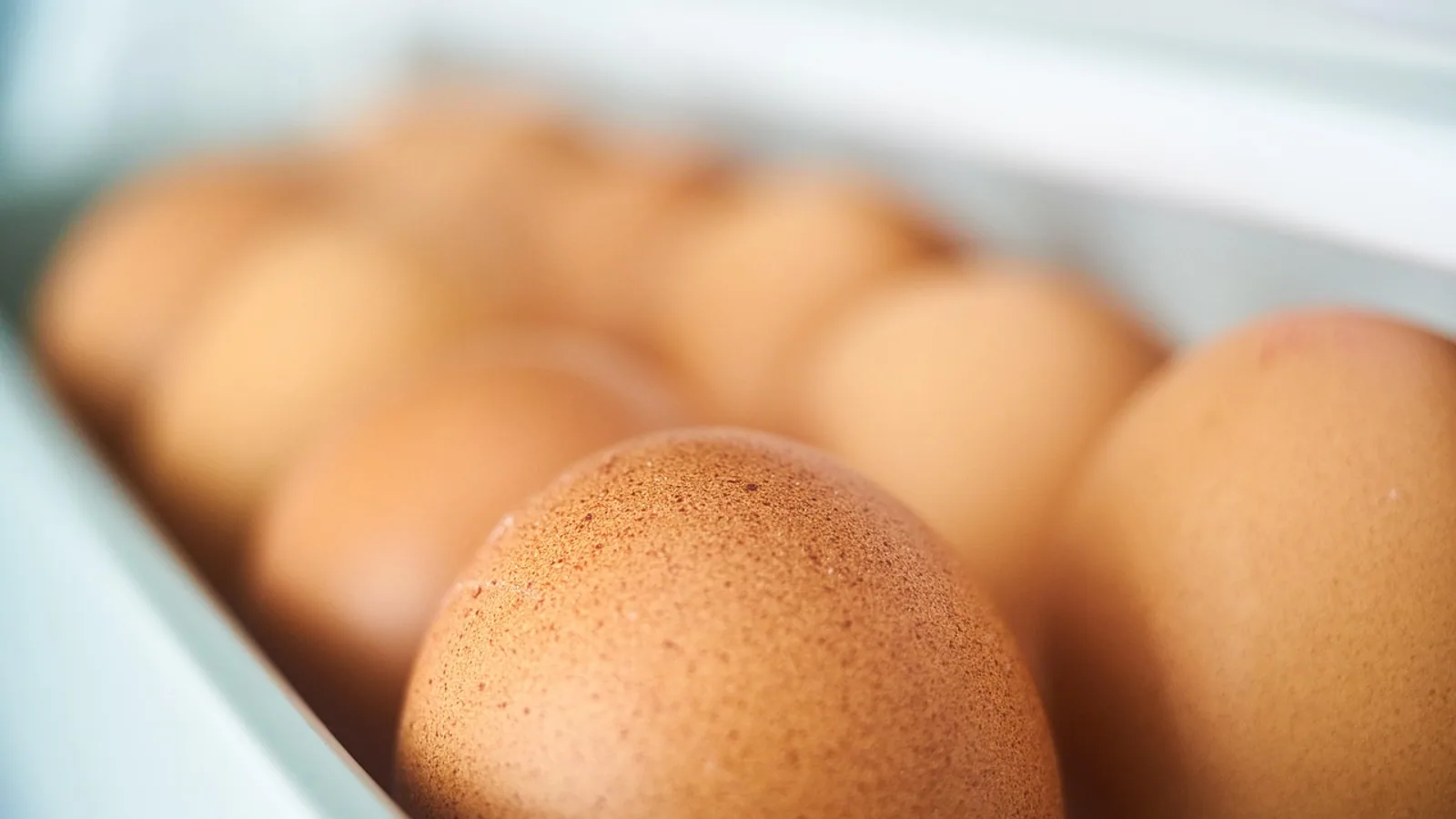
Unwashed fresh eggs keep about 3 to 5 weeks in a refrigerator held at 40 F (4 C) or below. Washed eggs keep roughly 2 weeks refrigerated, and eggs left on the counter last only 1 to 2 weeks even in a cool room. Those three numbers answer the question "how long do fresh eggs last in fridge" for almost every household, but the reasons behind them matter more than the numbers.
The cuticle, a thin protein layer on the outside of the shell, decides which of those timelines applies to your eggs. Commercial washing removes it. Once it is gone, refrigeration stops being a preference and becomes a requirement. Storage temperature then drives how fast the inside of the egg degrades, and the float test that many people rely on does not measure what they think it measures.
This article is educational and is not a substitute for veterinary diagnosis or treatment.
The Short Answer: Three Timelines, One Variable
Three storage scenarios cover nearly all home and small-flock situations.
Unwashed eggs, refrigerated: 3 to 5 weeks. Eggs that still carry an intact cuticle and go straight into a cold refrigerator hold their internal quality for roughly three to five weeks. Coated eggs in controlled studies have held acceptable albumen and yolk quality for far longer, but that reflects an added barrier, not a plain unwashed egg [1][2].
Washed eggs, refrigerated: about 2 weeks. Washing strips the cuticle and opens the shell pores to air and moisture movement. The egg still benefits from cold storage, but the clock runs faster.
Unwashed eggs, counter: 1 to 2 weeks. Room-temperature storage is the least forgiving option. Research on table eggs stored at warm ambient temperatures shows rapid quality loss, with some parameters changing within days at 35 C [3]. A cool pantry in the 60s F is gentler than a 75 F kitchen, but neither matches a refrigerator.
The variable that ties these together is the shell's outer coating. Everything else, including carton type and how the eggs are positioned, is a secondary modifier.
Why 3 to 5 Weeks Is a Quality Window, Not a Safety Cliff
The 3-to-5-week figure describes when an egg is still good to eat in the everyday sense: the yolk sits up, the white is thick, and the flavor is clean. It is not a hard safety deadline. Refrigeration alone has kept non-coated eggs at an acceptable internal grade for up to 20 weeks in one controlled study, though weight loss continued and quality drifted downward the whole time [1]. The practical takeaway is that refrigerated eggs rarely become dangerous at week five. They become less pleasant, and the margin for error shrinks.
What Actually Happens Inside a Stored Egg
An egg is a sealed biological package with a small air pocket at the blunt end. Two processes run simultaneously during storage, and both are slowed by cold.
The first is moisture loss. Water evaporates through the shell and into the air cell, which grows deeper over time. Air cell depth is one of the most reliable indicators of egg age. In a study that tracked eggs daily for 35 days, air cell depth, Haugh units, albumen weight, yolk index, and albumen and yolk pH were among the traits most affected by storage time, and a regression model built on those traits could predict how long an egg had been stored [4].
The second is chemical drift. Carbon dioxide escapes through the shell, the albumen becomes more alkaline, and the proteins that hold the thick white in shape weaken. The yolk membrane loses strength and the yolk flattens. Haugh units, a combined measure of albumen height and egg weight, fall steadily. In one storage trial, Haugh unit scores dropped roughly 40 percent from the first measurement to the last, regardless of egg type or season [5].
Temperature sets the speed of both processes. A comprehensive study of 1,500 eggs stored at 10 C, 21 C, and 35 C found that refrigeration maintained quality through short-term storage and produced only minor changes over 15 weeks, while eggs held at 35 C degraded so quickly that half-life calculations for several quality parameters came in under two days [3]. That is the biological reason a counter egg and a fridge egg diverge so fast.
The Cuticle: The Shell's Built-In Seal
The cuticle is a proteinaceous layer deposited on the shell surface before the egg is laid. It plugs the pores and slows both water loss and microbial entry. It is the reason an unwashed egg can sit at cool room temperature for a week or two without falling apart.
Once the cuticle is removed, the pores are open. Water leaves faster, carbon dioxide leaves faster, and bacteria on the shell surface have a clearer path inward. A study of the fungal population on eggshells found that as storage time increased, fungi including pathogenic species penetrated through the shells, and mycotoxins were subsequently identified in the egg whites [6]. The shell is a barrier, not a vault, and its outer coating is the first line of that barrier.
Washed vs Unwashed: The Rule That Explains US and European Practice
In the United States, commercial eggs are washed and sanitized before packing, and they are required to be refrigerated. In much of Europe, eggs are sold unwashed and are commonly stored at room temperature in stores and homes. Both systems are internally consistent, and the cuticle explains why.
Washing removes the cuticle along with visible dirt and some of the surface bacteria. That trade is deliberate: washing reduces the bacterial load on the shell at the moment of packing, but it also removes the egg's own protection. Refrigeration compensates for the lost barrier by slowing the processes the cuticle would have slowed. An unwashed egg retains its barrier and tolerates ambient storage better, which is why the European model works without a cold chain.
For a US owner with backyard hens, the practical rule follows directly:
- If you do not wash the egg, refrigerate it anyway for the longest shelf life, but you have more flexibility if it sits out.
- If you wash the egg, refrigerate it immediately and treat 2 weeks as the realistic window.
- If you wash an egg and then leave it on the counter, you have removed the protection and skipped the compensation. That is the worst of both options.
Some keepers wash eggs in warm water with a mild abrasive and then oil them to restore a barrier. Coating eggs with mineral oil or similar food-grade films has been shown to reduce weight loss and preserve albumen and yolk quality for weeks longer than uncoated eggs at both room and refrigerator temperatures [1]. If you wash and want to extend storage, a coating is the evidence-based way to do it.
Dirty Eggs and Cracked Eggs Are a Separate Category
A visibly dirty egg is not a candidate for long storage. Fecal material on the shell is a direct bacterial source, and dirt that has dried onto the shell is difficult to remove without damaging the cuticle. Cracked eggs are worse. A crack gives bacteria a direct route to the nutrient-rich contents, and the internal defenses cannot compensate.
Salmonella is the organism that matters most here. It can be present in egg products and is a recognized food safety risk, and temperature governs its behavior. In pasteurized liquid whole egg, Salmonella Typhimurium declined during storage at 7 C but grew rapidly at 10 C [7]. That is a 3-degree difference producing opposite outcomes. The lesson for shell eggs is the same: cold storage is not a convenience, it is the control measure.
Discard cracked eggs unless you are cooking them immediately and thoroughly. Discard heavily soiled eggs rather than washing and storing them. If you keep backyard hens and find a cracked egg in the nest, do not put it in the carton with the intact eggs.
Storage Method vs Time vs Quality Loss
| Storage method | Realistic keeping time | What degrades first | Notes |
|---|---|---|---|
| Unwashed, refrigerated at 40 F or below | 3 to 5 weeks | Air cell deepens, albumen thins, Haugh units fall | Cuticle intact, best all-around option |
| Washed, refrigerated at 40 F or below | About 2 weeks | Faster moisture loss and pH rise than unwashed | Refrigerate immediately after washing |
| Unwashed, cool counter (roughly 60 to 68 F) | 1 to 2 weeks | Rapid weight loss, yolk flattening | Shorter in a warm kitchen |
| Unwashed, warm room (above 75 F) | Days | Sharp quality decline across all measures | Not a safe long-term option |
| Coated (mineral oil or similar), refrigerated | Weeks beyond uncoated | Weight loss slowed, grade held longer | Coating replaces the cuticle's barrier function |
| Coated, room temperature | About 3 weeks longer than uncoated | Weight loss still the limiting factor | Coating helps but does not match refrigeration |
The pattern in the table is consistent across the storage literature. Temperature is the dominant factor, the cuticle or a coating is the second factor, and packaging is a distant third. One study found that eggs stored in plastic boxes at room temperature produced results very similar to eggs stored under refrigeration in conventional cardboard boxes, an effect attributed to the lower permeability of the plastic [8]. That is a useful detail for small-flock owners, but it does not change the ranking. Cold plus an intact barrier still wins.
Packaging and Handling Details That Matter
Cardboard cartons and plastic cartons are not equivalent. A study of free-range eggs stored at 5 C and 22 C found that eggs in plastic packaging contained more bacteria in their contents on days 14 and 28 than eggs in cardboard packaging [9]. Cardboard breathes, and that appears to matter for the microbial environment around the shell. Neither packaging type affected the foaming properties of the egg white or the sensory quality of hard-boiled eggs, but both deteriorated with storage time regardless of packaging [9].
Keep eggs in the carton they came in, blunt end up. The blunt end holds the air cell, and keeping it up keeps the yolk centered and reduces the chance of the yolk pressing against the shell membrane. Do not store eggs in the refrigerator door. The door is the warmest and most temperature-fluctuating part of the fridge, and every opening cycle works against the egg.
The Float Test: What It Detects and What It Misses
The float test is the most misunderstood egg test in common use. Drop an egg in a bowl of water. If it sinks and lies flat, it is fresh. If it stands upright on the bottom, it is older. If it floats, it is old enough that the air cell has expanded substantially.
That is all the test measures. It detects air cell expansion, which is a proxy for moisture loss and age. It does not detect bacterial contamination, and it does not detect spoilage. A sinking egg can still be spoiled, and a floating egg is not automatically unsafe, though a floating egg is old enough that most people should discard it.
The reason the test fails as a safety screen is that spoilage and contamination are independent of air cell size. Salmonella can be present in a fresh egg with a small air cell. A spoiled egg can have a small air cell if it was stored cold and then contaminated. The float test answers one narrow question, and treating it as a safety verdict is how people get sick.
Spoilage Signs That Actually Matter
Use your senses and a crack-and-sniff approach instead of the float test.
- Smell. A spoiled egg has a distinct sulfurous or rotten odor. If you crack an egg and smell anything off, discard it and wash the bowl.
- Appearance of the white. A fresh egg has a thick, cohesive white that stays close to the yolk. An old egg has a thin, watery white that spreads out. Cloudiness in the white is normal in very fresh eggs and is not a spoilage sign.
- Yolk behavior. A fresh yolk sits up in a dome. An old yolk flattens and the membrane weakens. A yolk that breaks immediately on cracking is a sign of age, not necessarily spoilage.
- Shell condition. A slimy, moldy, or visibly discolored shell means discard. Do not wash it and use it.
- Pink or iridescent white. This indicates Pseudomonas bacteria and the egg should be discarded.
If you are unsure, crack the egg into a separate bowl rather than directly into the pan or batter. That way a bad egg does not ruin the rest of the food, and you can inspect it before it touches anything else.
Practical Rules for Backyard Flocks and Households
Backyard egg handling differs from commercial handling, and the rules should reflect that.
Collect frequently. Eggs left in a nest box in summer heat degrade faster than eggs brought in promptly. In hot weather, collect at least twice a day.
Do not wash until you are ready to use the egg. This is the single most useful habit for anyone with hens. An unwashed egg with an intact cuticle stored in the refrigerator gives you the full 3-to-5-week window. A washed egg gives you about 2 weeks.
Refrigerate unwashed eggs anyway. The cuticle buys you tolerance, not immunity. Cold storage extends quality in every study that has compared it to ambient storage [3].
Keep a dated carton. Write the collection date on the carton. Egg age is easy to lose track of when you are collecting daily, and the storage window is measured from the day the egg was laid, not the day you bought it.
Rotate stock. Use the oldest eggs first. This is the same principle as any food storage system and it prevents the situation where you find a six-week-old egg at the back of the shelf.
Separate the compromised eggs. Cracked, dirty, or unusually thin-shelled eggs should be used immediately and cooked thoroughly, or discarded. Do not store them with intact eggs.
Keep the refrigerator at or below 40 F. Use a thermometer. Many home refrigerators run warmer than the dial suggests, and the difference between 38 F and 45 F matters over a month of storage.
Eggshell Quality and Storage Outcomes
Not all eggs store equally well. Eggs with eggshell apex abnormalities, a shell defect associated with Mycoplasma synoviae infection in hens, lost weight faster during storage than normal eggs, and the apex of the shell was thinner in affected eggs during summer [5]. That is a specific flock-health issue, but it illustrates a general point: shell quality is a storage variable. Thin-shelled or structurally abnormal eggs do not hold up as long, and they should be moved to the front of the queue.
Genetic factors in the hen also influence how an egg changes during storage. Studies in Japanese quail have linked polymorphisms in the ovomucoid and lysozyme genes to differences in quality changes over 14 weeks of storage, including breaking strength and other traits [10][11]. The same principle likely applies across species, which means two eggs from two hens can age at different rates. This is a reason to judge eggs individually rather than trusting a single calendar date.
Common Myths and Related Questions
Myth: An egg is safe as long as it floats. The float test measures air cell size, which reflects age and moisture loss. It does not detect bacteria. A sinking egg can be contaminated and a floating egg can be free of pathogens. The test is a rough age indicator, not a safety test.
Myth: You can tell a bad egg by the float test alone. You cannot. Smell and visual inspection after cracking are more informative.
Myth: Refrigeration ruins the taste of eggs. Refrigeration slows the chemical changes that make eggs taste stale. It preserves flavor rather than damaging it.
Myth: Unwashed eggs on the counter are always fine because Europeans do it. European eggs are unwashed and typically stored in stable, cool retail conditions, and they are often consumed within a shorter window than US refrigerated eggs. The comparison is about the cuticle and the cold chain, not about counter storage being universally safe.
Myth: A cracked egg is fine if you refrigerate it. A crack gives bacteria a direct path to the contents. Refrigeration slows bacterial growth but does not sterilize the egg. Use cracked eggs immediately and cook them thoroughly, or discard them.
Question: How long are fresh eggs good for after I buy them at the store? Store eggs are already washed, so the clock started before you bought them. Treat them as having about 2 weeks of good quality left from purchase, less if they sat in a warm car.
Question: Can I freeze eggs to extend storage? Freezing is outside the scope of shell-egg storage, and the quality changes during frozen storage differ from refrigerated storage. If you want to preserve eggs long-term, discuss the method with a food safety professional rather than assuming shell storage rules apply.
Limitations and When to Contact a Veterinarian
This article covers egg storage and food safety. It does not cover the health of the hens that laid the eggs, and it cannot tell you whether a specific egg in your refrigerator is safe to eat. Individual eggs vary by age, shell condition, storage history, and the health of the flock.
Contact a veterinarian if you keep a flock and notice any of the following:
- A sudden drop in egg production across multiple hens
- Thin, misshapen, or abnormally soft shells appearing in several eggs
- Visible respiratory signs, swollen eyes, or nasal discharge in the flock
- Diarrhea or unexplained weight loss in multiple birds
- Any illness in a person in the household who handled or ate eggs from the flock
A veterinarian can examine the birds, assess flock health, and determine whether a shell-quality problem reflects an infectious disease such as Mycoplasma synoviae or a management issue. Do not attempt to diagnose a flock problem from egg appearance alone.
For human illness after eating eggs, contact a physician. For food safety questions about a specific product, contact your local health department.
Frequently Asked Questions
How long do fresh eggs last in the fridge?
Unwashed eggs last about 3 to 5 weeks refrigerated at 40 F or below. Washed eggs last about 2 weeks. Both windows are measured from the day the egg was laid.
How long can eggs last in the fridge after washing?
About 2 weeks. Washing removes the cuticle, the shell's natural protective layer, so the egg loses moisture and takes on bacteria faster than an unwashed egg.
How long does fresh eggs last in the refrigerator if they are store-bought?
Store eggs are already washed and sanitized before packing, so treat them as having roughly 2 weeks of good quality from the purchase date. The storage clock started at the packing plant, not at your kitchen.
How long are fresh eggs good for on the counter?
Unwashed eggs keep about 1 to 2 weeks on a cool counter. In a warm kitchen above 75 F, quality drops within days and the safety margin narrows sharply.
Does the float test tell you if an egg is safe to eat?
No. The float test measures air cell expansion, which reflects age and moisture loss. It does not detect Salmonella or other bacteria, so a sinking egg can still be spoiled.
Why do US eggs need refrigeration but European eggs often do not?
US commercial eggs are washed, which strips the cuticle and removes the shell's natural barrier. European eggs are typically sold unwashed with the cuticle intact, so they tolerate ambient storage better. Refrigeration compensates for the lost barrier in the US system.
Can I eat an egg with a cracked shell if I refrigerate it?
No. A crack lets bacteria reach the contents directly. Cook cracked eggs immediately and thoroughly, or discard them. Do not store them with intact eggs.
What are the signs that an egg has gone bad?
A sulfurous or rotten smell, a slimy or moldy shell, a thin watery white, a yolk that breaks immediately, or a pink or iridescent white. Crack the egg into a separate bowl so a bad egg does not contaminate other food.
Related Articles
- How Long Do Dog Periods Last
- How Long Does A Dogs Heat Last
- How Long Does A Dog Period Last
- Dog Reverse Sneezing How Long Does It Last
- Cat Hissing at New Kitten: How Long Will It Last?
- Temperature Mapping for Laboratory Refrigerators, Freezers, and Incubators
- How Long Does a Chicken Lay an Egg? Cycle Explained
- Turtle Eggs: Incubation Time and Hatching Guide
- How Long Do Duck Eggs Take to Hatch? Timeline
Sources
- Mineral oil-chitosan emulsion coatings affect quality and shelf-life of coated eggs during refrigerated and room temperature storage.
- The effects of edible coatings on chicken egg quality under refrigerated storage.
- A Comprehensive Study of Chicken Eggs Quality in Short- and Long-Term Storage Under Different Temperatures.
- The Use of the Dynamics of Changes in Table Eggs during Storage to Predict the Age of Eggs Based on Selected Quality Traits.
- The effect of eggshell apex abnormalities on table egg quality during storage in 2 seasons of the year.
- Characterisation of the Mycobiota on the Shell Surface of Table Eggs Acquired from Different Egg-Laying Hen Breeding Systems.
- Effect of nisin, EDTA, and abuse temperature on the growth of Salmonella Typhimurium in liquid whole egg during refrigerated storage.
- The Impact of Package Type and Temperature on the Changes in Quality and Fatty Acids Profile of Table Eggs during Their Storage.
- Influence of Storage Packaging Type on the Microbiological and Sensory Quality of Free-Range Table Eggs.
- Ovomucoid gene polymorphism and its influence on quality changes at various storage timepoint of eggs from two strains of Japanese quail.
- The relationship between lysozyme gene polymorphism and quality changes during the storage of eggs derived from 2 commercial strains of Japanese quail.