ISA Brown Chicken: Breed Traits and Egg Yield
By Dr. Zubair Khalid, DVM, MS, PhD ·
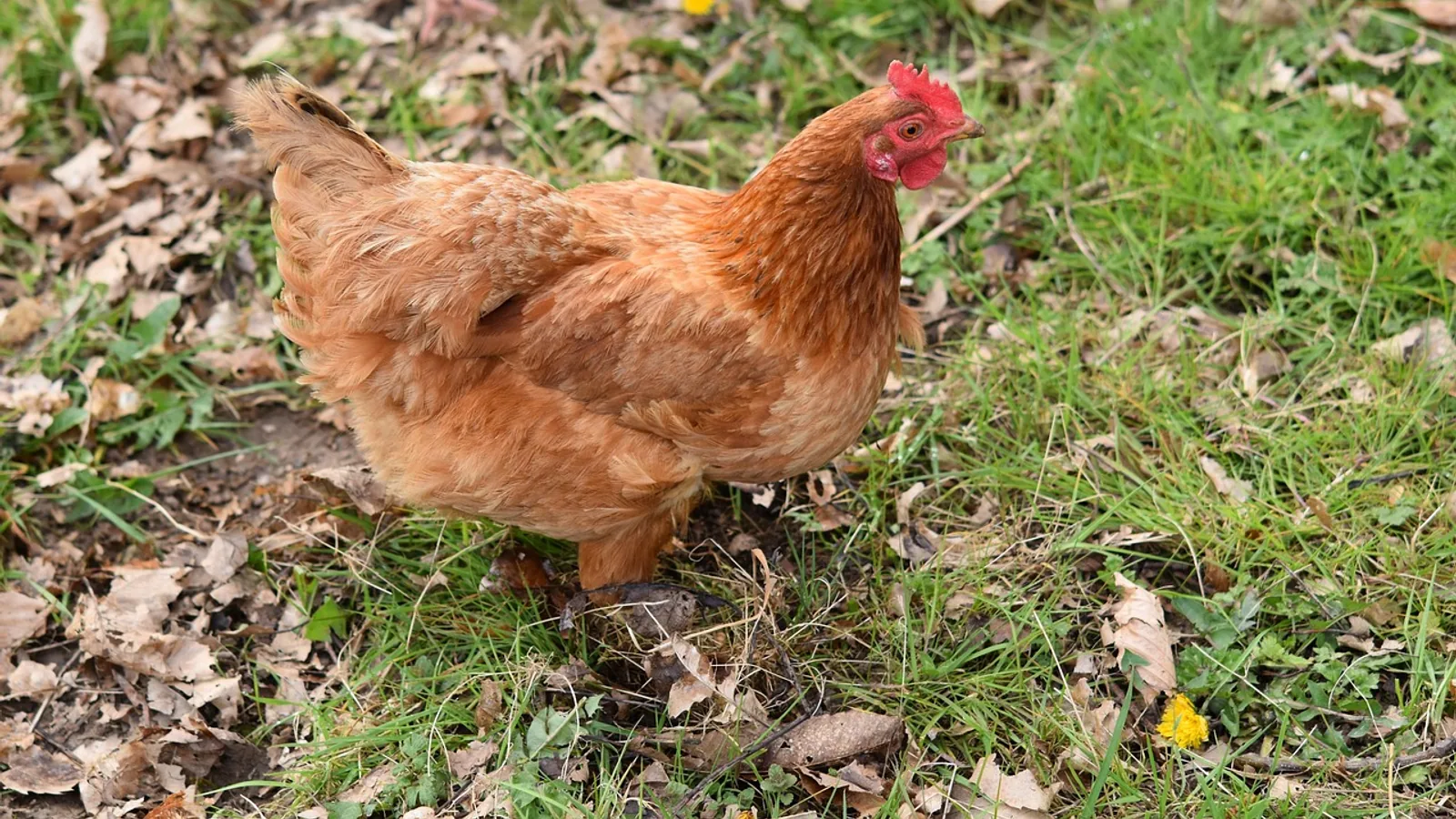
The ISA Brown is a commercial layer hybrid, not a standardized breed. It was developed in France in the 1970s by crossing Rhode Island Red and Rhode Island White lines to produce a brown-egg hen with sex-linked chick color, meaning day-old pullets and cockerels can be sorted by down color at hatch. The result is a small-bodied hen, roughly 1.8 to 2.0 kg in early lay, with a calm, handleable temperament and a single-minded drive to lay. Commercial flocks push these birds toward a peak hen-day production near 95 percent and a first-cycle output of roughly 300 to 320 eggs before production falls off after about 72 weeks of age.
That productivity is the entire point of the bird, and it is also the source of its health problems. An ISA Brown is a high-output machine with a short, intense working life. Backyard owners who understand the production curve, the daily feed requirement, and the specific risks of reproductive disease will get far more out of these hens than owners who expect a decade-long pet.
This article is educational and is not a substitute for veterinary diagnosis or treatment.
At a Glance
| Trait | Detail |
|---|---|
| Classification | Commercial sex-linked hybrid, not a true breed |
| Origin | France, 1970s, Institut de Sélection Animale |
| Primary use | Brown table eggs, commercial and backyard |
| Adult body weight | About 1,800 g at early lay, rising to about 2,000 g |
| Temperament | Calm, docile, easy to handle |
| Comb and wattles | Single comb, red |
| Egg color | Brown |
| Peak lay | Near 95 percent hen-day production |
| First-cycle output | Roughly 300 to 320 eggs |
| Production decline | After about 72 weeks of age |
| Daily feed intake | About 120 to 124 g per hen per day |
| Dietary calcium | About 3.5 to 4 percent for shell quality |
| Lifespan | Productive life of roughly 2 to 3 years, with declining output |
| Good with children | Generally yes, given calm temperament |
| Good with other chickens | Generally yes, but watch for feather pecking |
What the ISA Brown Actually Is
The ISA Brown is a brand-name commercial hybrid. It is not recognized as a breed by poultry standards organizations, and it does not breed true. If you hatch eggs from an ISA Brown hen, the offspring will not reliably look or perform like their mother. The parent lines are proprietary, and the commercial product is the first-generation cross, which is where the hybrid vigor and the sex-linked color sorting come from.
This matters for owners in three practical ways.
First, you cannot buy "ISA Brown" hatching eggs and expect ISA Brown chicks. You buy day-old pullets from a hatchery or a farm supply store, and those pullets are the commercial product.
Second, the bird's genetics are tuned for one outcome: egg output per unit of feed. Modern layer breeding programs test large gene pools and select for market requirements years in advance, and field results confirm a continuous genetic trend toward higher egg output and better feed efficiency [1]. The ISA Brown is a product of that system.
Third, the hybrid status explains the health profile. A hen that converts feed into egg mass at this rate has little metabolic slack. She is not a dual-purpose bird. She is not a meat bird. She is a layer, and her body is committed to that job.
History and Purpose
The ISA Brown was developed in France by the Institut de Sélection Animale, which later became part of the Hendrix Genetics group. The breeding goal was a brown-egg layer that could compete with white-egg Leghorns on feed efficiency while producing a brown shell that many markets prefer.
The sex-linked cross was the key innovation. By crossing a Rhode Island Red male with a Rhode Island White female, the resulting chicks can be sexed at hatch by down color. That eliminates the need for vent sexing and allows hatcheries to sell guaranteed pullets. For a commercial operation, that is a major cost saving.
The bird spread rapidly through commercial egg production in Europe, North America, and beyond. Today the ISA Brown name is used broadly in backyard flocks, often as a catch-all for any brown commercial layer hybrid. Related hybrids from other breeding companies, such as Bovans Brown and Lohmann Brown, fill the same niche.
In commercial systems, ISA Brown hens are typically housed in enriched cages or on litter floors. Research comparing housing systems found that ISA Brown hens had the highest egg production at 84.2 percent among the genotypes tested, outperforming Bovans Brown and a traditional Czech hybrid [2]. That study also showed that increasing dietary calcium from 3.00 to 3.50 percent improved egg production [2].
Appearance and Body Type


An ISA Brown hen is a medium-small bird with a compact, wedge-shaped body. She carries less body mass than a dual-purpose breed like an Orpington, and that lightness is deliberate. Feed that would go into body maintenance goes into eggs instead.
The plumage is a mix of reddish-brown, tan, and white, with individual variation. Hens are not uniform in color, which is one reason backyard owners sometimes mistake them for a specific breed. The feathers are close-fitting and the bird looks lean.
The head carries a single red comb and red wattles. The comb is moderate in size. In hot weather, the comb helps with heat dissipation, and in cold weather a large comb is a frostbite risk, though the ISA Brown comb is not extreme.
Body weight data from research flocks give a clear picture. In one study of 455 ISA Brown caged hens monitored from 25 to 30 weeks of age, initial body weight averaged 1,802 g and final body weight averaged 2,000 g [3]. Another study of 23-week-old ISA Brown hens recorded an average body weight of 1,894 g [4]. These figures are consistent. An ISA Brown hen in lay weighs roughly 1.8 to 2.0 kg, and she does not carry much extra.
Legs and feet are yellow to light brown. The beak is yellow. Eyes are orange-red.
Temperament and Behavior
ISA Brown hens are calm and docile. They tolerate handling well, which makes them a reasonable choice for families with children who want to interact with the birds. They are not flighty like some Leghorn lines, and they are not aggressive like some game breeds.
That said, they are active foragers when given the chance. A free-range study comparing ISA Brown and White Leghorn hens found that ISA Brown hens consumed significantly more pasture, averaging 43.9 g per day compared to 28.5 g per hen per day for the Leghorns [5]. They also grazed pasture down more heavily, leaving a post-grazing height of 6.7 cm versus 10.9 cm in Leghorn plots [5]. The ISA Brown is a bird that will work a pasture if you let her.
Feather pecking and cannibalism are recognized welfare concerns in layer genetics, and breeding programs now select for minimal tendency toward these behaviors without beak treatment [1]. In a backyard flock, feather pecking can still occur, especially in crowded or boring environments. Provide space, litter to scratch, and enrichment.
Broodiness is rare. These hens are not interested in sitting on eggs. They lay and move on.
Housing and Exercise Needs
ISA Brown hens adapt to a range of housing. They do well in coops with run access, and they do well in tractors and pasture pens. They are not suited to confinement in a small cage without enrichment, though commercial systems do use enriched cages.
The bird's small body size means she needs less perch space than a heavy breed, but she still needs room to move. A general guideline for backyard flocks is 2 to 3 square feet of coop space per bird and 8 to 10 square feet of run space per bird, with more if the birds are confined full time. These are husbandry conventions rather than figures from the research literature, and individual flock setups vary.
Ventilation matters more than most owners realize. A study of a commercial multi-tier layer house with an all-year sidewall inlet ventilation system found that indoor temperatures stayed within 3 degrees Celsius of fluctuation for 77.4 percent of the monitoring period, even when outdoor temperatures swung from minus 22 to 37 degrees Celsius [6]. The point is not that backyard coops need commercial ventilation systems. The point is that stable temperatures support production and welfare. Drafty, damp, or overheated coops do not.
Heat stress is a real concern. ISA Brown hens lay heavily and generate metabolic heat. In summer, provide shade, cool water, and airflow. In winter, keep the coop dry and free of drafts, and accept that production may dip slightly.
Grooming and Routine Care
ISA Brown hens do not need bathing. They dust bathe to control external parasites, and you should provide a dust bath area with dry dirt, sand, or wood ash.
Inspect the vent area regularly. A hen laying near daily can develop vent irritation, and early detection matters.
Check the feet for bumblefoot and the legs for scaly leg mites. Check the comb and wattles for frostbite in winter and for pale color, which can indicate anemia from mites or internal parasites.
Trim the beak only if a veterinarian recommends it. Beak trimming is a welfare-sensitive procedure and is not routine in backyard flocks.
Feeding the ISA Brown
Feeding is where the ISA Brown differs most from a dual-purpose breed. This hen eats a measured amount and converts it into eggs at high efficiency. Get the ration wrong and you either waste money or damage the bird's shell quality and skeleton.
Daily Feed Intake
Research gives clear figures. In a study of 455 ISA Brown caged hens from 25 to 30 weeks of age, average daily feed intake was 124 g plus or minus 15 g [3]. In a free-range study, hens were fed a balanced concentrate diet providing 120 g per hen per day [5]. A third study of 23-week-old ISA Brown hens used a corn-soybean meal based control diet and monitored intake across phases [4].
For practical backyard feeding, plan on roughly 120 to 125 g of complete layer feed per hen per day. That is about 4.2 to 4.4 ounces. A 50-pound bag of feed lasts about 180 hen-days, or roughly six months for a single hen.
Do not free-feed a high-energy ration to a small-bodied hybrid. Overfeeding leads to fat deposition, which can impair shell quality and increase the risk of reproductive problems. Restricted feeding research in ISA Brown hens showed that offering 115 g per hen per day reduced feed intake and body weight gain compared to ad libitum feeding, while albumen height and Haugh unit were higher in the restricted groups [7]. The takeaway is not that every backyard hen should be restricted. The takeaway is that this hybrid performs well on a measured ration, and ad libitum feeding is not automatically better.
Calcium and Shell Quality
Calcium is the critical mineral for a hen laying near daily. Each eggshell contains roughly 2 grams of calcium, and the hen draws on both dietary calcium and medullary bone reserves to supply it.
Research on ISA Brown hens has examined dietary calcium levels directly. In one study, hens were assigned to diets containing 40, 30, or 20 g/kg calcium, which is 4.0, 3.0, or 2.0 percent, with or without phytase, and given access to limestone grit [8]. Eggshell weight percentage, shell thickness, and shell breaking strength all decreased as dietary calcium dropped [8]. In another study, increasing feed calcium from 3.00 to 3.50 percent augmented egg production [2].
For a backyard ISA Brown in lay, target a complete layer ration with calcium at about 3.5 to 4.0 percent. That is the range supported by the research. A commercial layer pellet or crumble formulated for brown-egg layers will meet this. If you mix your own feed, you need a proper mineral premix and a calcium source such as limestone.
Offer oyster shell or limestone grit free choice on the side. Hens can regulate their own calcium intake to some degree, and providing a separate calcium source lets them top up when their needs rise. One study found that hens offered diets containing phytase consumed significantly less limestone grit, suggesting that phytase improved calcium availability from the feed [8].
Do not rely on crushed eggshells alone as a calcium source. They are a useful supplement, but they are not a substitute for a properly formulated ration.
Protein, Amino Acids, and Energy
ISA Brown hens need a layer ration with adequate protein and balanced amino acids. A typical commercial layer diet contains 16 to 18 percent crude protein.
Amino acid balance matters for egg size and shell quality, especially in older hens. Research on ISA Brown hens from 62 to 74 weeks of age examined digestible lysine levels and the ratio of digestible sulfur amino acids to lysine [9]. Reducing digestible lysine from 5.9 to 5.5 g/kg slowed the deterioration in eggshell breaking strength and shell thickness, regardless of the sulfur amino acid ratio [9]. The interaction between lysine and sulfur amino acids also affected egg weight [9].
For backyard owners, the practical message is simple. Feed a complete layer ration rather than mixing your own grain blend. Formulating for amino acid balance is not a backyard task.
Alternative Feed Ingredients
Research has explored many alternative ingredients in ISA Brown diets. Shrimp meal and yam bean were tested as sustainable protein and energy sources, and combined inclusion of up to 15 percent shrimp meal and 9 percent yam bean did not adversely affect laying performance, egg quality, nutrient composition, or nitrogen retention compared to the control [10]. Shrimp meal enhanced yolk color, eggshell weight, and eggshell thickness, and reduced egg fat content [10].
Black soldier fly larvae meal has been tested as a soybean meal substitute. Layer hens fed diets containing 75 percent black soldier fly larvae meal inclusion showed significantly higher egg production, at 87.41 percent in the first phase and 83.05 percent in the second phase [11].
These findings are interesting, but they are not a green light for backyard experimentation. Alternative ingredients require proper formulation to avoid nutrient gaps. If you want to feed kitchen scraps or pasture, do it as a supplement to a complete ration, not a replacement.
Water
Clean water at all times. A laying hen drinks roughly twice as much water as she eats feed by weight, and intake rises in heat. Dehydration drops production fast.
The Production Curve
The ISA Brown's production curve is steep, high, and short. Understanding it prevents two common mistakes: expecting peak production forever, and culling a hen too early because she slowed down.
Egg Output by Age in Weeks
The table below shows the typical production pattern for an ISA Brown hen in a well-managed flock. These figures represent hen-day production percentages and cumulative egg counts. Individual hens vary, and flock management, nutrition, lighting, and disease all affect the curve.
| Age (weeks) | Hen-day production | Eggs per week | Cumulative eggs |
|---|---|---|---|
| 18 to 20 | 5 to 30 percent | 0 to 2 | 0 to 3 |
| 20 to 24 | 50 to 80 percent | 3 to 6 | 10 to 25 |
| 24 to 30 | 85 to 95 percent | 6 to 7 | 40 to 70 |
| 30 to 40 | 90 to 95 percent | 6 to 7 | 110 to 140 |
| 40 to 50 | 85 to 90 percent | 6 | 170 to 200 |
| 50 to 60 | 80 to 85 percent | 5 to 6 | 220 to 250 |
| 60 to 72 | 70 to 80 percent | 5 | 270 to 310 |
| 72 to 80 | 60 to 70 percent | 4 to 5 | 310 to 330 |
| 80 to 90 | 50 to 60 percent | 3 to 4 | 330 to 360 |
| 90 to 100 | 40 to 50 percent | 3 | 350 to 380 |
The first cycle, from point of lay at roughly 18 to 20 weeks through about 72 weeks, produces roughly 300 to 320 eggs. After 72 weeks, production declines. Some hens continue laying at a reduced rate for another year or more. Others stop.
The peak of near 95 percent hen-day production occurs in the 24 to 40 week window. That means on a given day, 95 out of 100 hens in a flock lay an egg. A single hen at peak may lay six or seven eggs per week, with occasional days off.
Why Production Declines
Production decline after 72 weeks is partly genetic and partly physiological. The hen's reproductive system has been running at high output for over a year. Ovarian function becomes less regular. Egg size tends to increase while shell quality declines, because the hen deposits the same amount of shell calcium over a larger surface area.
Research on older ISA Brown hens confirms the shell quality problem. In hens from 62 to 74 weeks of age, reducing digestible lysine slowed the deterioration in eggshell breaking strength and thickness [9]. This is a management lever, not a cure. The decline is real.
Lighting and the Production Curve
Day length controls reproduction in chickens. Hens need roughly 14 to 16 hours of light per day to sustain high production. In commercial houses, lighting programs are managed precisely. In backyard flocks, natural day length in winter will drop production unless you add supplemental light.
If you add light, do it consistently. Increasing day length abruptly can trigger a molt or reproductive problems. A common approach is to provide 14 to 16 hours of total light per day year-round, using a timer.
Do not reduce light suddenly on a laying flock. That can cause a molt and a production stop.
Health Problems in the ISA Brown
The ISA Brown's high output creates specific health risks. These are not rare curiosities. They are predictable consequences of the bird's genetics and workload.
Egg Peritonitis
Egg peritonitis, also called egg yolk peritonitis, occurs when yolk material leaks into the abdominal cavity instead of passing into the oviduct. The yolk is a rich medium for bacteria, and the result is a severe inflammatory response.
Signs include a swollen, fluid-filled abdomen, labored breathing, lethargy, reduced appetite, and a drop in or stop of laying. The hen may stand with a penguin-like posture.
Egg peritonitis is a leading cause of death in high-production layer hens. The constant ovulation and the fragile reproductive tract of a hen laying near daily make leakage more likely. There is no simple backyard treatment. A veterinarian may attempt supportive care, antibiotics, or surgery in valuable birds, but the prognosis is guarded.
Prevention focuses on reducing risk factors. Maintain a clean environment. Avoid obesity. Manage the transition into lay carefully so the reproductive tract matures without excessive stress.
Prolapse
Prolapse occurs when the oviduct or cloaca protrudes through the vent during or after laying. It is more common in hens laying very large eggs, in obese hens, and in hens that have been pushed to lay early.
Signs include a visible red or pink tissue mass at the vent, straining, and blood on the vent or eggs. Other hens may peck at the prolapsed tissue, which can cause severe injury.
A prolapsed hen needs immediate attention. Isolate her, keep the tissue moist, and contact a veterinarian. In mild cases, the tissue can be gently replaced and the hen kept in a dark, quiet place to slow laying. In severe or recurrent cases, euthanasia may be the humane choice.
Prolapse risk rises with egg size. Managing amino acid balance in older hens to slow the increase in egg weight is one strategy supported by research [9].
Osteoporosis and Skeletal Problems
A hen laying near daily mobilizes calcium from her medullary bone to build eggshells. Over a production cycle, this can deplete bone mineral density and lead to osteoporosis. Affected hens are prone to fractures, especially of the keel, leg, and wing bones.
Layer breeding programs now select for better skeletal integrity alongside stronger shells for longer production cycles [1]. Bone quality assessment in pedigree birds uses keel bone palpation and ultrasound measurement of the humerus, and these traits have heritabilities in the range of 0.15 to 0.30 [1]. That means genetics can improve bone strength, but it does not eliminate the problem.
In backyard flocks, osteoporosis shows up as hens that fracture bones easily, that develop keel bone deviations, or that become lame without an obvious injury. Provide adequate calcium, avoid obesity, and give hens space to move and exercise. Exercise loads the bones and helps maintain density.
Other Health Concerns
Marek's disease, Newcastle disease, and infectious bronchitis are viral threats. Vaccination status depends on the hatchery. Ask your supplier what vaccines the pullets received.
External parasites, including mites and lice, are common. Internal parasites, including roundworms and coccidia, are also common in backyard flocks. A veterinarian can recommend a deworming protocol based on your flock's exposure.
Reproductive tumors, including ovarian and oviduct cancer, occur in older layer hens. Signs include a swollen abdomen, weight loss, and a stop in laying. These are difficult to treat.
Lifespan and the Spent Hen
The ISA Brown's productive life is roughly 2 to 3 years. After the first cycle, production declines. A hen at 90 weeks may lay three eggs per week. A hen at 2 years may lay two or fewer.
Commercial flocks typically cull spent hens at 72 to 80 weeks. Backyard owners often keep them longer as pets. That is a legitimate choice, but it comes with responsibilities.
A spent hen is at higher risk for egg peritonitis, prolapse, and osteoporosis. She may develop reproductive tumors. She may become lame. She may stop laying entirely and live for another year or two as a non-productive bird.
If you keep a spent hen, monitor her closely. Watch for a swollen abdomen, labored breathing, lameness, or a sudden stop in laying. These signs warrant a veterinary visit.
If you decide to cull, do it humanely. The AVMA provides guidelines for humane euthanasia of poultry, and a veterinarian can advise on the appropriate method.
Care Checklist for ISA Brown Hens
Use this checklist as a routine reference. Adjust based on your flock size, climate, and housing.
Daily
- Provide fresh water. Check drinkers for algae and debris.
- Feed a complete layer ration at roughly 120 to 125 g per hen per day.
- Collect eggs at least once daily, more often in hot weather.
- Observe the flock for signs of illness, lameness, or abnormal behavior.
- Check that the coop is dry and ventilated.
Weekly
- Clean waterers and feeders.
- Inspect the vent area of any hen that looks uncomfortable.
- Check for mites and lice, especially around the vent and under the wings.
- Turn the litter or bedding to keep it dry.
- Weigh or body-condition-score a sample of hens if you suspect weight problems.
Monthly
- Provide free-choice oyster shell or limestone grit.
- Check the calcium level of your layer ration. Target 3.5 to 4.0 percent.
- Inspect the coop for drafts, leaks, and predator entry points.
- Review the lighting schedule. Target 14 to 16 hours per day.
- Check the body condition of older hens. Thin or obese hens need intervention.
Seasonally
- Spring: Watch for the start of lay in pullets. Ensure nest boxes are clean and dark.
- Summer: Provide shade, cool water, and airflow. Watch for heat stress.
- Fall: Decide whether to add supplemental light. Prepare for molt if you allow one.
- Winter: Keep the coop dry and draft-free. Watch for frostbite on combs and wattles.
Annually
- Review vaccination status with your veterinarian.
- Deworm based on veterinary advice and flock exposure.
- Assess the production curve. Decide whether to keep, cull, or add hens.
- Review biosecurity. New birds should be quarantined before introduction.
Finding ISA Brown Pullets
ISA Brown pullets are sold by hatcheries, farm supply stores, and commercial poultry suppliers. They are typically sold as day-old chicks or as started pullets at 16 to 18 weeks, ready to lay.
Ask the supplier three questions.
First, what vaccines did the pullets receive? Marek's disease vaccination is standard in commercial hatcheries. Newcastle and infectious bronchitis vaccination status varies.
Second, what is the hatch date? You want to know the age of the pullets so you can plan the transition to layer feed and the lighting schedule.
Third, what is the source of the parent stock? Reputable suppliers can tell you.
Rescue is another option. Many backyard flocks end up with surplus hens when owners downsize or move. Animal rescues and farm sanctuaries sometimes have ISA Brown hens available. A rescued hen may be a spent commercial bird with health problems, or she may be a healthy backyard hen. Ask about her history.
Do not buy "ISA Brown hatching eggs." They will not produce ISA Brown chicks.
Who Should Not Get an ISA Brown
The ISA Brown is not the right bird for every owner.
Do not get an ISA Brown if you want a long-lived pet that lays a few eggs a week for a decade. This is a high-output hybrid with a short productive life. She will slow down, and she will likely develop reproductive problems as she ages.
Do not get an ISA Brown if you want a dual-purpose bird for meat and eggs. She is small and lean. She is not a meat breed.
Do not get an ISA Brown if you cannot commit to a measured feeding program. Free-feeding a high-energy ration to this hybrid leads to obesity and reproductive problems.
Do not get an ISA Brown if you are not prepared for the possibility of egg peritonitis, prolapse, or osteoporosis. These are common in the breed. You need a plan for veterinary care and for humane euthanasia if the hen's quality of life declines.
Do get an ISA Brown if you want a calm, handleable hen that will produce a high volume of brown eggs for two to three years, and if you are prepared to manage her nutrition and health carefully.
Limitations and When to Contact a Veterinarian
This article covers general breed traits and production expectations. Individual hens vary, and a veterinarian who examines your bird can give you specific advice.
Contact a veterinarian promptly if you see any of the following.
- A swollen or fluid-filled abdomen.
- Labored breathing or open-mouth breathing at rest.
- A visible tissue mass at the vent, or straining to lay.
- Blood on the vent, on eggs, or in the coop.
- Sudden stop in laying in a hen that was previously productive.
- Lameness, reluctance to walk, or a swollen leg or foot.
- Weight loss despite normal appetite.
- Lethargy, ruffled feathers, or a pale comb.
- A drop in feed or water intake across the flock.
- Sudden deaths in multiple birds.
For flock-level problems, contact a veterinarian who works with poultry. Many small-animal veterinarians do not see chickens, so call ahead to confirm. Your state veterinary diagnostic laboratory can also help with flock health investigations.
Frequently Asked Questions
Is the ISA Brown a true chicken breed?
No. The ISA Brown is a commercial sex-linked hybrid, not a standardized breed. It does not breed true, so hatching eggs from an ISA Brown hen will not produce ISA Brown chicks.
How many eggs does an ISA Brown lay in its first year?
Roughly 300 to 320 eggs in the first production cycle, which runs from point of lay at about 18 to 20 weeks through about 72 weeks of age.
What is the peak egg production of an ISA Brown?
Peak hen-day production approaches 95 percent, typically in the 24 to 40 week window. That means about 95 out of 100 hens in a flock lay on a given day.
How much feed does an ISA Brown need per day?
Plan on about 120 to 125 g of complete layer feed per hen per day. Research flocks have recorded average daily feed intake of 124 g plus or minus 15 g in early lay.
What calcium level do ISA Brown hens need?
Target a layer ration with calcium at about 3.5 to 4.0 percent. Research shows that shell weight, thickness, and breaking strength decline when dietary calcium drops below this range.
When do ISA Brown hens stop laying?
Production declines after about 72 weeks of age. Many hens continue laying at a reduced rate for another year or more, but output drops steadily.
What health problems are common in ISA Brown hens?
Egg peritonitis, prolapse, and osteoporosis are the main reproductive and skeletal risks. These are linked to the hen's high rate of lay and the calcium demands of daily egg production.
Can ISA Brown hens live in a backyard flock?
Yes. They adapt well to backyard housing, are calm and easy to handle, and forage actively when given pasture access. They need a complete layer ration, adequate calcium, and regular health monitoring.
Related Articles
- Raising Chickens for Eggs: Breed Selection, Care, and Egg Production
- Chicken Breeds for Beginners: Eggs, Housing, Climate, and Flock Welfare
- Why Have My Chickens Stopped Laying Eggs?
- How Many Eggs Do Backyard Chickens Lay?
- Parasites of Poultry: Chicken Parasites in Eggs and Meat
- Parasites in Poultry Eggs: Risks and Prevention
- Brown Leghorn Chicken: Eggs, Care, and Traits
- Ameraucana Chicken: Eggs, Traits, and Care
- Welsummer Chicken Breed: Eggs, Traits, and Care
Sources
- Innovative layer genetics to handle global challenges in egg production.
- Combined Effect of Genotype, Housing System, and Calcium on Performance and Eggshell Quality of Laying Hens.
- Variation and Association of Hen Performance and Egg Quality Traits in Individual Early-Laying ISA Brown Hens.
- Effect of dietary inclusion of Bacillus-based probiotics on performance, egg quality, and the faecal microbiota of laying hen.
- Research Note: A pilot study comparing White Leghorn and Isa Brown breeds under a free-range system on performance, egg quality and pasture characteristics.
- Thermal stability of multi-tier layer hen housing with all-year sidewall inlet ventilation system.
- Effect of restricted feeding on hen performance, egg quality and organ characteristics of individual laying hens.
- The Response of Layer Hen Productivity and Egg Quality to an Additional Limestone Source When Offered Diets Differing in Calcium Concentrations and the Inclusion of Phytase.
- The impact of digestible lysine and sulfur amino acids on eggshell quality and egg weight control in old ISA brown hens during 62 to 74 wk.
- Nutritional and performance effects of shrimp meal and yam bean as sustainable ingredients in laying hen diets.
- Big opportunities for tiny bugs: rush to boost laying hen performance using black soldier fly larvae meal.