How to Tell If an Egg Is Still Good: 4 Safe Tests
By Dr. Zubair Khalid, DVM, MS, PhD ·
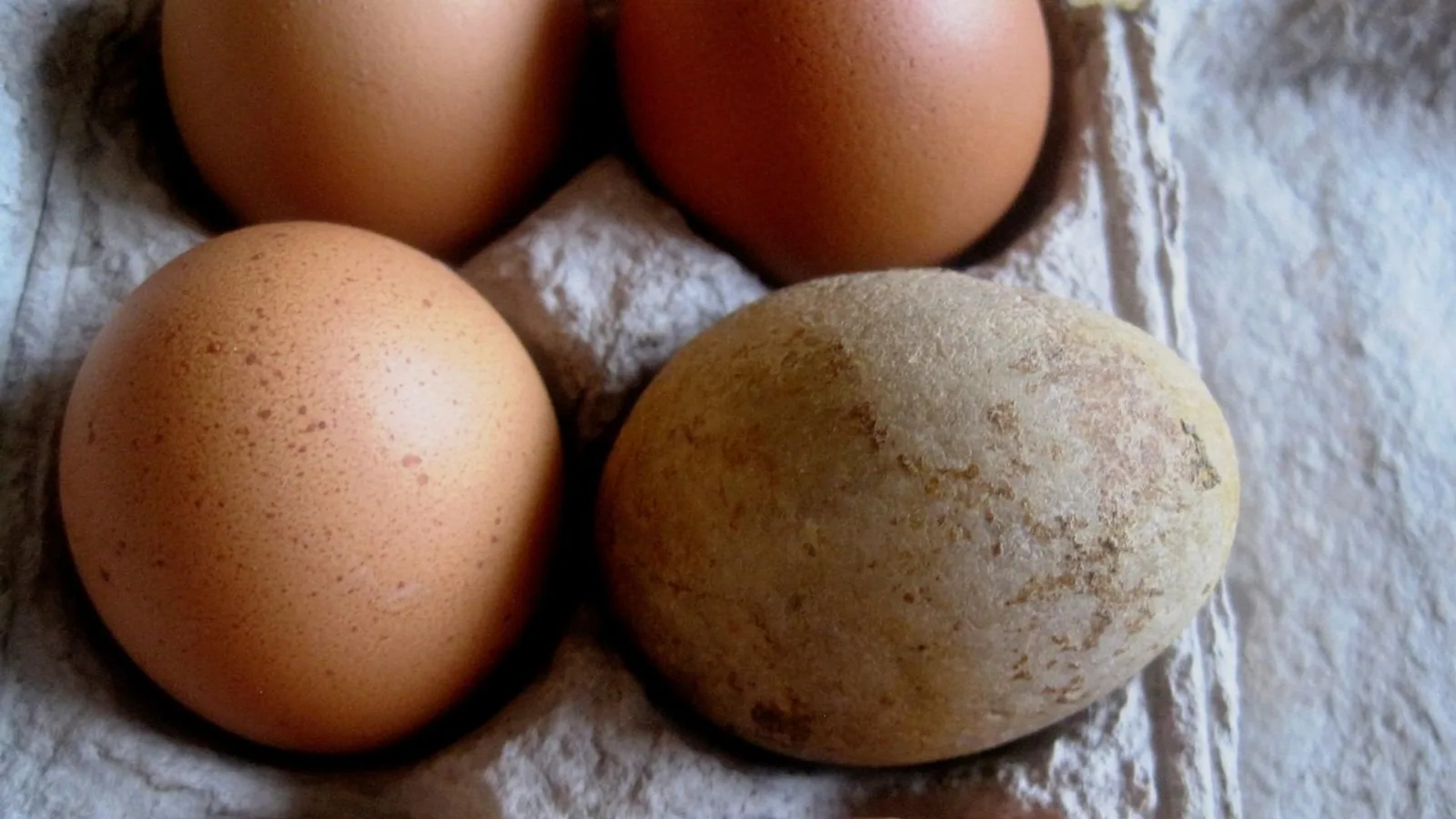
The single most useful thing you can do with a questionable egg is to lower it into a bowl of water. A fresh egg sinks and lies flat on the bottom. An older egg tilts upward or stands on one end. A spoiled egg floats. That float test is the fastest screen available in a home kitchen, and it works because of one physical change inside the shell: the air cell grows as the egg ages and loses moisture.
The float test tells you about age, not safety. This distinction matters more than any other point in this article. An egg can float and still be free of pathogens, and an egg can sink and still carry Salmonella on its shell or in its contents. The four tests below, used together, give you a practical picture of freshness. None of them is a microbiological assay. When the results conflict, or when the shell is cracked or visibly dirty, the safe decision is to discard the egg.
The four checks, in the order that makes sense for a home kitchen, are the float test, candling, the smell test after cracking, and visual inspection of the yolk and white. Each one probes a different physical or biological change that happens during storage.
The Four Safe Tests at a Glance
| Test | What it measures | Fresh result | Use with caution | Discard |
|---|---|---|---|---|
| Float test | Air cell size, which grows with age | Sinks and lies flat | Tilts or stands upright on one end | Floats at the surface |
| Candling | Air cell size and yolk shadow | Small air cell, faint yolk shadow | Enlarged air cell, yolk shadow more visible | Very large air cell, dark or cloudy interior, visible cracks |
| Smell after cracking | Volatile spoilage compounds | No off odor, mild and clean | Faint sulfur or musty note | Rot, sulfur, or any putrid odor |
| Visual inspection | Yolk and white structure | Firm round yolk, thick white | Flattened yolk, thinner white | Runny or discolored yolk, watery or discolored white, blood or greenish tint |
Use this table as a summary. The sections below explain the mechanism behind each result so you can interpret borderline cases.
Test 1: The Float Test
How the Float Test Works
An eggshell is porous. Over time, moisture and carbon dioxide escape through the shell, and the two membranes that line the inside of the shell separate at the wide end. That separation creates the air cell. A newly laid egg has a tiny air cell. As weeks pass, the air cell enlarges, and the egg becomes more buoyant in water.
The float test reads that buoyancy directly. A fresh egg is denser than water and sinks. An older egg with a larger air cell tilts or stands upright. An egg with a very large air cell floats. This is a physical measurement of age, and it is the reason the float test is sometimes called the air cell test.
What Each Result Means
A fresh egg sinks and rests flat. This is the expected result for an egg stored under good conditions for a short time.
An egg that tilts upward or stands on one end is older. The air cell has enlarged enough to change the egg's center of buoyancy. These eggs are usually still usable if the other three tests are clean, but they should be used soon and cooked thoroughly.
An egg that floats should be discarded. A floating egg has a large air cell and has lost substantial moisture. It is also more likely to have compromised internal membranes, which raises the chance that bacteria have crossed from the shell surface into the egg contents. The float test does not prove the egg is contaminated, but a floating egg is the clearest single signal to throw it out.
Why the Float Test Is Not a Safety Test
The float test measures age. It does not measure bacterial load. Salmonella can be present on the shell surface or inside an egg that still sinks. Storage temperature drives bacterial survival far more than age alone. One study on table eggs found that temperature played a major role in bacterial survival on egg surfaces, with the lowest microbial loads recorded at 4 degrees Celsius, while storage at higher temperatures allowed more bacterial growth [1]. A cold, fresh-looking egg can still carry pathogens, and a floating egg is not automatically dangerous in a microbiological sense. The float test is a freshness screen, and the discard rule for floating eggs is a precaution, not a diagnosis.
Practical Notes on the Float Test
Use water at room temperature. Cold water can create condensation and a false sense of security, and hot water is unnecessary. Lower the egg gently with a spoon rather than dropping it, because a cracked shell from a hard drop changes the risk profile entirely. Do not float-test an egg that you already know is cracked. A cracked egg should be discarded regardless of what the float test shows.
Test 2: Candling
How Candling Works
Candling means holding the egg against a bright light in a darkened room. Traditionally this was done with a candle, which is where the name comes from. A strong flashlight or a phone flashlight works well. The light passes through the shell and illuminates the interior, letting you see the air cell and the shadow of the yolk.
Candling is a standard freshness assessment method. A review of egg storage deterioration describes methods for assessing egg freshness that include both traditional destructive testing and advanced photoelectric nondestructive techniques [2]. Candling sits in the traditional, non-destructive category. It does not break the egg, so you can candle first and then decide whether to crack it.
What to Look For
The air cell is the most useful feature. Hold the egg with the wide end up and look for the boundary between the air space and the rest of the interior. A fresh egg has a small, well-defined air cell at the wide end. As the egg ages, the air cell grows and its boundary becomes less crisp.
The yolk shadow is the second feature. In a fresh egg, the yolk is a faint, centered shadow because the thick white holds it in place. In an older egg, the yolk shadow appears darker and larger, and it may drift off center as the white thins.
Cloudiness and cracks are the third feature. A fresh egg white is slightly cloudy because of carbon dioxide dissolved in the albumen. As the egg ages, carbon dioxide escapes and the white becomes clearer. A very clear interior in an egg that has also been stored a long time is not a good sign. Look for hairline cracks in the shell as you candle. A crack that you cannot see in normal light often shows up against a bright backlight.
Interpreting Candling Results
A small air cell with a faint, centered yolk shadow indicates a fresh egg. An enlarged air cell with a more visible yolk shadow indicates an older egg that is still likely usable if the smell and visual checks are clean. A very large air cell, a dark or cloudy interior, or a visible crack means discard.
Candling is more informative than the float test because it shows you the air cell directly and lets you inspect the shell for damage. It is also more subjective. Air cell size is a continuum, and two people looking at the same egg may disagree about whether the cell is "enlarged" or "very large." Use candling alongside the float test rather than instead of it.
The Biology Behind the Changes You See
The changes candling reveals are the visible result of biochemical deterioration. A review of egg storage deterioration describes reduced glycosylation, structural decay, and degradation of ovomucin during egg white thinning, along with weakening of the interactions between lysozyme and ovomucin [2]. Those protein changes are what turn a thick, gel-like white into a thin, watery one. The same review describes degradation and structural transformation of ovalbumin and discusses how solubility and viscosity theory applies to egg white thinning [2]. In the yolk, the review describes hydrolysis of glycerophospholipids and glycerolipids and auto-oxidation of fatty acids [2]. You do not need to know these pathways to candle an egg, but they explain why the yolk shadow changes and why the white gets runny. The physical signs are downstream of real molecular changes.
Test 3: The Smell Test After Cracking
Why Smell Is a Strong Signal
Cracking an egg releases volatile compounds. A fresh egg has almost no odor, or a very mild one. A spoiled egg releases hydrogen sulfide and other volatile spoilage products, which produce the characteristic rotten egg smell. This is the most direct sensory test available because it detects the end products of microbial and enzymatic breakdown.
Smell is a late indicator. By the time an egg smells clearly bad, spoilage is advanced. That makes smell a reliable discard signal but a poor early-warning test. Use it after the float test and candling have already given you a freshness estimate.
How to Do the Smell Test Properly
Crack the egg into a clean, separate bowl rather than directly into a pan or into a mixture with other ingredients. This is the single most important practical step. If you crack a bad egg into a bowl of batter, you contaminate the whole batch. If you crack it into its own bowl, you can discard it and rinse the bowl.
Bring the bowl close to your nose and take a normal breath. Do not inhale deeply over a suspect egg. A clean egg smells faintly of nothing much, or has a mild mineral note. A faint sulfur smell can appear in eggs that are simply older, and it is not automatically a sign of spoilage. A strong sulfur smell, a musty smell, or any putrid or rotting odor means discard.
What Smell Does Not Detect
Smell does not detect Salmonella. Salmonella infection in an egg does not produce a distinctive odor. An egg contaminated with Salmonella can smell completely normal. This is why the smell test cannot be your only test, and why cooking eggs thoroughly matters even when an egg passes every check. The same limitation applies to other pathogens. A study of psychrotrophic Bacillus cereus group bacteria in the egg product industry distinguished isolates that represented a food safety risk from those that represented a spoilage risk, and noted that specific genetic markers and growth characteristics were needed to tell them apart [3]. You cannot make that distinction with your nose.
Test 4: Visual Inspection of the Yolk and White
What a Fresh Egg Looks Like When Cracked
A fresh egg has a round, firm yolk that sits up high. The white around it is thick and holds its shape, with a distinct inner layer of thick albumen surrounding the yolk and a thinner outer layer. The whole thing looks compact.
An older egg has a flatter yolk and a thinner white that spreads out across the bowl. The yolk membrane weakens with age, so the yolk flattens more easily. The white thins because of the protein changes described above [2].
What to Look For and What It Means
A firm, round yolk with thick white indicates a fresh egg. A flattened yolk with thinner white indicates an older egg that is likely still usable if it passes the other tests. A yolk that breaks immediately on cracking, or a white that is watery and spreads widely, indicates an old egg that should be used with caution or discarded depending on the other results.
Color changes are a separate category. A pinkish, greenish, or iridescent sheen on the yolk or white is a sign of microbial spoilage and means discard. Blood spots and meat spots are different. Small blood spots are a normal occurrence in some eggs and are not a sign of spoilage, but they are also not a sign of freshness. If you are uncertain about a spot, discard the egg.
The Yolk Index and Albumen Index
Food science uses two measurements to quantify what you see in the bowl. The yolk index compares yolk height to yolk width. The albumen index compares thick albumen height to albumen width. A study on eggshell microorganisms and egg quality found that yolk index, albumen index, and Haugh unit values all decreased during storage [4]. The Haugh unit is a related measure that combines egg weight and albumen height. You will not calculate these at home, but they confirm that the flattening you see is a real, measurable change, not an illusion.
Why Shell Surface Contamination Matters
The shell surface carries microorganisms that can contribute to spoilage and can infect the egg [4]. A study that isolated microorganisms from eggshells identified seven species, including Bacillus drentensis and several Staphylococcus species, and found that a biological fumigation treatment reduced microbial numbers on the shell surface during a 14-day storage period [4]. The practical takeaway is that shell hygiene matters. A dirty shell is a shell with a higher microbial load, and that load can cross into the egg if the shell is compromised. This is one reason a dirty egg should be discarded rather than washed and used.
The Decision Sequence: Putting the Four Tests Together
Work through the tests in order. Each one is cheap and fast, and each one can end the process.
- Look at the shell before you do anything else. If it is cracked or visibly dirty, discard the egg. Do not proceed to the other tests.
- Float the egg in room-temperature water. If it floats, discard it. If it sinks flat, it is fresh. If it tilts or stands, note that it is older and continue.
- Candle the egg against a bright light. Check the air cell size, the yolk shadow, and the shell for hairline cracks. If the air cell is very large or you see a crack, discard it.
- Crack the egg into a separate bowl. Smell it. If there is a strong sulfur, musty, or putrid odor, discard it.
- Inspect the yolk and white. If the yolk is runny or discolored, or the white is watery or discolored, discard it. If the yolk is flattened and the white is thin but clean, use it soon and cook it thoroughly.
A short decision path for the whole process looks like this.
flowchart TD
    A[Inspect shell] --> B{Cracked or dirty}
    B -->|Yes| C[Discard]
    B -->|No| D[Float test]
    D --> E{Floats}
    E -->|Yes| C
    E -->|No| F[Candle egg]
    F --> G{Large air cell or crack}
    G -->|Yes| C
    G -->|No| H[Crack and smell]
    H --> I{Off odor}
    I -->|Yes| C
    I -->|No| J[Inspect yolk and white]
    J --> K{Runny or discolored}
    K -->|Yes| C
    K -->|No| L[Use soon and cook thoroughly]
Storage, Refrigeration, and the Timeline of Freshness
How Long Eggs Stay Good
Refrigerated eggs typically stay at usable quality for about three to five weeks from the date of purchase, assuming they were refrigerated from the start and handled properly. The exact window depends on how the eggs were stored before you bought them, how consistent your refrigerator temperature is, and whether the shells are intact.
The three-to-five-week figure is a practical guideline, not a hard cutoff. An egg at the end of that window may still pass all four tests and be perfectly usable. An egg at the start of that window can fail if it was temperature-abused in transit or stored in a warm pantry.
Why Refrigeration Matters
Temperature is the dominant variable in bacterial survival on eggs. A study on modified-atmosphere packaging of table eggs found that temperature played a major role, more than gas composition, in influencing bacterial survival, with the lowest microbial loads for E. coli and spoilage bacteria recorded at 4 degrees Celsius [1]. That study also found that 100 percent carbon dioxide packaging combined with low storage temperature had a positive effect on reducing Salmonella loads [1]. You cannot replicate modified-atmosphere packaging at home, but you can replicate the temperature part. Keep eggs refrigerated at or near 4 degrees Celsius (about 39 degrees Fahrenheit).
The Cuticle and Why You Should Not Wash Eggs
The eggshell has a thin outer coating called the cuticle. A review of egg storage deterioration describes cuticle thinning and the impact of preservation strategies on cuticle quality [2]. The cuticle is a barrier. Washing an egg can damage or remove it, which opens the shell pores to microbial entry. Commercial egg washing is done under controlled conditions with temperature and sanitizer management that a home kitchen cannot match. For home use, do not wash eggs before storage. If an egg is visibly dirty, discard it rather than washing it.
Spoilage Organisms You Should Know About
Egg spoilage is driven by specific organisms. Psychrotrophic bacteria can grow at refrigeration temperatures, which is why cold storage slows spoilage but does not stop it. A study of psychrotrophic lactic acid bacteria in Belgium found strictly psychrotrophic LAB associated with spoilage in packaged and chilled food products, including egg products, and noted that these organisms are often missed by mesophilic enumeration methods because of their cold-adapted character [5]. The practical implication is that refrigeration extends shelf life but does not make an egg immortal. The clock keeps running, just more slowly.
Bacillus cereus group bacteria are another concern in egg products. A study of psychrotrophic B. cereus group isolates from pasteurized liquid whole egg products found that the collection split into two groups, one representing a safety risk and the other a spoilage risk, and identified genetic markers and growth characteristics that distinguished them [3]. This is a food-industry concern more than a home-kitchen one, but it reinforces the point that spoilage and safety are separate axes.
Salmonella and the Cracked or Dirty Egg Rule
Why Cracked Eggs Are Discarded
A crack in the shell breaks the physical barrier between the outside and the inside of the egg. Bacteria on the shell surface, including Salmonella, can move through the crack into the egg contents. A cracked egg is not a freshness question. It is a contamination question, and the answer is discard.
The same logic applies to a dirty egg. A dirty shell carries a higher microbial load [4]. If the shell is intact, that load is mostly on the outside. If the shell is compromised, or if you wash it and damage the cuticle, the load can reach the inside. Discard dirty eggs.
Why Salmonella Risk Does Not Show Up in the Four Tests
None of the four tests detects Salmonella. A Salmonella-contaminated egg can sink in water, candle with a small air cell, smell clean when cracked, and show a firm round yolk with thick white. That is the central limitation of every home freshness test. The tests measure age and spoilage. They do not measure pathogen presence.
This is why cooking eggs thoroughly matters. Heat kills Salmonella. The four tests help you avoid spoiled eggs, and thorough cooking addresses the pathogen risk that the tests cannot see.
Pathogen Survival and Temperature
The temperature findings from the table egg study apply here as well. The lowest microbial loads for E. coli and spoilage bacteria were recorded at 4 degrees Celsius, and 100 percent carbon dioxide packaging with low temperature reduced Salmonella loads [1]. Cold storage is your main defense at home. Keep eggs cold, keep them dry, and keep them in their carton.
Common Mistakes in Egg Freshness Testing
Cracking Eggs Directly Into the Pan
This is the most consequential mistake. A bad egg cracked into a pan of other food contaminates the whole dish. Always crack into a separate bowl first. The extra bowl is a small cost for a large reduction in risk.
Treating the Float Test as a Safety Test
The float test measures air cell size, which reflects age and moisture loss. It does not measure bacterial contamination. A floating egg should be discarded as a precaution, but a sinking egg is not certified safe. Use all four tests.
Washing Eggs Before Storage
Washing damages the cuticle [2]. Store eggs unwashed and discard dirty ones.
Assuming Refrigeration Stops Spoilage
Refrigeration slows spoilage. It does not stop it. Psychrotrophic organisms grow at cold temperatures [5]. The three-to-five-week window reflects this reality.
Relying on the Sell-By Date Alone
The sell-by date is a retail rotation tool, not a freshness guarantee. It assumes proper storage from packing to purchase. If the eggs sat in a warm car or a power outage hit your refrigerator, the date is meaningless. Use the four tests.
Ignoring the Shell
The shell is the first thing to check and the easiest thing to overlook. A cracked or dirty shell ends the process. Discard the egg.
Prevention: Storing Eggs So They Stay Good Longer
Buy and Store Cold
Buy eggs from a refrigerated case and get them into your refrigerator promptly. Temperature is the dominant factor in bacterial survival on eggs [1]. A consistent 4 degrees Celsius is the target.
Keep Eggs in the Carton
The carton protects eggs from physical damage and from absorbing odors from other foods. Keep eggs in the main body of the refrigerator rather than in the door, where temperature fluctuates more.
Do Not Wash Before Storage
Leave the cuticle intact [2]. If an egg is dirty, discard it.
Use the Oldest Eggs First
If you keep eggs in the carton, rotate them so the oldest eggs are used first. This is the same first-in, first-out principle that commercial operations use.
Cook Eggs Thoroughly
Thorough cooking kills Salmonella. This is the backstop for the pathogen risk that the four tests cannot detect.
Handle Eggs With Clean Hands and Clean Equipment
Shell surface microorganisms can contribute to spoilage and can infect the egg [4]. Clean hands, clean bowls, and clean utensils reduce the chance of transferring contamination from the shell to the contents.
Limitations and When to Contact a Veterinarian
This article is educational and is not a substitute for veterinary diagnosis or treatment.
The four tests described here are home freshness assessments. They do not detect Salmonella or other pathogens, and they cannot certify an egg as safe. A sinking, clean-smelling, well-formed egg can still carry bacteria.
Contact a veterinarian if a pet has eaten a raw egg or raw egg product and develops vomiting, diarrhea, lethargy, fever, or abdominal pain. Contact a veterinarian if a pet has eaten a spoiled or floating egg. Contact a veterinarian if a pet has eaten a cracked or dirty egg and shows any gastrointestinal signs. Contact a veterinarian if a pet has access to a compost pile or trash containing discarded eggs. Contact a veterinarian if you are unsure whether an egg your pet ate was safe. Contact a veterinarian promptly if a pet that ate raw or undercooked eggs is very young, very old, pregnant, or immunocompromised, because these animals are at higher risk from foodborne infection.
Do not induce vomiting unless a veterinarian instructs you to do so. Bring the egg carton or a photo of it if you can, and note the time the pet ate the egg.
Frequently Asked Questions
Does a floating egg always mean the egg is spoiled?
No. A floating egg has a large air cell, which means it is old and has lost substantial moisture. It should be discarded as a precaution, but floating reflects age and air cell size rather than proven spoilage. The discard rule exists because an old egg with a large air cell is more likely to have compromised membranes.
Can a fresh egg that sinks still carry Salmonella?
Yes. Salmonella does not produce a distinctive odor and does not change the float test result, the candling appearance, or the look of the yolk and white. A sinking, clean-smelling egg can still carry the bacteria. Thorough cooking is the reliable control.
How long are eggs good in the refrigerator?
About three to five weeks from purchase when stored consistently at refrigeration temperature. The window depends on how the eggs were handled before purchase and how stable your refrigerator temperature is. Use the four tests near the end of that window.
Why should I discard a cracked egg instead of cooking it?
A crack breaks the barrier between the shell surface and the egg contents. Bacteria on the shell, including Salmonella, can move through the crack. Cooking would kill the bacteria, but the risk of cross-contamination during handling and the uncertainty about how long the crack has been present make discard the safer choice.
What does a bad egg smell like?
A spoiled egg smells of hydrogen sulfide, which is the rotten egg odor. It can also smell musty or putrid. A faint sulfur note in an older egg is not automatically spoilage, but a strong sulfur smell or any rotting odor means discard.
Is candling more accurate than the float test?
Candling gives you more information because you see the air cell directly and can check for hairline cracks. It is also more subjective, since air cell size is a continuum. Use candling alongside the float test rather than instead of it.
Should I wash eggs before storing them?
No. Washing damages the cuticle, the thin outer coating that helps block microbial entry. Store eggs unwashed and discard dirty eggs rather than washing them.
Can I use an egg that tilts in water but does not float?
Often yes, if it passes the other three tests. A tilting egg is older, not necessarily spoiled. Use it soon and cook it thoroughly. If it also has a large air cell on candling, an off odor, or a runny yolk, discard it.
Related Articles
- How Much Does a Vet Urinalysis Cost? What the Test Tells You
- Fecal Egg Count Reduction Test for Anthelmintic Resistance
- Dog and Cat DNA Tests: What They Actually Tell You
- Blood Tests for Dog Anxiety: What They Can and Can't Tell You
- Vegetables Good For Dogs
- Dog Limping Front Leg But Still Running
- How Long Do Fresh Eggs Last in the Fridge?
- ISA Brown Chicken: Breed Traits and Egg Yield
Further Reading
Sources
- Modified-atmosphere packaging of hen table eggs: effects on pathogen and spoilage bacteria.
- Storage deterioration and detection of egg multi-scale structure: A review.
- Global overview of the risk linked to the Bacillus cereus group in the egg product industry: identification of food safety and food spoilage markers.
- Evaluation of Muscodor cinnamomi as an egg biofumigant for the reduction of microorganisms on eggshell surfaces and its effect on egg quality.
- Psychrotrophic lactic acid bacteria associated with production batch recalls and sporadic cases of early spoilage in Belgium between 2010 and 2014.