Cats in Heatwaves: Heat Safety and Cooling Tips
By Dr. Zubair Khalid, DVM, MS, PhD ·
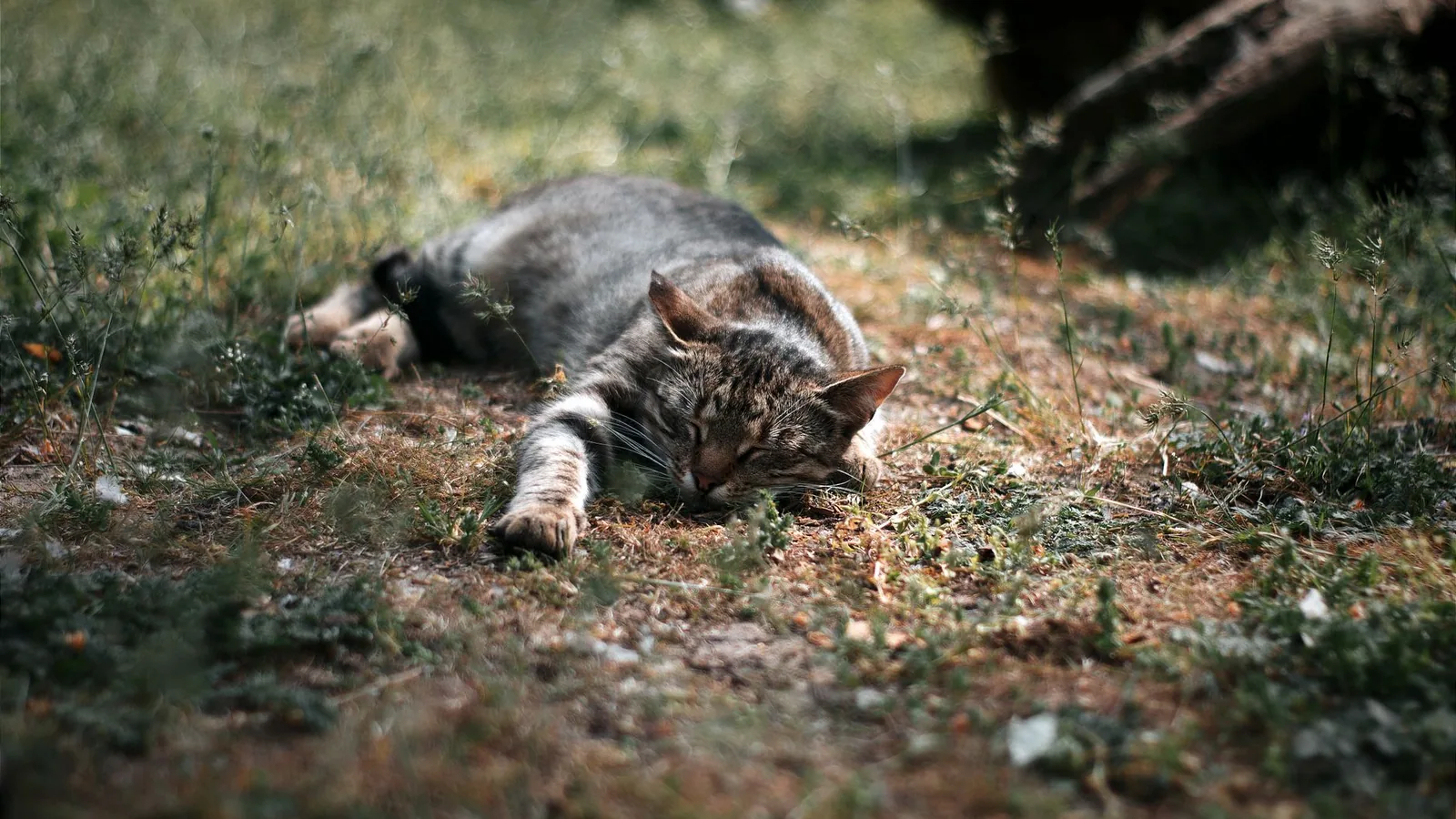
Cats evolved in hot climates, but that does not make them heatproof. A cat's cooling system depends on evaporation, and evaporation fails when humidity climbs or water runs short. In a heatwave, a healthy cat can move from uncomfortable to critically overheated in a matter of hours. Heatstroke in cats is a life-threatening emergency, and the speed of cooling is the single biggest factor in survival [1].
Every year, emergency veterinarians treat cats that collapsed at home during hot weather. Many of those emergencies are preventable. This guide answers the questions cat owners ask when temperatures spike. It explains why heat is dangerous for cats, which temperature and humidity combinations push cats into the danger zone, how to recognize heat stress before it becomes heatstroke, and which cooling steps actually work. The advice is grounded in published veterinary research on feline thermoregulation and in documented cases of feline heatstroke. If you remember only one thing, remember this: cats in heatwaves need water, shade, airflow, and a fast response when things go wrong.
At a Glance: Heat Emergency Checklist
| Step | Action | Why It Matters |
|---|---|---|
| 1 | Move the cat to shade or air conditioning | Stops further heat gain |
| 2 | Offer cool, fresh water | Hydration keeps the cooling system working [2] |
| 3 | Start active cooling with cool water and airflow | Rapid cooling is the treatment that saves lives [1] |
| 4 | Check rectal temperature every 10 minutes | Tells you whether cooling is working |
| 5 | Call a veterinarian if the temperature stays high or the cat is unstable | Heatstroke causes organ damage that requires hospital care [3] |
Why Heat Is Dangerous for Cats
Cats Cool Differently Than Humans
Humans sweat across the whole body. Cats have a much smaller toolkit. They lose heat through evaporation from the respiratory tract, through saliva spread on the fur, and through limited sweat glands in the paw pads. The feline nose is a dedicated cooling surface. Blood bound for the brain passes through a network of vessels called the carotid rete, where it gives up heat to the nasal mucosa before reaching the brain [4]. In a cool room at 25°C (77°F), blood flowing to the brain is measurably cooler than blood in the body core, and shifts in nasal temperature track changes in brain temperature [4]. Anything that blocks nasal heat loss, such as high humidity or dehydration, directly threatens brain cooling.
Cats do increase respiratory rate and evaporative water loss as temperatures rise [2], but their cooling capacity is limited. Panting in a cat is less efficient than in a dog, and the evaporative system depends on a steady supply of water. When the air is humid, evaporation slows. When the cat is dehydrated, the cooling system loses its fuel. Both situations push a cat toward heatstroke faster than most owners expect. The practical consequence is that a cat's comfort zone is narrower than a human's. A room that feels fine to a person can already be forcing a cat's cooling system to work at full capacity.
Heat Redirects Blood Flow Away From Organs
When a cat faces extreme heat, the body makes a trade. Blood flow measurements in cats exposed to 50°C (122°F) showed that skin blood vessels open wide while blood vessels to the small intestine and skeletal muscles constrict [5]. The body sends blood to the skin to shed heat and pulls it away from the gut and muscles. This protective shift has a cost. Reduced intestinal blood flow can damage the gut lining, and that damage is part of why severe heatstroke in cats triggers a systemic inflammatory response [1]. The same mechanism helps explain the gastrointestinal signs seen in feline heatstroke cases [3].
Dehydration Breaks the Cooling System
Evaporative cooling requires water. In experiments where cats were dehydrated for four days, evaporative water loss dropped to about half of normal at ambient temperatures of 35°C and 38°C (95°F and 100.4°F) [2]. The drop tracked closely with a fall in respiratory rate, meaning dehydrated cats panted less. Their body core temperatures then ran significantly higher at 38°C, 40°C, and 43°C (100.4°F, 104°F, and 109.4°F) [2].
The control center for this effect is blood salt concentration. Infusing a concentrated salt solution into hydrated cats at 38°C (100.4°F) reduced evaporative heat loss and raised body temperature [6]. Infusing water into dehydrated cats did the opposite: evaporative heat loss rose and body temperature fell [6]. The practical message is direct. A cat that cannot drink, or will not drink, loses its main defense against heat.
Cats in Heatwaves: What Counts as Dangerous Heat
Temperature and Humidity Together
Thermometer readings alone do not tell the full story. Researchers studying heat stress in domestic cats used a temperature-humidity index to define danger thresholds [7]. In their study, an ambient temperature of 28.5°C (83.3°F) with 54% relative humidity marked the upper edge of moderate thermal stress. A similar day at 27.9°C (82.2°F) with 66% humidity was equally stressful. When relative humidity approached 90%, severe thermal stress occurred at temperatures as low as 26.6°C (79.9°F) [7].
For a cat owner, the rule is simple. Humid heat is more dangerous than dry heat at the same temperature, and ordinary summer days in humid regions can push cats into the stress zone. The same study found that warm environments measurably reduced sperm quality in tomcats, with sperm concentration and total count the most affected parameters [7]. That finding shows that thermal stress changes internal physiology well before a cat looks visibly ill.
What a Normal Cat Temperature Looks Like
A cat's normal rectal temperature sits near 38.1°C to 39.2°C (100.6°F to 102.6°F). In a study of cats recovering from anesthesia, temperatures above 39.2°C (102.6°F) were classified as hyperthermia [8]. Heatstroke is far beyond that. In one reported case of severe feline heatstroke, the presenting temperature was 43.0°C (109.4°F) [1]. At that level, cellular proteins denature, circulation fails, and seizures can begin.
Recognizing Heat Stress and Heatstroke
Early Signs
The first measurable response to heat in cats is an increase in respiratory rate and evaporative water loss [2]. Panting in a cat is a warning sign, because cats use this cooling mechanism less efficiently than dogs. When panting becomes visible, the cooling system is already working hard. Owners should treat any visible panting as the first warning and start cooling measures immediately.
Emergency Signs
The signs below come from confirmed cases of feline heatstroke reported in the veterinary literature:
- Body temperature above the hyperthermia threshold that keeps climbing [8]
- Severe hyperthermia, with one case presenting at a life-threatening level [1]
- Circulatory shock, including pale gums, weak pulse, and collapse [1]
- Oral hemorrhage or bleeding from the mouth [1]
- Generalized seizures [1]
- Neurological dysfunction and altered mentation [3]
- Corneal and mucosal ulceration [3]
- Rhabdomyolysis, which appears as muscle damage and dark urine
- With longer heat exposure: coagulopathy, acute liver injury, acute kidney injury, cardiac dysfunction, and gastrointestinal signs [3]
If a cat shows any of these, cooling must start immediately and a veterinarian must be contacted.
Step-by-Step Cooling Protocol
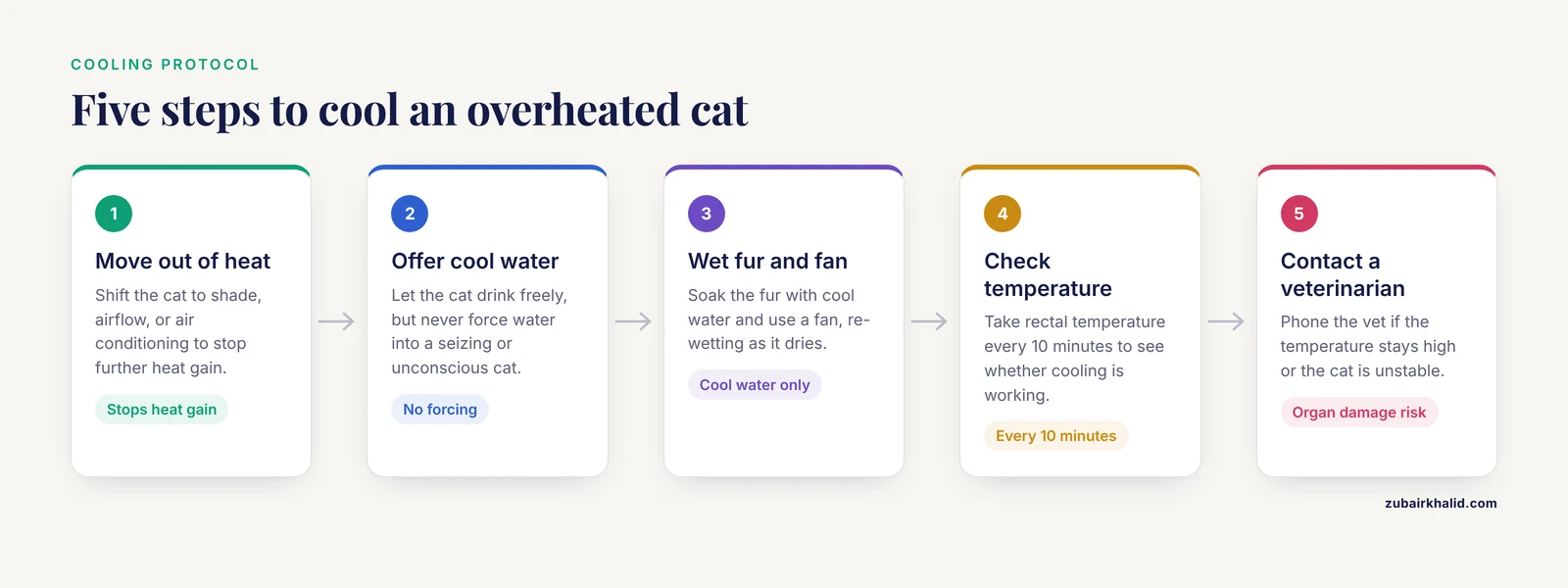
Step 1: Remove the Cat From the Heat Source
Move the cat to a cool, shaded, ventilated area or into air conditioning. If the heat source is a clothes dryer or a closed car, remove the cat and check for trauma as well as heat injury. In one case series, cats entrapped in dryers had both heat injury and physical trauma [3]. In another, a cat that spent about 20 minutes in an operating dryer presented with severe hyperthermia, shock, oral hemorrhage, and seizures [1].
Step 2: Offer Water, But Do Not Force It
Dehydration suppresses evaporative cooling [2]. Offer cool, fresh water. Do not force water into the mouth of a cat that is seizing, unconscious, or unable to swallow. The osmolality research shows that restoring body water rapidly restores the evaporative cooling response [6].
Step 3: Start Active Cooling
The treatment that saved cats in published heatstroke cases was rapid active cooling combined with aggressive fluid support [1]. Practical active cooling includes wetting the cat's fur with cool water, using a fan to increase airflow over the wet fur, and placing the cat on a cool surface. Wet the fur thoroughly rather than just misting the surface. The water that evaporates from the fur carries heat away, and airflow speeds that process. Re-wet the fur as it dries.
Why not ice water? Heat loss depends on blood flow to the skin [5]. Extreme cold constricts skin blood vessels and traps heat in the core. Cool water and airflow preserve skin blood flow while evaporation does the work.
Step 4: Monitor Temperature
Check rectal temperature every 10 minutes during cooling so you know whether the cooling is working. A temperature that keeps climbing despite cooling is a sign that the cat needs hospital care. Stop active cooling once the temperature returns to the normal range, then keep the cat in a cool room and watch for relapse.
Step 5: Call a Veterinarian
Any cat with a temperature above the hyperthermia threshold that does not drop quickly, or any cat showing neurologic signs, shock, or bleeding, needs veterinary care immediately [1], [3]. Heatstroke in cats triggers a systemic inflammatory response that can continue for days after the temperature normalizes [1]. The cats that survived in published cases received intensive hospital care, including intravenous fluids and monitoring [1],.
Cooling Equipment and Home Setup
Water Stations
Because dehydration is the main preventable amplifier of heat stress [2], water availability is the foundation of heat safety. Place multiple water bowls in cool, shaded areas around the home. Cats drink more when water is fresh, cool, and easy to reach, so refill bowls twice a day during a heatwave.
Airflow and Ventilation
Cats depend on evaporation to shed heat, and evaporation depends on air movement [2]. Fans and open windows support that process. Air conditioning is the most effective tool because it cools and dehumidifies at the same time.
Humidity Control
The temperature-humidity research is clear that humidity is a major driver of thermal stress in cats [7]. Air conditioning removes humidity as it cools. If air conditioning is not available, a dehumidifier can reduce the strain on a cat's cooling system.
Check Enclosed Spaces
Two published case reports document feline heatstroke from clothes dryer entrapment [1], [3]. Cats seek warm, enclosed spaces, and a dryer drum or a parked car can reach lethal temperatures quickly. Check appliances before turning them on, keep laundry room doors closed, and never leave a cat in a parked car.
Travel and Outdoor Safety
Enclosed Spaces Are the Danger
The common thread in the published feline heatstroke cases is an enclosed space that traps heat [1],. A parked car behaves the same way. Even on a mild day, the interior of a closed car heats rapidly. If a cat must travel in warm weather, keep the trip short, keep the car ventilated, and never leave the cat alone in the vehicle. Plan car travel for the coolest part of the day, such as early morning or late evening.
Heat Changes Behavior
Hot weather also changes how cats interact with people. A study of more than 24,000 mammalian-related injuries in a subtropical city found that injury risk rose on hot days, with the highest risk at 27.4°C (81.3°F) compared with cooler reference days [9]. Cats and dogs caused about 90% of those injuries [9]. A cat that is already stressed by heat is more likely to bite or scratch when handled. Use a towel or carrier to handle a distressed cat, and protect yourself so you can still help the cat.
Special Risk Groups
Dehydrated Cats
Dehydration is the clearest risk factor in the research. Dehydrated cats show reduced evaporative water loss, reduced respiratory rate, and higher core temperatures in heat [2]. Any cat that is not drinking normally is at higher risk during a heatwave.
Cats Recovering From Anesthesia or Illness
Cats can run temperatures above the hyperthermia threshold even without a heatwave, for example after anesthesia [8]. A cat that is recovering from illness, surgery, or sedation has less reserve for handling environmental heat. Keep recently sedated or ill cats in a cool, quiet room and monitor their temperature.
Breeding Males
The heat stress research in tomcats found that warm environments reduced sperm quality, with effects appearing at moderate temperatures when humidity was high [7]. Breeders should keep stud cats in climate-controlled spaces during heatwaves to protect fertility.
Common Mistakes and Troubleshooting
Waiting for Obvious Signs
Cats hide illness. The research shows that thermal stress changes internal physiology, including sperm production, at temperatures that look like a normal summer day [7]. By the time a cat shows dramatic signs like seizures, the body temperature is already at a life-threatening level [1]. Act on the conditions, not on the cat's appearance.
Using Ice Water
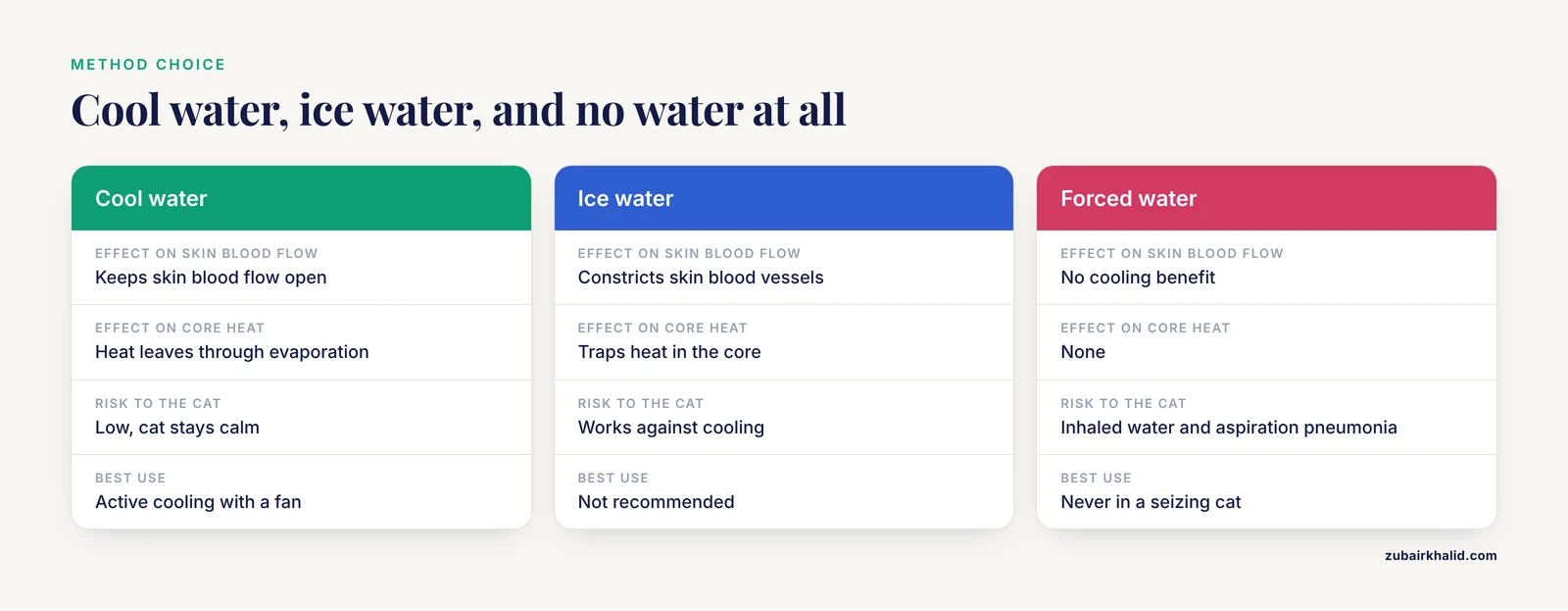
Ice water feels logical but can work against the cooling process. Heat loss depends on blood reaching the skin [5], and extreme cold reduces skin blood flow. Use cool water and airflow instead.
Forcing Water Into a Seizing Cat
A cat that is seizing or unconscious cannot swallow safely. The emergency cases show that seizures and shock are part of severe heatstroke [1]. Focus on cooling and on getting to a veterinarian.
Assuming Indoor Cats Are Safe
The reported feline heatstroke cases happened inside homes, in clothes dryers [1],. Indoor cats face heatstroke risk from household appliances and from homes without air conditioning during heatwaves. Indoor cats need the same water, shade, and ventilation as outdoor cats.
Limitations and When to Contact a Veterinarian
This article is educational and is not a substitute for veterinary diagnosis or treatment.
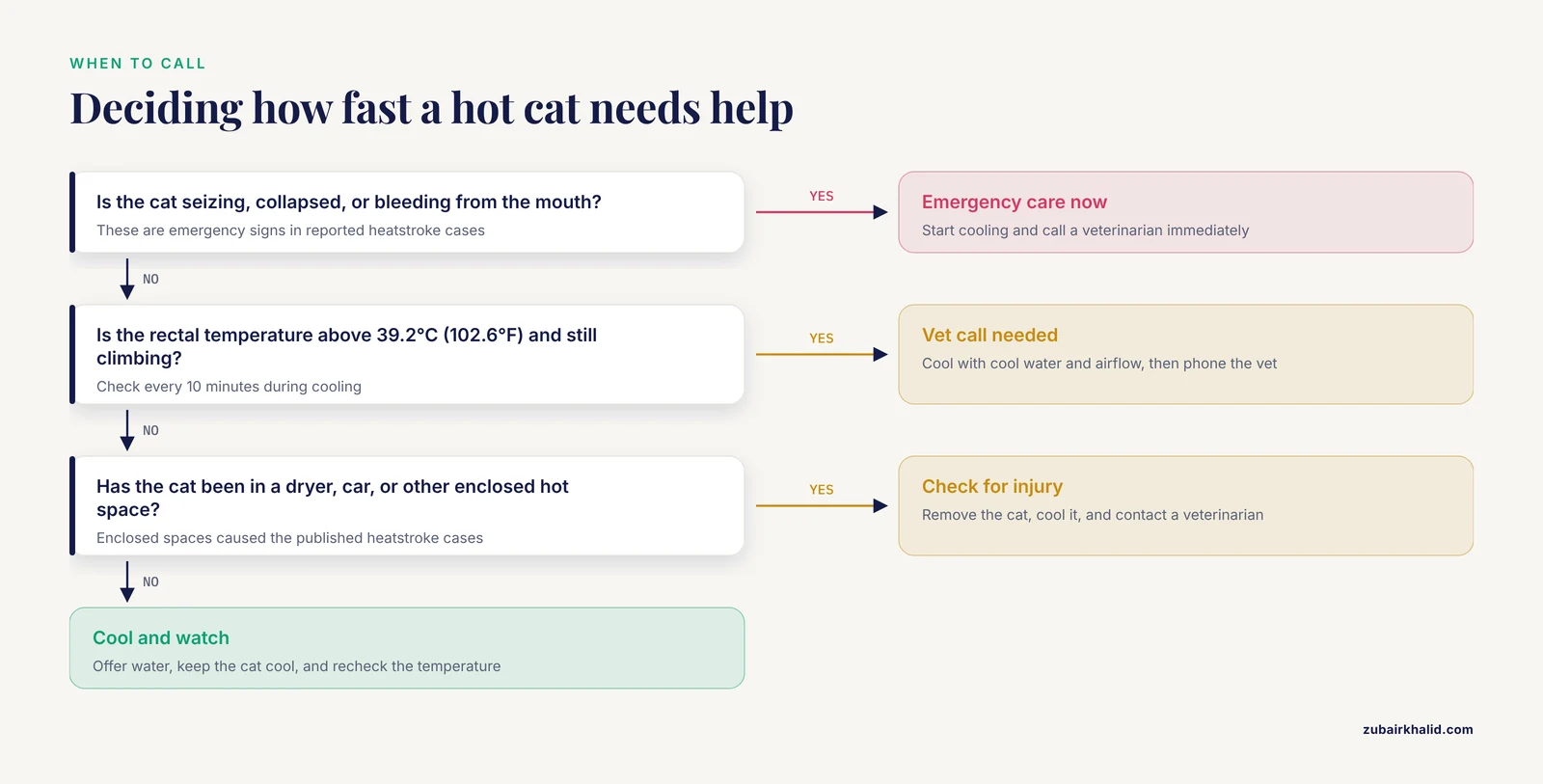
Contact a veterinarian immediately if your cat:
- Has a rectal temperature above the hyperthermia threshold that does not fall with cooling [8]
- Shows seizures, collapse, or altered mentation,
- Has bleeding from the mouth or other orifices
- Has been in an enclosed hot space such as a dryer or car,
- Shows signs of organ failure such as dark urine, jaundice, or repeated vomiting, which can appear hours to days after heat exposure [3]
The published cases show that cats can recover with rapid treatment. One cat with severe heatstroke stabilized within a day and was discharged after six days, with full recovery confirmed on day 11 [1]. Another case series of three cats also documented survival with intensive care. Outcome depends on how fast cooling starts and how quickly hospital care begins.
Individual cases vary. Age, underlying disease, and the duration of heat exposure all change the risk. A veterinarian who examines the cat is the only person who can assess that specific cat's situation.
How to Check Your Cat for Dehydration
Dehydration is a major heatwave risk because it disables the cat's main cooling mechanism [2]. Home checks can help you decide whether a cat needs fluids, but they are screening tools, not a diagnosis.
Skin Tent Test
Gently pinch a fold of skin over the shoulder blades, lift it about 2 to 3 cm, and release. In a well-hydrated cat, the skin snaps back immediately. In a dehydrated cat, it returns slowly or stays raised for a second or more. The longer the skin holds its tented shape, the more severe the dehydration.
Gum Moisture and Capillary Refill Time
Run a clean finger along the cat's gum above a canine tooth. Normal gums feel moist and slick. Dry, tacky, or sticky gums suggest dehydration. To check capillary refill time, press a fingertip against the gum until the area blanches white, then release and count the seconds until the pink color returns. Normal refill time is about 1 to 2 seconds. A refill time of 3 seconds or more suggests poor circulation, which can result from dehydration or from heat stress.
Why Home Checks Are Imperfect
These tests are useful but not precise. Skin elasticity declines with age, so a senior cat may show skin tenting even when adequately hydrated. Overweight cats carry fat under the skin that can mask tenting, while very thin cats may tent even when hydrated. Gum moisture can be affected by recent drinking, panting, or dental disease. Capillary refill time can be slowed by shock or heart problems and sped up by stress or fever. None of these checks detects mild dehydration, and a cat can be significantly dehydrated before any of them looks abnormal.
When to Call a Veterinarian
If the skin tent persists for more than a couple of seconds, if the gums are dry and tacky, or if capillary refill time is slow, contact a veterinarian. Lethargy, sunken eyes, and persistent tenting are stronger warning signs than any single home check, especially during a heatwave. A dehydrated cat in hot weather is at immediate risk of heatstroke [2]. Offer water, keep the cat cool, and call a veterinarian for advice.
Cooling a Cat That Hates Water
Some cats will not tolerate being wetted or soaked. Forcing the issue adds stress, raises the cat's body temperature further, and invites bites. Soaking with cool water is an effective cooling method, but it is not the only one. The goal is to remove heat and support evaporation without turning cooling into a fight. A cat that is fighting is also generating heat, so a calm approach matters as much as the method.
Alternatives to Soaking
- Damp towel over shoulders. Wring out a towel dipped in cool water and drape it over the cat's shoulders and back. Evaporation from the damp fabric pulls heat from the body. Re-wet the towel as it warms. Do not cover the face.
- Cooling mats. Place a self-cooling mat or gel pad in the coolest room. Cats that avoid lying on the mat will often lie next to it, which still helps.
- Gentle brushing. Loose fur traps heat. A soft brush removes it, which helps longhaired cats most. Stop if the cat becomes agitated.
- Frozen water bottles wrapped in cloth. Wrap a frozen bottle in a towel or sock and place it near the cat's resting spot. The cat can move away if it wants. Never place ice directly against the skin.
- Move to the coolest room. The coolest room is usually the one with the least sun exposure, often a bathroom or a north-facing room. Add airflow with a fan, but do not aim it directly at the cat's face.
What to Avoid
Do not force water into the mouth of a cat that is resisting. A struggling cat can inhale water, and aspiration pneumonia is a real danger. Do not use ice baths. Extreme cold constricts skin blood vessels and traps heat in the core [5]. The same logic rules out ice packs placed directly on the body.
When to Call a Veterinarian
These alternatives are for mild heat stress in a cat that is otherwise stable. Call a veterinarian immediately if the cat has a rectal temperature above the normal range that keeps climbing [8], seizures, collapse, or altered mentation [1],, bleeding from the mouth or other orifices [1], or repeated vomiting and dark urine, which can signal organ damage. Start cooling with whatever method the cat tolerates while you make the call.
Heat Risk by Breed, Coat Type, and Age
A cat's cooling system is not identical across all cats. Anatomy, coat, and life stage change how fast heat builds up. The groups below need earlier monitoring and more aggressive cooling.
Brachycephalic Breeds
Flat-faced cats such as Persians, Himalayans, and Exotic Shorthairs have narrowed nostrils and a shortened upper airway. Panting moves less air, and the reduced nasal surface area limits the brain-cooling effect described earlier [4]. They overheat faster and show distress at lower temperatures. Watch for open-mouth breathing, noisy respiration, or drooling. Keep them indoors in air conditioning during heatwaves. If respiratory effort increases or the cat cannot settle, call a veterinarian.
Long-Haired and Dark-Coated Cats
Long fur traps heat against the body, and dark fur absorbs more solar radiation. Both slow heat loss. Brush out loose undercoat before hot weather, but do not shave unless a veterinarian advises it, because fur also blocks sunburn. Provide cool tiles or shaded spots. Wetting the coat with cool water and using airflow helps these cats shed heat. Call a veterinarian if the cat pants continuously or becomes lethargic.
Kittens
Kittens have immature thermoregulatory control and a higher surface-area-to-mass ratio, so they gain heat faster and dehydrate sooner. They also forget to drink when playing. Keep kittens in the coolest room, offer water in shallow bowls, and limit active play during peak heat. If a kitten becomes quiet, vomits, or feels hot to the touch, call a veterinarian promptly.
Senior Cats
Older cats often have kidney, heart, or joint disease that reduces heat tolerance and water conservation. They may struggle to reach a water bowl or to move to a cooler spot. Place water bowls next to their resting areas and check that they are drinking. Keep them in air conditioning and monitor for weakness or reduced appetite. Call a veterinarian if a senior cat stops eating, seems disoriented, or has a temperature above the normal range.
Overweight Cats
Body fat insulates the core and increases the amount of heat that must be shed. Overweight cats also tire faster, so panting becomes less effective. Limit their movement during hot hours and keep them in the coolest available room. Monitor breathing during rest. If an overweight cat pants at rest or cannot recover after mild activity, call a veterinarian.
For all of these groups, call a veterinarian if the rectal temperature stays above the normal range after 10 to 15 minutes of cooling, or if the cat collapses, seizes, or shows breathing difficulty. Early intervention matters most in cats that start with less cooling reserve.
Helping Outdoor and Community Cats Survive a Heatwave
Outdoor cats depend on what the environment provides. During a heatwave, that environment can fail quickly. Community cat caregivers should plan for shade, water, food, and shelter checks before the hottest part of the day.
Provide Reliable Shade
Shade must block direct sun and allow airflow. Use trees, a tarp, shade cloth, or an open-sided shelter. Do not rely on a closed box or plastic crate. It may be hotter inside than outside. Place shade so it stays usable as the sun moves, and check it at midday, not just morning.
Set Up Multiple Water Stations
One bowl is not enough. Place several shallow, heavy bowls in shaded spots around a colony or yard so cats do not have to compete or travel far. Refill twice daily and rinse bowls. Water left in sun becomes warm and less appealing. During heat, dehydration reduces evaporative cooling and raises core temperature [2], so steady water access matters.
Feed Wet Food Strategically
Wet food adds water to the diet. Offer it in the cooler morning or evening, in small amounts cats will finish. Remove leftovers within about 20 to 30 minutes in hot weather to limit spoilage and flies. Keep dry food stored dry and clean; wet food should not sit out all day.
Check Shelters for Heat Traps
Small plastic bins, metal sheds, greenhouses, and enclosed carriers can trap heat. Check inside temperature with your hand or a thermometer. Add ventilation and shade, or move the shelter. Avoid bedding that blocks airflow. If a shelter feels hot to you, it is too hot for a cat.
When to Intervene With a Stray
Act if a stray is panting heavily, drooling, weak, wobbly, collapsed, or seizing. Move it to shade, offer water only if alert, and wet the fur with cool water. Call a veterinarian. Transport is necessary because heatstroke causes systemic inflammation and organ damage that can continue after the temperature falls; survivors in published cases needed intensive hospital care, including fluids and monitoring [1]. Use a carrier or towel, keep the car ventilated, and call ahead. Do not force water into an unconscious or seizing cat. Injury risk from mammals rises on hot days [9], so handle a distressed cat with a towel or carrier.
Related Guides
- How to Help a Cat in Heat: Care and Cooling Tips
- Cat Cafe: Health and Safety Tips for Visitors and Cats
- Can Cats Eat Eggs? Safety and Feeding Tips
- Can Cats Eat Arugula? Safety and Serving Tips
Frequently Asked Questions
At what temperature is it too hot for a cat?
Danger depends on both temperature and humidity. Cats show measurable thermal stress on warm, humid days, and severe stress can occur at surprisingly mild temperatures when humidity is extreme [7].
How do I know if my cat is overheating?
Watch for increased panting, which is the first cooling response, and escalate to emergency signs such as seizures, collapse, bleeding, or a temperature above the normal range [2], [1],.
What should I do first if my cat has heatstroke?
Move the cat out of the heat, start active cooling with cool water and airflow, offer water if the cat is alert, and call a veterinarian immediately [1].
How does humidity affect heat risk for cats?
High humidity blocks evaporation, which is the main way cats shed heat. Humid days are more dangerous than dry days at the same temperature [2], [7].
Can dehydration make heatstroke more likely?
Yes. Dehydration suppresses the evaporative cooling response and raises core temperature in warm conditions [2]. Restoring water restores cooling.
What is a fever-range temperature for a cat?
A temperature above the normal feline range is classified as hyperthermia [8]. Severe heatstroke runs much higher [1].
Are cats safe in a hot car or dryer?
No. Enclosed spaces such as clothes dryers have caused severe, life-threatening heatstroke in cats [1], [3]. A parked car is equally dangerous.
Why do cats pant in hot weather?
Panting drives evaporative water loss, the main cooling mechanism available to cats [2]. Cats also use nasal heat loss to cool the brain [4].
Sources
- Successful Intensive Management and Serial Clinical Progression of Severe Non-Exertional Heatstroke in a Cat Following Clothes Dryer Entrapment.
- Effects of dehydration on thermoregulation in cats exposed to high ambient temperatures.
- Clothes dryer-induced heat stroke in three cats.
- Influence of the carotid rete on brain temperature in cats exposed to hot environments.
- [[Effect of high ambient temperature on regional redistribution of blood flow in the cat].](https://pubmed.ncbi.nlm.nih.gov/7075841/)
- Control of evaporative heat loss during changes in plasma osmolality in the cat.
- Heat stress and sperm production in the domestic cat.
- Retrospective investigation of an association between high-dose buprenorphine and perpetuation of post-anesthesia hyperthermia in cats following ovariohysterectomy.
- Association between ambient temperature and mammalian-related injuries in Guangzhou, China, 2014-2019.