Do Cats Sweat? How Cats Cool Down in Heat
By Dr. Zubair Khalid, DVM, MS, PhD ·
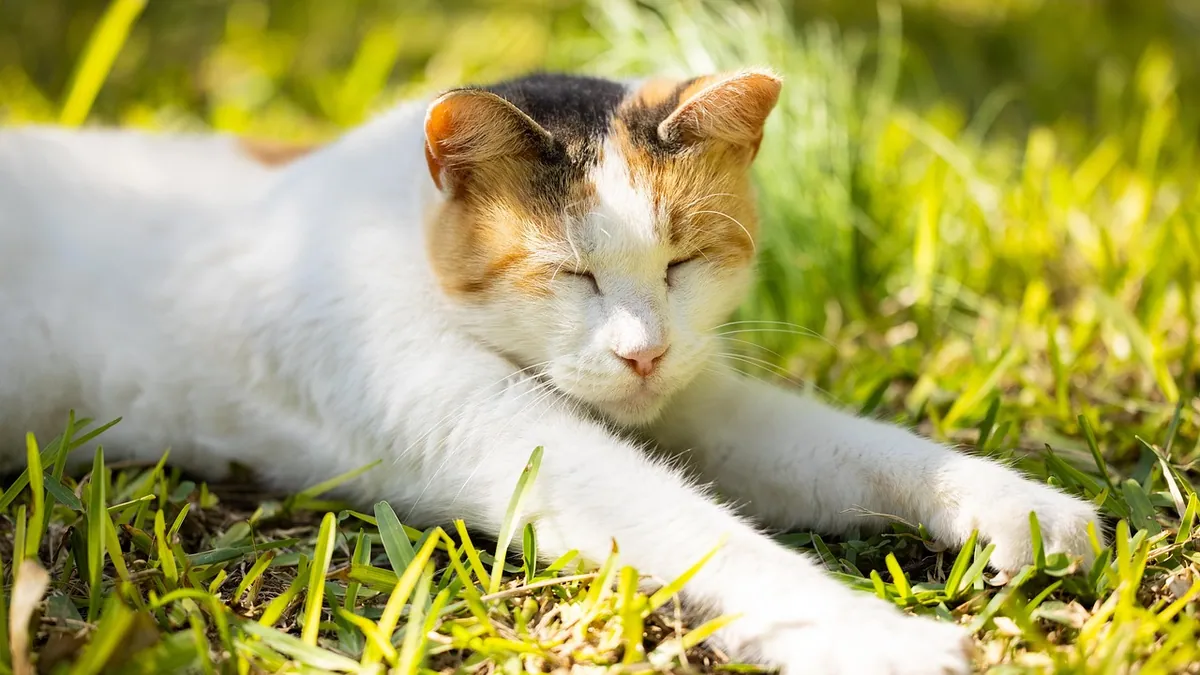
Do cats sweat? Yes, but only in a few small places, mainly the paw pads. Cats rely far more on behavior, like finding shade and grooming, and on panting when they get truly hot. This article is educational and is not a substitute for veterinary diagnosis or treatment.
Quick Answer
- Cats have sweat glands on their paw pads and a few other hairless spots, so you may see damp paw prints on a hot day or a vet exam table.
- Sweating alone cannot cool a cat down. It plays a small role compared with panting, resting in cool spots, and grooming.
- Panting after hard play or a few minutes in the sun can be normal. Panting that continues while your cat rests in a cool room is not.
- A body temperature of about 43.0 °C (109.4 °F) with collapse, seizures, or bleeding gums is a life-threatening emergency that needs immediate cooling and veterinary care [1].
- Never leave a cat in a parked car, a sunroom, or a closed garage, and check dryers and warm appliances before closing them [1].
What Normal Cooling Looks Like in Cats
Do cats sweat through their skin?
No. A cat's coat covers most of its body, and the skin underneath has very little in the way of functional sweat glands. The sweat glands cats do have are apocrine glands, which are clustered in the paw pads and a few other sparsely haired areas such as the chin and lips [2]. Apocrine glands in mammals release fluid as part of a scent and stress response, and they are not built for the kind of large-volume evaporative cooling that human skin provides [3]. So when you ask how do cats sweat, the honest answer is: a little, and mostly through their feet.
Paw sweating
If your cat has ever left small wet footprints on a tile floor or a stainless steel exam table, that is paw sweating. It happens with heat, stress, and excitement. It is normal. It is also not enough to lower body temperature much on its own.
Panting
Panting moves air quickly over the moist surfaces of the mouth, nose, and airways, which lets heat leave the body. It is the main active cooling tool a cat has. A cat may pant briefly after intense play, a car ride, or a few minutes in direct sun. That is usually short-lived and stops once the cat rests in a cool place.
Grooming and behavior
Cats spread saliva over their coats when they groom. As the saliva evaporates, it pulls heat away from the skin. Cats also stretch out on cool floors, seek shade, and become less active during the hottest part of the day. These are behavioral thermoregulation strategies, and they matter as much as the physical ones [3]. If your cat suddenly seems withdrawn or is hiding more than usual in the heat, that can overlap with stress behavior, which is covered in Cat Stress Signs: How to Recognize and Reduce Stress in Your Cat.
Main Causes of Heavy Sweating, Panting, and Overheating
| Cause | Typical clues | How urgent |
|---|---|---|
| Normal heat and exercise | Panting during play or in a warm room, damp paws, settles within a few minutes of resting in cool air | Routine, watch at home |
| Stress or fear | Damp paw prints, flattened ears, hiding, panting at the vet or during a car ride | Routine, but reduce the trigger |
| Hot environment without escape | Panting while resting, warm ears and paws, seeking tile or shade, no cool spot available | Same-day action, cool the cat now |
| Dehydration | Panting, tacky gums, skin that stays tented when gently pinched, less urine | Same-day veterinary call, see Cat Dehydration Symptoms: How to Tell and What to Do |
| Heatstroke (non-exertional) | Body temperature near 43.0 °C (109.4 °F), collapse, seizures, bleeding from the mouth, shock | Emergency now |
| Fever from infection or inflammation | Panting with lethargy, not eating, warm to the touch, no hot environment involved | Same-day veterinary visit |
| Pain or nausea | Panting with pacing, drooling, lip licking, restlessness | Same-day veterinary visit |
| Heart or airway disease | Panting at rest, coughing, noisy breathing, exercise intolerance | Same-day to emergency, depending on severity |
Heatstroke in cats is uncommon compared with dogs, and when it does happen it is often tied to a household hazard. One reported case involved a cat trapped in a running clothes dryer for about 20 minutes, which produced severe hyperthermia, shock, mouth bleeding, and seizures [1]. That case shows how fast a confined hot space can become deadly.
Red Flags That Mean an Emergency
Call an emergency veterinary hospital right away if you see any of these:
- Panting that does not stop after 5 to 10 minutes in a cool, shaded, quiet place.
- Body temperature at or above roughly 40.5 °C (105 °F) on a rectal thermometer. A documented feline heatstroke case presented at 43.0 °C (109.4 °F) [1].
- Collapse, weakness, staggering, or a cat who will not stand.
- Seizures, twitching, or a dazed look [1].
- Bleeding from the mouth, nose, or gums, or blood in vomit or stool [1].
- Bright red or very pale gums, or gums that feel hot and dry.
- Rapid, noisy, or open-mouth breathing while the cat is resting in a cool room.
- Vomiting, diarrhea, or drooling along with any of the above.
Heatstroke damages organs quickly. In the reported feline case, the cat needed active cooling and aggressive resuscitation right away, and even with that care it had seizures on the first day and a sustained inflammatory response during hospitalization [1]. Time matters more than anything else you can do at home.
What You Can Do at Home While You Wait
If your cat is panting but still alert and able to walk, act calmly and quickly.
- Move your cat to the coolest room in the house. Air conditioning, a fan, or a shaded area with good airflow all help.
- Offer cool (not ice-cold) water in a shallow bowl. Do not force your cat to drink.
- Wet the paws, ears, and belly with room-temperature or cool water. A damp towel works well. Avoid ice packs directly on the skin, which can drop temperature too fast and cause shivering.
- Let your cat lie on a cool tile floor or a damp towel. Do not wrap your cat in blankets.
- Keep the room quiet and dim. Stress raises body temperature, so calm handling matters [3].
- Check the gums and note the color. Pink is normal. Pale, white, blue, or bright red gums are a reason to go to the vet now.
- If you have a pet thermometer, take a rectal temperature and write down the number and the time. Do not delay transport to keep rechecking.
Do not give any medication for fever or cooling. Human fever reducers are toxic to cats, and the dose for any drug your cat needs is calculated by your veterinarian based on your cat's weight and health.
If your cat is unconscious, seizing, or bleeding, skip home cooling and drive to the nearest emergency hospital. Call ahead so the team can prepare.
What Your Veterinarian Will Check and Test
Your vet will start with a full physical exam, including temperature, heart rate, breathing pattern, gum color, and hydration. They will ask about the environment, how long the cat was exposed, and whether there was any confinement in a hot space.
Common tests include:
- Bloodwork to check organ function, blood sugar, and electrolyte balance.
- A blood gas or lactate measurement if heatstroke is suspected.
- Clotting tests if there is any bleeding [1].
- Inflammatory markers. In the reported heatstroke case, feline serum amyloid A stayed elevated during hospitalization even when the cat looked better, which suggests ongoing inflammation after the initial crisis [1].
- Imaging such as X-rays or ultrasound if the vet suspects heart disease, fluid in the chest, or an underlying mass.
Treatment depends on what is found. For heatstroke, cooling is started immediately, often with cool IV fluids, cool water applied to the body, and fans. Oxygen, seizure control, and blood pressure support may be needed [1]. For a cat who is panting because of pain, nausea, heart disease, or an infection, the plan targets that cause instead.
If your cat is also losing weight or has other ongoing changes, your vet may widen the workup. See Why Is My Cat Losing Weight? for what that evaluation usually involves.
Prevention and Daily Monitoring
Most heat problems in cats are preventable with a few habits.
- Keep at least one room cool. Air conditioning, a fan with good airflow, or a shaded basement helps. Cats cannot sweat enough to cope with a hot room on their own.
- Always provide fresh water in more than one spot. Cats drink more when water is easy to reach.
- Never leave a cat in a parked car, even with the windows cracked.
- Check warm appliances before closing them. Dryers, ovens, and hot cars are the classic traps, and the reported feline heatstroke case came from a dryer [1].
- Watch flat-faced cats, seniors, kittens, and cats with heart or airway disease more closely. They overheat faster.
- Brush your cat regularly in warm months. Mats and heavy undercoat trap heat.
- Limit play during the hottest hours. Move active play to early morning or evening.
- Know your cat's normal breathing rate at rest. Count breaths for 15 seconds and multiply by 4. Most healthy cats rest at 20 to 30 breaths per minute. A number that is climbing over several days is worth a call.
- Weigh your cat monthly. Unexplained weight loss can point to an underlying illness that makes heat harder to handle.
If your cat is intact and you are tracking cycles for breeding or spay planning, heat behavior can be confused with heat stress. The two are different, and How Often Do Cats Go Into Heat? Feline Estrous Cycle & Signs Guide explains the estrous signs.
Limitations and When to Contact a Veterinarian
This article covers general information only. Your cat's individual situation needs a veterinarian who can examine your cat and run tests.
Contact your veterinarian the same day if your cat:
- Pants at rest in a cool room for more than a few minutes.
- Has a rectal temperature between 39.7 °C (103.5 °F) and 40.5 °C (105 °F) with no clear cause.
- Is drinking less, urinating less, or has tacky gums.
- Seems weak, off balance, or unusually quiet.
- Has vomited more than once or has diarrhea.
Go to an emergency hospital now if your cat:
- Collapses or cannot stand.
- Has a seizure or seems disoriented [1].
- Breathes with an open mouth while resting, or makes noisy breathing sounds.
- Has bleeding from the mouth, nose, or rectum [1].
- Has a temperature at or above 40.5 °C (105 °F), or a temperature you cannot measure but with severe signs.
- Was trapped in a hot car, dryer, or other enclosed hot space [1].
Schedule a routine visit if your cat pants easily during mild play, has had repeated episodes of overheating, or has other changes like weight loss, bad breath, or a change in appetite. Dental disease and other painful conditions can change how a cat eats, drinks, and handles heat. See Why Does My Cat's Breath Smell? if that is part of the picture.
Frequently Asked Questions
Do cats sweat when they are scared?
Yes. Fear and stress trigger the apocrine glands in the paw pads, so you may see damp footprints on the exam table or the floor. This is a normal stress response and not a sign of overheating by itself. If your cat pants and paces during stressful events, talk to your vet about calming strategies.
Is panting in cats ever normal?
Yes, brief panting can be normal after intense play, a car ride, or a short time in warm air. It should stop within a few minutes once your cat rests in a cool place. Panting at rest, panting that lasts, or panting with weakness is not normal and needs veterinary attention.
Can I put ice on my cat to cool them down?
No, do not pack your cat in ice or use ice-cold water. Rapid cooling can cause shivering, which raises body temperature again, and it can be dangerous. Use cool water on the paws, ears, and belly, plus airflow and a cool room, and get veterinary help if signs are severe.
Do long-haired cats sweat more than short-haired cats?
No. Coat length does not change how many sweat glands a cat has. Long-haired cats do have more insulation, so they can overheat faster in hot weather and need more help staying cool. Regular brushing and access to air conditioning matter more for them.
How can I tell if my cat is too hot at home?
Watch for panting at rest, damp paws, warm ears, restlessness, and seeking out tile or shade. A rectal temperature above 39.7 °C (103.5 °F) at rest is a reason to call your vet. If your cat collapses, seizes, or bleeds, treat it as an emergency and go now.
Related Articles
- How Often Do Cats Go Into Heat? Feline Estrous Cycle & Signs Guide
- Why Does My Cat's Breath Smell?
- Cat Stress Signs: How to Recognize and Reduce Stress in Your Cat
- Cat Dehydration Symptoms: How to Tell and What to Do
- Why Is My Cat Losing Weight?
- Cat Hot Spot or Something Else? How to Tell and What to Do
- How Do Cats Cool Down? Keeping Cats Safe in Hot Weather
- How Do Cats Handle Heat? Cooling Signs and Safety
- Are Cats OK in the Heat? Heat Safety for Cats
References
- Successful Intensive Management and Serial Clinical Progression of Severe Non-Exertional Heatstroke in a Cat Following Clothes Dryer Entrapment. Veterinary sciences, 2026.
- Feline Lower-Lip Apocrine Sweat Gland Adenocarcinoma with Mandibular Nodal Metastasis: A Case Report. Veterinary sciences, 2026.
- Physiological and Behavioral Mechanisms of Thermoregulation in Mammals. Animals : an open access journal from MDPI, 2021.