Are Cats OK in the Heat? Heat Safety for Cats
By Dr. Zubair Khalid, DVM, MS, PhD ·
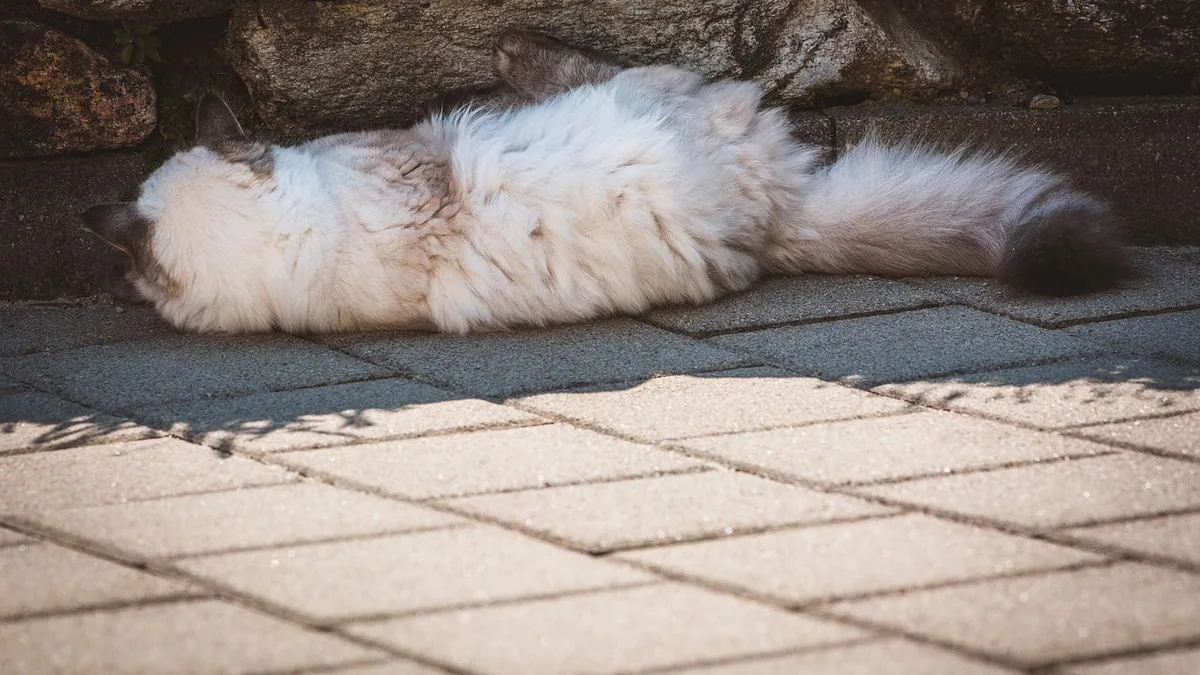
Are cats okay in the heat? Usually yes, for short periods, as long as they have shade, airflow, and plenty of fresh water. Cats handle warmth better than many people assume, but they can still overheat, and heat stroke in cats can become life-threatening very quickly [1]. This article is educational and is not a substitute for veterinary diagnosis or treatment.
Quick Answer
- Cats are generally fine in mild heat when they can move to a cooler spot, drink freely, and avoid direct sun during the hottest hours.
- Normal body temperature in cats runs around 38 °C (about 100.4 °F), which is higher than a human's, so a warm cat is not automatically a sick cat [2].
- Never leave a cat in a parked car, a closed garage, a sunroom, or any space without airflow, even for a few minutes.
- Know the early signs of heat stress: heavy panting, drooling, restlessness, and seeking out cool floors or sinks.
- Treat collapse, seizures, bright red gums, or a body temperature above 104 °F as an emergency and go to a vet right away [3].
Is It Safe for Cats to Go Out in the Heat?
It depends on the temperature, the humidity, and your cat. A healthy adult cat lounging in 80 °F shade with water nearby is usually fine. A flat-faced breed, a kitten, a senior, or an overweight cat in 95 °F full sun is a different story.
Cats do not sweat the way people do. They cool themselves mainly by panting and by grooming saliva onto their coats. That system works well in dry, moderate heat and poorly in humid heat, because saliva does not evaporate as fast when the air is already wet.
As a general rule, keep outdoor time short once temperatures climb above the mid-80s, and bring cats inside during extreme heat forecasts. Cornell University College of Veterinary Medicine advises keeping cats indoors in air-conditioned areas when extreme heat is predicted [1]. If your cat goes outside, make sure water is available both indoors and outdoors at all times [1].
Do Cats Like the Heat?
Many cats do seek out warm spots. You have probably found yours stretched across a sunny windowsill or curled on a warm laptop. Cats have a higher normal body temperature than humans, so a patch of sun that feels hot to you may feel pleasant to them [2].
That said, liking warmth is not the same as tolerating dangerous heat. A cat will often stay in a sunny spot longer than is good for it, especially if it falls asleep. Your job is to make sure a cooler option is always within easy reach.
Is It Safe for Cats to Be Out in the Heat if They Seem Fine?
Yes, with limits. Watch for the moment your cat stops acting normal. A cat that was basking happily and is now panting with its mouth open, lying flat and spread out, or pacing and meowing is telling you it is too hot.
Practical Steps to Keep Your Cat Safe in Hot Weather
Step 1: Set Up Cool Zones Before the Heat Arrives
Pick at least two cool spots in your home. A tiled bathroom floor, a basement, or a shaded hallway works well. Close blinds or curtains on south- and west-facing windows during the afternoon.
Cooling mats are widely available and can help cats stay comfortable [1]. You can also wrap ice packs in blankets and place them where your cat likes to rest [1]. Always leave an uncovered area nearby so your cat can move away if it gets too cold.
Step 2: Make Water Easy to Find and Hard to Ignore
Fresh water should be available at all times [1]. Some cats drink more from a running source, so a fountain may encourage extra drinking [1]. Set out more bowls than usual and put them in different rooms. Wash bowls daily, because warm water grows bacteria fast and a dirty bowl can put a cat off drinking.
If your cat eats mostly dry food, consider adding a little water to the bowl or offering wet food during hot spells. Your veterinarian can tell you whether a change in diet is appropriate for your cat's health.
Step 3: Manage Outdoor Access
If your cat goes outside, bring it in during the hottest part of the day, roughly late morning through early evening. Provide shade and water outside as well as inside [1]. A catio or screened porch gives outdoor time with far less risk.
Never tie a cat outside in the sun. A tethered cat cannot move to shade when it needs to.
Step 4: Protect Light-Colored Skin
Cats with white or light-colored fur, especially on the ears and nose, are prone to sun-related skin damage. Pet-safe sunscreen on the ear tips and nose can help prevent skin cancer [1]. Ask your veterinarian which product is safe, because some human sunscreens contain ingredients that are toxic to cats if licked off.
Step 5: Never Use a Hot Car or Enclosed Space as a Waiting Room
A parked car can reach dangerous temperatures within minutes, even with the windows cracked. The same goes for a closed garage, a shed, or a dryer. One reported case involved a cat trapped in an operating clothes dryer for about 20 minutes that arrived with a body temperature of 43.0 °C (109.4 °F), shock, bleeding in the mouth, and seizures [3]. That cat survived only because of rapid cooling and intensive hospital care [3]. Prevention is far simpler than treatment.
Heat Safety Checklist by Temperature
| Outdoor temperature | What to do |
|---|---|
| Below 80 °F | Normal routine. Water available inside and out [1]. |
| 80 to 89 °F | Limit outdoor time to short, shaded visits. Offer a cooling mat or cool resting spot [1]. |
| 90 to 99 °F | Keep cats indoors in air conditioning if possible. Watch for panting and drooling [1]. |
| 100 °F and above | Keep cats indoors. No car rides unless necessary, and never leave a cat in a vehicle. |
| Any temperature, if your cat is panting hard, wobbly, or vomiting | Treat as an emergency and call your vet or an emergency clinic now. |
Humidity matters as much as the number on the thermometer. A 90 °F day with low humidity is easier on a cat than an 85 °F day with heavy humidity, because panting works less well in moist air.
Signs That Something Is Wrong
Early Heat Stress
- Panting with the mouth open. Occasional panting can happen, but sustained panting in a cat is a warning sign.
- Drooling or thick saliva.
- Restlessness, pacing, or loud meowing.
- Seeking out sinks, tile floors, or cool corners.
- Faster breathing at rest.
At this stage, move your cat to an air-conditioned room, offer cool water, and wipe the paws and belly with a damp, room-temperature cloth. Do not use ice-cold water or ice packs directly on the body, because rapid surface cooling can cause shivering, which raises core temperature again.
Heat Stroke: Emergency Signs
Heat stroke in cats can become life-threatening very quickly [1]. Signs include:
- Collapse or weakness
- Seizures
- Bright red or very pale gums
- Vomiting or diarrhea
- Confusion, staggering, or unresponsiveness
- Body temperature above 104 °F
A cat with severe heatstroke may also develop shock, bleeding, and organ damage [3]. These cats need active cooling and intravenous fluids in a hospital, not home remedies.
If you are unsure whether your cat is simply warm or genuinely overheating, checking its temperature can help. Our guide on how to safely check your cat's temperature at home walks through the steps and what the numbers mean. Rectal temperature is the standard, and normal readings in cats average around 38 °C (about 100.4 °F) [2]. Non-contact infrared thermometers taken at the perineal area may be a useful, less stressful alternative, though they read lower than rectal measurements [2].
Common Mistakes Owners Make
Assuming cats self-regulate perfectly. Cats do seek cool spots, but a sleeping cat in full sun may not wake up before it overheats.
Leaving a cat in a car "just for a minute." Interior car temperatures rise faster than most people expect, and a cat cannot open a door.
Using ice baths at home. Sudden extreme cooling can cause shivering and make things worse. Cool gradually with room-temperature water and airflow, and get to a vet.
Skipping water bowls outside. Cats that spend time outdoors need water outdoors too, not only indoors [1].
Ignoring panting because "dogs pant, so cats must too." Cats can pant, but routine panting in a cat is not normal and deserves attention.
Confusing heat with estrus. A cat in heat may yowl, pace, and act restless, which can look like heat stress. If your cat is unspayed and the behavior comes in cycles, our article on how often cats go into heat explains what to expect.
Forgetting that heat and cold both matter. Owners often ask about one season at a time. Our cold weather safety guide for dogs and cats covers the other end of the thermometer.
Mistaking a skin problem for heat rash. Cats do not get heat rash the way people do. Red, moist, irritated patches are more often hot spots, which have their own treatment. See how to treat a cat's hot spot at home and how to tell a hot spot from something else.
Supplies and Setup That Actually Matter
You do not need much, but the items you choose should be safe for cats.
- Water bowls and a fountain. Multiple stations, cleaned daily. A fountain can encourage drinking in cats that prefer moving water [1].
- Cooling mats. Designed for pets and safe to lie on. Check for chew damage, since a punctured gel mat can leak [1].
- Ice packs wrapped in blankets. Never place a bare ice pack against skin [1].
- Pet-safe sunscreen. For light-colored ear tips and noses, with your vet's product recommendation [1].
- A thermometer. A digital rectal thermometer is the standard at home, and a non-contact infrared thermometer can be a lower-stress option for screening [2].
- A carrier kept indoors. In an emergency, you do not want to be hunting for a carrier in a hot garage.
Limitations and When to Contact a Veterinarian
Individual cases need a veterinarian. No table or checklist can tell you how your specific cat will respond to heat, especially if it has heart disease, kidney disease, asthma, or a history of breathing problems. Cats with severe breathing difficulty are a fragile group in general, and respiratory and cardiac causes account for a large share of feline emergency breathing cases [4].
Call an emergency clinic now if your cat:
- Is panting heavily and will not stop
- Has collapsed, is staggering, or is having seizures
- Has bright red, brick-colored, or very pale gums
- Is vomiting, has diarrhea, or is bleeding from the mouth
- Feels hot to the touch and is unresponsive or confused
Contact your veterinarian the same day if your cat:
- Has been in a hot space and seems "off" even after cooling down
- Is breathing faster than usual at rest
- Is drooling or refusing water
- Has a temperature above 103 °F on a home check
Schedule a routine visit if:
- Your cat has light-colored ears or nose and you want advice on sun protection [1]
- Your cat has a heart or lung condition and you want a hot-weather plan
- Your cat seems to struggle every summer and you want to rule out underlying disease
Frequently Asked Questions
Can cats stay outside all day in summer?
Only if they have continuous shade, airflow, and water, and only when temperatures stay mild. Once extreme heat is forecast, bring your cat indoors to an air-conditioned space [1]. A cat that cannot leave the sun when it wants to is at real risk.
How hot is too hot for a cat?
There is no single cutoff that fits every cat, but most veterinarians treat the mid-80s and above as the point to limit outdoor time, and extreme heat warnings as a signal to keep cats inside [1]. Humidity, breed, age, and health all shift that line.
Do cats pant when they are hot?
Yes, panting is one way cats lose heat, but it is also a warning sign when it is prolonged or happens at rest. A cat that is panting, drooling, and restless needs to be moved somewhere cool right away. If it does not improve quickly, call your vet.
Is it okay for cats to be in the cold?
Cats tolerate cold differently than heat, and the risks are different too. Cold can cause hypothermia and frostbite, especially for kittens, seniors, and cats with thin coats. Our cold weather safety guide covers the details.
Can I give my cat water with ice cubes when it is hot?
Cool water is fine and can encourage drinking. Avoid forcing a hot, distressed cat to drink, and never pour water into the mouth of a cat that is weak or unresponsive, because it can choke. If your cat is showing emergency signs, skip the home remedies and go to the vet.
Related Articles
- How to Safely Check Your Cat's Temperature at Home: What's Normal and What's Not
- How Often Do Cats Go Into Heat? Feline Estrous Cycle & Signs Guide
- Cold Weather Safety for Dogs and Cats
- How to Treat a Cat's Hot Spot at Home: Safe Steps and When to See a Vet
- Cat Hot Spot or Something Else? How to Tell and What to Do
- Cat Heatstroke: Emergency Cooling Steps and When to Rush to the Vet
- How Do Cats Cool Down? Keeping Cats Safe in Hot Weather
- How Do Cats Handle Heat? Cooling Signs and Safety
- How to Care for a Cat in Hot Weather
References
- Feline Heat Safety. Cornell University College of Veterinary Medicine.
- Comparison of Digital Rectal Thermometry and a Non-Contact Veterinary Infrared Thermometer in Cats: Identifying Alternative Sites to Rectal Measurement. Veterinary sciences, 2025.
- Successful Intensive Management and Serial Clinical Progression of Severe Non-Exertional Heatstroke in a Cat Following Clothes Dryer Entrapment. Veterinary sciences, 2026.
- Emergency Dyspnea in 258 Cats: Insights from the French RAPID CAT Study. Veterinary sciences, 2025.