Is a Christmas Tree Harmful to Cats? Real vs Fake
By Dr. Zubair Khalid, DVM, MS, PhD ·
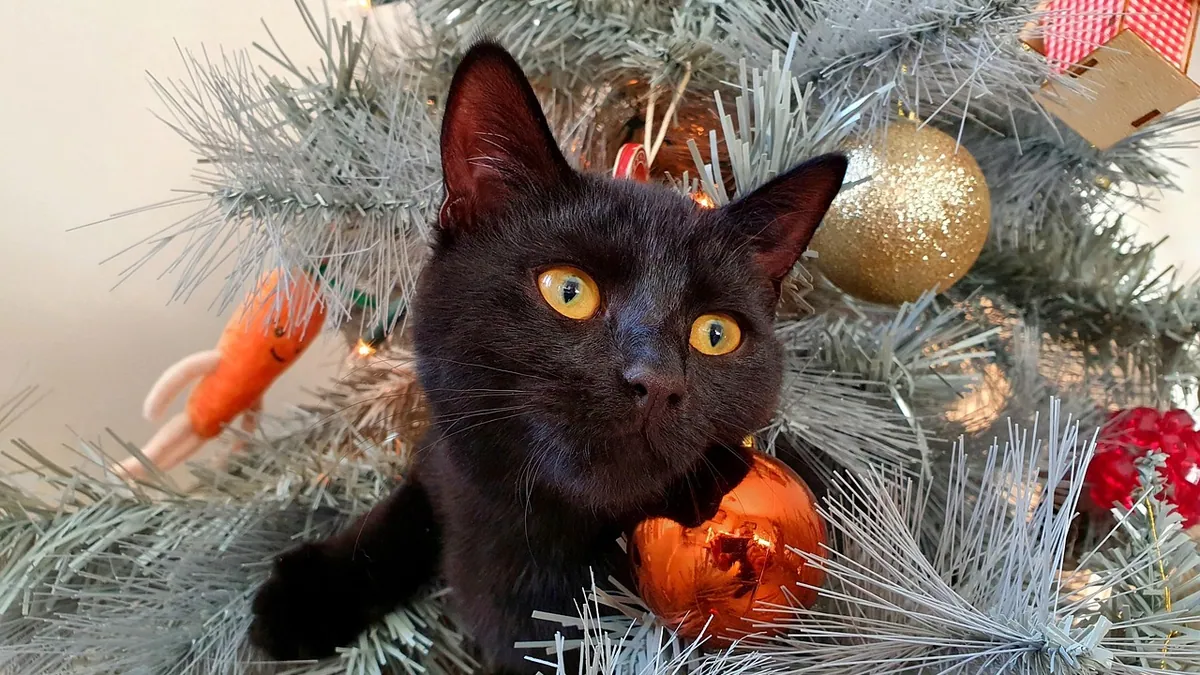
Is a Christmas tree harmful to cats? Yes, it can be, but the danger is usually physical and irritant-related instead of simple poisoning. Real trees can leak sap and oils, their water basin grows bacteria, and both real and fake needles can cause stomach upset or a blockage if swallowed. The bigger picture matters more than one single toxin, so this guide walks through each part of the tree and what to do if your cat gets into trouble.
This article is educational and is not a substitute for veterinary diagnosis or treatment.
Quick Answer
- Real Christmas trees are not a classic deadly poison for cats, but pine oils, sap, and stagnant tree water can cause vomiting, drooling, skin irritation, and stomach upset [1].
- Fake trees remove sap and tree water from the equation, but tinsel, hooks, lights, and chewed plastic needles still cause serious problems [1].
- Flocking (the fake snow spray) is a risk mainly because it can be inhaled or swallowed, and because it hides needles your cat may chew. Its exact toxicity in cats is not well established in veterinary research.
- If your cat eats needles, drinks tree water, or gets sap on the coat, call your veterinarian, the ASPCA Animal Poison Control Center at (888) 426-4435, or Pet Poison Helpline at (855) 764-7661. Do not make your cat vomit unless a veterinarian tells you to.
- The most reliable prevention is a secured tree, a covered water basin, no tinsel, and a cat-proof barrier around the base.
Is a Real Christmas Tree Toxic to Cats?
This is the question most owners ask first, and the honest answer is that real trees sit in a gray zone. Pine, fir, and spruce are not on the short list of plants that cause severe poisoning in cats the way lilies do. Plant poisoning in pets is a real and documented problem worldwide, and it accounts for a meaningful share of calls to animal poison centers [2][3]. In one 12-year survey of pet poison calls, cats made up 26 percent of plant-related cases, and most exposures caused mild to moderate signs [3]. That context helps you judge risk without panicking.
The parts that matter most with a real tree are the oils, the sap, and the water.
Pine Oils and Sap
Cats are very sensitive to pine oils, and repeated or chronic ingestion can cause problems [1]. Sap is sticky and irritating. If sap gets on your cat's coat, the cat will groom it off and swallow it, which is how a skin problem becomes a stomach problem [1]. Pine needles themselves can cause nausea, vomiting, skin irritation, or injury to the stomach if eaten [1].
Is Christmas Tree Water Toxic to Cats?
Tree water is one of the most underrated hazards in the whole setup. It sits stagnant for weeks, collecting bacteria, mold, and whatever sap and oils leach out of the trunk. Cats are very sensitive to pine oils, and drinking from that basin means repeated small doses [1]. The fix is simple. Do not give your cats access to the water basin at the bottom of a live tree [1]. A covered stand or a physical barrier solves most of this.
Needles as Foreign Bodies
A single swallowed needle often passes, but a mouthful can ball up in the stomach or intestine. That turns a holiday mishap into a possible surgical case. Needles also irritate the mouth and throat on the way down, which is why drooling and pawing at the mouth are common early signs.
Is a Fake Christmas Tree Toxic to Cats?
A fake tree removes sap, pine oils, and tree water from the risk list, which is a genuine advantage [1]. That does not make it safe by default. Artificial needles are usually plastic or metal, and a cat that chews them can swallow fragments that irritate the gut or, less often, obstruct it. Older artificial trees may shed more material, and any tree with lights and cords adds an electrical risk.
The Pet Poison Helpline specifically suggests an artificial tree so your cat cannot ingest sap, tree water, or pine needles [1]. If you go this route, inspect the tree each year for loose needles and exposed wire, and keep cords tucked away.
Is Christmas Tree Flocking Toxic to Cats?
Flocking is the white powder or spray that mimics snow. The exact toxicity of flocking products in cats is not well established in veterinary research, and risk depends on the ingredients in the specific product. The practical concerns are inhalation and ingestion. Inhaled powder can irritate the airways, and swallowed material can cause stomach upset.
Flocking also changes how the tree behaves. It can mask needles, so a cat chewing on a branch may swallow more material than you would expect. If you use flocking, keep the tree behind a barrier and check the product label for warnings. When in doubt, skip it.
What Is the Toxic Principle and What Does It Do?
There is no single toxic principle for Christmas trees, which is why this is more of a mixed-risk situation than a classic poisoning. The relevant agents are plant oils and terpenes, sap, bacteria and mold in standing water, and physical foreign bodies like needles and tinsel.
Plant toxins in general work through several mechanisms. Glycosides, alkaloids, oxalates, toxalbumins, saponins, and terpene or terpenoid compounds are the main groups responsible for plant-related poisoning in pets [3]. Terpenes are the aromatic compounds in pine oils, and they are the reason pine oil exposure irritates the mouth, stomach, and skin [1][3]. Essential oil compounds from plants can also have direct antimicrobial activity, which shows how biologically active these chemicals are even at low concentrations [4]. That does not mean your tree is a drug. It means the oils are not inert, and a cat's small body handles them differently than a person's.
Grayanotoxins from plants in the heath family are a good example of how plant toxins cause vomiting, retching, and regurgitation in animals that eat them [5]. Christmas trees are not in that family, but the pattern is useful. Plant-related illness in cats often shows up first as gastrointestinal signs, which is exactly what you would expect from needles, sap, and stagnant water.
Signs and Typical Timeline
Signs depend on what your cat got into.
- Needle or sap ingestion: drooling, pawing at the mouth, vomiting, reduced appetite, and sometimes diarrhea. Nausea and vomiting are the most common reported effects [1].
- Tree water: vomiting, loose stool, and mild lethargy, often within hours of drinking.
- Sap on the coat: sticky fur, excessive grooming, and then stomach upset once the sap is swallowed [1].
- Tinsel or string: vomiting, not eating, abdominal discomfort, and possibly no stool. These can progress over a day or two as the material moves.
- Flocking or plastic fragments: coughing, gagging, or vomiting, depending on whether the material went into the airway or the stomach.
Timing varies. Mild stomach upset often shows within a few hours. Foreign body signs can take a day or more to appear and may worsen gradually. If your cat is stable and eating but vomited once, a same-day call is reasonable. If your cat is repeatedly vomiting, straining, or acting painful, treat it as an emergency.
What to Do Right Now
First, move your cat away from the tree and check the mouth for needles, tinsel, or string. Do not pull on anything that is already partly swallowed, because you can injure the throat or drag material tighter.
Then call for advice. Your veterinarian is the best first call. The ASPCA Animal Poison Control Center at (888) 426-4435 and Pet Poison Helpline at (855) 764-7661 are staffed for exactly this kind of question. Have your cat's weight, age, and a rough idea of what and how much was eaten ready.
Do not induce vomiting unless a veterinarian tells you to. Making a cat vomit at home is risky. Sharp needles can injure the esophagus on the way back up, and some materials cause more harm coming out than going in.
If sap is on the coat, wash it off right away with warm water and a mild pet-safe soap [1]. If you leave it, your cat will groom it off and swallow it [1].
Veterinary Treatment
Treatment depends on the findings. For mild exposure, your veterinarian may recommend monitoring at home, a bland diet, and anti-nausea medication. The dose and choice of any medication are set by your veterinarian based on your cat's weight and health.
For significant ingestion, expect blood work, abdominal imaging, and possibly hospitalization with intravenous fluids. If a foreign body is suspected, surgery may be needed. If a large amount of tree water was consumed, your veterinarian may check hydration and electrolytes.
There is no antidote for pine oil or sap exposure. Care is supportive and aimed at controlling vomiting, protecting the stomach, and removing any material that should not be there.
Outlook
Most cats that nibble a needle or lick a little sap do well with supportive care. Mild to moderate signs are the most common outcome in plant-related pet poisonings [3]. The cases that go badly usually involve large amounts of material, a true foreign body, or a cat with other health problems.
Fatal plant poisoning is uncommon but real. In one survey, fatal cases made up 10.6 percent of plant poisonings where an outcome was recorded [3]. That number covers all plants and both species, so it does not predict what happens to your cat. It does show why you should not wait and see when signs are serious.
Prevention and Safer Alternatives
Prevention is mostly about access, not willpower.
- Secure the tree at the top and bottom so a climbing cat cannot pull it over [1].
- Cover the water basin completely, or block the base with a barrier [1].
- Skip tinsel, ribbon, and string. These are the highest-risk decorations for cats.
- Use plastic or shatterproof ornaments, and avoid hooks that can be batted loose.
- Tuck light cords into conduit or cord covers.
- Give your cat a better climbing option nearby, such as a sturdy cat tree, so the Christmas tree is less interesting.
- Wash sap off the coat immediately if it happens [1].
If you want to know which other plants in your home are risky, see What Kind Of Plants Are Harmful To Cats and What Plants Are Toxic To Cats With Pictures. For indoor-specific risks, House Plants Toxic To Cats With Pictures is a useful reference.
Limitations and When to Contact a Veterinarian
This article covers general patterns. Your cat's individual case needs a veterinarian who can examine your cat, ask about the exposure, and decide on testing and treatment.
Contact your veterinarian the same day if your cat vomited once or twice, is drooling, has sap on the coat, or you saw your cat drink tree water.
Go to an emergency clinic now if your cat is vomiting repeatedly, has a swollen or painful belly, is straining to defecate, is breathing hard, is coughing or gagging, or is collapsed or unresponsive. Tinsel or string ingestion is also an emergency, even if your cat seems fine right now.
A routine visit is fine for a cat that had brief, mild signs and is now eating, drinking, and acting normal. Your veterinarian can still check for hidden problems.
Frequently Asked Questions
Is a real Christmas tree toxic to cats?
Real trees are not a classic severe poison for cats, but pine oils, sap, and needles can cause vomiting, drooling, and stomach irritation. Repeated exposure to pine oils is the main concern. An artificial tree removes sap, tree water, and needles from the risk list.
Is Christmas tree water toxic to cats?
Tree water is a real hazard because it sits stagnant and collects bacteria, mold, and leached oils. Cats are very sensitive to pine oils, and drinking from the basin means repeated small exposures. Cover the stand so your cat cannot reach the water.
Is a fake Christmas tree toxic to cats?
Fake trees are generally safer than real ones because there is no sap or tree water. The risks are physical, including chewed plastic needles, tinsel, hooks, and electrical cords. Inspect the tree each year and keep decorations out of reach.
Is Christmas tree flocking toxic to cats?
The exact toxicity of flocking in cats is not well established, and it depends on the product ingredients. The bigger concerns are inhalation of the powder and swallowing it along with needles. If you use flocking, keep the tree behind a barrier and read the label.
Is Christmas tree sap toxic to cats?
Sap is irritating instead of a classic poison, but it matters because cats groom it off and swallow it. That turns a skin exposure into a stomach exposure and can cause vomiting and nausea. Wash sap off the coat right away with warm water and mild pet-safe soap.
Related Articles
- What Kind Of Plants Are Harmful To Cats
- Cat Tree
- What Plants Are Toxic To Cats With Pictures
- House Plants Toxic To Cats With Pictures
- What Plants Are Toxic To Cats Indoor
- House Plants Toxic To Cats Pictures
- Are Christmas Trees Toxic to Cats and Dogs?
- Are Pine Needles Toxic to Cats? Christmas Tree Safety
- Is Christmas Cactus Toxic to Cats? Holiday Safety
References
- Cats and Christmas Trees. Pet Poison Helpline.
- Indoor Companion Animal Poisoning by Plants in Europe. Frontiers in veterinary science, 2020.
- Plant poisoning in domestic animals: epidemiological data from an Italian survey (2000-2011). The Veterinary record, 2013.
- In vitro susceptibility testing of phytochemicals from essential oils against Prototheca species. The Journal of veterinary medical science, 2024.
- Grayanotoxin poisoning in animals following the ingestion of Ericaceae plants. Veterinary journal (London, England : 1997), 2026.