Nicotine Poisoning in Pets: Symptoms and Treatment
By Dr. Zubair Khalid, DVM, MS, PhD ·

If you suspect your pet has swallowed any nicotine product, treat it as an emergency. Call your veterinarian or a pet poison control hotline immediately. Nicotine is a naturally occurring alkaloid found primarily in tobacco, and in pets it can cause rapid onset of vomiting, agitation, tremors, and in severe cases seizures or cardiac complications. The sooner a pet receives veterinary assessment and treatment, the better the chance of a full recovery. Do not wait for signs to appear before seeking help, because nicotine is absorbed quickly and clinical signs can escalate within minutes.
This article is educational and is not a substitute for veterinary diagnosis or treatment.
At a Glance: Nicotine Exposure Sources and Risk
| Exposure source | Key facts | Risk level if ingested |
|---|---|---|
| Cigarettes | Each cigarette contains 10 to 15 mg of nicotine, though only about 1 mg is delivered to a smoker [1] | High, especially for small pets |
| Smokeless tobacco, pipe tobacco, cigar tobacco, waterpipe tobacco | Nicotine is present in all of these forms [1] | High |
| Smoking cessation products (gum, lozenges, patches) | These contain nicotine [1] | High, because a single piece or patch can contain a large dose |
| Nicotine-based insecticides | Not commercially available in the United States since 2014 [1] | Extreme if old stock is found and ingested |
| Wild tobacco plants (Nicotiana glauca) | Anabasine is the major toxic principle in this plant [2] | High if leaves are chewed or swallowed |
What Nicotine Is and Where Pets Encounter It
Nicotine is a naturally occurring alkaloid found primarily in tobacco. It is most commonly absorbed from cigarette smoke, and a single cigarette contains 10 to 15 mg of nicotine while delivering on average about 1 mg to the smoker. Nicotine is also present in smokeless tobacco such as snuff and chewing tobacco, in pipe and cigar tobacco, in waterpipe tobacco, and in a variety of smoking cessation medications. These products are common in households, which means the risk of accidental pet exposure is real and ongoing.
Beyond tobacco products, nicotine has a long history of use as an insecticide. Nicotine-based pesticides have been used since the 1690s, and tobacco extracts were the original commercial form. However, nicotine insecticides have not been commercially available in the United States since 2014, and the European Union has also banned them. Even so, old bottles of nicotine insecticide can still be found in garages, sheds, and garden storage areas. Pets that chew on such containers can receive a highly concentrated dose.
Pets can also be exposed to nicotine-like alkaloids in plants. Nicotiana glauca, commonly known as wild tobacco, contains anabasine as its major toxic principle [2]. A documented outbreak of Nicotiana glauca poisoning occurred in a flock of ostriches in South Africa, where post-mortem examination revealed leaf remnants weighing 80 to 770 g packed in the proventriculus, and chemical analysis confirmed the presence of anabasine in those remnants at 114 to 177 micrograms per gram of dry weight [2]. While this case involved ostriches, it highlights that plants in the Nicotiana genus are toxic to animals and should be treated as a hazard in yards and pastures.
Nicotine is released into the environment throughout every phase of the tobacco life cycle, which makes it a pervasive environmental pollutant [3]. For pets, the most common route of exposure is ingestion of a nicotine-containing product that was left within reach.
How Nicotine Affects the Body
Nicotine is rapidly absorbed after ingestion and distributes widely through the body. Approximately 80 to 90 percent of nicotine is metabolized by the lungs, liver, and kidneys, and the principal metabolite is cotinine, which reaches plasma concentrations about 10-fold higher than nicotine itself. About 17 percent of nicotine is excreted unchanged in the urine, and the rate of urinary excretion is pH dependent, decreasing when urine is alkaline. Nicotine is also found in the milk of lactating women, with concentrations that parallel plasma levels.
The cardiovascular effects of nicotine are well established. Nicotine stimulates the release of catecholamines, which increases heart rate and blood pressure. In a toxic dose, these stimulant effects can become extreme, leading to tachycardia, hypertension, and in severe cases cardiac arrhythmias or collapse.
Nicotine also causes direct cellular damage, particularly in the liver. In a controlled mouse model, nicotine exposure significantly altered serum levels of liver function indices, lipid profile, lactate dehydrogenase, and alkaline phosphatase [3]. Nicotine increased hepatic inflammation, lipid peroxidation, and DNA damage-related biomarkers, while reducing antioxidant enzyme activities [3]. The study showed that nicotine downregulated the expression of SOD1, SOD2, CAT, GPX1, and GPX2, which are antioxidant enzymes, while upregulating the gene expression of NF-κB, a central inflammatory pathway mediator [3]. These findings mean that nicotine toxicity is not only an acute neurological and cardiovascular event, but also a metabolic and hepatic insult that may require follow-up monitoring.
Clinical Signs of Nicotine Poisoning
Nicotine poisoning in a dog is a documented veterinary emergency, and a published case report confirms that this condition occurs in clinical practice [4]. The signs that owners observe follow directly from nicotine's pharmacological actions on the nervous system and cardiovascular system.
Because nicotine is a stimulant, the earliest signs usually appear within minutes to a few hours after ingestion. Vomiting is often the first sign, and it may be accompanied by excessive drooling and nausea. The pet may appear restless, agitated, or unusually excitable. As the dose takes effect, muscle tremors and twitching can develop, and the pet may appear uncoordinated or weak.
In more severe cases, the neurological stimulation progresses to seizures. The cardiovascular effects described in the literature [1] can produce a rapid heart rate, and in severe poisonings the pet may collapse or have difficulty breathing. Pets that are very small, very young, or that have pre-existing heart or liver disease may show signs at lower doses.
It is important for owners to understand that the severity of signs depends on the dose relative to the pet's body weight. A single cigarette contains 10 to 15 mg of nicotine, and for a small dog or cat, even one cigarette can produce serious toxicity. A pet that has ingested a nicotine patch, a vial of e-cigarette liquid, or an old insecticide product may receive a much larger dose than a pet that ate a single cigarette.
If your pet shows any of these signs after known or suspected nicotine exposure, transport the pet to a veterinarian immediately. Do not attempt to manage the signs at home.
Diagnosis and Veterinary Examination
When a pet arrives at a veterinary clinic with suspected nicotine poisoning, the veterinarian will begin by taking a detailed history. The owner should be prepared to describe what the pet ingested, how much, and approximately when the ingestion occurred. If the product packaging or what remains of the product is available, it should be brought to the clinic, because this information helps the veterinary team estimate the dose.
The diagnosis of nicotine poisoning is primarily based on the exposure history and the clinical signs that are present. Most veterinary clinics do not have a rapid test for nicotine in blood, so the diagnosis rests on consistent history, physical examination findings, and the exclusion of other causes.
The veterinarian will perform a physical examination that includes assessment of heart rate, heart rhythm, respiratory rate, body temperature, and neurological status. Given the documented liver effects of nicotine [3], the veterinarian may recommend blood work to establish a baseline for liver enzymes and to assess overall organ function. This baseline is useful not only during the acute phase but also for monitoring recovery.
Because other substances can produce similar signs, the veterinarian will consider differential diagnoses. For example, ingestion of marijuana products produces a different clinical picture, because THC acts through cannabinoid receptors in the central nervous system [5], and the management approach differs. The history is usually sufficient to distinguish these cases, but the veterinarian may run additional tests if the exposure history is unclear.
Treatment and Management
The treatment of nicotine poisoning in pets is supportive and symptomatic, and it must be guided by a veterinarian. A documented case of nicotine poisoning in a dog confirms that veterinary treatment is both necessary and potentially successful [4].
The first step in treatment is stabilization. If the pet is having seizures, is collapsed, or has an abnormal heart rhythm, the veterinary team will address these life-threatening issues first. This may include intravenous access, oxygen therapy, and medications to control seizures or support the heart.
If the ingestion was very recent, the veterinarian may consider decontamination. This could include inducing vomiting, but only if the pet is awake, stable, and not having seizures, because vomiting in a neurologically compromised pet carries a risk of aspiration. Activated charcoal may be administered to bind nicotine in the gastrointestinal tract, but this is only helpful if given early.
Intravenous fluids are a cornerstone of treatment. They support blood pressure, help maintain organ perfusion, and assist the kidneys in excreting nicotine. Because nicotine excretion is pH dependent, the veterinary team may manage the pet's acid-base status, though this is done carefully and only when indicated.
Medications may be needed to control specific signs. Anti-nausea drugs can reduce vomiting, and sedatives or anticonvulsants can control tremors and seizures. If the heart rate is dangerously fast or the blood pressure is unstable, the veterinarian may use medications to address these parameters.
Given the documented liver injury associated with nicotine exposure [3], the veterinary team may monitor liver enzymes during hospitalization and may recommend a follow-up blood test after discharge to ensure that liver values have returned to normal.
The duration of hospitalization varies widely. Some pets with mild exposure recover within hours and can go home the same day. Pets with severe poisoning may require one or more days of intensive care. The veterinarian will base the discharge decision on the pet's clinical status, not on a fixed timeline.
Unsafe Home Remedies
Do not attempt to treat nicotine poisoning at home. Inducing vomiting without veterinary guidance is dangerous, especially if the pet is already showing neurological signs, because the pet could aspirate vomit into the lungs. Do not give the pet milk, salt water, hydrogen peroxide, or any other home remedy, because these can cause additional harm and delay proper treatment. Do not wait to see whether the pet improves on its own. Nicotine is absorbed rapidly, and the window for effective intervention is narrow.
Prevention
The most effective way to prevent nicotine poisoning in pets is to keep all nicotine products completely out of reach. This includes cigarettes, cigars, pipe tobacco, and smokeless tobacco, as well as e-cigarettes, vape cartridges, and refill liquids. Nicotine gum, lozenges, and patches should be stored in closed drawers or cabinets. Ashtrays with cigarette butts should be emptied and cleaned regularly, because leftover butts retain nicotine.
Old nicotine insecticide products that may remain in a garage or shed should be disposed of properly or locked away where pets cannot access them. Nicotine-based insecticides have not been commercially available in the United States since 2014, but old stock may still exist. If you find such a product, treat it as a serious hazard.
For pets that spend time outdoors, check the yard for wild tobacco plants in the Nicotiana genus. These plants contain anabasine, a toxic alkaloid [2], and should be removed if there is any risk that a pet might chew on them.
Prognosis
The prognosis for a pet with nicotine poisoning depends on several factors, including the dose ingested, the time between exposure and treatment, the pet's size, and the pet's overall health. With prompt veterinary care, many pets recover fully and return to normal within days. However, severe exposures, particularly those involving concentrated nicotine products or delayed treatment, can be fatal.
The liver damage associated with nicotine exposure [3] means that even pets that recover from the acute phase may benefit from a follow-up examination and blood work to confirm that liver enzymes have returned to baseline.
Emergency Red Flags
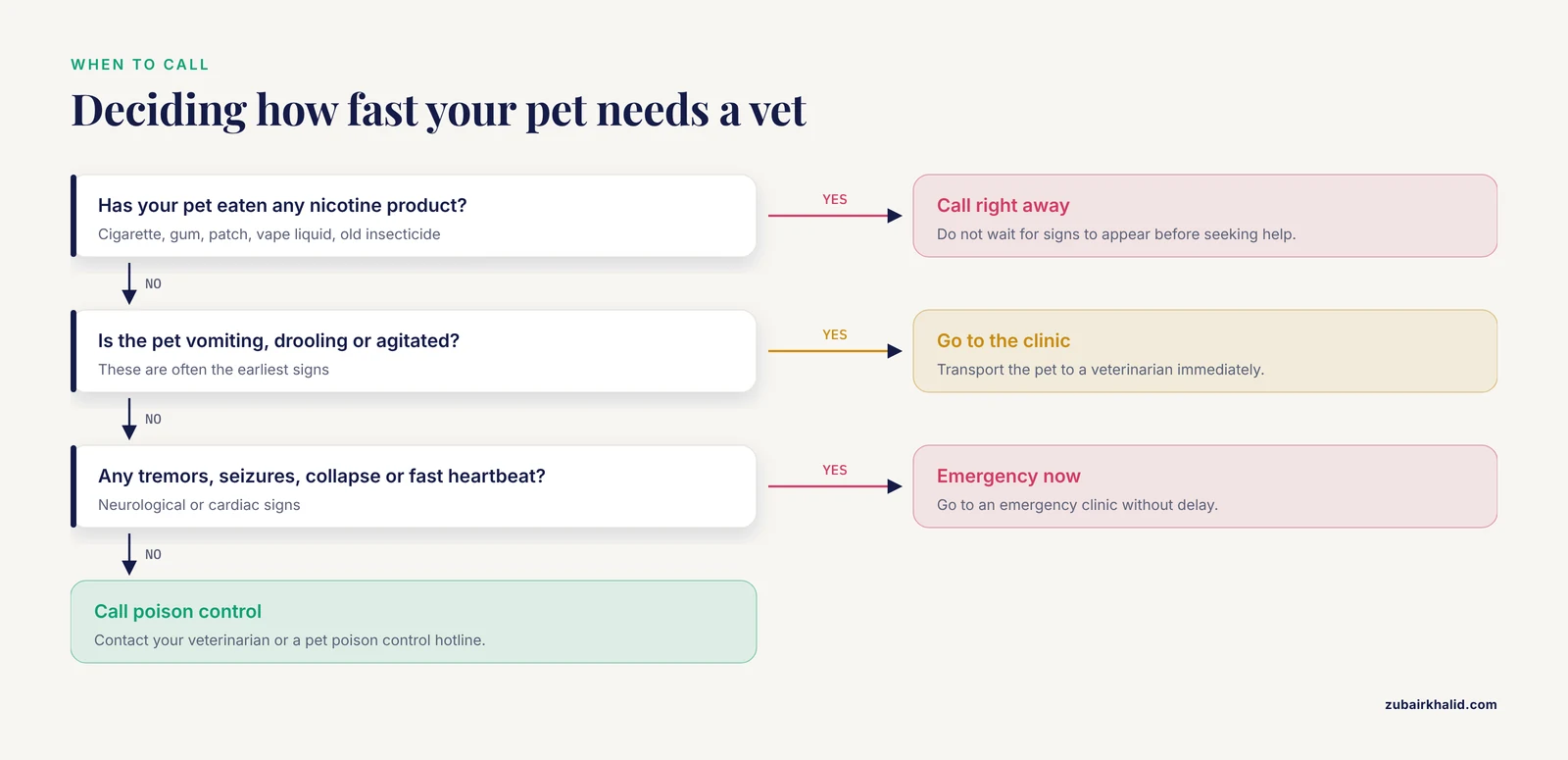
Call your veterinarian or an emergency veterinary clinic immediately if your pet has ingested any nicotine product, even a small amount. Also seek immediate care if your pet shows any of the following signs, regardless of whether you know that nicotine was ingested:
- Vomiting or excessive drooling
- Tremors, twitching, or seizures
- Unusual agitation, restlessness, or hyperactivity
- A rapid or irregular heart rate
- Weakness, collapse, or difficulty breathing
- Unsteady gait or apparent disorientation
These signs indicate that the nicotine dose is having a significant effect on the nervous system or cardiovascular system, and they require urgent veterinary assessment.
Limitations and When to Contact a Veterinarian
This article is educational and is not a substitute for veterinary diagnosis or treatment. Every case of nicotine exposure is different, and the appropriate response depends on many factors, including the pet's species, size, age, and health status, as well as the amount and type of nicotine product involved. Individual cases need a veterinarian, and no article can replace that assessment.
Contact your veterinarian or a pet poison control service immediately if you suspect your pet has ingested any nicotine product. Do not wait for clinical signs to appear. If your pet is already showing neurological signs such as tremors, seizures, or collapse, or cardiac signs such as a rapid or irregular heartbeat, transport the pet to an emergency veterinary facility without delay.
What Owners Should Document Before Calling the Veterinarian
When an owner discovers that a pet has ingested a nicotine product, the first instinct is often panic, but the minutes before the call to the veterinarian can be used productively. The information gathered in those minutes can meaningfully shape the veterinary team's initial assessment and the treatment plan. Owners should try to identify the exact product involved, because the nicotine concentration varies enormously between a cigarette, a piece of gum, a patch, and a refill bottle for an electronic cigarette. A single cigarette contains 10 to 15 mg of nicotine, but a single patch or vial of e-cigarette liquid can contain a far larger dose, and knowing which product was involved helps the veterinarian estimate risk before the pet even arrives at the clinic.
Owners should also estimate how much of the product was consumed. If a cigarette was chewed but not swallowed, the risk may be lower than if the entire cigarette was eaten. If a patch was chewed, the packaging or the remnant of the patch should be brought to the clinic. If the pet vomited before the call, the owner should note whether any product pieces appear in the vomitus, and, if it can be done safely, a sample of the vomitus can be collected in a sealed plastic bag and brought along. The owner should also try to recall the approximate time of ingestion, because the interval between exposure and treatment is one of the most important factors in determining the outcome.
The veterinarian will need to know whether the pet has any pre-existing health conditions, whether it takes any regular medication, and whether it has ever had a seizure or a heart problem. This information is not always easy to recall in an emergency, so keeping a basic pet health summary in a phone or on the refrigerator can be genuinely useful. During the call, the owner should describe the pet's current behavior honestly, including any trembling, restlessness, drooling, or weakness, because those details guide the veterinary team's decision about whether the pet should be brought in as an emergency or whether the situation can be managed with observation. Owners should also be prepared to state whether the pet has access to other potential toxins, because the presence of multiple substances can complicate the clinical picture.
How Veterinarians Estimate the Risk After Nicotine Exposure
The clinical reasoning that a veterinarian applies to a nicotine exposure case begins with dose estimation. Because nicotine is absorbed quickly and distributes widely, the veterinarian's first task is to decide how much nicotine the pet may have absorbed relative to its body weight. A small-breed dog that weighs 4 kg and eats a single cigarette has received a much larger dose per kilogram than a 30 kg dog that eats the same cigarette. This dose-per-kilogram relationship is the foundation of the risk assessment, and it explains why small pets, puppies, and kittens are overrepresented in nicotine toxicity cases.
The same reasoning applies to concentrated products. A nicotine patch contains a much higher nicotine content than a cigarette, and a pet that chews a patch can absorb a large dose through the oral mucosa even before swallowing, because nicotine is readily absorbed across mucous membranes. E-cigarette refill liquids are similarly concentrated, and even a small lick can deliver a clinically significant dose to a small pet. The veterinarian will also consider whether the product was new or used, because a used patch or a spent cartridge contains less nicotine than a fresh one, and this distinction can change the risk assessment.
The veterinarian also considers the time since exposure. Nicotine is metabolized relatively quickly, with about 80 to 90 percent of the absorbed dose metabolized by the lungs, liver, and kidneys, and the principal metabolite, cotinine, reaching plasma concentrations roughly 10-fold higher than nicotine itself. If several hours have passed since ingestion and the pet is still showing no signs, the risk of severe toxicity may be lower than if the ingestion just occurred. However, the veterinarian cannot rely on the absence of early signs as reassurance, because clinical signs can escalate within minutes and the rate of progression varies from pet to pet.
The veterinarian will also factor in the pet's health status. A pet with pre-existing liver disease may metabolize nicotine more slowly, which can prolong the exposure and increase the risk of toxicity, given the documented hepatic effects of nicotine [3]. A pet with cardiac disease is at greater risk from the catecholamine-driven increases in heart rate and blood pressure that nicotine produces. These considerations shape the veterinarian's decision about whether the pet needs to be seen immediately, whether it can be monitored at home with close observation, or whether it should be admitted for intravenous fluids and supportive care even before clinical signs appear.
The Diagnostic Workflow in Suspected Nicotine Poisoning
The diagnostic approach to suspected nicotine poisoning is largely clinical, because most veterinary clinics do not have access to a rapid blood test for nicotine or its metabolites. The workflow begins with triage, in which the veterinary team assesses the pet's airway, breathing, and circulation, and checks for obvious neurological signs such as tremors, seizures, or altered mental status. If the pet is unstable, stabilization takes priority over diagnostic testing. Once the pet is stable, the veterinarian takes a detailed history, including the information the owner gathered before the call.
The physical examination follows, with particular attention to heart rate and rhythm, respiratory rate and effort, body temperature, mucous membrane color, capillary refill time, and neurological status. Because nicotine stimulates catecholamine release, which increases heart rate and blood pressure, the veterinarian will listen carefully for arrhythmias and may recommend an electrocardiogram if the heart rate is unusually fast or irregular. The neurological examination is equally important, because the distinction between mild agitation and a true seizure changes the treatment plan.
Baseline blood work is often recommended, especially for pets with moderate to severe exposure. The documented effects of nicotine on the liver, including increased hepatic inflammation, lipid peroxidation, and altered expression of antioxidant enzymes [3], mean that a baseline panel of liver enzymes is useful both for the acute assessment and for comparison at a follow-up visit. The veterinarian may also check electrolytes, kidney values, and blood glucose, because vomiting and reduced intake can cause dehydration and metabolic derangements.
In pets with neurological signs, the veterinarian may consider other causes before settling on nicotine poisoning. This is where the history becomes essential. For example, ingestion of marijuana products can produce a different clinical picture, because THC acts through cannabinoid receptors in the central nervous system [5], and the management approach for THC toxicity differs from that for nicotine toxicity. The veterinarian will weigh the history, the physical findings, and the available test results to reach a diagnosis. In many cases, the diagnosis is made on the basis of a consistent exposure history and characteristic clinical signs, with blood work used to assess the severity of organ involvement rather than to confirm the toxin. This reliance on clinical reasoning is appropriate in veterinary toxicology, but it means that the owner's accurate description of the event is a central piece of the diagnostic process.
Evidence Limitations and How the Literature Informs Practice
The evidence base for nicotine poisoning in companion animals is thinner than the evidence base for many other toxicities, and this limitation shapes how veterinarians practice. Most of what is known about nicotine's pharmacology and toxicology comes from human medicine and from laboratory animal models. The veterinary literature includes case reports, such as the published case of nicotine poisoning in a dog that confirms this condition occurs in clinical practice and that treatment can be successful [4], but large clinical studies in dogs and cats are lacking. This means that many treatment decisions are guided by extrapolation from human toxicology, by clinical experience, and by the principles of supportive care rather than by species-specific trial data.
The experimental evidence that does exist is valuable but must be interpreted carefully. The mouse model that documented nicotine's effects on liver function, oxidative stress, and inflammatory gene expression [3] provides a mechanistic explanation for why a pet with nicotine poisoning may develop hepatic injury, but mice are not dogs, and the doses used in laboratory studies may not reflect the doses that a pet ingests in a household accident. Similarly, the outbreak of Nicotiana glauca poisoning in ostriches in South Africa, in which post-mortem examination revealed leaf remnants weighing 80 to 770 g in the proventriculus and chemical analysis confirmed anabasine at 114 to 177 micrograms per gram of dry weight [2], is a useful reminder that plants in the Nicotiana genus are toxic to animals, but it does not directly predict the clinical course in a dog or cat that chews a leaf.
These limitations do not mean the evidence is useless. Rather, they mean that the veterinarian must weigh the available data alongside the specific circumstances of each case, and must remain alert to unexpected presentations. The same limitation applies to owner education. Pet owners should understand that the absence of large veterinary trials does not mean the risk is low, and that the safest approach to any nicotine exposure is prompt professional assessment. The veterinarian's clinical judgment, informed by the published literature and by experience with similar cases, remains the most reliable guide in this setting.
Special-Population Considerations in Nicotine Poisoning
Not every pet responds to nicotine in the same way, and several populations deserve particular attention. Puppies and kittens are at higher risk for several reasons. They are smaller, so a given amount of nicotine represents a larger dose per kilogram of body weight. They are also more likely to explore objects with their mouths, and they may be attracted to the smell or texture of a nicotine patch, a piece of gum, or a cigarette butt. Their liver enzyme systems are not fully mature, which can slow the metabolism of nicotine and prolong the exposure.
The same reasoning applies to senior pets, in whom age-related declines in liver and kidney function can alter nicotine clearance, and in whom pre-existing conditions such as heart disease, hypertension, or chronic kidney disease can magnify the cardiovascular effects of nicotine, including the catecholamine-driven increases in heart rate and blood pressure [1]. Pets with known liver disease are a particular concern, because nicotine has been shown to increase hepatic inflammation and oxidative stress in laboratory models [3], and a liver that is already compromised may be less able to handle an additional toxic insult.
Pets with cardiac disease, arrhythmias, or a history of seizures are also at higher risk of severe complications, because nicotine's stimulant effects on the nervous and cardiovascular systems can trigger or worsen these conditions. Brachycephalic breeds, such as bulldogs, pugs, and Boston terriers, may have more difficulty maintaining adequate oxygenation if they develop respiratory distress, and the stress of toxicity can exacerbate their already narrowed airways.
Cats present a different set of considerations. Cats are generally more discriminating about what they eat than dogs are, but they groom themselves, and a cat that walks through a puddle of e-cigarette liquid or steps on a discarded patch may ingest nicotine while grooming. Cats also have unique drug-metabolism pathways, and some substances that are handled easily by dogs are more toxic to cats. The veterinary team will consider these species differences when deciding on a treatment plan. For any pet in a special-population category, the threshold for veterinary evaluation should be lower, and the owner should not wait for obvious signs before seeking help.
Recovery, Follow-Up, and Long-Term Monitoring
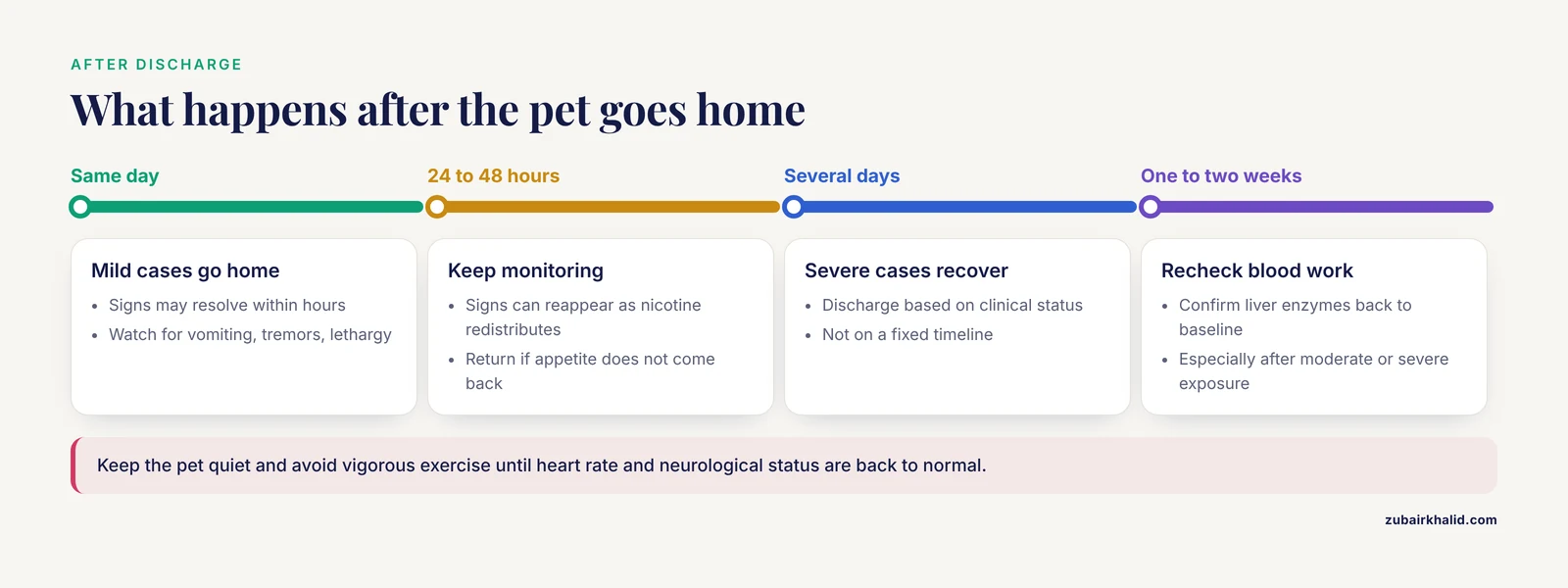
Recovery from nicotine poisoning is not always a straight line, and the follow-up period is an important part of the overall management. In pets with mild exposure, clinical signs may resolve within hours, and the pet may be discharged the same day with instructions to monitor for any recurrence of vomiting, tremors, or lethargy. In pets with more severe exposure, the recovery period may extend over several days, and the veterinarian will base the discharge decision on the pet's clinical status rather than on a fixed timeline.
Once the pet is home, the owner should expect to continue monitoring for at least 24 to 48 hours, because nicotine's effects on the nervous system can sometimes reappear as the drug is redistributed or as metabolites accumulate. The owner should also be prepared to return to the clinic if the pet's appetite does not return, if vomiting recurs, or if the pet seems unusually tired or weak. Because of the documented effects of nicotine on the liver, including increased inflammation, lipid peroxidation, and altered antioxidant enzyme expression [3], the veterinarian may recommend a follow-up blood test one to two weeks after the acute episode to confirm that liver enzymes have returned to baseline. This is especially important for pets that had moderate to severe exposure or that have pre-existing liver disease.
During the recovery period, the pet should be offered a bland, easily digestible diet if the veterinarian approves, and access to fresh water should be unrestricted. The owner should keep the pet quiet and avoid vigorous exercise until the veterinarian confirms that the heart rate and neurological status have returned to normal. In pets that experienced seizures or cardiac arrhythmias, a recheck examination and possibly an electrocardiogram may be recommended to ensure that there are no lasting effects. The prognosis for full recovery is generally good with prompt veterinary care, but the follow-up period is the time when the owner and the veterinarian together confirm that the recovery is complete.
Situational Prevention in the Home and Yard
Prevention of nicotine poisoning is not just about storing cigarettes out of reach. It is about recognizing the many situations in which a pet can encounter nicotine, and about building habits that reduce the risk. Visitors who smoke are a common source of exposure. A guest may leave a cigarette or a lighter on a coffee table, drop a butt in an ashtray, or leave a jacket with a pack of cigarettes in a pocket within reach of a curious dog. Owners should ask guests to keep their smoking materials in a bag or a closed room, and ashtrays should be emptied and cleaned after every visit, because leftover butts retain nicotine.
E-cigarettes create their own set of risks. Devices are often left on a nightstand or charging station while the owner sleeps, and a dog that chews the device can ingest the cartridge or the liquid. Refill bottles are small, brightly colored, and sometimes flavored, which can attract a pet's attention, and they are often stored in a purse or bag that a pet can open. All e-cigarette materials should be stored in a locked drawer or a high cabinet, and spent cartridges should be disposed of in a sealed container.
Outdoor spaces require their own attention. Old nicotine insecticide products, which have not been commercially available in the United States since 2014, can still be found in garages, sheds, and garden storage areas, and a pet that chews on an old bottle can receive a highly concentrated dose. These products should be disposed of properly or locked away. Yards and pastures should be checked for wild tobacco plants in the Nicotiana genus, which contain anabasine as their major toxic principle [2], and any such plants should be removed if there is a risk that a pet might chew on them.
Multi-pet households deserve special consideration, because a pet that is normally well-behaved may compete with another pet for a found object, and a small piece of gum or a butt can be swallowed whole in seconds. Owners should also think about the places where nicotine products are carried. Pockets of jackets, compartments of backpacks, and the bottom of a handbag are all common hiding places for cigarettes, gum, or lozenges, and these are exactly the places that a curious pet can reach. A simple rule applies to all of these situations: if a nicotine product can be seen, it can be reached, and if it can be reached, it can be ingested.
Understanding What the Published Cases Show
The published veterinary cases of nicotine and related alkaloid poisoning offer practical lessons for both owners and clinicians. The case report of nicotine poisoning in a dog [4] demonstrates that this condition is not merely a theoretical concern, and it confirms that with prompt, appropriate veterinary treatment, a dog can survive a significant nicotine exposure. The details of that case, including the clinical signs observed, the treatment provided, and the outcome, give veterinarians a reference point for managing similar cases and give owners a realistic sense of what to expect. The report also underscores the importance of the owner's role in recognizing the exposure, seeking help quickly, and providing the veterinary team with an accurate history.
The outbreak of Nicotiana glauca poisoning in ostriches [2] provides a different but complementary lesson. It shows that toxic alkaloids in the Nicotiana genus are not limited to the nicotine in manufactured tobacco products, and that plants in this genus can cause serious poisoning when ingested. Although the ostrich case involved a flock and a large volume of plant material, the principle applies to pets that chew on wild tobacco leaves in a yard or pasture. The chemical analysis in that outbreak, which confirmed anabasine in the leaf remnants at 114 to 177 micrograms per gram of dry weight [2], demonstrates the potency of these plant toxins and reinforces the recommendation to remove Nicotiana plants from areas where pets can access them.
Together, these published cases illustrate that nicotine and related alkaloids are real, documented threats to animal health, and that both manufactured products and plants require vigilance. They also highlight the value of the veterinary literature in building the clinical knowledge base, even when large controlled trials are not available. For the pet owner, the takeaway is clear: nicotine exposure in any form should be treated as an emergency, and the chances of a good outcome are highest when the veterinary team is involved early. This article is educational and is not a substitute for veterinary diagnosis or treatment, and every suspected exposure should be discussed with a veterinarian without delay.
Related Guides
- Cat Poisoning: Common Household Toxins and Immediate Steps: Cat-specific household toxin guidance is useful for cat owners
- Lead Poisoning in Dogs and Cats: Sources, Symptoms, Treatment: Another common poisoning in dogs and cats with similar emergency approach
- Organophosphate Insecticides Poisoning in Dogs: Signs and Treatment: Insecticide poisoning signs and treatment are relevant to nicotine insecticide exposure
- Grape Poisoning in Dogs: Symptoms to Watch For: Common dog poisoning article with symptoms owners should watch for
- Fertilizer Poisoning in Dogs: Symptoms, Risky Types, What to Do: Garden toxin exposure is another household poisoning risk for dogs
- Blue-Green Algae Poisoning in Dogs: Signs and Treatment: Environmental toxin poisoning signs and treatment for dogs
Frequently Asked Questions
What should I do if my pet ate a cigarette?
Contact your veterinarian or a pet poison control hotline immediately. Do not wait for signs to appear, because nicotine is absorbed quickly and clinical signs can develop within minutes.
How much nicotine is dangerous for a pet?
The toxic dose depends on the pet's size, age, and health. A single cigarette contains 10 to 15 mg of nicotine, and even one cigarette can be dangerous for a small dog or cat.
What are the first signs of nicotine poisoning in a pet?
Early signs typically include vomiting, excessive drooling, and agitation. These signs can progress to tremors, seizures, and cardiac problems if the dose is large.
Can secondhand smoke poison my pet?
The primary risk to pets is ingestion of nicotine products, not inhalation of smoke. However, any nicotine exposure should be taken seriously, and nicotine products should be kept out of reach.
How long does it take for nicotine symptoms to appear in pets?
Signs typically begin within minutes to a few hours after ingestion. The speed of onset depends on the dose and the pet's individual sensitivity.
What is the treatment for nicotine poisoning in pets?
Treatment is supportive and symptomatic and must be provided by a veterinarian. It may include decontamination, intravenous fluids, medications to control seizures or heart rate, and monitoring of liver function.
Can pets recover from nicotine poisoning?
Many pets recover fully with prompt veterinary care. The outcome depends on the dose ingested, the speed of treatment, and the pet's overall health.
Are e-cigarettes more dangerous than regular cigarettes for pets?
E-cigarette liquid contains concentrated nicotine, and a small amount can deliver a very large dose. All nicotine products, including e-cigarettes and refill liquids, should be kept securely out of reach of pets.
Sources
- A MINI-REVIEW ON NICOTINE AND ITS CARDIOVASCULAR EFFECTS
- Nicotiana glauca poisoning in ostriches (Struthio camelus).
- Nicotine exacerbates liver damage in a mice model of Ehrlich ascites carcinoma through shifting SOD/NF-κB/caspase-3 pathways: ameliorating role of Chlorella vulgaris.
- Nicotine poisoning in a dog.
- Marijuana poisoning.