Are Mini Roses Toxic to Cats? Pet Safety Guide
By Dr. Zubair Khalid, DVM, MS, PhD ·
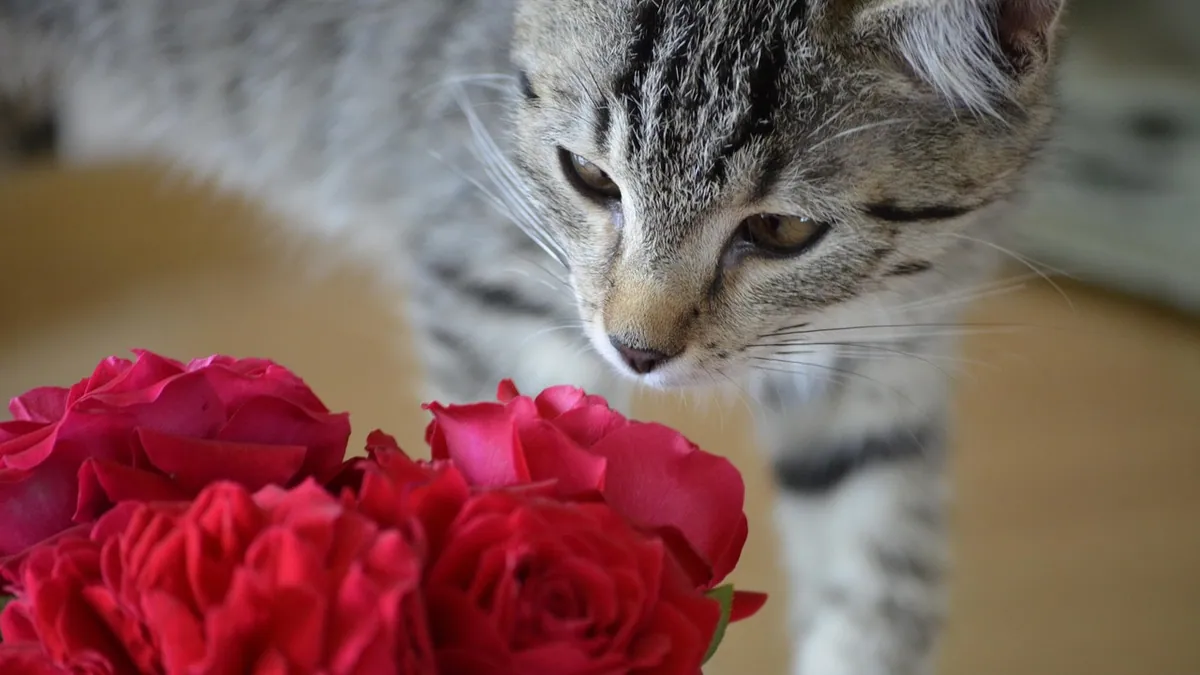
Mini roses are not toxic to cats. The rose plant itself, including the blooms and petals, is listed as non-toxic to cats by the ASPCA Animal Poison Control Center [1]. The real risks come from the thorns, the chemicals sprayed on the plant, and the preservatives florists add to the water.
This article is educational and is not a substitute for veterinary diagnosis or treatment.
Quick Answer
- Rose blooms, petals, leaves, and stems are non-toxic to cats, so a nibble on a petal is not a poisoning emergency [1].
- Thorns can puncture your cat's mouth, throat, or paws, and a swallowed thorn can injure the digestive tract.
- Pesticides, insecticides, and fungicides on the plant are often the actual danger, not the rose itself.
- Florist preservative packets and vase water can contain sugars, acids, and other compounds that cause stomach upset if your cat drinks them.
- If your cat ate a rose and seems fine, watch closely for a few hours. If you see drooling, vomiting, or trouble breathing, call your veterinarian or a pet poison hotline right away.
Is Mini Roses Toxic to Cats?
No. Miniature roses belong to the genus Rosa, and the ASPCA classifies the rose as non-toxic to cats, dogs, and horses [1]. That means the plant does not contain a poison that harms cats when they chew or swallow small amounts.
This applies to the whole plant, including the flower head, the petals, the leaves, and the green stems. If your cat bats at a mini rose and eats a petal or two, you generally do not need to panic.
Miniature rose cats encounter indoors are usually potted gift plants or cut flowers from a grocery store or florist. The plant species is the same kind of rose found in gardens. The difference is what has been done to it before it reached your home.
Rose Petals and Blooms
Rose petals cats might chew are not toxic [1]. A cat that eats a petal or a small piece of bloom may have no symptoms at all. At most, eating plant material can cause mild stomach upset because cats do not digest plant fiber well.
Some cats are attracted to the texture or smell of flowers. Others chew leaves out of boredom. A single petal is not a poisoning concern, but a cat that eats a large amount of any plant material can vomit or have loose stool.
Rose Thorns and Stems
Thorns are the main physical hazard. A cat that bites a stem can get a thorn stuck in the gums, tongue, or roof of the mouth. A thorn in the paw can cause limping and pain.
If a thorn is swallowed, it can scratch the inside of the esophagus or stomach. Sharp plant material can, in rare cases, cause a puncture or blockage. These are injuries, not poisonings, and they need veterinary care.
Pesticides and Chemicals on Roses
This is where many real-world rose problems start. Roses are heavily treated with insecticides, fungicides, and miticides in commercial greenhouses and garden centers. Residue can stay on leaves and petals after you bring the plant home.
A cat that chews a treated leaf can swallow those chemicals. The effects depend on the product. Some cause drooling, vomiting, and tremors. Others are less harmful but still upset the stomach.
If you do not know what was sprayed on the plant, treat any chewing as a possible exposure and call for advice.
Florist Preservatives and Vase Water
Cut roses often come with a small packet of flower food. These packets usually contain sugar, citric acid, and a small amount of bleach or a similar antimicrobial. The powder can irritate a cat's mouth and stomach if eaten.
Vase water is a mix of preservative, bacteria, and plant debris. A cat that drinks from the vase may vomit or have diarrhea. The volume a cat would typically drink is small, so serious poisoning is uncommon, but stomach upset is possible.
What Is the Toxic Principle?
For the rose plant itself, there is no toxic principle. The ASPCA lists the toxic principle as non-toxic [1].
The toxic principle depends on what else is on or around the plant:
- Pesticide residue: the active ingredient in the spray, which varies by product.
- Florist preservative: sugars, acids, and antimicrobial agents in the packet or vase water.
- Physical injury: thorn wounds, which are mechanical instead of chemical.
Many plant poisonings in pets happen indoors, where cats spend most of their time sharing the home environment with their owners [2]. That is why the product on the plant often matters more than the plant species.
Cats also have unique metabolic sensitivities compared with other species, which is why some compounds that are mild for dogs can be more serious for cats [3]. This is one reason to take any chemical exposure in a cat seriously, even if the amount seems small.
Signs to Watch For and Timeline
Signs after rose exposure fall into two groups: physical injury and chemical exposure.
Thorn Injury Signs
- Drooling more than usual
- Pawing at the mouth
- Refusing food or dropping food while eating
- Bad breath or a visible wound in the mouth
- Limping or holding up a paw
- Swelling around a puncture
These signs often appear within minutes to hours of the injury. A thorn stuck in the mouth can cause pain right away.
Pesticide or Preservative Signs
- Vomiting
- Diarrhea
- Drooling
- Lack of appetite
- Lethargy
- Tremors or wobbliness (with some pesticides)
- Fast or noisy breathing
Mild stomach signs may show up within a few hours. Neurologic signs from pesticide exposure can appear within hours to a day, depending on the product and the amount swallowed.
If your cat only ate a petal and has no symptoms after a few hours of normal behavior, the risk is low. If symptoms start, they usually do not wait long to appear.
What to Do Right Now
Stay calm and gather information.
- Move the plant or vase out of reach.
- Look at your cat's mouth for thorns, cuts, or swelling.
- Note what your cat ate (petal, leaf, stem, vase water, preservative powder) and roughly how much.
- Find the plant tag or the preservative packet so you can read the label.
- Call your veterinarian, the ASPCA Animal Poison Control Center at (888) 426-4435, or Pet Poison Helpline at (855) 764-7661.
Do not induce vomiting unless a veterinarian tells you to. Making a cat vomit at home can cause choking, aspiration, or injury if a thorn is involved. It can also make chemical burns worse if the substance was irritating.
If your cat has a thorn in the mouth or paw, do not pull it out yourself if it is deeply embedded. Let a veterinarian remove it with the right tools and pain control.
If your cat is having trouble breathing, is collapsing, or has severe tremors, go to an emergency clinic now.
How Veterinarians Treat Rose Exposure
Treatment depends on what happened.
For thorn injuries, your veterinarian will examine the mouth, throat, and paws. They may use sedation or local numbing to remove a thorn safely. They will check for infection and may prescribe antibiotics or pain medication. The dose is calculated from your cat's weight and health, so it is set by your veterinarian.
For pesticide or preservative exposure, treatment is supportive. Your veterinarian may give fluids under the skin or into a vein, medication for vomiting, and activated charcoal in some cases if the exposure was recent and the substance is one that charcoal binds. If neurologic signs are present, they may give medications to control tremors and monitor the heart and breathing.
Blood work may be checked to look at organ function and electrolytes. In serious poisonings in cats, electrolyte problems and organ injury can develop, and hospitalized care may be needed [4]. The exact plan depends on the product involved and how much your cat absorbed.
Outlook
The outlook for a cat that ate a rose petal is excellent. The plant is non-toxic, and most cats have no symptoms [1].
The outlook for thorn injuries is also good when the thorn is removed early and the wound is treated. Delayed care raises the risk of infection or a deeper injury.
The outlook for pesticide or preservative exposure depends on the product and the amount. Mild stomach upset usually resolves with supportive care. More serious exposures need prompt treatment, and some cases in cats can become life threatening if treatment is delayed [4].
Prevention and Safer Alternatives
A few simple habits prevent most rose-related problems.
- Keep mini roses on a high shelf, in a closed room, or in a hanging planter your cat cannot reach.
- Trim all thorns from cut roses before you put them in a vase.
- Rinse cut flowers well, or choose flowers grown without pesticides when you can.
- Never leave florist preservative packets where a cat can chew them.
- Cover vase water or use a vase with a narrow neck.
- Rinse your hands after handling treated plants.
- If you spray roses indoors, move your cat out of the room until the product dries, and follow the label.
If you want cat-safe flowers, choose blooms that are known to be non-toxic. Avoid lilies entirely, since they are highly dangerous to cats. You can read more about which blooms to avoid in Are Lilies Toxic to Cats? and Flowers That Are Toxic To Cats.
For a broader list of safe and unsafe plants, see What Plants And Flowers Are Toxic To Cats.
Cat grass, catnip, and spider plants are common alternatives that give cats something safe to chew. Rotating a few safe plants can reduce the urge to sample your flowers.
Limitations and When to Contact a Veterinarian
No article can tell you what is happening inside your specific cat. Individual cases need a veterinarian who can examine your pet, ask about the exposure, and run tests if needed.
Contact a veterinarian the same day if:
- Your cat ate part of a plant you know was sprayed with pesticide
- Your cat drank vase water or ate preservative powder
- Your cat is drooling, vomiting, or has diarrhea
- Your cat is eating less or seems tired
- You see a wound or swelling in the mouth or on a paw
Go to an emergency clinic now if:
- Your cat is having trouble breathing
- Your cat is collapsing, seizing, or having severe tremors
- Your cat has heavy bleeding from the mouth
- Your cat cannot swallow or is pawing frantically at the mouth
- Your cat is unresponsive
Schedule a routine visit if:
- Your cat had a minor thorn prick and seems comfortable, but you want the wound checked
- Your cat chewed a petal and had one episode of vomiting but is now normal
- You want help choosing cat-safe plants for your home
When in doubt, call. Poison control hotlines are staffed to help you decide whether your cat needs to be seen.
Frequently Asked Questions
Are miniature roses safe for cats to chew?
Yes, the rose plant is non-toxic to cats, so chewing a small amount is not a poisoning emergency [1]. The bigger concerns are thorns and any chemicals on the plant. Watch for mouth pain, drooling, or stomach upset after chewing.
Can my cat get sick from drinking vase water?
It can happen. Vase water may hold florist preservative, bacteria, and plant debris, and drinking it can cause vomiting or diarrhea. Most cats that take a few laps have mild signs, but call your veterinarian if your cat seems unwell.
What should I do if my cat swallowed a rose thorn?
Call your veterinarian right away. Do not try to make your cat vomit, because a thorn can injure the throat on the way back up. A veterinarian can examine your cat and decide whether imaging or removal is needed.
Do rose petals hurt cats?
Rose petals are not toxic to cats [1]. A cat that eats a petal may have no symptoms, or it may vomit a small amount of plant material. If vomiting repeats or your cat stops eating, have it checked.
Are all parts of a rose plant non-toxic to cats?
The plant itself is listed as non-toxic, including the blooms and foliage [1]. The parts that cause trouble are the thorns and anything added to the plant, such as pesticides or florist preservatives. Keep treated plants and vase water away from your cat.
Related Articles
- Flowers That Are Toxic To Cats
- Flowers Toxic To Cats
- What Flowers Are Toxic To Cats
- Are Lilies Toxic to Cats?
- What Plants And Flowers Are Toxic To Cats
- Plants Toxic To Cats
- Are Geraniums Toxic to Cats? Rose, Scented, and Wild Types
- Are Azaleas Toxic to Cats? Flowers, Leaves, and Bushes
- Is Philodendron Toxic to Cats? Varieties and Risks
References
- Toxic and Non-toxic Plants: Rose. ASPCA Animal Poison Control Center.
- Indoor Companion Animal Poisoning by Plants in Europe. Frontiers in veterinary science, 2020.
- Predictive q-RASAR modeling of intrinsic toxicity of pharmaceuticals and bioactive compounds in cats. Journal of hazardous materials, 2026.
- Barium Toxicosis After Ingestion of Snake Fireworks in a Cat. Journal of veterinary emergency and critical care (San Antonio, Tex. : 2001), 2026.