Is Lysol Toxic to Cats? Wet, Dry, and Spray Risks
By Dr. Zubair Khalid, DVM, MS, PhD ·
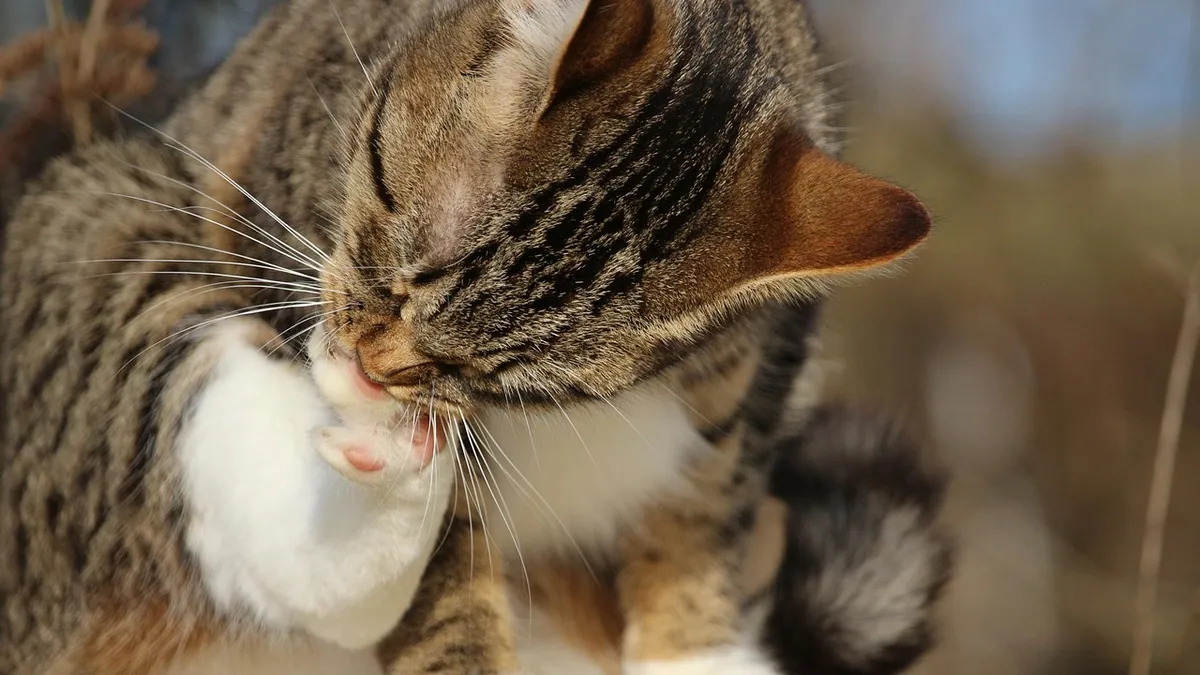
Is Lysol toxic to cats? Yes. Most Lysol products contain benzalkonium chloride or other disinfecting chemicals that can harm cats when they lick, inhale, or contact wet surfaces. The risk drops as surfaces dry, but "dry" does not always mean "safe," especially on food bowls, counters, and floors your cat walks on.
This article is educational and is not a substitute for veterinary diagnosis or treatment.
Quick Answer
- Wet Lysol sprays, wipes, and concentrated cleaners are the highest risk. Cats can be poisoned by licking treated surfaces, walking through wet cleaner, or grooming themselves afterward.
- Drying reduces risk but does not eliminate it. Residue can stay on hard surfaces and transfer to paws, fur, and food.
- The most common signs of benzalkonium chloride exposure in cats are drooling, tongue ulcers, and oral ulcers, and these can start within minutes to hours [1].
- If you suspect exposure, call your veterinarian, the ASPCA Animal Poison Control Center at (888) 426-4435, or Pet Poison Helpline at (855) 764-7661 right away.
- Do not induce vomiting unless a veterinarian tells you to.
Is Lysol Toxic to Cats? Which Products and Ingredients Matter
The short answer is that the danger depends on the product and the ingredient list. Lysol makes many items, and they are not all equally risky.
Sprays
Aerosol and pump sprays are a common concern. When you spray, fine droplets land on floors, counters, furniture, and your cat's coat. A cat who walks through the mist or across a wet floor will groom the chemical off her paws later. Inhaled droplets can also irritate the nose, throat, and airways.
Wipes
Lysol wipes are often used on counters and tables. The surface stays wet for a while, and the wipe itself holds a concentrated dose of cleaner. A cat who licks a freshly wiped counter or plays with a discarded wipe can swallow a meaningful amount.
Concentrated cleaners and all-purpose liquids
These are usually diluted before use, but the concentrate is the strongest form. Spills, mop water, and buckets left out are real hazards. Cats are small, and a few licks of concentrated cleaner can cause serious oral injury.
Lemon Lysol
Lemon-scented Lysol is not safer for cats. The lemon scent comes from fragrance, not from a harmless ingredient, and the disinfecting chemicals are still present. Citrus scents can also make a product more appealing to investigate, which raises the chance of contact.
What about "pet safe" labels?
A label that says "kills 99.9% of germs" tells you nothing about cat safety. Read the active ingredients instead. Benzalkonium chloride is one of the most common disinfecting ingredients in household antibacterial cleaners and disinfectants, and it is a well-documented cause of cat poisoning [1].
The Toxic Principle: What Benzalkonium Chloride Does in the Body
Benzalkonium chloride is a quaternary ammonium compound. It works by disrupting cell membranes, which is how it kills bacteria. Unfortunately, it does the same thing to the moist tissues it touches in your cat.
When a cat licks or mouths a treated surface, the chemical contacts the tongue, gums, and throat. That direct contact causes irritation and tissue damage. This is why tongue ulceration and oral ulceration are so common in reported cases [1]. Drooling is the body's attempt to flush the irritant away, and it was the single most common sign in a review of 245 feline exposures, seen in 53.9 percent of cats [1].
Skin contact matters too. If cleaner sits on the coat or paws, it can irritate the skin and then be swallowed during grooming. In that same review, 58 cats had skin-only exposure and 57 cats had more than one route of exposure, which shows how easily a surface contact becomes an ingestion [1].
Benzalkonium chloride is also used as a preservative in some eye medications, and research in healthy cats shows it can affect the ocular surface, tear function, and the meibomian glands with repeated exposure [2]. That is a different situation from household cleaning, but it confirms that this chemical is not inert on feline tissue.
Signs of Lysol Poisoning in Cats and How Fast They Appear
Signs can show up quickly. In reported cases, the average time to the first clinical sign was 6.4 hours, with a range from five minutes to 48 hours and a median of 4.5 hours [1]. Some cats react almost immediately, and others look normal for a day.
Watch for:
- Drooling or hypersalivation (the most common sign) [1]
- Ulcers or sores on the tongue [1]
- Ulcers in the mouth or on the gums [1]
- Pawing at the mouth, lip smacking, or dropping food
- Refusing to eat or drink because the mouth hurts
- Vomiting or retching
- Coughing, sneezing, or trouble breathing after inhaling spray
- Red, irritated skin or paws
- Lethargy or hiding
- Elevated body temperature (hyperthermia was reported in 40.4 percent of cases) [1]
A cat with oral ulcers may sit with her tongue out, drool continuously, or cry when she tries to eat. These are not mild signs. Mouth pain in cats can progress to dehydration and weight loss within a day or two.
If your cat has swallowed a cleaner and is now vomiting, weak, or breathing hard, treat it as an emergency. Other household poisons can look similar, and a veterinarian needs to sort out the cause. For comparison, some toxins cause delayed organ damage instead of immediate mouth pain, such as the kidney injury seen with ethylene glycol poisoning [3] or the severe acute kidney injury reported after accidental oclacitinib ingestion [4]. Getting an early exam matters either way.
How Long Is Lysol Toxic to Cats When Dry?
This is the question owners ask most, and the honest answer is that it depends on the surface, the product, and how much residue is left.
As a general rule, a hard, non-porous surface that has been cleaned and then rinsed with plain water is much lower risk once fully dry. A surface that was wiped and left to air dry without rinsing can hold residue that transfers to paws and fur.
Here is a practical way to think about it:
- Wet product: high risk. Keep your cat away until the surface is dry and rinsed.
- Damp, tacky surface: still risky. Cats groom their paws, so anything sticky on the floor ends up in the mouth.
- Dry but unrinsed: lower risk, but not zero. Residue can remain, especially on textured or porous surfaces.
- Dry and rinsed with water: lowest risk for most hard surfaces.
Food and water bowls, countertops where you prepare food, and floors where your cat eats or lies down deserve the most caution. A bowl wiped with a disinfecting wipe and not rinsed can leave chemical residue right where your cat eats.
There is no single number of hours that applies to every product. Drying time depends on humidity, airflow, and the surface. If you can still smell the cleaner, assume residue is present.
What to Do Right Now If Your Cat Was Exposed
Act quickly and do not wait for signs to appear.
- Move your cat away from the area. Close the door or move her to a room with no treated surfaces.
- If cleaner is on her coat or paws, wipe it off. Use a damp cloth with plain water and wipe away from the face. Do not scrub broken skin.
- If she licked or ate the product, do not induce vomiting. Vomiting a caustic cleaner can burn the mouth and throat a second time. Only induce vomiting if a veterinarian tells you to.
- Call for guidance. Contact your veterinarian, the ASPCA Animal Poison Control Center at (888) 426-4435, or Pet Poison Helpline at (855) 764-7661. Have the product container with you so you can read the ingredients.
- Do not give food, milk, or home remedies unless a veterinary professional tells you to.
- Rinse the mouth only if instructed. Offering a small amount of water to drink is generally fine if your cat is alert, but do not force fluids.
If your cat is drooling heavily, has visible mouth sores, is vomiting, or is having trouble breathing, go to an emergency clinic now.
Veterinary Treatment for Lysol Exposure in Cats
Treatment depends on the route and severity. Your veterinarian will examine the mouth, skin, eyes, and breathing first.
Common supportive care for benzalkonium chloride exposure includes antibiotics, intravenous fluids, pain medication, and gastroprotectants [1]. In the reported cases, antibiotics were given in 82.0 percent of cats, fluids in 50.2 percent, analgesia in 45.3 percent, and gastroprotectants in 31.0 percent [1]. These numbers reflect how often mouth injuries and dehydration occur.
Your veterinarian may also:
- Rinse the mouth or eyes with sterile saline
- Give medication for nausea or stomach protection
- Place a feeding tube if your cat will not eat
- Hospitalize for fluids and monitoring
- Run blood work to check organ function if a large amount was swallowed
Doses of any medication are calculated by your veterinarian based on your cat's weight and health. Never give human pain relievers to a cat.
Outlook After Lysol Exposure
Many cats recover well with prompt care, especially when the exposure was small and treatment started early. Mouth ulcers are painful but often heal with supportive treatment and time.
The outlook is worse when exposure is large, when treatment is delayed, or when a cat stops eating and drinking. One detail from the reported cases stands out: owners contacted poison services an average of 14.0 hours after exposure, even though signs often began within hours [1]. That delay can let dehydration and mouth damage get worse.
If your cat has other health problems, or if the exposure involved a different toxin, the outlook can change. For example, cats with serious kidney injury from other poisons may need long hospital stays and can still die despite intensive care [4]. Early veterinary assessment is the single best thing you can do for your cat's chances.
Prevention and Safer Alternatives
The easiest way to protect your cat is to keep disinfectants and cats apart.
- Clean when your cat is in another room, then let surfaces dry completely.
- Rinse food bowls, water bowls, and food-prep counters with plain water after disinfecting.
- Store wipes, sprays, and concentrates in closed cabinets your cat cannot open.
- Never leave mop water, buckets, or used wipes where a cat can reach them.
- Choose a different product for cat areas when possible. Plain soap and water, or a dedicated pet-safe cleaner, handles most everyday messes.
- If you must use a strong disinfectant, use it on surfaces your cat does not contact, and rinse afterward.
Other household hazards deserve the same attention. Lilies and many other flowers can cause severe poisoning in cats, so check any bouquet before it comes inside. You can review Are Lilies Toxic to Cats?, Flowers That Are Toxic To Cats, and Plants Toxic To Cats for room-by-room guidance. If you give your cat any supplement or oil, check the safety profile first, as described in CBD Oil for Cats: Feline Safety Profile and THC Toxicity.
Limitations and When to Contact a Veterinarian
This article covers general information. Your cat's individual case needs a veterinarian who can examine her, ask about the product, and decide on treatment.
Contact a veterinarian the same day if:
- You saw your cat lick or mouth a treated surface
- Your cat is drooling more than usual
- She is pawing at her mouth or refusing food
- You are not sure how much she swallowed
Go to an emergency clinic now if:
- Your cat has visible ulcers or bleeding in the mouth
- She is vomiting repeatedly
- She is having trouble breathing, coughing, or wheezing
- She is weak, collapsed, or unresponsive
- She has a high body temperature or is panting
Schedule a routine visit if:
- Signs were mild and have fully resolved, but you want a mouth check
- Your cat had skin contact and the area still looks red or irritated
- You want help choosing safer cleaning products for your home
Frequently Asked Questions
Is Lysol spray toxic to cats?
Yes, Lysol spray can be toxic to cats, especially while the mist is in the air or the surface is still wet. Droplets land on the coat and paws, and cats swallow them during grooming. Inhaled spray can also irritate the airways.
Are Lysol wipes toxic to cats?
Yes, Lysol wipes can poison cats. The wipe holds a concentrated cleaner, and a cat who licks a freshly wiped counter or chews a used wipe can swallow enough to cause drooling and mouth ulcers. Rinse surfaces with plain water after wiping if your cat has access to them.
Is Lysol poisonous to cats after it dries?
Dried Lysol is less dangerous than wet Lysol, but it is not guaranteed safe. Residue can remain on unrinsed surfaces and transfer to paws, fur, and food. Rinsing with plain water after the surface dries lowers the risk further.
Is lemon Lysol toxic to cats?
Yes, lemon Lysol is toxic to cats for the same reasons as other Lysol products. The lemon scent does not make it safer, and the disinfecting ingredients can still injure the mouth and stomach. Treat it exactly like any other Lysol cleaner.
Can my cat get sick just from walking on a cleaned floor?
Yes, a cat can get sick from walking on a wet or damp cleaned floor. She picks up residue on her paws and then grooms them, which moves the chemical into her mouth. Keep her off the floor until it is fully dry, and rinse if the product label allows it.
Related Articles
- Are Lilies Toxic to Cats?
- CBD Oil for Cats: Feline Safety Profile and THC Toxicity
- Flowers That Are Toxic To Cats
- Flowers Toxic To Cats
- Plants Toxic To Cats
- My Cat Threw Up Yellow Liquid
- Is Disinfectant Toxic to Cats? Cleaning Spray Safety
- Is Clorox Toxic to Cats? Bleach and Spray Safety
- Is Bleach Harmful to Cats? Fumes, Dilution, Safety
References
- Benzalkonium chloride exposure in cats: a retrospective analysis of 245 cases reported to the Veterinary Poisons Information Service (VPIS). The Veterinary record, 2015.
- Fifteen-day topical ketorolac tromethamine, with and without benzalkonium chloride, alters tear function, goblet cell density, and meibomian gland integrity in healthy cats. Veterinary world, 2026.
- Ethylene glycol poisoning in a free-roaming cat associated with suspected animal cruelty: a forensic veterinary case report in South Korea. Frontiers in veterinary science, 2026.
- Severe Toxicosis Secondary to Accidental Oclacitinib Ingestion in Three Cats. Journal of veterinary emergency and critical care (San Antonio, Tex. : 2001), 2026.