Is a Pachira Money Tree Toxic to Cats? Braided Plant Safety
By Dr. Zubair Khalid, DVM, MS, PhD ·
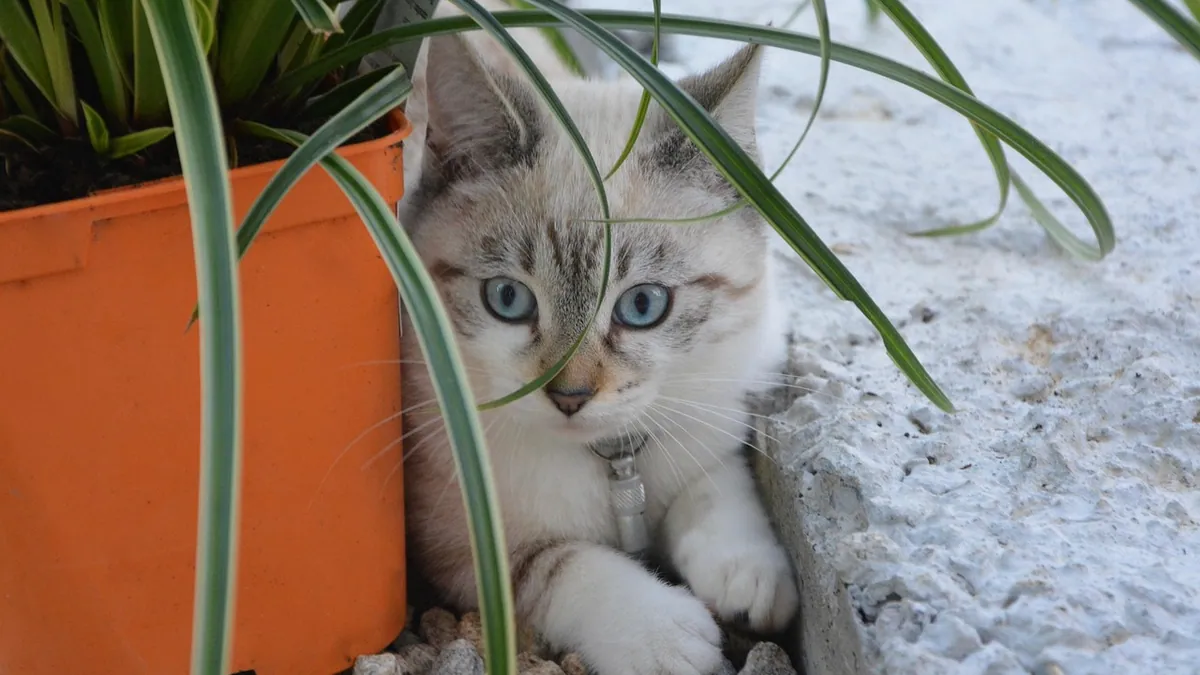
Is a Pachira money tree toxic to cats? According to the ASPCA Animal Poison Control Center, the answer is no. Pachira aquatica, the species sold as the money tree, is listed as non-toxic to cats, dogs, and horses [1]. That said, "non-toxic" does not mean "no consequences." Cats that chew on the leaves or braided trunk can still end up with nausea, vomiting, and loose stool [1].
This article is educational and is not a substitute for veterinary diagnosis or treatment.
Quick Answer
- Pachira aquatica (money tree, money plant) is listed as non-toxic to cats, with no toxic principles identified [1].
- The ASPCA record does list possible clinical signs after ingestion: nausea, vomiting, and loose stool [1].
- The braided trunk is the same plant, so a braided money tree carries the same risk profile as a single-stem one.
- A cat that ate money tree leaves usually needs monitoring at home, not emergency treatment, unless signs are severe or keep going.
- If you are unsure what your cat ate, call the ASPCA Animal Poison Control Center at (888) 426-4435 or Pet Poison Helpline at (855) 764-7661.
Is Pachira Money Tree Toxic to Cats?
The short answer from the ASPCA is no. Their plant record for Pachira aquatica lists it as non-toxic to cats, dogs, and horses, with no toxic principles identified [1]. The plant also goes by the common name money plant, and it belongs to the Malvaceae family [1].
This matters because money trees are sold everywhere, often with labels claiming they are pet safe. For once, the label matches the official listing. If you have been searching "is pachira money tree toxic to cats" while staring at a chewed leaf on your floor, the ASPCA listing is the most direct answer available.
Is a Braided Money Tree Toxic to Cats?
A braided money tree is the same species, just several young trunks woven together as they grow. The braid is a growing style, not a different plant. So the toxicity answer does not change. A braided tree cat owners bring home carries the same non-toxic listing as an unbraided one [1].
The braid does create one practical difference. The woven trunk has crevices where moisture, soil, and fertilizer salts collect. A cat that gnaws on the braid may swallow more dirt or fertilizer residue than a cat nibbling a smooth stem. Fertilizer and soil additives are a separate question from the plant itself, and your veterinarian can help you sort out what was in the pot.
Which Parts of the Plant Are Involved?
The ASPCA listing covers the plant as a whole and does not single out any part as toxic [1]. Leaves, stems, and trunk all fall under the same non-toxic listing.
The signs listed by the ASPCA (nausea, vomiting, loose stool) are most often linked to a cat eating plant material in general [1]. A cat's gut is not built to process large amounts of fibrous leaves. Chewing and swallowing plant matter can irritate the stomach and move through the intestines faster than normal.
What Is the Toxic Principle in a Money Tree?
There is no toxic principle. The ASPCA record states "Toxic Principles: None" for Pachira aquatica [1].
That is unusual and worth pausing on. Most plants that cause problems in cats do so because of a specific chemical. Lilies cause kidney failure. Sago palms damage the liver. Grapes and raisins are linked to acute kidney injury in pets, and a large study of emergency records looked at how fresh and processed grape ingestion plays out in dogs and cats [2]. Money trees do not have a comparable toxin.
So why do some cats get sick after chewing one? The most likely explanation is mechanical and dietary, not poisonous. Plant fiber in a cat's stomach can trigger nausea and vomiting. Some cats are sensitive to the texture or the volume they swallow. Others may react to whatever is in the potting mix.
Why the "Cat Safe" Label Is Thin Evidence
Here is the honest part. The non-toxic listing is reassuring, but it is not a guarantee that your specific cat will have zero reaction. The ASPCA listing itself notes that nausea, vomiting, and loose stool can occur [1]. That is the same organization that calls the plant non-toxic.
So the label means "no known toxin," not "no possible upset." If your cat has a sensitive stomach, a chronic GI condition, or a habit of eating every plant in the house, a money tree can still cause a bad day.
Signs Your Cat Ate Money Tree Leaves
The signs to watch for are the ones the ASPCA lists: nausea, vomiting, and loose stool [1]. In practice, nausea in a cat can look like lip licking, drooling, food refusal, or hanging over the water bowl without drinking.
Vomiting may bring up leaf fragments, clear fluid, or food. Loose stool may be a single soft stool or several episodes. Many cats that chew a leaf have no signs at all.
Timeline: When Signs Show Up
The ASPCA listing does not give a specific onset window for money tree ingestion [1]. In general veterinary practice, gut upset from eating plant material tends to show up within a few hours to about a day. If your cat is still normal 24 hours after a small nibble, a serious reaction is unlikely.
If signs do appear, they usually resolve on their own within a day or two once the plant material passes. Signs that last longer, get worse, or come with lethargy or appetite loss need a veterinarian.
Signs That Are Not Typical for Money Tree
Some signs do not fit the money tree picture and should push you to call a veterinarian right away. Repeated vomiting that will not stop, vomiting blood, a distended or painful belly, collapse, tremors, trouble breathing, or a cat that will not eat or drink for more than a day are all reasons to seek care.
These signs suggest something other than a simple plant nibble. Your cat may have eaten a different plant, gotten into medication, or have an unrelated illness. A cat that eats plants outdoors may also have swallowed pesticide residue, fertilizer, or a toxic plant you did not see. If you are trying to sort out what is dangerous, our guide to plants toxic to cats covers the common household offenders.
What to Do Right Now If Your Cat Ate Money Tree Leaves
First, take the plant away from your cat and put it somewhere out of reach. Then check your cat's mouth for leaf fragments and look at the plant to see how much is missing.
If your cat seems normal, you can monitor at home. Offer water, keep meals small and normal, and watch for vomiting or loose stool over the next 24 hours.
If your cat is vomiting, drooling, or clearly uncomfortable, call your veterinarian or a poison control line. The ASPCA Animal Poison Control Center can be reached at (888) 426-4435, and Pet Poison Helpline at (855) 764-7661. Both are staffed to help you decide whether your cat needs to be seen.
Do not induce vomiting unless a veterinarian tells you to. Making a cat vomit at home can cause choking, aspiration, or injury, and it is not needed for a plant with no toxic principle [1]. Your veterinarian will decide if decontamination is appropriate based on what was eaten and when.
What to Tell Your Veterinarian
Have these details ready when you call:
- Which plant and which part your cat chewed (leaf, stem, braided trunk)
- Roughly how much is missing
- When it happened
- Your cat's age, weight, and any health conditions
- Any medications your cat takes
- Whether your cat has vomited or had loose stool, and how many times
If you are not sure the plant is a money tree, bring a photo or a cutting with you. Plant identification errors are common, and the wrong ID can change the whole plan. Our article on what plants are toxic to cats with pictures can help you compare what you have at home.
Veterinary Treatment for Money Tree Ingestion
Most cats that chew a money tree do not need treatment. If your cat has mild vomiting or soft stool, your veterinarian may recommend a bland diet, small frequent meals, and plenty of water for a day or two. Some cats get an anti-nausea medication or a probiotic.
If your cat is dehydrated from repeated vomiting or diarrhea, your veterinarian may give fluids under the skin or into a vein. Bloodwork is usually not needed for a plant with no toxic principle [1], but it may be recommended if your cat has other health problems or if the signs do not fit.
If your veterinarian suspects your cat ate something else along with the plant, the plan changes. Some toxins require specific treatments, and some cause organ damage that only shows up on lab work. For example, accidental ingestion of human or veterinary medications can cause severe acute kidney injury in cats, and cases have been reported where cats needed intensive supportive care after large overdoses [3]. That is a very different situation from a money tree leaf.
If Your Cat Ate Something Else Too
Cats are not picky, and a plant pot is a tempting place to investigate. If your cat may have swallowed fertilizer, pesticide, or a medication, say so when you call. Do not wait for signs to appear. Some toxins cause damage before a cat looks sick.
Outlook After a Cat Eats a Money Tree
The outlook is good. With no toxic principle in the plant [1], most cats recover fully with monitoring or simple supportive care. Vomiting and loose stool, when they happen, are usually short lived.
The main risk is not the plant itself. It is the chance that your cat ate something else, or that repeated plant eating is a sign of an underlying problem. Some cats chew plants because of boredom, stress, or an upset stomach. If your cat is a repeat offender, that pattern deserves a conversation with your veterinarian.
Prevention and Safer Alternatives
The simplest prevention is placement. Put the money tree where your cat cannot reach it. A hanging planter, a tall shelf, or a room your cat does not enter all work. If your cat is a climber, a shelf may not be enough.
You can also make the plant less appealing. Cats often chew plants for texture and entertainment. Offer cat grass or a catnip plant instead. Rotate toys and add vertical climbing space to redirect the behavior.
If you want a plant that is documented as non-toxic, check the ASPCA listing before you buy. Keep in mind that "non-toxic" still allows for stomach upset [1]. Our guide to house plants toxic to cat can help you build a safer plant collection, and are snake plants toxic to cats answers a common question about another popular houseplant.
Watch the Pot, Not Just the Plant
Fertilizer spikes, slow-release granules, and fresh potting soil can all cause problems if a cat digs or eats them. Use pet-safe potting practices, and keep the saucer and soil surface clean. If your cat likes to dig, cover the soil with large decorative stones.
Limitations and When to Contact a Veterinarian
The non-toxic listing is based on the plant itself [1]. It does not account for your cat's individual health, the amount eaten, or anything else in the pot. Individual cases need a veterinarian who can examine your cat and ask the right questions.
Call your veterinarian the same day if your cat has vomited more than once, has loose stool that keeps going, is drooling heavily, or seems uncomfortable. Call right away, as an emergency, if your cat is having trouble breathing, is collapsed or unresponsive, has tremors or seizures, has a swollen or painful belly, is vomiting blood, or cannot keep water down.
Schedule a routine visit if your cat chews plants often, has lost weight, or has had repeated bouts of vomiting or soft stool over weeks. That pattern may point to a diet problem, dental pain, or a chronic intestinal condition.
Frequently Asked Questions
Is a braided money tree toxic to cats?
No. A braided money tree is the same species as a standard money tree, and Pachira aquatica is listed as non-toxic to cats [1]. The braid is a growing style, not a separate plant. Chewing the braided trunk can still cause stomach upset from the plant material itself.
Are money trees safe for cats to be around?
Yes, the plant can stay in a home with cats. The ASPCA lists it as non-toxic, with no toxic principles identified [1]. Keep in mind that a cat can still vomit or have loose stool after eating leaves, so watch your cat after any chewing.
What happens if a cat eats money tree leaves?
Most cats have no signs or mild stomach upset. The ASPCA lists nausea, vomiting, and loose stool as possible signs after ingestion [1]. If your cat seems normal, monitor at home for a day. If signs are severe or continue, call your veterinarian.
Should I make my cat vomit after eating a money tree?
No, not unless a veterinarian tells you to. There is no toxic principle in the plant, so decontamination is usually not needed [1]. Inducing vomiting at home can cause choking or other injuries. Call your veterinarian or a poison control line first.
Can a money tree cause kidney failure in cats?
There is no evidence that it does. The ASPCA lists no toxic principles for Pachira aquatica [1], and kidney injury is not a listed effect. Kidney failure in cats after plant exposure is linked to other plants and substances, not money trees. If your cat has kidney signs, get veterinary care right away.
Related Articles
- Are Snake Plants Toxic To Cats
- Plants Toxic To Cats
- What Plants Can Be Toxic To Cats
- House Plants Toxic To Cat
- What Plants Are Toxic To Cats With Pictures
- House Plants Toxic To Cats Pictures
- Is Money Tree Toxic to Cats? Leaves, Sap, and Types
- Is Money Tree Toxic to Dogs? Pachira Safety
- Is Christmas Tree Alternanthera Toxic to Cats?
References
- Toxic and Non-toxic Plants: Money Tree. ASPCA Animal Poison Control Center.
- A multicenter, retrospective, cross-sectional analysis of fresh and processed Vitis vinifera (grape) ingestion in dogs and cats. Frontiers in veterinary science, 2026.
- Severe Toxicosis Secondary to Accidental Oclacitinib Ingestion in Three Cats. Journal of veterinary emergency and critical care (San Antonio, Tex. : 2001), 2026.