Are Geraniums Toxic to Cats?
By Dr. Zubair Khalid, DVM, MS, PhD ·
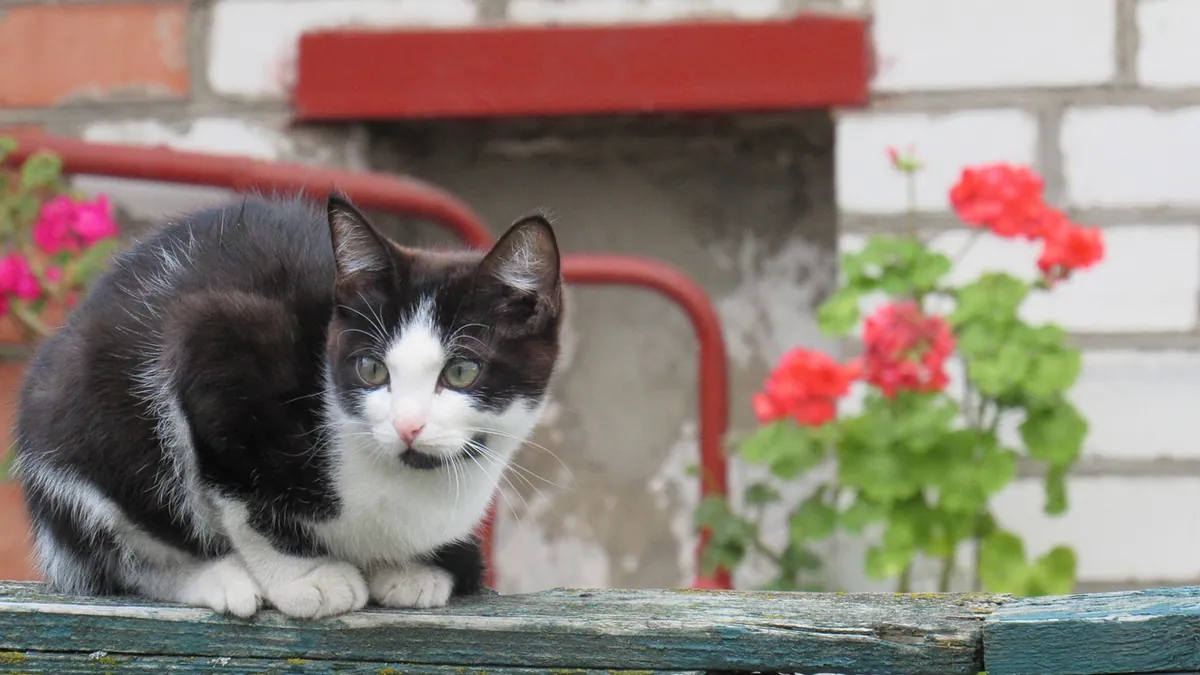
Are geraniums toxic to cats? Yes. The ASPCA Animal Poison Control Center lists geranium (Pelargonium species) as toxic to cats, dogs, and horses, with geraniol and linalool as the toxic principles [1]. Most cases involve mild stomach upset, but the plant's identity matters because several look-alikes are far more dangerous.
This article is educational and is not a substitute for veterinary diagnosis or treatment.
Quick Answer
- True geraniums and the common garden Pelargoniums are listed as toxic to cats by the ASPCA, with vomiting, loss of appetite, depression, and skin irritation as the expected signs [1].
- The toxic principles are geraniol and linalool, plant compounds that irritate the stomach and skin [1].
- A single small nibble often causes only mild, short-lived upset, but any ingestion is worth a phone call to your veterinarian or a poison control line.
- Geranium essential oil is more concentrated than the plant and should never be used on or near a cat.
- If your cat is vomiting repeatedly, drooling, or acting depressed after chewing a plant, treat it as an urgent problem and call for advice right away.
Are Geraniums Toxic to Cats? What the ASPCA Record Says
The ASPCA's toxic plant database lists geranium under the scientific name Pelargonium species, family Geraniaceae, and records it as toxic to dogs, cats, and horses [1]. The same record names geraniol and linalool as the toxic principles and lists vomiting, anorexia, depression, and dermatitis as the clinical signs [1].
That record is the clearest answer to the search "are geraniums toxic to cats aspca," and it is the one most veterinarians and poison control staff work from. It also explains why the plant has a reputation for being mildly instead of severely poisonous. The expected problems are stomach upset and skin irritation, not organ failure.
True Geraniums vs. Pelargoniums
Gardeners use the word "geranium" for two different groups of plants. The hardy perennial geraniums (often called cranesbill) are true Geranium species. The potted and bedding plants sold at garden centers as geraniums are usually Pelargonium species, which is the group named in the ASPCA record [1].
Both groups belong to the same plant family and share similar chemistry, so the practical advice is the same. If your cat chews on any plant labeled geranium, assume it can cause mild stomach upset.
Is Zonal Geranium Toxic to Cats?
Yes. Zonal geraniums are Pelargonium cultivars, the type most often grown in pots and window boxes, and they fall under the same ASPCA listing for Pelargonium species [1]. The toxic principles, geraniol and linalool, are the same across these cultivars [1].
There is no evidence that one Pelargonium cultivar is safe while another is dangerous. Treat every zonal, ivy, or scented geranium in your home the same way.
Which Parts of the Plant Matter
The ASPCA record does not single out one part of the plant as the only toxic one [1]. The compounds responsible are distributed through the plant, and the leaves are what cats most often chew because they are easy to reach.
The bigger variable is how much was eaten and how sensitive your cat is. A cat that bites a leaf and walks away is a different situation from a cat that eats a whole stem.
Geranium Oil and Essential Oils
Geranium oil is a concentrate, and that changes the risk. A safety assessment of geranium rose oil from Pelargonium graveolens concluded that the additive should be considered an irritant to skin and eyes and a skin and respiratory sensitizer [2]. That assessment was written for animal feed, but the irritation finding is the part that matters for a cat walking across a freshly oiled surface or grooming oil off its coat.
Never apply geranium oil to your cat, never diffuse it in a closed room with a cat inside, and never add it to food or water. Cats groom themselves constantly, so anything on the coat ends up in the mouth.
Cats Allergic to Geranium
Owners sometimes ask whether their cat is allergic to geranium. The more common problem is direct irritation instead of allergy. The ASPCA lists dermatitis as one of the clinical signs of geranium exposure, which means contact with the plant can irritate skin [1]. Geranium rose oil is also classified as a skin and respiratory sensitizer, meaning repeated contact can make reactions more likely over time [2].
If your cat develops redness, crusting, or hair loss on the muzzle, chin, or paws after rubbing against a geranium, that is a reason to see your veterinarian. Skin problems in cats have many causes, and a veterinarian can sort out which one you are dealing with.
The Toxic Principle and What It Does in the Body
Geraniol and linalool are the two compounds named in the ASPCA record for geranium toxicity [1]. Both are natural components of the plant's oils, and both are also used in insect repellent and fragrance products.
These compounds are irritants. When a cat chews a leaf, the oils contact the mouth, throat, and stomach lining and trigger nausea and vomiting. When the oils sit on skin, they can cause local irritation. Geraniol also has documented insecticidal and repellent activity against cat fleas in laboratory testing, which shows the compound is biologically active against insects, not that it is safe to apply to a cat [3].
The body handles these oils by breaking them down and clearing them, which is why most mild exposures resolve with supportive care. The dose and the amount of plant material eaten determine how sick a cat gets.
Signs of Geranium Poisoning in Cats and Their Timeline
The ASPCA lists four clinical signs for geranium: vomiting, anorexia, depression, and dermatitis [1]. In practice, that looks like this:
- Vomiting, sometimes several times in the first few hours
- Drooling or lip smacking
- Refusing food or turning away from the bowl
- Hiding, sleeping more, or acting dull
- Red, irritated, or crusty skin where the plant touched the coat
Timing usually follows the meal. Signs tend to appear within a few hours of ingestion, and mild cases often settle within a day with rest and fluids. If vomiting continues past a day, or if your cat stops eating entirely, the problem needs veterinary attention.
Dermatitis can take longer to show up because it depends on repeated contact. A cat that brushes the same plant every day may develop a slow-building skin problem instead of a sudden one.
What to Do Right Now
If you saw your cat chew a geranium, take these steps in order.
- Move the plant out of reach and take a photo of it, including any label. Plant identification helps the veterinarian or poison control staff give you the right advice.
- Estimate how much was eaten. A chewed leaf tip is different from a missing stem.
- Call your veterinarian, the ASPCA Animal Poison Control Center at (888) 426-4435, or Pet Poison Helpline at (855) 764-7661. Have your cat's weight, age, and any health conditions ready.
- Do not induce vomiting unless a veterinarian tells you to. Making a cat vomit at home can cause aspiration, choke the airway, or make things worse if the substance is caustic.
- Do not give human medications, milk, oil, or home remedies. None of these help, and some cause harm.
- If the plant touched the skin, rinse the area with lukewarm water and mild soap if your cat will tolerate it, then dry gently.
If your cat is breathing normally and acting like itself, a phone call is still the right first move. Poison control staff can tell you whether you need to come in or whether you can monitor at home.
How Veterinarians Treat Geranium Exposure
Treatment depends on what your cat ate and how it looks when it arrives. Most mild cases need supportive care instead of a specific antidote, because there is no antidote for geraniol or linalool.
Your veterinarian will likely start with a physical exam and questions about the plant, the amount, and the timing. If the exposure was recent and the plant material is still in the stomach, the veterinarian may choose to induce vomiting in the clinic, where it can be done safely and monitored. That decision is made by the veterinarian, not at home.
From there, care usually includes:
- Anti-nausea medication to stop vomiting and let the stomach settle
- Fluids under the skin or into a vein if your cat is dehydrated
- A bland diet once vomiting stops, reintroduced slowly
- Activated charcoal only if the veterinarian decides it is appropriate for the timing and the substance
- Skin treatment with gentle cleaning and, if needed, medication for irritation
Blood work may be recommended if your cat is depressed, not eating, or has other health problems. It helps rule out other causes and shows how well the kidneys and other organs are working. Any medication dose is calculated by your veterinarian from your cat's weight and health status.
Outlook After Geranium Ingestion
The outlook for geranium exposure is generally good. The ASPCA lists vomiting, anorexia, depression, and dermatitis as the expected signs, which are manageable problems instead of organ failure [1]. Most cats that receive prompt supportive care recover fully.
The cats that do worse are usually the ones with heavy exposure, underlying illness, or a delay in care. A cat that vomits for two days and stops eating can become dehydrated and develop liver problems from not eating, which is a separate and serious concern in cats.
If your cat has other toxic plants in the house, the outlook depends on which plant it got into. Some common houseplants cause far more severe poisoning than geranium. Our guide to plants toxic to cats covers the ones that cause the most serious problems, and are lilies toxic to cats? explains why lilies are in a different risk category entirely.
Prevention and Safer Alternatives
The simplest prevention is placement. Put geraniums on a shelf, hanging basket, or windowsill your cat cannot reach, and keep fallen leaves and prunings off the floor.
Other practical steps:
- Skip geranium essential oil diffusers in rooms your cat uses
- Wash your hands after handling geraniums and before petting your cat
- Check cut flowers and gift bouquets for geranium foliage before bringing them inside
- Watch for nibble marks on leaves, which tell you a plant is within reach
If you want greenery your cat can share space with, choose species with a better safety record. Spider plants are a common choice, and you can read more in are spider plants toxic to cats. Orchids are another option, covered in are orchids toxic to cats. For a room-by-room review, see house plants toxic to cat.
One more safety habit is worth building. Cats that chew plants often do it out of boredom, so extra play sessions and a cat-safe grass pot can redirect the behavior away from your houseplants.
Limitations and When to Contact a Veterinarian
This article covers the general pattern of geranium toxicity, but every cat is an individual. Your cat's weight, age, other health conditions, and the amount eaten all change the picture, and only a veterinarian who examines your cat can give you a real answer.
Call your veterinarian or a poison control line the same day if:
- You know or suspect your cat ate part of a geranium
- Your cat vomited once or twice and seems slightly off
- You notice drooling, lip smacking, or a change in appetite
- Your cat has a new skin irritation on the face, chin, or paws
Go to an emergency clinic now if:
- Your cat is vomiting repeatedly and cannot keep water down
- Your cat is weak, wobbly, or hard to wake
- Breathing looks fast, noisy, or labored
- Your cat's gums look pale, blue, or unusually dark
- You do not know what plant was eaten and your cat is getting worse
Schedule a routine visit if a skin problem on the muzzle or paws is not improving after you have removed the plant from your cat's environment.
Frequently Asked Questions
Will a single bite of geranium hurt my cat?
Usually not much. A small bite often causes mild drooling or one episode of vomiting, and many cats recover without treatment. Call your veterinarian or a poison control line anyway so someone can help you decide whether monitoring at home is enough.
Is geranium oil worse than the plant?
Yes, because it is concentrated. Geranium rose oil is classified as an irritant to skin and eyes and a skin and respiratory sensitizer, so contact or inhalation can cause problems even without eating the plant [2]. Keep oils, diffusers, and oil-treated surfaces away from your cat.
Can geraniums cause skin problems in cats?
They can. Dermatitis is one of the four clinical signs the ASPCA lists for geranium exposure [1]. If your cat rubs against the plant and develops redness or crusting, remove the plant and have your veterinarian look at the skin.
Do I need to make my cat vomit after eating a geranium?
No, not on your own. Inducing vomiting at home can cause choking and other complications, and it is only appropriate in some situations. A veterinarian or poison control professional should make that call.
Are all plants called geranium equally risky?
The Pelargonium species listed by the ASPCA share the same toxic principles, geraniol and linalool [1]. True Geranium species belong to the same family and have similar chemistry, so treat any plant labeled geranium as a chew risk and keep it out of reach.
Related Articles
- Plants Toxic To Cats
- Are Spider Plants Toxic To Cats
- Are Lilies Toxic to Cats?
- Are Orchids Toxic To Cats
- House Plants Toxic To Cat
- Flowers That Are Toxic To Cats
- Is Pelargonium Toxic to Cats? Geranium Poisoning Signs
- Are Geraniums Toxic to Cats? Rose, Scented, and Wild Types
- Is Citronella Plant Toxic to Cats? Geranium Risk
References
- Toxic and Non-toxic Plants: Geranium. ASPCA Animal Poison Control Center.
- Safety and efficacy of a feed additive consisting of an essential oil from the herbaceous parts of Pelargonium graveolens L'Hér. (geranium rose oil) for all animal species (FEFANA asbl). EFSA journal. European Food Safety Authority, 2023.
- In vitro insecticidal and repellent activity of Cymbopogon essential oils and geraniol against cat flea. Veterinary parasitology, 2026.