Why Is My Cat's Voice Changing? Causes and When to Worry
By Dr. Zubair Khalid, DVM, MS, PhD ·
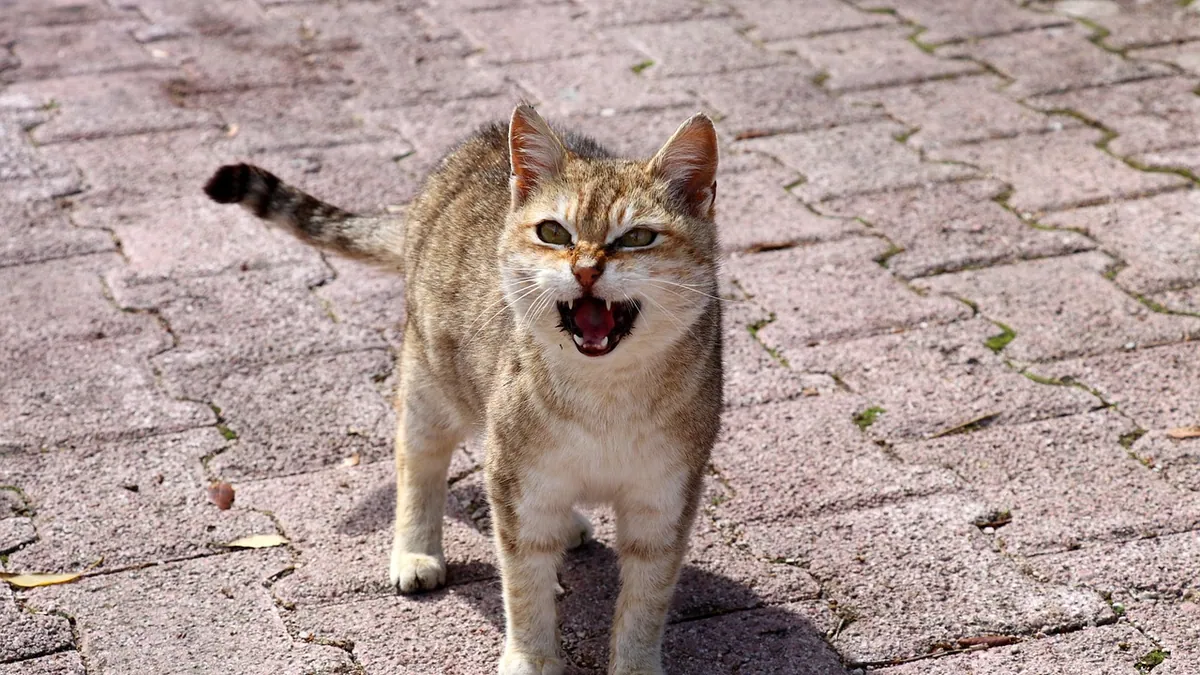
Yes, a kitten's voice does change. Most kittens start with a high, thin meow that gradually deepens and settles into an adult voice somewhere between 6 and 12 months of age. A sudden voice change in an adult cat is different, and it can be a sign of a health problem that needs veterinary care.
This article is educational and is not a substitute for veterinary diagnosis or treatment.
Quick Answer
- A kitten's meow normally becomes lower and more stable as the larynx (voice box) grows, usually finishing around 6 to 12 months of age.
- A slow, gradual deepening over months is normal. A sudden change in an adult cat is not.
- Hoarseness, a softer meow, a higher-pitched meow, or a lost meow can point to laryngitis, laryngeal paralysis, a mass in the throat, nerve damage, or hyperthyroidism.
- Any cat with voice change plus trouble breathing, noisy breathing, drooling, trouble swallowing, or a dropped jaw needs to be seen right away.
- Do not give human medications, cough drops, or honey to a cat. Keep the cat calm and quiet, and call your veterinarian.
What a Voice Change Looks Like and What Is Normal
"Voice change" covers a few different things. Your cat's meow may sound raspy or hoarse. It may be softer than usual, or higher pitched. It may crack, fade out, or disappear entirely. Some cats also make a new sound, such as a squeak instead of a meow.
In kittens, this is usually just growth. The larynx and the tissues around it enlarge as the cat matures, and the sound the moving vocal folds produce gets lower. The change is gradual. You may notice it over weeks to months, and the final adult meow often sounds nothing like the tiny mew your kitten made at 8 weeks.
So do kittens' voices change? Yes, and that is expected. The related question of when do cats' voices get deeper has a simple answer for most cats: the shift happens during the first year, and the voice is usually stable after that.
An adult cat's voice should also stay fairly stable over time. A meow that changes over days or weeks, especially in a cat older than 8 or 10 years, is worth a veterinary visit. In one reported case, a 14-year-old cat developed a meow that was softer and higher pitched along with other nerve problems, and the underlying cause turned out to be hyperthyroidism [1].
When Do Cats' Voices Change? Normal Kitten Development
Kittens are born with a small larynx, and their early vocalizations are high and thin. As the cartilage and muscles grow, the voice lowers. Most owners notice the biggest shift between 4 and 8 months, with the adult voice settling by about a year.
A few normal patterns are worth knowing:
- The meow may get deeper and louder at the same time, because the cat is also learning to use its voice to ask for things.
- Some cats keep a high, chirpy meow for life. A high voice alone is not a problem if it has always been that way.
- A cat that was quiet as a kitten may become more vocal as an adult, or the reverse. That is temperament, not disease.
If your cat's voice has always been the same and suddenly sounds different, that is the pattern that matters most.
What Causes a Cat's Voice to Change?
Many things can change how a cat sounds. Some are minor and short lived. Others are serious. The table below groups the main causes by what you are likely to notice and how quickly you should act.
| Cause | Typical clues | How urgent |
|---|---|---|
| Laryngitis (inflammation of the voice box) | Hoarse or lost meow after days of crying, coughing, or a respiratory infection. Cat otherwise bright and eating. | Routine visit within a few days |
| Laryngeal paralysis | Noisy breathing, especially on inhale. Voice change, exercise intolerance, sometimes coughing. | Same day |
| Laryngeal or throat mass | Progressive hoarseness or stridor over weeks. May have trouble swallowing or a visible swelling. | Same day to urgent |
| Nerve damage from a tumor in the ear or skull | Voice change plus drooping eyelid, unequal pupils, trouble swallowing, or a head tilt. | Same day |
| Hyperthyroidism | Older cat, weight loss despite good appetite, softer or higher meow, sometimes weakness. | Routine visit soon |
| Oral or throat pain | Reluctance to chew hard food, dropping food, bad breath, drooling. | Routine to urgent |
| Upper respiratory infection | Sneezing, nasal discharge, eye discharge, hoarse meow. | Routine visit |
| Overuse or stress | Meow hoarse after a day of nonstop crying (travel, boarding, a new home). | Monitor, call if it lasts more than 2 to 3 days |
Laryngitis and Overuse
Laryngitis is the most common and least scary cause. It often follows a bout of heavy meowing, a respiratory infection, or irritation from dust and smoke. The voice may come back on its own within a few days. If it does not, or if your cat also coughs or has nasal discharge, have your veterinarian take a look. A persistent cough with a voice change deserves attention, and our guide to cat coughing explains what to watch for.
Laryngeal Paralysis and Nerve Problems
Laryngeal paralysis means the muscles that open the airway do not work properly. The cat breathes noisily, and the voice can change or fade. In one reported case, a 7-year-old cat had a voice change along with a drooping eyelid, a protruding third eyelid, trouble swallowing, and coughing. Laryngoscopy showed left-sided laryngeal paralysis, and imaging found a middle ear tumor that had damaged several cranial nerves [2].
That case shows why voice change plus other nerve signs is a serious combination. The nerves that control the voice box, tongue, and swallowing run close together, so one problem can affect several of them at once.
Masses in the Larynx and Throat
Growths in or near the voice box can change the voice. In one report, a 14-year-old cat had 2 months of noisy breathing and hoarseness, and evaluation found a laryngeal mass that was confirmed as squamous cell carcinoma [3]. In another report, a 16-year-old cat had a 3-month history of voice change, and the cause was cancer that had spread to the larynx from a tumor near the ear [4]. A third report described a 15-year-old cat with 4 weeks of voice change and reluctance to chew hard food, caused by a tumor on the soft palate [5].
These cases share a pattern. The voice change was gradual, it lasted weeks, and it came with other signs such as noisy breathing, trouble eating, or drooling. Any of those combinations means a veterinary visit is needed.
Hyperthyroidism and Other Whole-Body Causes
Hyperthyroidism is a common disease of older cats. It can affect the nerves that control the voice. In one reported case, a 14-year-old cat developed a softer, higher-pitched meow along with a dropped jaw, tongue weakness, trouble swallowing, and mild weakness in the back legs. Blood testing showed high thyroid hormone levels, and treatment with medication and then surgery led to rapid improvement in the nerve signs over 13 days [1].
This is a good reminder that a voice change is not always a throat problem. Sometimes the throat is fine and the nerves feeding it are not.
Pain, Infection, and Dental Problems
A cat with a sore mouth or throat may meow differently because it hurts to use the voice. Watch for dropping food, chewing on one side, bad breath, drooling, or a reluctance to eat hard food. Dental disease, oral ulcers, and infections can all do this. Your cat may also seem clingy or withdrawn when it is uncomfortable, which is covered in our article on why your cat may suddenly act clingy.
Red Flags That Make It an Emergency
Some voice changes can wait a day or two. Others cannot. Go to an emergency clinic now if your cat has any of these:
- Open-mouth breathing, or breathing that looks like hard work
- Loud, raspy, or whistling breathing at rest
- Blue, gray, or pale gums or tongue
- Collapse, or weakness that keeps your cat from standing
- A dropped jaw, a tongue that hangs out and will not go back in, or drooling that will not stop
- Gagging, retching, or repeated attempts to swallow with nothing coming up
- A visible swelling on the neck or under the jaw that is growing
Breathing problems in cats get worse fast. Do not wait to see if it improves overnight.
Safe Things You Can Do at Home While You Wait
You cannot treat a voice change at home, but you can keep your cat safe and comfortable until the appointment.
- Keep the cat indoors and quiet. Rest the voice the way you would rest a strained muscle.
- Remove smoke, strong sprays, scented candles, and dusty litter from the room. These irritate the airway.
- Offer soft, room-temperature food if chewing seems hard. Warm food smells stronger and may encourage eating.
- Make sure fresh water is easy to reach. Cats with throat pain often drink less.
- Write down when the change started, what it sounds like, and any other signs. This history helps your veterinarian a lot.
- Do not give human pain relievers, antihistamines, cough syrups, or honey. Several common human drugs are toxic to cats.
- Do not try to look down your cat's throat with a spoon or your fingers. You can be bitten badly, and you can push a mass or a swollen tissue and block the airway.
If your cat is hiding more than usual or acting afraid of you, that can be a sign of pain or illness. Our article on why your cat might suddenly seem afraid of you covers that pattern.
What Your Veterinarian Will Check and Test
Your veterinarian will start with a full physical exam. They will listen to the heart and lungs, feel the neck for lumps and for the thyroid gland, check the pupils and facial symmetry, and look in the mouth and throat as far as your cat allows.
Depending on what they find, the next steps may include:
- Blood work, including a thyroid hormone level, especially in cats over 8 years old [1]
- Blood pressure measurement, since high blood pressure can appear with thyroid disease [1]
- Laryngoscopy, which uses a small camera to see the voice box directly [4][2]
- Imaging of the head, neck, or chest, such as CT, to look for masses or nerve damage [2][5]
- A biopsy of any mass, because the type of tumor changes the treatment plan [3][4][5]
Treatment depends entirely on the cause. Laryngitis may need only rest and time. Hyperthyroidism is managed with medication, and in some cases surgery [1]. Laryngeal tumors may be treated with surgery, radiation, or chemotherapy, and the plan is tailored to your cat [3][5].
Prevention and Monitoring
You cannot prevent every cause of voice change, but you can catch problems early.
- Know your cat's normal meow. You are the best judge of what sounds wrong.
- Schedule yearly exams for adult cats and twice-yearly exams for cats over 8. Thyroid disease and tumors are more common in older cats.
- Keep up with dental care and treat mouth pain early.
- Avoid smoke and strong fumes in the home.
- If your cat has a hoarse meow that lasts more than 2 to 3 days, call your veterinarian instead of waiting for the next scheduled visit.
Limitations and When to Contact a Veterinarian
This article cannot tell you what is causing your cat's voice change. Only an examination and testing can do that, and every cat needs its own veterinarian.
Call your veterinarian the same day if your cat has a voice change that started suddenly, has lasted more than 2 to 3 days, or comes with a cough, nasal discharge, weight loss, or a change in appetite.
Go to an emergency clinic right away if your cat is breathing with its mouth open, making loud breathing noises at rest, drooling heavily, has a dropped jaw or a tongue that will not retract, is gagging, or has collapsed.
For a routine visit, book an appointment within a few days if the change is mild, your cat is eating and breathing normally, and there are no other signs.
Frequently Asked Questions
Do kittens' voices change as they grow?
Yes, a kitten's meow usually becomes lower and more stable as the voice box grows. Most of the change happens in the first year, and the adult voice is often set by 12 months. A gradual deepening over months is normal and is not a reason to worry.
At what age do cats' voices get deeper?
The biggest drop usually happens between 4 and 8 months, with the voice settling by about a year. Some cats keep a higher, chirpier meow for life, and that is normal too. What matters is whether the change is gradual and expected or sudden and new.
What causes a cat's voice to change suddenly?
Common causes include laryngitis from overuse or infection, laryngeal paralysis, a mass in the throat or voice box, nerve damage from a tumor near the ear or skull, and hyperthyroidism in older cats. Pain in the mouth or throat can also change how a cat vocalizes. A sudden change in an adult cat should always be checked.
Can hyperthyroidism change a cat's voice?
Yes, it can. One reported case described an older cat whose meow became softer and higher pitched along with a dropped jaw, tongue weakness, and trouble swallowing, and testing confirmed hyperthyroidism. The nerve signs improved quickly once the thyroid disease was treated.
Is a hoarse meow in an older cat serious?
It can be. In older cats, a hoarse or changed meow that lasts for weeks may be caused by a growth in the larynx or throat, and these are sometimes cancerous. It can also be something minor, so the only way to know is an exam. Do not wait months to have it checked.
Related Articles
- Why Is My Cat Suddenly Afraid of Me?
- Why Is My Cat Suddenly Clingy?
- Why Is My Cat Losing Hair?
- Cat Coughing: When Should You Worry?
- Why Is My Cat Shaking Her Head And Ears
- Why Is My Cat Suddenly Hiding and Acting Weird?
- Cat Losing Its Voice: Causes and When to Worry
- Cat Not Meowing Anymore: Causes and When to Worry
- Why Is My Cat Quiet? Causes of Sudden Quietness in Cats
- Cat Respiratory Infections: Etiology, Clinical Signs, Zoonotic Potential, and Management
- Feline Respiratory Infections: Causes, Transmission, and Zoonotic Risk
References
- Multiple cranial nerve motor deficits, resembling polyneuritis cranialis, in a cat with hyperthyroidism. Australian veterinary journal, 2022.
- Case report: Villaret's syndrome caused by middle ear adenocarcinoma in a cat. Frontiers in veterinary science, 2023.
- Long-term remission in a cat with laryngeal squamous cell carcinoma treated with stereotactic radiation therapy. JFMS open reports, 2026.
- A cat with suspected laryngeal metastasis with mucosal irregularity resulting from apocrine/salivary gland adenocarcinoma in the head. The Journal of veterinary medical science, 2017.
- Oral histiocytic sarcoma in a cat. JFMS open reports, 2020.