Why Is My Dog Losing Its Voice or Bark?
By Dr. Zubair Khalid, DVM, MS, PhD ·
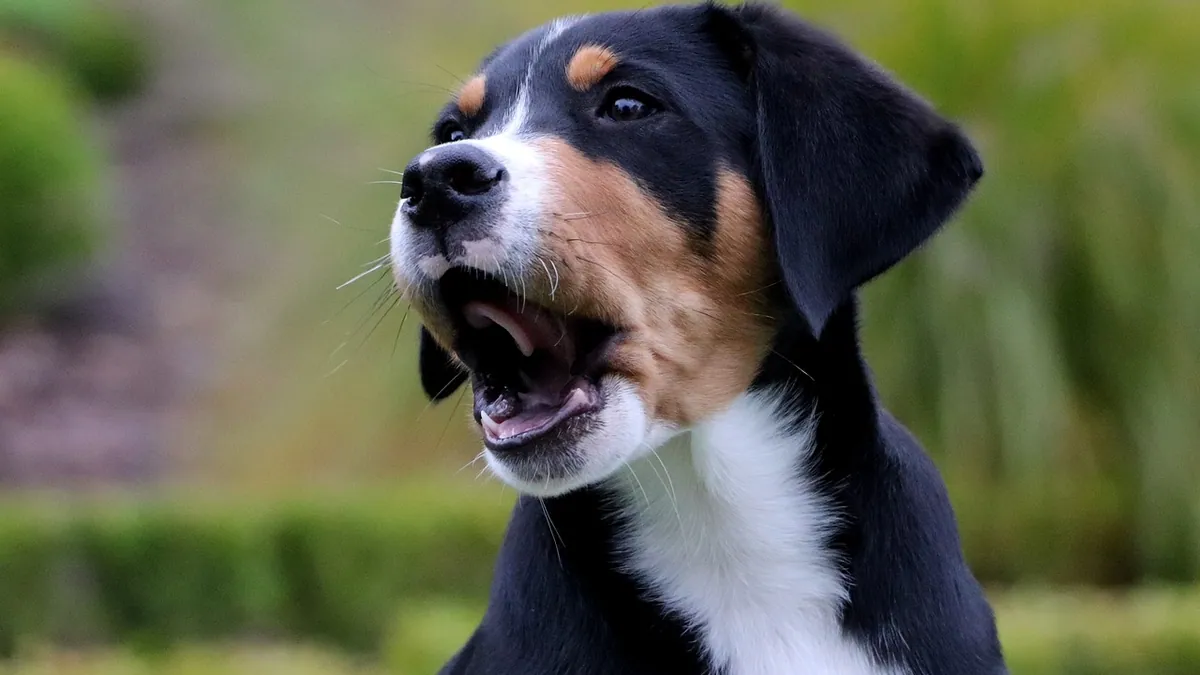
A dog losing voice when barking usually means something is irritating or injuring the larynx, the "voice box" in the throat. The most common causes are laryngitis, kennel cough, and laryngeal paralysis, and the sound can change suddenly or fade over weeks. This article is educational and is not a substitute for veterinary diagnosis or treatment.
Quick Answer
- A hoarse, squeaky, or silent bark often points to inflammation of the larynx, called laryngitis, which can follow an infection, inhaled irritants, a breathing tube during surgery, or too much barking [1].
- Sudden voice loss after a bout of heavy barking, a cold snap, or a dusty environment is common and often improves with rest and time.
- A gradual change in bark, noisy breathing, or a raspy sound in an older large-breed dog can signal laryngeal paralysis, which is a serious problem that needs prompt veterinary care [2].
- A honking cough with gagging, especially after boarding or daycare, raises the odds of infectious tracheobronchitis, also called kennel cough [1].
- Any dog who is struggling to breathe, has blue gums, or collapses needs emergency care right away.
What Voice Loss in Dogs Actually Looks Like
Owners describe this problem in many ways. You might hear a dog losing its bark as a squeak, a rasp, a whisper, or nothing at all when the mouth opens. Some dogs still try to bark and produce only air.
Other signs often travel with the voice change. A cough is frequently the first thing you notice with laryngitis. It starts harsh, dry, and short, then becomes softer and wetter, and it can be painful [1]. Your dog may swallow with effort, have bad breath, or breathe noisily [1]. Some dogs stand with the head lowered and the mouth open [1].
What a Normal Bark Sounds Like
Every dog has a baseline. A beagle bays, a husky howls, and a pug snorts. You know your dog's normal pitch, volume, and rhythm better than anyone.
The key question is change. A bark that is quieter, higher, crackly, or absent compared with last week is the sign that matters. So is a bark that disappears only during certain activities, such as greeting you at the door.
Sudden Versus Gradual Voice Loss
Timing gives your veterinarian useful clues.
Sudden loss, over hours or a day, often follows a specific trigger. Examples include a long barking session at the fence, a grooming or boarding stay, a surgical procedure with a breathing tube, or a blast of smoke or dust [1]. Sudden loss can also be the first sign of kennel cough in a dog who was recently around other dogs [1].
Gradual loss, over weeks to months, is more concerning. It can reflect a slow problem in the nerves and muscles that control the larynx, and it is more common in middle-aged to older large-breed dogs [2].
Main Causes of a Dog Losing Its Voice
The table below groups the most common reasons a dog's voice changes, along with the clues that point to each one and how quickly you should act.
| Cause | Typical clues | How urgent |
|---|---|---|
| Laryngitis (inflammation of the voice box) | Hoarse or changed bark, harsh dry cough that becomes moist, painful swallowing, bad breath, noisy breathing [1] | See your vet within a day or two, sooner if breathing is noisy at rest |
| Kennel cough (infectious tracheobronchitis) | Honking cough, gagging, retching, recent contact with other dogs, voice change [1] | See your vet within a day or two, sooner for puppies, seniors, or flat-faced breeds |
| Laryngeal paralysis | Raspy or absent bark, loud breathing on inhale, exercise intolerance, gagging, worse in heat, older large-breed dog [2] | Same-day veterinary visit, emergency if breathing is labored |
| Excessive barking | Voice loss right after a long barking episode, no other signs, normal energy and appetite [1] | Monitor at home, call your vet if it does not improve in a few days |
| Irritants (smoke, dust, fumes) | Voice change after exposure, coughing, watery eyes, sneezing [1] | Move the dog to clean air, call your vet if signs persist |
| Breathing tube during anesthesia | Voice change after a procedure, sometimes with coughing or gagging [3] | Call the clinic that did the procedure the same day |
| Growths or masses in the throat | Slow voice change, gagging, retching, noisy breathing, sometimes visible tissue [4] | Same-day veterinary visit |
| Distemper or other systemic infection | Voice change plus fever, eye or nose discharge, lethargy, appetite loss [1] | Same-day veterinary visit |
Laryngitis: The Most Common Reason
Laryngitis is inflammation of the larynx, the part of the throat often called the voice box [1]. It can come from an upper respiratory infection, from inhaling dust, smoke, or irritating gas, or from a foreign object [1]. The trauma of a breathing tube placed during surgery can cause it, and so can excessive vocalization, meaning plain old too much barking [1].
Laryngitis may also accompany infectious tracheobronchitis and distemper in dogs [1]. That is why your vet may ask about recent boarding, daycare, dog park visits, or new dogs in the home.
The cough of laryngitis can be triggered by pressure on the throat, cold or dusty air, swallowing coarse food or cold water, or attempts to give medicine [1]. If your dog coughs every time you reach for the pill pocket, that pattern fits.
Kennel Cough and Other Infections
Kennel cough is the everyday name for infectious tracheobronchitis, and laryngitis often comes along with it [1]. The classic sound is a honking cough followed by a gag or a retch. The bark may sound different too [1].
Most otherwise healthy adult dogs recover with supportive care, but the cough can linger. Puppies, senior dogs, and flat-faced breeds can get into trouble faster. If your dog's energy or appetite drops, or breathing looks like work, that is a same-day call.
Laryngeal Paralysis: A Serious Cause
Laryngeal paralysis means the cartilage of the voice box does not open and close the way it should. The result is a raspy or lost bark, loud breathing on the inhale, and trouble tolerating exercise or heat [2].
This condition shows up most often in middle-aged and older large-breed dogs [2]. It can also appear in young dogs of certain breeds with an inherited nerve and muscle form of the disease. A genetic variant linked to laryngeal paralysis and polyneuropathy has been found in young Great Danes, and related variants have been identified in Leonbergers and Saint Bernards [5].
Laryngeal paralysis is not something to watch at home. Dogs with it can develop aspiration pneumonia, and the risk rises when swallowing is not coordinated [3]. Some cases have been reported after endotracheal intubation, though this is rare [3].
Growths and Other Blockages
Not every voice change comes from the voice box itself. A 13-year-old Labradoodle with a year of gagging, retching, coughing, and noisy breathing turned out to have large tonsillar polyps blocking the upper airway, along with laryngeal paralysis [4]. Surgery resolved the problem [4].
This is a reminder that a full airway exam matters. If your dog has a long history of throat noise, your vet may recommend imaging to look for masses or other blockages [4].
Behavior and Barking Patterns
Sometimes the voice is fine and the barking pattern is the issue. If your dog barks at nothing, or barks nonstop at the window, the strain alone can leave the voice hoarse [1]. You can read more about that in Why Is My Dog Barking at Nothing? and Dog Barking Problems: How to Train Your Dog to Be Quiet.
If you are working on quiet training, see How To Get My Dog To Stop Barking. Less barking means less strain on the larynx.
Red Flags That Make It an Emergency
Some signs mean you should stop reading and call an emergency clinic now.
- Loud, raspy breathing at rest, especially on the inhale [2]
- Gums that look blue, gray, or pale
- Collapse, weakness, or fainting
- Standing with the head lowered and mouth open, with obvious effort to breathe [1]
- A cough that ends in gagging or vomiting and will not stop
- Swallowing that is clearly painful, with drooling or food falling out of the mouth [1]
- A neck that looks swollen or feels hot
Death from suffocation with laryngitis alone is rare, but it can happen when an underlying cause such as paralysis is present, especially if the dog is exerted [1]. Do not wait to see if it passes.
Safe Things You Can Do at Home While You Wait
Home care is about reducing irritation and strain, not treating the cause.
Rest the Voice
Cut back on barking triggers. Close the blinds, keep your dog away from the fence line, and skip the dog park for a few days. If your dog barks at the doorbell, turn the bell off or use a white noise machine.
Clean the Air
Avoid smoke, strong cleaners, aerosol sprays, scented candles, and heavy dust. Cold air can trigger coughing in laryngitis, so keep walks short and warm on bitter days [1].
Soften the Food and Water
Coarse food and cold water can set off coughing [1]. Offer room-temperature water and consider softening kibble with warm water if swallowing seems uncomfortable. Never force food or pills if your dog is struggling to swallow.
Use a Harness, Not a Neck Collar
Pressure on the throat can trigger coughing in laryngitis [1]. A harness takes pressure off the neck during walks.
Keep the Environment Calm
Stress raises breathing rate. Keep your dog cool, quiet, and indoors during hot weather, since heat makes laryngeal problems worse [2].
Do not give human cough medicine, antihistamines, or leftover pet medications. Your veterinarian will calculate any dose from your dog's weight and health.
What Your Veterinarian Will Check and Test
Your vet starts with the story. When did the voice change? Was it sudden or gradual? Any boarding, surgery, smoke exposure, or barking marathons? Then comes the hands-on exam.
Physical Examination
Your vet will watch your dog breathe at rest and after a short walk. They will feel the neck and throat, check the gums, listen to the heart and lungs, and may press gently on the larynx to see if it triggers a cough [1]. They will also check for fever, nasal discharge, and eye changes that suggest infection [1].
Tests Your Vet May Recommend
- Laryngoscopy: This is the gold standard for laryngeal paralysis. Your dog is lightly anesthetized so the vet can watch the vocal folds move.
- Chest X-rays: Radiographs help rule out pneumonia and other lung disease. Research shows that certain tracheal measurements on chest X-rays are associated with a diagnosis of laryngeal paralysis, so imaging can support the diagnosis [2].
- Bloodwork: A complete blood count and chemistry panel check for infection, inflammation, and organ function.
- Airway swabs or PCR testing: These look for infectious causes such as kennel cough.
- CT or advanced imaging: Used when a mass or blockage is suspected [4].
Treatment Depends on the Cause
Laryngitis is treated by removing the trigger and resting the voice, with medications chosen by your vet [1]. Kennel cough is usually managed with supportive care and cough control. Laryngeal paralysis may need surgery to open the airway, and some dogs need treatment for aspiration pneumonia [3]. Masses are often removed surgically, as in the tonsillar polyp case [4].
Prevention and Monitoring
You cannot prevent every cause, but you can lower the odds.
- Keep barking under control. Training and management reduce strain on the voice box [1].
- Avoid smoke and airborne irritants. This includes secondhand smoke, vaping clouds, and heavy cleaning fumes [1].
- Stay current on vaccines. Distemper is one of the infections that can cause laryngitis [1].
- Ask about kennel cough vaccination before boarding or daycare.
- Watch older large-breed dogs closely. A raspy bark or noisy breathing in a senior Labrador, Golden Retriever, or similar breed deserves a prompt exam [2].
- Know your breed risks. Some young Great Danes carry a genetic variant linked to laryngeal paralysis and polyneuropathy, and related variants appear in Leonbergers and Saint Bernards [5].
- Track changes. Record a short video of the abnormal bark or breathing. It helps your vet hear what you hear.
If your dog is also losing weight or has a poor appetite, that combination deserves attention. See Why Is My Dog Losing Weight?. If you notice coat changes at the same time, Why Is My Dog Losing Hair? covers that topic.
Limitations and When to Contact a Veterinarian
This article cannot tell you what is wrong with your individual dog. Only a veterinarian who examines your dog can do that.
Call an emergency clinic now if your dog is struggling to breathe, has blue or gray gums, collapses, or cannot settle because of breathing effort. These signs can worsen quickly with laryngeal paralysis [2].
Call your regular veterinarian the same day if the voice change came on suddenly with a cough, if your dog is gagging or retching, if swallowing looks painful, or if the change followed surgery with a breathing tube [1][3].
Schedule a routine visit within a few days if the voice change is mild, your dog is eating and breathing normally, and there are no other signs. Gradual voice loss over weeks still deserves an exam, even when your dog seems comfortable [2].
Frequently Asked Questions
Will my dog's voice come back on its own?
Often yes, if the cause is simple laryngitis from barking or a mild irritant. Rest, clean air, and time usually help, and the bark returns as swelling settles [1]. If the voice does not improve within a few days, or breathing changes, see your vet.
Is losing the voice a sign of kennel cough?
It can be. Laryngitis often accompanies infectious tracheobronchitis, and a changed bark plus a honking cough is a common pattern [1]. Recent contact with other dogs, such as boarding or daycare, raises the odds.
Can too much barking really damage a dog's voice?
Yes. Excessive vocalization is a recognized cause of laryngitis, the inflammation that changes how the bark sounds [1]. The fix is usually rest and removing the trigger, not medication.
Does laryngeal paralysis always need surgery?
No, but many dogs benefit from it. The decision depends on your dog's age, overall health, breathing effort, and the risk of aspiration pneumonia [3]. Your veterinarian will discuss the options after a full airway exam.
Are some breeds more likely to lose their bark?
Yes. Laryngeal paralysis is most common in middle-aged and older large-breed dogs, and an inherited nerve and muscle form affects young Great Danes, with related variants in Leonbergers and Saint Bernards [2][5]. Breed-related airway and lung problems also appear in Irish Wolfhounds, Cavalier King Charles Spaniels, and Miniature Dachshunds [6].
Related Articles
- Why Is My Dog Losing Hair?
- Why Is My Dog Barking at Nothing?
- Dog Barking Problems: How to Train Your Dog to Be Quiet
- How To Get My Dog To Stop Barking
- Why Is My Dog Losing Weight?
- Why Is My Dog Coughing And Honking
- Why Is My Dog Not Barking? When Silence Is Normal
- Why Is My Dog Barking and Whining at Me? 7 Reasons
- Do Dogs Get Tired of Barking? What Owners Should Know
References
- Laryngitis in Dogs - Dog Owners. Merck Veterinary Manual.
- Radiographic tracheal and carina distension is associated with diagnosis of laryngeal paralysis in dogs. Journal of the American Veterinary Medical Association, 2025.
- Laryngeal Paralysis Following Endotracheal Intubation in a Dog: A Case Report. Topics in companion animal medicine, 2022.
- Bilateral Tonsillar Polyps in a Dog Described on CT. Veterinary radiology & ultrasound : the official journal of the American College of Veterinary Radiology and the International Veterinary Radiology Association, 2025.
- A CNTNAP1 Missense Variant Associated With Laryngeal Paralysis and Polyneuropathy in Young Great Dane Dogs. Journal of veterinary internal medicine, 2025.
- Breed Specific Pneumonia. The Veterinary clinics of North America. Small animal practice, 2026.