Sick Cat Face: What Facial Signs Mean
By Dr. Zubair Khalid, DVM, MS, PhD ·
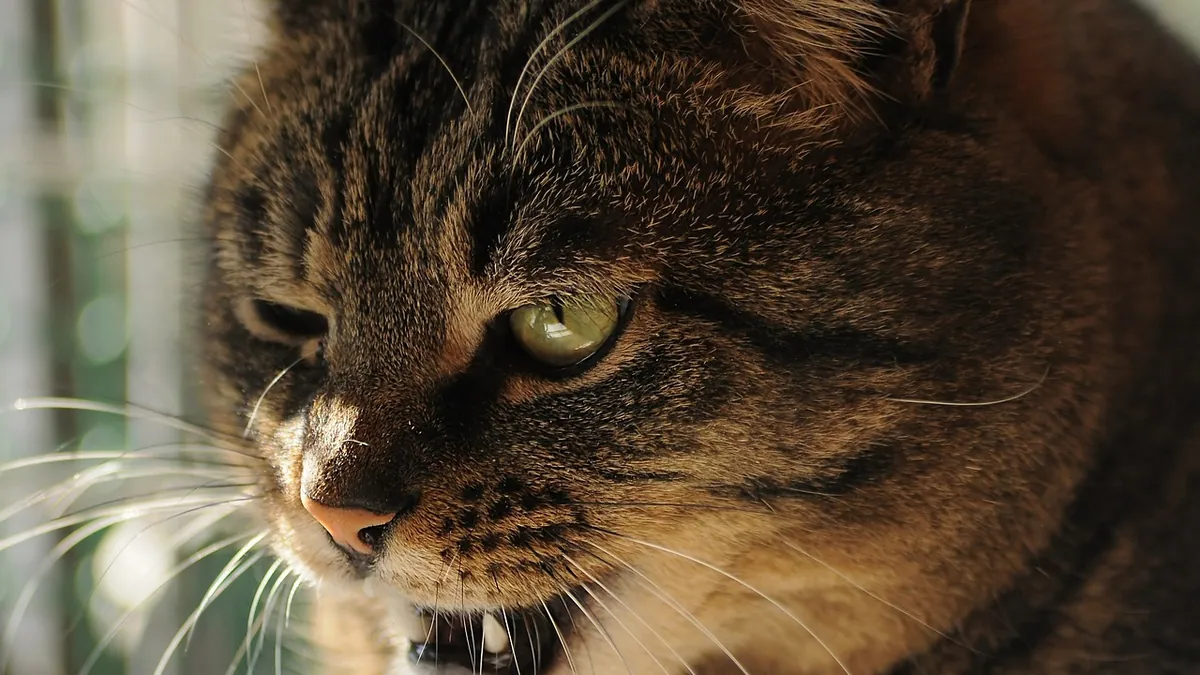
A sick cat face is a set of changes in expression that owners can learn to read: squinted eyes, flattened ears, a tense muzzle, whiskers pulled forward or back, and a lowered head. These cues often mean pain or nausea, and cats hide both well. This article is educational and is not a substitute for veterinary diagnosis or treatment.
Quick Answer
- The Feline Grimace Scale (FGS) scores five features: ear position, orbital tightening (squint), muzzle tension, whisker change, and head position [1].
- Ear position and eye position are the most reliable units to read, while muzzle tension and whisker change are harder to score consistently [2].
- Nausea alone can raise pain scores, so drooling and lip licking do not always mean pain [3].
- A cat that will not eat, hides, or holds its head low needs to be seen the same day.
- Never give human pain relievers to a cat. Many are toxic, and your veterinarian calculates any dose from your cat's weight and health.
What a Sick Cat Face Looks Like (and What Is Normal)
A relaxed cat has soft, forward-facing ears, eyes that open fully or close gently when sleepy, a smooth muzzle, whiskers that rest in a natural fan, and a head that sits level with the body. When you pet a healthy cat, the face stays loose.
A painful or nauseated cat looks different. The ears rotate outward and flatten toward the sides of the head. The eyes narrow into a squint, sometimes with the third eyelid creeping across the eye. The muzzle tightens and the nose may look pinched. Whiskers move away from the resting position, either pulled forward or flattened back against the cheeks. The head drops below the shoulder line and the cat stares at nothing.
These five features are the basis of the Feline Grimace Scale, a facial expression scoring system for acute pain in cats [1]. Each unit gets a score, and the total helps a veterinarian decide whether the cat needs pain relief. You do not need to score your cat at home. You need to notice that the face has changed from your cat's normal.
One caution: flat-faced (brachycephalic) breeds such as Persians and Exotic Shorthairs already have squinted eyes, a short muzzle, and unusual ear and whisker positions. In these cats, muzzle tension and whisker change are especially hard to judge, and the scale performs less reliably [2]. If you live with a flat-faced cat, compare today's face with photos of your cat on a good day.
Common Causes of a Sick Cat Face
| Cause | Typical clues | How urgent |
|---|---|---|
| Dental or mouth pain | Drooling, lip licking, chewing on one side, dropping food, bad breath | Same-day to 24 hours |
| Eye pain or injury | Squinting one eye, pawing at the face, tearing, redness, cloudy eye | Same day, emergency if the eye is bulging or the cat is screaming |
| Nausea (from illness, medication, or motion) | Lip licking, drooling, vomiting, refusing food | Same day if it lasts more than a few hours |
| Abdominal pain (pancreatitis, blockage, cystitis) | Hunched posture, lowered head, hiding, not eating, litter box changes | Emergency if the cat is straining or vomiting repeatedly |
| Post-surgical or post-trauma pain | Grimace after surgery, reluctance to move, guarding a body part | Call the clinic the same day |
| Upper respiratory infection or nasal disease | Squinting, discharge from eyes or nose, sneezing, mouth breathing | Same day, emergency if breathing is labored |
| Neurologic problem | Facial droop, head tilt, unequal pupils, wobbling | Emergency |
Pain in the mouth deserves special attention because owners often miss it. A cat with dental disease may drool, lick its lips after drinking, or chew only on one side. Bad breath is a common clue, and it is worth reading Cat Bad Breath: When Is It a Sign of Illness? if you have noticed a change in your cat's breath along with the facial signs.
Eye pain is another common driver of a sick cat face. In one study of cats recovering from eye surgery, squinting and a lowered head position were among the behaviors recorded before and after pain relief [4]. If your cat holds one eye closed and the eye looks cloudy, red, or larger than usual, treat it as urgent. A related article on the third eyelid is useful if you see a pale membrane sliding across the eye: Cat Third Eyelid Showing Sick.
Nausea can mimic pain on the face. In a controlled trial, a drug that causes nausea (xylazine) raised both Feline Grimace Scale scores and another pain scale in healthy cats that had no painful condition [3]. That finding matters for owners. Drooling and lip licking are not proof of pain. They can also mean an upset stomach, motion sickness, kidney disease, or a reaction to medication.
Sick Kitten Face: Why Young Cats Are Different
Kittens get the same facial changes as adults, but the stakes are higher. A kitten that stops eating for even a day can become dangerously weak, because young cats have little reserve. A sick kitten face often shows as a dull, half-closed stare, ears that stay flat even when the kitten is warm and comfortable, and a refusal to play.
Kittens also cannot tell you about mouth pain. Teething, oral ulcers from a viral infection, and foreign objects stuck in the mouth all produce drooling and lip licking. If a kitten is drooling, has a wet chin, or cries when it tries to eat, call your veterinarian the same day.
Weight matters too. Any medication for a kitten is dosed by body weight and health status, and your veterinarian sets that dose. Do not split a pill meant for an adult cat or for a person.
Red Flags That Make It an Emergency
Go to an emergency clinic now if you see any of these:
- Open-mouth breathing, or breathing that is fast and labored at rest. See Cat Difficulty Breathing: Emergency Signs and What to Do.
- A bulging eye, a eye that has suddenly gone cloudy, or a cat that cries when the face is touched.
- Collapse, seizures, or a cat that cannot stand.
- Repeated vomiting with a swollen or painful belly, or a cat straining in the litter box with no urine produced.
- Bleeding from the mouth or nose that will not stop.
- A fever with a rash or skin sores. Read Cat Skin Rash with Fever: Emergency Signs You Shouldn't Ignore.
- A cat that has not eaten for more than 24 hours, or a kitten that has not eaten for 12 hours.
If you suspect your cat swallowed a medication, a houseplant, or a human food that is toxic, call the ASPCA Animal Poison Control Center at (888) 426-4435 or the Pet Poison Helpline at (855) 764-7661. Both may charge a consultation fee.
What You Can Safely Do at Home While You Wait
You cannot treat pain at home, but you can keep your cat comfortable and gather information your veterinarian will need.
- Do not give any human pain medication. Acetaminophen and ibuprofen are toxic to cats, and even "pet" products should only be used on veterinary advice.
- Offer soft, room-temperature food. Warm food smells stronger and may tempt a nauseated cat. Try a small amount of a wet food your cat already eats.
- Keep the room quiet and dim. Pain and nausea both worsen with bright light and noise.
- Write down what you see. Note when the face changed, whether your cat is eating, drinking, urinating, and using the litter box, and whether it is hiding more than usual.
- Take a short video of your cat's face at rest. Cats often look more normal in the exam room than they do at home, and a video helps your veterinarian see the real expression.
- Check the mouth only if your cat allows it. Do not force the mouth open. A painful cat may bite even if it has never bitten before.
If your cat has a wound, a hot spot, or crusty skin along with the facial signs, Cat Skin Infection: Signs and Treatment Options covers what those skin changes can mean.
What Your Veterinarian Will Check and Test
Your veterinarian will start with a full physical exam, including the mouth, eyes, ears, and abdomen. They will watch your cat's face at rest and may use the Feline Grimace Scale or another pain scale to decide whether pain relief is needed [1].
Depending on what they find, expect some of these tests:
- A dental exam under sedation if mouth pain is suspected, since most dental disease is hidden below the gumline.
- An eye exam with a stain to check for ulcers, plus a pressure check if glaucoma is possible.
- Blood work, including a complete blood count and chemistry panel, to look for infection, organ problems, or dehydration.
- Urinalysis, especially if the cat is straining or licking the genital area.
- Imaging such as X-rays or ultrasound if the abdomen is painful or a blockage is suspected.
Treatment depends on the cause. Dental disease needs a cleaning or extractions. Eye pain may need drops, antibiotics, or surgery. Nausea may need anti-nausea medication and fluids. Pain relief is chosen by your veterinarian based on your cat's weight, kidney and liver function, and the source of the pain.
Prevention and Monitoring at Home
The best tool you have is a baseline. Take a few clear photos of your cat's face when it is healthy and relaxed. Then, when something seems off, you can compare directly.
Weigh your cat monthly if you can. Weight loss often shows up before any facial change, and it is one of the earliest signs of dental disease, kidney disease, and cancer in cats.
Watch for small habits that shift. A cat that used to meet you at the door but now stays under the bed is telling you something. A cat that drops food, chews on one side, or drools while sleeping needs a mouth exam.
Keep up with routine veterinary visits. Dental disease and eye problems are far easier to treat when they are caught early. If your cat has a chronic condition such as kidney disease or arthritis, ask your veterinarian what facial and behavior changes you should watch for between visits.
Limitations and When to Contact a Veterinarian
The Feline Grimace Scale is a screening tool, not a diagnosis. It was designed for acute pain, and it has real limits. In flat-faced cats with eye pain, agreement between raters is poor for muzzle tension and whisker change, though it is good for ear and eye position [2]. Nausea and sedation can also push scores up or down without any change in pain [3]. That means a normal-looking face does not rule out pain, and a grimace does not prove it.
Contact your veterinarian the same day if your cat has a changed facial expression plus any of these: not eating, hiding more, drooling, vomiting, a swollen eye, or a new lump on the face.
Go to an emergency clinic now for open-mouth breathing, collapse, a bulging eye, uncontrolled bleeding, or a cat that cannot urinate.
Schedule a routine visit if the change is mild and your cat is still eating, drinking, and using the litter box normally, but the expression has lasted more than a day or two.
Every cat is different. Your veterinarian needs to examine your cat to know what is going on.
Frequently Asked Questions
Is a squinting cat always in pain?
No. Cats squint when they are sleepy, content, or in bright light. Painful squinting usually comes with other changes, such as flattened ears, a tense muzzle, or a head held low. If the squint is one-sided, or the eye looks cloudy or red, call your veterinarian.
Why is my cat drooling and licking its lips?
Drooling and lip licking often mean nausea, and they can also signal mouth pain or a foreign object stuck in the mouth. Nausea alone can raise pain scores on the Feline Grimace Scale, so these signs do not prove pain. If the behavior lasts more than a few hours or your cat will not eat, get it checked.
Can I use the feline grimace scale at home?
You can learn the five features and watch for changes, but the scale is meant to be scored by trained observers. Home scoring is not well established in veterinary research. Photos of your cat when healthy are a more reliable comparison tool for owners.
My cat's ears are flat. Does that mean pain?
Flat ears can mean pain, fear, or simple irritation. Fear and anxiety also change ear position, which is why cats showing fear behaviors are often excluded from pain studies. Look at the whole face and the whole cat before you decide.
How fast can a sick cat face become an emergency?
Some causes move quickly. Eye injuries, urinary blockages, and breathing problems can become life-threatening within hours. If your cat is breathing with its mouth open, cannot stand, or has a bulging eye, go to an emergency clinic right away.
Related Articles
- Cat Bad Breath: When Is It a Sign of Illness?
- Cat Third Eyelid Showing Sick
- Cat Skin Rash with Fever: Emergency Signs You Shouldn't Ignore
- Cat Difficulty Breathing: Emergency Signs and What to Do
- Cat Skin Infection: Signs and Treatment Options
- Cat Stress Signs: How to Recognize and Reduce Stress in Your Cat
- Sick Cat Body Language: Signs Your Cat Is Unwell
- Swollen Face or Cheek in Cats: Causes and When to Worry
- Cat Not Feeling Well? 12 Signs to Watch For
References
- Understanding the Feline Grimace Scale: A study of dimensional structure, importance of each action unit and variables affecting assessment. Veterinary journal (London, England : 1997), 2025.
- Challenges using the Feline Grimace Scale in brachycephalic cats with ocular pain. Journal of feline medicine and surgery, 2026.
- Influence of drug-induced nausea and opioid-associated behavioural alterations on pain scores in nonpainful cats: a prospective, randomised, experimental trial. Veterinary anaesthesia and analgesia, 2026.
- Keeping an eye on pain: Characterization of pain behaviours in cats undergoing ophthalmic surgery. Veterinary journal (London, England : 1997), 2026.