Why Is My Senior Dog's Jaw Chattering or Quivering?
By Dr. Zubair Khalid, DVM, MS, PhD ·
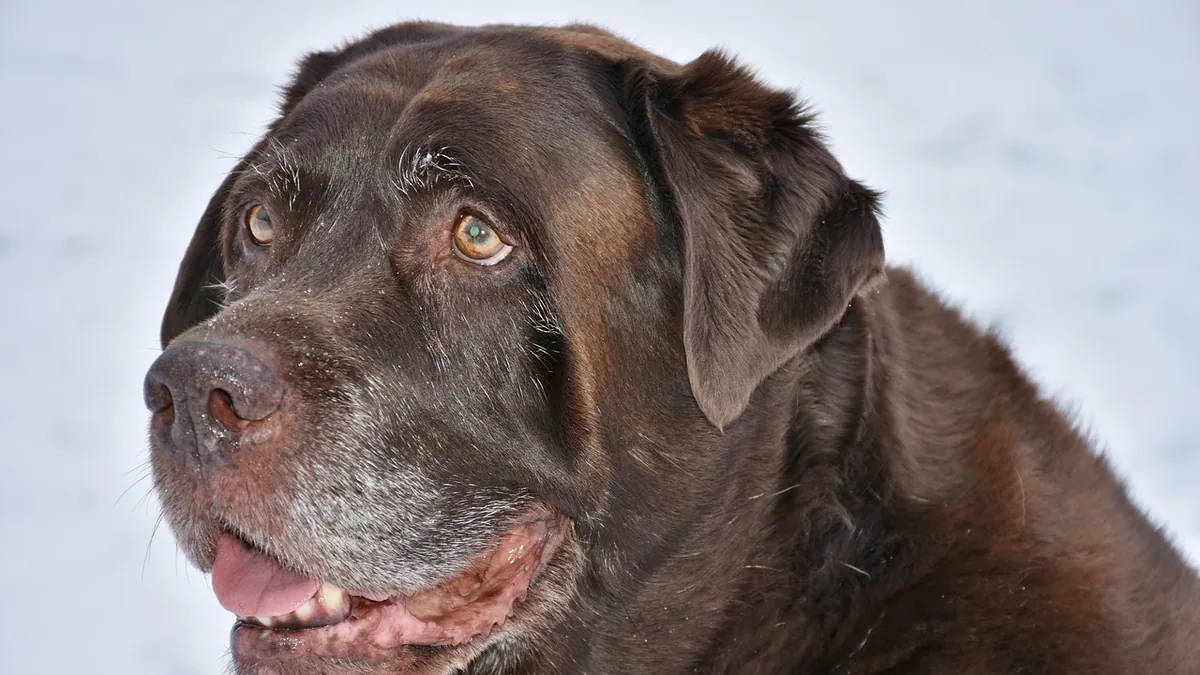
Jaw chattering in a senior dog is usually a rhythmic, brief quiver of the lower jaw that can be harmless or can point to pain, dental disease, a tremor disorder, or a focal seizure. The pattern, timing, and what happens before and after each episode are what help your veterinarian sort out the cause. This article is educational and is not a substitute for veterinary diagnosis or treatment.
Quick Answer
- A short, rapid jaw quiver that stops on its own and leaves your dog fully normal is often an episodic mandibular tremor, a movement disorder that has been described in dogs and can resemble either a benign tremor or a sign of pain [1].
- Chattering that happens while eating, chewing, or yawning, or that comes with dropping food, bad breath, or drooling, points more toward dental or jaw pain.
- A jaw that suddenly cannot close at all (a "dropped jaw") is a different problem and needs prompt evaluation [2].
- Record a short video of every episode, note the time of day, what your dog was doing, and how long it lasted. That recording is often more useful to your vet than any description.
- Any episode with collapse, loss of consciousness, stiff limbs, or trouble breathing is an emergency. Go to a veterinary hospital now.
What Senior Dog Jaw Chattering Actually Looks Like
Owners describe this in many ways. You may see senior dog teeth chattering, a senior dog jaw quivering, or a senior dog mouth chattering that looks like your dog is cold or chewing on nothing. Some owners say the senior dog jaw is shaking when closing the mouth, as if the muscles are fighting each other.
The movement is usually fast and small. It may affect only the lower jaw, or it may involve the lips, cheeks, and tongue. Some dogs stay completely aware and responsive during it. Others look spaced out for a few seconds.
It helps to sort what you see into three buckets.
Normal or near-normal movements. A brief jaw quiver when your dog is excited, anticipating food, or just waking up is common and often harmless. Some dogs chatter when they smell something intense, like another dog or a favorite treat. A single shiver after a bath or on a cold morning is also normal.
Rhythmic tremors. These are repeated, fairly regular movements. They can affect the jaw alone or spread to the head and body. Generalized tremors in dogs have been linked to a range of causes, including toxin exposure, a condition called idiopathic generalized tremor syndrome, low blood calcium, low blood sugar, and inflammatory brain disease [3]. That is why a tremor is a sign to investigate, not a diagnosis by itself.
Episodes that look different from a tremor. If the jaw movement is followed by drooling, confusion, or a few seconds where your dog seems absent, a seizure is possible. Seizures in older dogs deserve a veterinary workup.
One more pattern matters. If your dog's jaw hangs open and will not close, that is not chattering. It is jaw weakness, and it should be checked quickly [2].
Main Causes of Jaw Chattering in Older Dogs
Many conditions can produce a quivering or chattering jaw. The table below groups the most common ones and what makes each more or less urgent.
| Cause | Typical clues | How urgent |
|---|---|---|
| Episodic mandibular tremor (teeth chattering) | Rapid, short-lasting episodes, often no other signs, dog normal between episodes [1] | Routine visit, but record episodes |
| Dental or jaw pain | Chattering around meals, dropping food, bad breath, drooling, chewing on one side, flinching when touched near the mouth | Soon, within days |
| Facial nerve problems | Drooping lip or ear, drooling from one side, unable to blink one eye, food falling from the mouth [4] | Soon, within days |
| Trigeminal nerve disease (dropped jaw) | Sudden inability to close the mouth, drooling, trouble eating and drinking [2] | Prompt, same day |
| Generalized tremor disorders | Whole-body shaking, wobbling, sometimes triggered by excitement or exercise [3] | Same day if sudden or severe |
| Toxin exposure | Tremors plus vomiting, drooling, unsteadiness, known or possible exposure to a poison | Emergency now |
| Low blood sugar or low blood calcium | Weakness, tremors, collapse, especially in dogs with other illness | Emergency now |
| Seizure activity | Staring, loss of awareness, paddling, drooling, then a period of confusion | Same day, emergency if repeated |
| Age-related movement changes | Mild twitching in an older dog that also shows confusion, pacing, or staring at walls | Routine visit with a symptom diary |
Dental and Jaw Pain
Pain is one of the most common reasons an older dog's jaw quivers. Loose teeth, fractured teeth, infected tooth roots, and gum disease all sit in the same area that controls chewing. A dog in mouth pain may chatter right before or during a meal, then stop when the food is gone.
Watch for these clues. Your dog may drop kibble, chew only on one side, paw at the mouth, or resist having the muzzle handled. Bad breath and visible tartar are common in older dogs with dental disease. If any of these appear with the chattering, book a dental exam.
Nerve Problems
The trigeminal nerve controls the muscles that close the jaw and carries sensation from the face [2]. When it is affected, a dog can lose the ability to close the mouth. This is called idiopathic trigeminal neuropathy, or dropped jaw syndrome. It is generally not painful, and most dogs recover within a few weeks with supportive care, but sudden jaw weakness should always be evaluated promptly because other diseases can look the same [2].
The facial nerve is a different nerve, and it controls blinking, ear position, and lip tone. Facial paralysis can cause a drooping ear, a drooping upper lip, drooling from one corner of the mouth, and food or water falling out while eating [4]. One or both sides of the face can be affected [4]. A dog with facial nerve signs may also chatter or quiver because the mouth is not held normally.
Tremor Disorders
Some older dogs develop tremors that involve the jaw, head, or whole body. A large review of dogs with generalized tremors found that the most common associated conditions were intoxication, idiopathic generalized tremor syndrome, low blood calcium, inflammatory brain disease, low blood sugar, high blood calcium, and degenerative brain diseases [3].
Head tremors are a related problem. A study of 100 dogs with episodic head tremor found that dogs with a structural cause on MRI were older, had other neurologic signs, and were more likely to have a mass such as a pituitary tumor [5]. That does not mean every older dog with a tremor has a brain tumor. It does mean that new tremors in an older dog deserve a real workup.
Seizures and Movement Disorders
A focal seizure can start in the muscles of the face or jaw. It may look like chattering, lip smacking, or a brief freeze. These episodes often have a pattern, such as happening at the same time of day or lasting the same number of seconds.
There is overlap between pain and movement disorders here. A 2024 study of episodic mandibular tremor in dogs described teeth chattering as a sign that might resemble an idiopathic movement disorder or a manifestation of pain [1]. In other words, even veterinarians are still working out how to classify some of these episodes. That is exactly why a video and a careful history matter.
Age-Related and Cognitive Changes
Older dogs can develop twitching or jerking movements alongside cognitive changes. An online survey of owners of geriatric dogs found that among dogs with signs of canine cognitive dysfunction, most also showed myoclonus, which is a sudden brief muscle jerk [6]. The survey did not prove that one causes the other, but it does suggest that if your older dog is chattering and also seems confused, disoriented, or restless at night, the two may be connected.
If your dog is shaking in other ways too, these guides may help you sort out what you are seeing: Why Is My Dog Shaking? and Dog Shaking And Restless.
Red Flags That Make Jaw Chattering an Emergency
Some signs mean you should stop reading and call a veterinary emergency hospital.
- Your dog collapses, loses consciousness, or has stiff, paddling limbs.
- The jaw chattering spreads to the whole body and will not stop.
- Your dog cannot close the mouth at all, or the jaw hangs open [2].
- Breathing looks labored, or the gums are pale, blue, or white.
- You suspect your dog ate a toxin, including chocolate, xylitol, antifreeze, or a human medication.
- Your dog is vomiting, drooling heavily, or unsteady on the feet along with the tremors.
- Your dog has a known heart, kidney, or diabetes condition and suddenly starts trembling.
- Episodes are getting longer, more frequent, or closer together.
For poison exposure in the United States, call the ASPCA Animal Poison Control Center at (888) 426-4435 or the Pet Poison Helpline at (855) 764-7661. Both may charge a consultation fee.
What You Can Safely Do at Home While You Wait
You cannot diagnose this at home, but you can gather information that will speed up your vet visit.
Record video. Use your phone and get a clear view of the face and jaw. Capture the start and the end of the episode if you can. A 20-second clip is often enough.
Keep a symptom log. Write down the date, time, duration, what your dog was doing, and how your dog behaved afterward. Note whether your dog was awake, asleep, eating, or excited.
Check the mouth gently. Lift the lip and look for broken teeth, red gums, swelling, or a foreign object. Do not pry the mouth open or put your fingers near the back teeth if your dog is painful or anxious.
Offer soft food. If chewing seems to hurt, moisten kibble with warm water or offer a soft canned diet. Do not change diets drastically without asking your vet, especially if your dog has a medical condition.
Keep your dog calm and cool. Stress and overheating can trigger tremors in some dogs. Move your dog to a quiet, comfortable spot.
Do not give human medications. Never give aspirin, ibuprofen, acetaminophen, or any human pain reliever to a dog unless your veterinarian specifically prescribes it. The dose depends on your dog's weight and health, and your veterinarian calculates it for your pet.
Do not restrain the jaw. If your dog is having a seizure, do not put your hands in the mouth. Move furniture away and keep your dog safe until the episode ends.
What Your Veterinarian Will Check and Test
Your vet will start with a full history and a physical exam. Bring your video and your log. The pattern you recorded often narrows the list of causes before any test is run.
Oral exam. Your vet will look at the teeth, gums, tongue, and jaw joints. Dental disease is common in older dogs and is often the simplest explanation.
Neurologic exam. This checks the cranial nerves, including the trigeminal and facial nerves [2][4]. Your vet will test blink reflexes, facial symmetry, jaw tone, and how your dog walks.
Blood work. A complete blood count, chemistry panel, and sometimes thyroid testing can rule out low blood sugar, low or high blood calcium, kidney disease, and other metabolic causes of tremors [3].
Blood pressure and heart check. High blood pressure and heart disease can cause neurologic signs in older dogs.
Imaging. Dental radiographs can find tooth root disease that is invisible on a normal exam. If your vet suspects a brain problem, an MRI may be recommended. In one study, older dogs with head tremors and other neurologic signs were more likely to have a structural lesion on MRI, most often a pituitary mass [5].
Toxin testing. If exposure is possible, your vet may run specific tests or start treatment based on the history.
Trial treatment. Sometimes the answer comes from response to treatment. A dental cleaning and pain control may resolve the chattering. In other cases, your vet may try a medication for tremor or seizure control and see how your dog responds.
If your dog's head is also moving in unusual ways, these articles cover related signs: Dog Shaking Head Up And Down and Dog Shaking And Tilting Head.
Prevention and Long-Term Monitoring
You cannot prevent every cause of jaw chattering, but you can lower some risks and catch problems earlier.
Keep up with dental care. Regular dental exams and cleanings under anesthesia are the best way to prevent mouth pain in older dogs. Ask your vet how often your dog needs a check.
Watch for toxin risks. Keep human medications, sugar-free gum, chocolate, and antifreeze away from your dog. Store garbage securely.
Manage chronic disease. If your dog has diabetes, kidney disease, or heart disease, keep up with rechecks. Metabolic problems can cause tremors when they are out of control [3].
Track cognitive changes. If your older dog is pacing, staring, or getting lost in familiar rooms, mention it at the next visit. Cognitive dysfunction and movement changes can appear together in geriatric dogs [6].
Recheck if the pattern changes. A tremor that was brief and rare but becomes frequent, longer, or stronger is a reason to call your vet again.
Keep a running video file. Over months, a collection of clips can show your vet whether the problem is stable, improving, or getting worse.
Limitations and When to Contact a Veterinarian
This article cannot tell you what is causing your dog's jaw chattering. Only a veterinarian who examines your dog can do that. Individual cases need a veterinarian, and the timing of your visit depends on what you see.
Call an emergency hospital now if your dog collapses, has trouble breathing, cannot close the mouth, has repeated seizures, or may have eaten a toxin.
Call your vet the same day if the chattering is new, if it lasts longer than a few minutes, if it comes with drooling or confusion, or if your dog seems painful.
Book a routine visit within a few days if the episodes are brief, your dog is normal between them, and there are no other signs. Bring your video and log.
Watch and wait only if your vet has already evaluated your dog, the pattern is unchanged, and you have a plan for recheck.
Frequently Asked Questions
Is jaw chattering in old dogs always a sign of pain?
No. Pain is one possible cause, but tremor disorders, nerve problems, seizures, and metabolic conditions can all produce the same sign. A 2024 study described teeth chattering as a sign that might be either a movement disorder or a manifestation of pain, so the two can look alike [1]. Your vet uses the full exam and history to tell them apart.
Can dental disease cause a dog's jaw to quiver?
Yes. Infected teeth, loose teeth, and gum disease can all cause mouth pain that shows up as quivering or chattering, especially around meals. Dogs with dental pain often drop food, chew on one side, or resist having the muzzle touched. A dental exam with radiographs is the way to find it.
What is a dropped jaw, and is it the same as chattering?
A dropped jaw is a sudden inability to close the mouth, and it is not the same as chattering [2]. It is caused by dysfunction of the trigeminal nerve, which controls the jaw-closing muscles [2]. The condition is often temporary and most dogs recover within a few weeks with supportive care, but it should always be evaluated promptly because other diseases can cause similar signs [2].
Should I worry if my senior dog's jaw chatters only when excited?
A brief quiver during excitement, like when you pick up the leash or a treat bag, is common and often harmless. That said, any new movement in an older dog is worth mentioning at the next exam. If the episodes become longer, more frequent, or happen at rest, move the visit up.
Can my dog's jaw chattering be a seizure?
It can be. Focal seizures sometimes start in the face or jaw and can look like chattering, lip smacking, or a brief stare. What separates a seizure from a tremor is usually the behavior around it, such as loss of awareness, drooling, or confusion afterward. Your vet may recommend blood work, imaging, or a trial of seizure medication to sort it out.
Related Articles
- Why Is My Dog Shaking?
- Dog Shaking Head Up And Down
- Dog Shaking And Restless
- Dog Shaking Head Up And Down Fast
- Dog Shaking And Tilting Head
- Dog Keeps Shaking And Tilting Head
- Why Is My Dog Quivering? Causes of Tremors and Shaking
- Why Is My Senior Dog Yelping Randomly? Pain, Spasms, and More
- Senior Dog Zoning Out and Pacing: Cognitive Changes
References
- Episodic mandibular tremor in dogs: an idiopathic movement disorder or a manifestation of pain. Journal of the American Veterinary Medical Association, 2024.
- Idiopathic trigeminal neuropathy in dogs (dropped jaw). Cornell University College of Veterinary Medicine.
- Generalized Tremors in Dogs: 198 Cases (2003-2023). Journal of veterinary internal medicine, 2025.
- Facial Paralysis in Dogs - Dog Owners. Merck Veterinary Manual.
- Idiopathic and structural episodic nonintentional head tremor in dogs: 100 cases (2004-2022). Journal of veterinary internal medicine, 2023.
- Myoclonus in geriatric dogs and its association with canine cognitive dysfunction: an online survey. Frontiers in veterinary science, 2026.