Why Is My Dog Quivering? Causes of Tremors and Shaking
By Dr. Zubair Khalid, DVM, MS, PhD ·
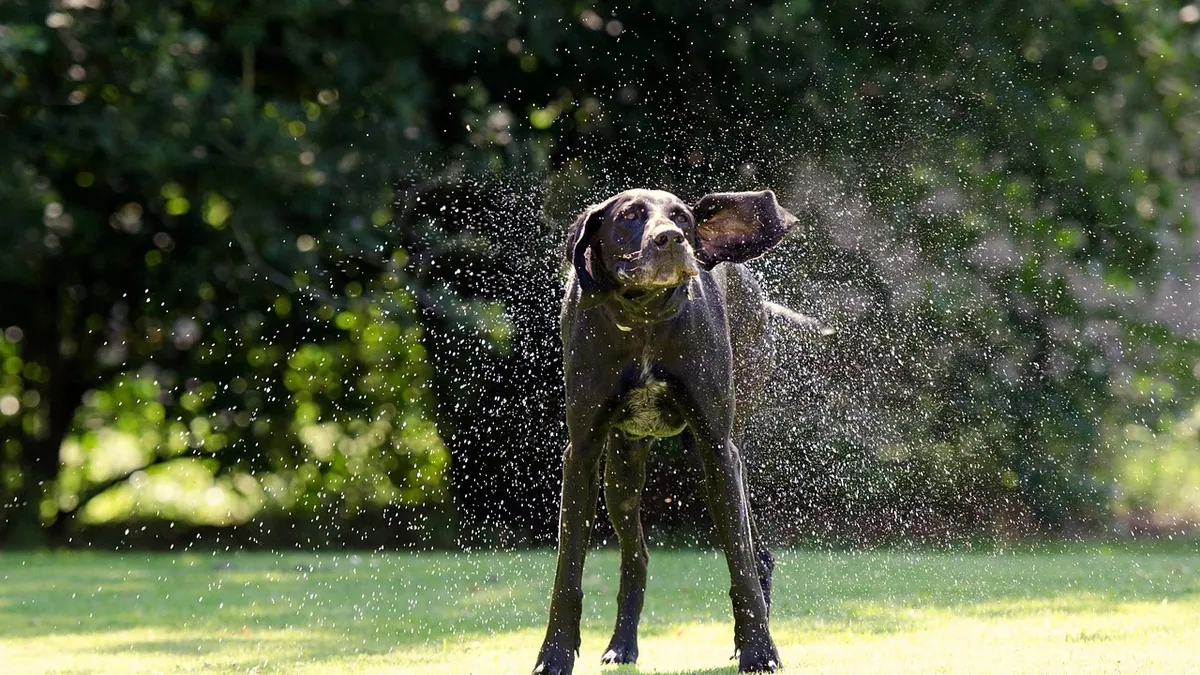
A dog who quivers has small, rapid muscle movements that they cannot control. Most quivering is mild and short lived, but it can also signal pain, poisoning, or a brain problem. This guide explains why does my dog quiver, when it is harmless, and when you need to call a veterinarian right away.
This article is educational and is not a substitute for veterinary diagnosis or treatment.
Quick Answer
- Shivering from cold, excitement, or fear is common and usually stops once the trigger is gone.
- Full body tremors in dogs are most often linked to poisoning or to a condition called idiopathic generalized tremor syndrome, based on a study of 198 dogs [1].
- Jaw chattering and lip quivering can be a movement disorder or a sign of pain, so they deserve a veterinary exam [2].
- Moldy food, compost, and old walnuts can cause tremors, vomiting, and even seizures within a few hours of eating them [3].
- If your dog is also vomiting, stumbling, collapsing, or acting confused, treat it as an emergency and go to a vet now.
What Quivering Actually Looks Like
Quivering is a fine, fast tremor. The muscle movements are small and rhythmic, and your dog cannot stop them on purpose. It may affect the whole body, just the back legs, the head, the jaw, or the lips.
Some owners describe it as shivering, shaking, or teeth chattering. The exact word matters less than the pattern. Note where the tremor happens, how long it lasts, and what your dog was doing right before it started.
Normal shaking versus a tremor
Dogs shake on purpose all the time. A quick side to side shake of the body or head is a normal behavior. A study of 96 dogs found that shaking most often happened between two activities, like when a dog switched from playing to resting [4]. That kind of shake is brief and your dog controls it.
A tremor is different. It is involuntary, it can last for minutes or longer, and your dog may look worried or unable to settle. If your dog is shaking for other reasons, our guide to Why Is My Dog Shaking? covers the broader picture.
Why do puppies quiver?
Puppies quiver for many of the same reasons adult dogs do, plus a few of their own. Their muscles are still developing, their blood sugar can drop quickly if they skip meals, and they get cold faster because they have less body fat.
A puppy who quivers after play, during a vet visit, or in a cold room is often fine. A puppy who quivers and is weak, wobbly, or hard to wake up needs to be seen right away. Low blood sugar was one of the causes of generalized tremors in the 198 case study, though it was less common than poisoning or tremor syndrome [1].
Main Causes of Quivering in Dogs
Vets group tremors by what is driving them. Some come from the environment, some from the body's chemistry, and some from the nervous system itself.
| Cause | Typical clues | How urgent |
|---|---|---|
| Cold, fear, excitement | Tremor starts with a trigger, stops when it ends, dog is otherwise normal | Not urgent |
| Pain or injury | Jaw or lip quiver, stiffness, reluctance to move, whining | See a vet soon |
| Toxin or moldy food | Vomiting first, then tremors, wobbling, fast heart rate | Emergency |
| Low blood sugar or calcium | Weakness, wobbling, small breed or puppy, skipped meals | Emergency if severe |
| Idiopathic generalized tremor syndrome | Sudden full body tremor, often in young female dogs | See a vet same day |
| Brain or spinal disease | Head tremor, other neurological signs, older dog | See a vet soon |
| Paroxysmal dyskinesia | Episodes of tremor with normal awareness between them | See a vet soon |
Toxins and moldy food
This is the cause vets worry about most. A large study of 198 dogs with generalized tremors found that poisoning was the single most common diagnosis, affecting 91 of the 198 dogs [1].
The classic culprit is mold. When mold grows on walnuts, peanuts, dairy, silage, or compost, it can make tremor producing toxins [3]. A dog who raids the compost bin or eats a dropped nut can start showing signs within a few hours [3].
Vomiting is often the first sign, and it may actually help limit how sick the dog gets [3]. After that come tremors, wobbling, a fast heart rate, and unusual sensitivity to touch [3]. Small amounts of toxin tend to cause fine tremors that last hours to days, while large amounts can cause seizures and death [3].
Pain and jaw or lip quivering
Why does my dog quiver his jaw?
Jaw quivering in dogs often shows up as teeth chattering. A 2024 study described this as episodic mandibular tremor, a short burst of rapid jaw movement [2]. The authors noted that this sign can look like a movement disorder, but it may also be a sign of pain [2].
That matters because pain is treatable. If your dog chatters their teeth while eating, yawning, or having their head touched, a painful tooth, jaw joint, or neck problem may be involved. A veterinary exam can sort this out.
Why does my dog quiver his lip?
Lip quivering usually means the muscles around the mouth are twitching. It can happen with jaw tremors, with anxiety, or with pain in the mouth or face. It can also be part of a whole body tremor that is easiest to see at the lips because the muscles there are thin.
Lip and jaw quivering on its own, with a bright and normal dog, is rarely an emergency. If it comes with drooling, trouble eating, or head shyness, book a vet visit.
Idiopathic generalized tremor syndrome
This condition causes a sudden onset of full body tremors, sometimes with balance and eye movement problems [5]. It is thought to have an immune mediated origin and it usually responds to corticosteroid treatment [5]. Many dogs do well, though some have relapses or mild signs that linger [5].
In the 198 dog study, this syndrome was the second most common cause of generalized tremors, found in about a quarter of the dogs [1]. Dogs with this condition were more often female and younger [1].
Head tremors and movement disorders
Some dogs have brief episodes of head tremor with normal awareness in between. A study of 100 dogs with this pattern found that most had no structural brain lesion, but some had masses or other lesions in the brain, most often a pituitary mass [6]. Dogs with a structural cause were older and had other neurological signs [6].
Another group of conditions called paroxysmal dyskinesias causes short episodes of tremor, unusual posture, or involuntary movement while the dog stays conscious [7]. These can be hard to tell apart from seizures, which is why a veterinary neurologist may be involved.
Other body causes
Low calcium, low blood sugar, high calcium, and inflammatory brain disease were all found among the 198 dogs with generalized tremors [1]. These are diagnosed with blood tests and imaging, not by looking at the tremor alone.
If your dog's shaking comes and goes with restlessness or pacing, our article on Dog Shaking And Restless may help you sort out the pattern. For shaking that seems to have no trigger at all, see Dog Shaking And Trembling For No Reason.
Red Flags That Make It an Emergency
Go to an emergency clinic now if your dog has any of these:
- Vomiting followed by tremors, especially if you suspect they ate compost, moldy food, or nuts [3]
- A seizure, collapse, or loss of consciousness [3]
- Tremors that get worse instead of better
- Trouble standing, walking, or holding their head up
- A fast heart rate with trembling and unusual sensitivity to touch [3]
- Tremors after possible exposure to a toxin, even if you are not sure what it was
Call your vet the same day if your dog has:
- New jaw chattering or teeth chattering [2]
- A head tremor that keeps coming back [6]
- Tremors with vomiting but no other severe signs
- Tremors in a puppy, a small breed dog, or a dog who has not eaten
What You Can Do at Home While You Wait
Stay calm and keep the room quiet. Stress can make a tremor worse, and a calm dog is easier to examine.
- Remove any possible source. Check the yard, garage, and trash for moldy food, compost, or spilled nuts, and keep your dog away from it [3].
- Do not induce vomiting unless a veterinarian tells you to. Vomiting can be helpful with some toxins, but it can be dangerous with others [3].
- Do not give human medications. Never give your dog a painkiller or sedative from your own cabinet.
- Record a short video of the tremor. This is one of the most useful things you can bring to the visit.
- Note the time it started, how long it lasts, and what happened right before.
- Offer water and a small meal if your dog is alert and swallowing normally.
- Keep your dog warm and still. Wrap them in a blanket and avoid handling the head and neck if that seems to trigger it.
What Your Veterinarian Will Check
Your vet will start with a full physical and neurological exam. They will watch your dog walk, check reflexes, look in the mouth, and feel the jaw and neck. The video you made can help a lot here.
Blood work usually comes next. A chemistry panel can find low calcium, low blood sugar, or high calcium, all of which showed up in the 198 dog study [1]. Your vet may also check for infection and run a toxin screen if poisoning is suspected.
If the exam points to the brain, your vet may recommend MRI. In the head tremor study, MRI found lesions in the middle cranial fossa, brainstem, and other areas in dogs with a structural cause [6]. A pituitary mass was the most common underlying condition in that group [6].
Treatment depends on the cause. Poisoned dogs may need fluids, medication for nausea, and sometimes activated charcoal. Dogs with idiopathic generalized tremor syndrome often improve with corticosteroids [5]. If pain is behind the jaw or lip quiver, treating the pain source may stop the tremor [2].
Your vet will calculate any medication dose from your dog's weight and health. Never use a dose you found online.
Prevention and Monitoring
Most quivering cannot be prevented, but some causes can.
- Keep compost bins latched and out of reach. Moldy food waste is a common source of tremor producing toxins [3].
- Pick up fallen walnuts and nuts in the yard, and do not leave dairy or peanuts where a dog can get them [3].
- Feed puppies and small breed dogs on a regular schedule to avoid low blood sugar.
- Keep your dog warm in cold weather, especially short coated and senior dogs.
- Track episodes in a notebook or phone app. Note the date, time, length, and what the body part was.
- Bring the log to every vet visit. Patterns over weeks are more useful than a single memory.
If your dog has a known tremor condition, ask your vet what a normal episode looks like for your dog and what changes mean you should call.
Limitations and When to Contact a Veterinarian
No article can tell you what is causing your dog's tremor. Two dogs with the same shaking can have very different diagnoses, and only an exam and testing can sort that out. Individual cases need a veterinarian.
Call an emergency clinic now for seizures, collapse, vomiting with tremors, or a dog who cannot stand. Call your vet the same day for new jaw chattering, a returning head tremor, or tremors in a puppy. Book a routine visit for mild, brief quivering that happens with cold, fear, or excitement and stops on its own.
If you are in the United States and think your dog ate something toxic, call the ASPCA Animal Poison Control Center at (888) 426-4435 or the Pet Poison Helpline at (855) 764-7661. Both may charge a consultation fee.
Frequently Asked Questions
Should I worry if my dog quivers only when excited?
No, excitement tremors are usually harmless. They start with a trigger like a visitor or a leash, and they stop when your dog settles. If the quivering happens at random times or lasts a long time, have your vet take a look.
Can dehydration cause quivering in dogs?
Dehydration can make muscles twitch and can worsen tremors from other causes, but it is rarely the whole story on its own. A dehydrated dog often looks tired, has tacky gums, and may not want to eat. Offer water and call your vet if your dog will not drink.
Is teeth chattering always a sign of pain?
No, but pain is one of the possibilities. A 2024 study found that episodic jaw tremor can look like a movement disorder or a sign of pain, and the two can be hard to tell apart without an exam [2]. If your dog chatters their teeth while eating or when the head is touched, get it checked.
Do tremors in dogs go away on their own?
Some do. Mild toxin tremors can fade over hours to days as the body clears the poison, and vomiting may help limit how severe it gets [3]. Others, like idiopathic generalized tremor syndrome, usually need treatment [5]. Do not wait it out if your dog is vomiting, weak, or getting worse.
Can a brain tumor cause head tremors in dogs?
Yes. In a study of 100 dogs with episodic head tremor, 29 had a structural lesion on MRI, and a pituitary mass was the most common cause [6]. Those dogs were older and had other neurological signs [6]. This is why a returning head tremor in an older dog deserves a vet visit.
Related Articles
- Why Is My Dog Shaking?
- Dog Shaking And Restless
- Dog Shaking And Trembling For No Reason
- Dog Shaking Head Causes
- Dog Shaking Head Reasons
- Why Does My Dog Keep Shaking Her Head
- Tremors in Dogs: Causes, Symptoms, and What They Mean
- Tremors in Dogs: Treatment Options and What to Expect
- Why Is My Senior Dog's Jaw Chattering or Quivering?
References
- Generalized Tremors in Dogs: 198 Cases (2003-2023). Journal of veterinary internal medicine, 2025.
- Episodic mandibular tremor in dogs: an idiopathic movement disorder or a manifestation of pain. Journal of the American Veterinary Medical Association, 2024.
- Tremorgenic Neuromycotoxicosis in Dogs - Toxicology. Merck Veterinary Manual.
- Shake It Off: Investigating the Function of a Domestic Dog Behavior in Social Contexts. Animals : an open access journal from MDPI, 2024.
- Canine idiopathic generalized tremor syndrome, immune-mediated?. Frontiers in veterinary science, 2024.
- Idiopathic and structural episodic nonintentional head tremor in dogs: 100 cases (2004-2022). Journal of veterinary internal medicine, 2023.
- Canine paroxysmal dyskinesia: distribution of etiological subtypes and structural and reactive causes in a retrospective tertiary care cohort. Frontiers in veterinary science, 2026.