Senior Cat Eye Changes: Discharge, Cloudiness, Staring
By Dr. Zubair Khalid, DVM, MS, PhD ·
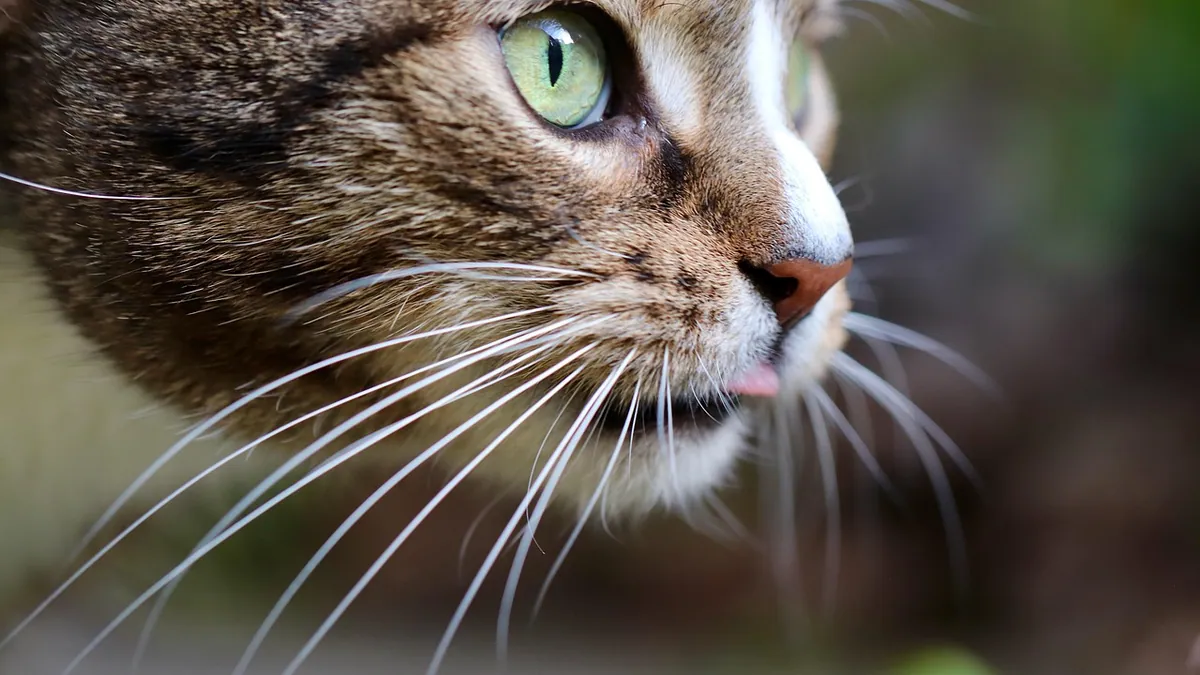
Cloudy eyes in a senior cat are often caused by normal aging changes in the lens, but they can also signal cataracts, glaucoma, uveitis, or high blood pressure. Discharge and staring can point to pain, vision loss, or an eye infection. Some changes are harmless, and some need a veterinarian the same day.
This article is educational and is not a substitute for veterinary diagnosis or treatment.
Quick Answer
- A slight blue-gray haze in both eyes that does not affect vision is usually nuclear sclerosis, a normal aging change.
- A true white or gray opacity, especially in one eye, may be a cataract and should be checked by a veterinarian [1].
- Any new eye discharge in a senior cat deserves a vet visit, because conjunctivitis and corneal problems are common and treatable [2].
- Staring at walls, pressing the head against objects, or bumping into furniture can mean vision loss or eye pain, not just "old age."
- A suddenly cloudy, red, or swollen eye with squinting is an emergency and needs care right away.
What Senior Cat Eye Changes Look Like
Senior cat eyes change in several ways. The pupil may respond more slowly to light. The lens may look hazy. The iris may thin or develop small dark spots. Some cats sleep with their eyes partly open, which dries the surface and leaves a little crust in the morning.
Cloudiness is the change owners notice most. The important question is whether the haze is in the lens, the cornea (the clear front window), or the fluid inside the eye. Each has a different cause and a different level of urgency.
Discharge is another common finding. A small amount of clear or reddish-brown tear staining at the inner corner can be normal, especially in flat-faced cats. Green, yellow, thick, or foul-smelling discharge is not normal. Neither is discharge that appears suddenly or comes with squinting.
Staring is easy to miss. A cat may sit and look at a wall, a corner, or into space for long stretches. Some cats stare because their vision is fading. Others stare because light hurts or because the eye is under pressure. Some cats simply become more still and watchful as they age.
Normal aging changes
Nuclear sclerosis is the most common benign change. The lens fibers compact with age and scatter light, so the pupil looks gray-blue. It usually affects both eyes evenly. Cats with nuclear sclerosis still see well enough to jump, eat, and find their litter box.
Iris atrophy and small iris freckles are also common with age. They rarely cause problems on their own.
Changes that are not normal
A cataract is an opacity in the lens itself. It can be small and harmless or large enough to block vision. Cataracts in cats are often linked to other disease, including diabetes mellitus [1]. In one reported case, a diabetic cat developed a cataract that swelled and ruptured the lens capsule, which is a painful and serious problem [1].
Glaucoma means high pressure inside the eye. It is painful. Causes in cats include chronic uveitis, lens instability, and other conditions, and treatment may involve surgery in some cases [3].
Uveitis is inflammation inside the eye. It can cause cloudiness, pain, a small pupil, and a change in eye color. It has many causes, and your veterinarian will look for the underlying trigger.
Main Causes of Cloudy Eyes, Discharge, and Staring in Senior Cats
| Cause | Typical clues | How urgent |
|---|---|---|
| Nuclear sclerosis (normal aging) | Even blue-gray haze in both eyes, vision seems fine | Routine visit at next exam |
| Cataract | White or gray opacity, one or both eyes, may worsen over time [1] | Routine to urgent, depending on pain and vision |
| Glaucoma | Cloudy cornea, red eye, squinting, enlarged eye, pain [3] | Emergency |
| Uveitis | Cloudy eye, small pupil, light sensitivity, color change | Same-day visit |
| Conjunctivitis | Redness, discharge, squinting, swollen lids [2] | Same-day to routine visit |
| Eosinophilic keratitis | White or pink raised tissue on the cornea, discharge [4] | Same-day visit |
| Ectopic cilia or eyelid problems | Tearing, squinting, discharge, rubbing the eye [5] | Same-day visit |
| High blood pressure or retinal disease | Sudden blindness, dilated pupils, staring, bumping into things | Emergency |
| Dry eye or tear film changes | Thick discharge, dull cornea, repeated infections [2] | Routine to same-day visit |
Cataracts and lens disease
Cataracts in cats are less common than in dogs, but they do happen. They can be inherited, caused by inflammation, or linked to diabetes mellitus [1]. A cataract that swells can push on the lens capsule until it tears, which causes severe pain and inflammation [1]. Surgery to remove the lens restored vision in the reported diabetic cat, though an artificial lens was placed in only one eye [1]. Not every cataract needs surgery, but every new lens opacity deserves an exam.
Glaucoma
Glaucoma in cats is often a long-term problem, and it can be hard to control with medication alone. A surgical procedure called endocyclophotocoagulation has been used in cats with glaucoma from several causes, including chronic uveitis and lens instability [3]. In one review, pressure was controlled in 86% of eyes at three months and 94% at one year, and vision remained in 77% and 71% of cases at those time points [3]. Those numbers come from a specialty setting, so your own cat's outlook may differ.
Conjunctivitis and tear film changes
Conjunctivitis is common in cats and shows up as redness, discharge, and squinting [2]. Tear fluid contains proteins that help defend the eye surface, including lactoperoxidase, lactotransferrin, albumin, and immunoglobulin A [2]. When the surface is inflamed, the tear film changes, and that can change how the eye looks and feels [2]. If your cat has new discharge, see Cat Eye Discharge: When Should You Worry? for a closer look at what different types of discharge mean.
Eosinophilic keratitis
Eosinophilic keratitis is an inflammatory condition that causes raised white or pink tissue on the cornea, often with discharge. In a study of 28 cats, the median age was about 8 years, and most improved within roughly two to three weeks of starting topical treatment [4]. Treatment usually involves a topical corticosteroid or a topical calcineurin inhibitor, and your veterinarian will choose based on your cat's other health conditions [4].
Eyelid and eyelash problems
Eyelids that roll inward, extra hairs growing from the wrong spot, and other eyelid defects can cause chronic tearing, squinting, and discharge [5]. These problems are often present from a young age, but they can be missed and only become obvious when a cat slows down. A cat with a chronically watery or squinty eye should have the lids and lashes checked.
Staring and vision loss
Staring often means a cat is relying on other senses. If your cat stares at a wall, misjudges jumps, or seems startled when you approach, vision may be fading. Sudden blindness is an emergency. It can come from high blood pressure, retinal detachment, or severe inflammation. A cat that was fine yesterday and is now bumping into things needs to be seen right away.
Red Flags That Mean Emergency
Call an emergency clinic now if you see any of these:
- A suddenly cloudy, red, or bulging eye
- Squinting, pawing at the eye, or holding the eye closed
- A pupil that is fixed, very large, or different from the other side
- Sudden blindness or a cat that will not move around normally
- A cloudy eye with vomiting, weight loss, or increased thirst
- A wound, a foreign object, or a chemical exposure
- A cat that is crying out, hiding, or refusing food with an eye problem
Eye pain in cats is easy to underestimate. Cats often go quiet instead of crying. If your cat is less active and one eye looks different, treat it as urgent.
Safe Things You Can Do at Home While You Wait
- Do not put any human eye drops or ointments in your cat's eye unless your veterinarian tells you to.
- Do not try to remove anything stuck in the eye. You can flush a visible chemical or dust with plain saline if your vet advises it.
- Gently wipe away discharge with a clean, damp cotton ball, using a fresh one for each eye, and wipe from the inner corner outward.
- Keep your cat indoors and block stairs or high furniture if vision seems poor.
- Keep the litter box, food, and water in the same place so your cat can find them by memory.
- Note the time each sign started and take a short video of the staring or squinting to show your vet.
- Do not give any medication by mouth for an eye problem without veterinary guidance.
If your cat has a long-term condition like diabetes, keep up with the treatment plan your veterinarian set. Poorly controlled diabetes is linked to lens problems in cats [1].
What Your Veterinarian Will Check and Test
Your veterinarian will start with a full eye exam. That usually includes:
- A Schirmer tear test to measure tear production
- A fluorescein stain to check for corneal ulcers
- A pressure check (tonometry) to look for glaucoma [3]
- A close look at the lens, iris, and retina with a bright light and magnifier
- A general physical exam, including weight, heart rate, and blood pressure
Blood work is common. It can check for diabetes, kidney disease, thyroid disease, and other conditions that affect the eyes. If uveitis is suspected, your veterinarian may recommend tests for infectious causes. In the reported diabetic cat, prior testing had ruled out several common infectious causes of uveitis before eye surgery [1].
If the eye is very cloudy or the view inside is poor, your veterinarian may recommend an ultrasound. Referral to a veterinary ophthalmologist is an option for cataracts, glaucoma, or unclear cases. Surgery such as phacoemulsification has restored vision in cats with cataracts, and procedures for glaucoma have helped control pressure in many cases [1][3].
Your veterinarian will calculate any medication dose from your cat's weight and health. Do not use a dose from the internet or from another pet.
Prevention and Monitoring
You cannot stop aging, but you can catch problems early.
- Schedule a wellness exam at least once a year for a senior cat, and twice a year if your cat has a chronic disease.
- Ask your veterinarian to check blood pressure at every senior visit.
- Watch for changes in how your cat jumps, climbs, and finds food.
- Keep a photo of your cat's eyes on your phone so you can compare over time.
- Treat underlying conditions like diabetes and high blood pressure as directed.
- Keep up with parasite prevention and vaccines as your veterinarian advises.
- If your cat has one cloudy eye, check the other eye daily and note any change.
For more on discharge that comes and goes, see Cat Eye Discharge: Normal or Infection? and Cat Eye Discharge: Causes and When to See a Vet. If the third eyelid is showing, read Cat Third Eyelid Showing With Discharge.
Limitations and When to Contact a Veterinarian
This article cannot tell you what is happening in your cat's eye. Only an exam can do that. Individual cases need a veterinarian, and the timing matters.
Contact your veterinarian the same day if you see new discharge, a change in eye color, a cloudy eye in only one eye, or a cat that seems uncomfortable.
Go to an emergency clinic now if your cat has sudden blindness, a bulging or bleeding eye, severe squinting, a known injury, or a chemical exposure.
Schedule a routine visit if the change is mild, has been stable for months, and your cat is eating, playing, and behaving normally.
Frequently Asked Questions
Is cloudy eyes in a senior cat always a sign of blindness?
No. Many senior cats have a harmless blue-gray haze from nuclear sclerosis and still see well. A true cataract or glaucoma is more likely to affect vision and cause pain. Only an eye exam can tell the difference.
Why does my senior cat stare at nothing?
Staring can mean your cat is losing vision and relying on hearing and smell. It can also mean the eye is painful or the brain is not processing signals normally. A sudden change in staring behavior should be checked by a veterinarian.
Can I use human eye drops on my cat?
No, not without veterinary guidance. Some human drops contain ingredients that can harm a cat's eye or worsen pressure inside the eye. Your veterinarian will pick a product and dose that fits your cat.
Does eye discharge in older cats always mean infection?
No. Discharge can come from allergies, dry eye, eyelid problems, or inflammation. Thick yellow or green discharge is more likely to involve infection. Any new discharge in a senior cat should be examined.
Will my cat's cloudy eye get better on its own?
Some mild surface irritation can settle with time, but cataracts and glaucoma do not go away on their own. Waiting can allow pain or vision loss to get worse. Have the eye checked early.
Related Articles
- Cat Eye Discharge: When Should You Worry?
- Cat Third Eyelid Showing With Discharge
- Cat Eye Discharge: Normal or Infection?
- Cat Eye Discharge: Causes and When to See a Vet
- Why Is My Cat having eye discharge? Herpesvirus Chlamydia and Conjunctivitis
- Why Is My Cat suddenly going blind? Hypertensive Retinal Detachment and Uveitis
- Glaucoma in Cats: Symptoms, Treatment, and Life Expectancy
- Cataracts in Cats: Age of Onset and Early Signs
- Cat Vision Loss and Blindness: Signs and Causes
References
- Rare occurrence of an intumescent cataract in a diabetic domestic longhair cat. JFMS open reports, 2026.
- A Pilot Proteomic Analysis of Tear Fluid in Domestic Cats with and Without Conjunctivitis Using MALDI-TOF/TOF Mass Spectrometry. Animals : an open access journal from MDPI, 2026.
- Retrospective Evaluation of Surgical Outcomes in Cats With Glaucoma Following Diode Endoscopic Cyclophotocoagulation. Veterinary ophthalmology, 2026.
- Initial Outcomes Following Treatment With Topical Corticosteroids or Topical Calcineurin Inhibitors in Cats With Eosinophilic Keratitis. Veterinary ophthalmology, 2026.
- Bilateral Third Eyelid Ectopic Cilia in a Maine Coon Cat. Veterinary ophthalmology, 2026.