Cat Vision Loss and Blindness: Signs and Causes
By Dr. Zubair Khalid, DVM, MS, PhD ·
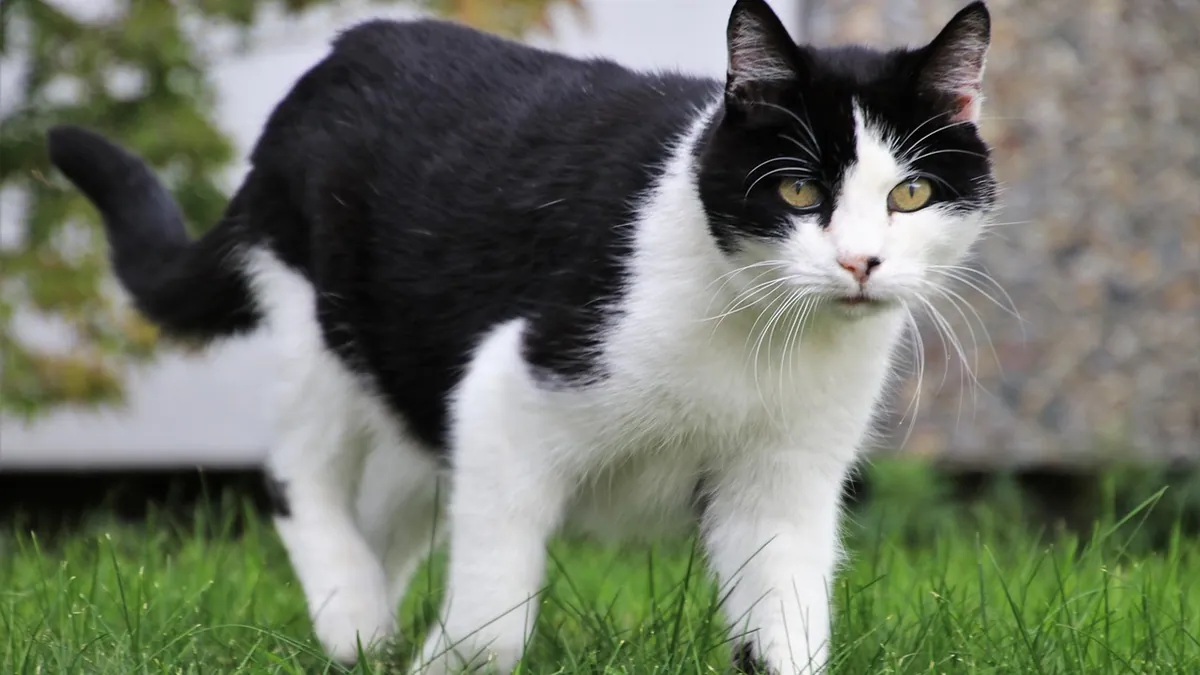
Cats rarely announce that their eyesight is fading. The signs of cat going blind are usually small changes in behavior, like hesitating at the top of the stairs or misjudging a jump onto the couch. Because cats adapt so well to dim vision, many owners do not realize something is wrong until the loss is advanced.
This article is educational and is not a substitute for veterinary diagnosis or treatment.
Quick Answer
- Watch for a cat who stops jumping onto high surfaces, misses toys, or walks with a low, cautious posture.
- Sudden blindness is often a medical emergency, and high blood pressure is a common cause that can be treated if caught early [1].
- Gradual vision loss is more common in middle-aged and older cats, and it often reflects eye disease that has been progressing for years [2].
- A cat with sudden blindness may have widely dilated pupils that do not react to light, which points to a problem with the optic nerve or retina [3].
- Never give your cat any medication, including eye drops, without a veterinarian's direction, since some drugs can damage feline eyes [4].
What Vision Loss Looks Like and What Is Normal
Normal cat vision
Cats see well in dim light and are excellent at detecting motion, but their sharp distance vision is weaker than a human's. A healthy cat tracks a moving toy, navigates furniture in a familiar room, and reacts to a hand moving toward the face. Cats also rely heavily on whiskers, smell, and memory, so a cat with mild vision loss can still seem perfectly normal at home.
Early signs of cat vision loss
The first clues are often behavioral. You may notice your cat:
- Hesitates before jumping onto a counter or windowsill it used to clear easily
- Bumps into walls, doorframes, or furniture, especially in new places
- Walks with a crouched, careful gait or hugs the wall
- Stops chasing laser pointers or toys
- Startles easily when you approach from the side
- Seems disoriented in dim light or at night
- Has trouble finding the food bowl if you move it
Some of these changes overlap with arthritis, cognitive decline, or dental pain, so they do not prove blindness on their own. They do mean your cat needs a veterinary exam.
Signs of cat eye problems you can see
Physical changes in the eye are often easier to spot than behavior changes. Look for:
- Cloudiness in the lens or cornea
- Redness, swelling, or squinting
- Discharge, tearing, or crusting
- A pupil that stays large or stays small
- One eye that looks different from the other
- A visible third eyelid
- Blood or a hazy film inside the eye
These findings can point to conditions ranging from conjunctivitis to uveitis to glaucoma, and several of them are painful. You can read more about discharge and redness in Cat Eye Discharge: Causes and When to See a Vet.
How to tell if your cat has poor vision
A simple at-home check is the menace response. Move your hand quickly toward your cat's face without touching the eye or creating a puff of air. A sighted cat blinks or pulls back. A blind cat does not. Do this gently and never poke or touch the eye itself.
You can also drop a cotton ball in front of your cat and see if the eyes or head follow it. These tests are rough guides only. They cannot tell you why your cat cannot see, and a cat with partial vision may still pass them.
Main Causes of Vision Loss in Cats
Vision loss can start in the eye itself, in the optic nerve, or in the brain. Some causes are reversible, and some are permanent. The table below gives a quick overview, and the sections after it explain the most common ones.
| Cause | Typical clues | How urgent |
|---|---|---|
| High blood pressure (hypertension) | Sudden blindness, dilated pupils, often in older cats | Emergency, same day |
| Cataracts | Cloudy lens, gradual dimming, often both eyes | Routine to urgent |
| Uveitis | Pain, squinting, redness, cloudy or bloody eye | Urgent, same day |
| Glaucoma | Firm, painful eye, enlarged globe, cloudy cornea | Emergency |
| Optic neuritis | Sudden blindness, pupils fixed and dilated, no other eye disease | Urgent |
| Retinal detachment | Sudden blindness, often linked to high blood pressure | Emergency |
| Infection (herpesvirus, FIP, toxoplasmosis, FeLV, FIV) | Eye inflammation plus other illness signs | Urgent |
| Trauma | Recent injury, blood in the eye, swelling | Emergency |
| Drug reaction | Vision loss after starting a medication | Stop and call the vet now |
High blood pressure and the eye
Systemic hypertension can cause sudden vision loss in cats [1]. The high pressure damages the small vessels in the retina, which can lead to bleeding, swelling, and retinal detachment. This is one of the most important causes to rule out because it is treatable, and the same high blood pressure can also damage the kidneys, heart, and brain.
A cat with hypertensive eye disease often goes blind over hours to days. The pupils may be wide and slow to respond. If your cat loses vision suddenly, this is a same-day emergency. You can read more in Why Is My Cat suddenly going blind? Hypertensive Retinal Detachment and Uveitis.
Cataracts
A cataract is a clouding of the lens. It usually develops slowly, so owners often notice a gray or white haze before they notice any behavior change. Cataracts can affect one or both eyes. Some are inherited, and some follow uveitis, trauma, or diabetes. Cataracts in cats are less common than in dogs, and surgery is not always an option, but a veterinary ophthalmologist can advise you.
Uveitis and other inflammatory eye disease
Uveitis is inflammation inside the eye. It is painful and can cause squinting, tearing, a cloudy appearance, and a small pupil. It is often a sign of a body-wide problem. Infectious diseases such as feline infectious peritonitis, toxoplasmosis, feline immunodeficiency virus, and feline leukemia virus can cause uveitis, retinal detachment, and glaucoma [1]. Feline herpesvirus 1 is linked to conjunctivitis, corneal disease, and dry eye [1].
Optic nerve disease
The optic nerve carries signals from the eye to the brain, and injury to it usually causes partial or complete sight loss [3]. The most common optic nerve disease is optic neuritis, which is inflammation of the nerve. When it affects both eyes, signs include dilated pupils that do not respond to light and sudden blindness that is not explained by other eye disease [3]. Causes include brain inflammation, infections, poisons, and trauma [3]. Treatment targets the underlying disease and often includes medication to reduce inflammation and damage, and if treatment works, the pupils return to normal size and respond to light within several days, with vision returning a few days later [3].
Retinal detachment and tears
The retina is the light-sensing layer at the back of the eye. When it pulls away from its base, vision is lost. In a review of 99 cats with retinal detachment, the most common eye condition in cats with giant retinal tears was hypertensive retinopathy, followed by vitreal degeneration, trauma, cataract, and anterior uveitis or vitritis [5]. Trauma and male sex were identified as risk factors in that group [5]. This is another reason blood pressure checks matter in any cat with sudden vision loss.
Dental and post-procedure complications
Dental work is routine, and serious eye complications are rare, but they do happen. One report described a 5-year-old cat who went blind in both eyes three days after a dental procedure, with retinal swelling and partial detachments, and the cat regained some vision and remained well 13 months later [6]. A separate report described a 12-year-old cat who developed a retrobulbar abscess, ascending bacterial optic neuritis, and meningitis after a tooth extraction, and the cat was euthanized because of the poor prognosis [7]. If your cat has eye swelling, pain, or vision loss after any dental or surgical procedure, call your veterinarian right away.
Medication reactions
Some drugs can harm feline eyes. A review of enrofloxacin use in cats found reports of eye problems in 163 cats, with loss of vision, dilated pupils, and abnormal pupil light responses reported most often, and increased tapetal reflectivity, narrowed retinal vessels, and retinal degeneration seen on examination [4]. Never adjust or stop a prescribed medication on your own, but do call your veterinarian immediately if your cat's vision changes after starting any drug.
Trauma and injury
Blunt trauma, scratches, and foreign bodies can damage the eye, lens, or retina. A scratched cornea is painful and can become infected. If your cat has a swollen, bloody, or obviously injured eye, treat it as an emergency. First aid basics are covered in Cat Eye Injury: Signs, First Aid, and When to See the Vet.
Red Flags That Mean Emergency Now
Go to an emergency clinic immediately if your cat has:
- Sudden blindness, especially if it happened over hours
- Pupils that are wide open and do not react to light
- A suddenly cloudy, bloody, or bulging eye
- Severe squinting, pawing at the eye, or crying out
- One eye that is much larger or firmer than the other
- Vision loss along with wobbling, head tilt, seizures, or collapse
- Vision loss after a dental procedure, surgery, or injury
- Vision loss after starting a new medication
Sudden blindness is the single most important sign to act on. A cat who has been slowly losing vision for years may be stable, but a cat who was sighted yesterday and blind today needs care within hours.
Safe Things You Can Do at Home While You Wait
You cannot restore vision at home, but you can keep your cat safe and comfortable.
- Block stairs with a baby gate, and close doors to rooms with hazards.
- Keep food, water, and the litter box in fixed locations. Do not move them.
- Talk to your cat before you touch it, so you do not startle it.
- Keep the floor clear of shoes, bags, and clutter.
- Use night lights so a cat with partial vision can still get around.
- Pad sharp furniture corners if your cat bumps into them.
- Do not let your cat outside. A blind cat cannot avoid cars, dogs, or other cats.
- Do not put any human eye drops or leftover pet medication in your cat's eye.
If your cat is blind in one eye only, it may still go outside in a secure catio, but supervision is wise. For more on how feline eyes work, see Cat Eyes: Understanding Feline Vision, Common Eye Problems & Care Tips.
What Your Veterinarian Will Check and Test
Your veterinarian will start with a full physical exam and a detailed eye exam. Expect:
- A menace response and pupillary light reflex test
- A close look at the cornea, lens, and retina with an ophthalmoscope
- A Schirmer tear test and fluorescein stain to check for dry eye and corneal ulcers
- A tonometer reading to measure eye pressure
- A blood pressure measurement, which is essential in any cat with sudden vision loss [1]
- Blood work, including a complete blood count and chemistry panel
- Testing for feline leukemia virus, feline immunodeficiency virus, and other infections as indicated [1]
- Chest x-rays or other imaging if the cause is unclear
- A neurologic exam if optic nerve or brain disease is suspected [3]
If your cat has a disease affecting both eyes, your veterinarian will often look for disease elsewhere in the body, because eye changes can reveal a body-wide problem before other signs appear [1]. In some cases, your veterinarian may refer you to a veterinary ophthalmologist for advanced imaging or surgery.
Prevention and Monitoring
You cannot prevent every cause of vision loss, but you can catch problems earlier.
- Schedule yearly exams for adult cats and twice-yearly exams for cats over 8.
- Ask for a blood pressure check at every senior visit, since hypertension is a leading cause of sudden blindness [1].
- Keep vaccinations and parasite prevention current.
- Watch for the early behavioral signs listed above, and write down what you see.
- If your cat has kidney disease, heart disease, or diabetes, ask your veterinarian how often blood pressure should be checked.
- Keep your cat indoors to reduce trauma risk.
- If your cat is already blind, keep routines steady. Most blind cats do remarkably well once the furniture stays put.
Limitations and When to Contact a Veterinarian
This article cannot tell you why your cat cannot see. Only an exam can do that, and individual cases need a veterinarian.
Call an emergency clinic now if your cat has sudden blindness, a bulging or bloody eye, a pupil that will not react to light, or vision loss with wobbling, seizures, or collapse.
Call your veterinarian the same day if you notice new cloudiness, squinting, discharge, a change in pupil size, or any behavior that suggests your cat is not seeing well.
Schedule a routine visit if the changes are mild and gradual, such as hesitating before jumps or bumping into furniture in dim light. Even gradual changes deserve a look, because early treatment can sometimes slow or stop the damage [2].
Frequently Asked Questions
Can a blind cat still have a good quality of life?
Yes. Cats rely on memory, smell, whiskers, and hearing, and most adjust well when their home stays consistent. Keep food, water, and the litter box in the same spots, and avoid moving furniture.
How long does it take a cat to adjust to blindness?
It varies. Some cats adapt within days, and others take weeks. Sudden blindness is harder than gradual loss because there is no time to compensate, so give your cat quiet, predictable surroundings and plenty of patience.
Can cataracts in cats be treated?
Sometimes. Cataract surgery is available in some cases, but it depends on the cause and the health of the rest of the eye. Your veterinarian or a veterinary ophthalmologist can tell you whether surgery is an option for your cat.
Is cloudy eye in an older cat always a cataract?
No. Cloudiness can come from the lens, the cornea, or fluid inside the eye, and these have very different causes and treatments. Only an eye exam can tell them apart.
Can high blood pressure in cats be managed?
Often, yes. Your veterinarian will treat the underlying cause and may prescribe medication to lower blood pressure. The key is catching it early, before the retina is permanently damaged.
Related Articles
- Why Is My Cat suddenly going blind? Hypertensive Retinal Detachment and Uveitis
- Cat Eye Injury: Signs, First Aid, and When to See the Vet
- Cat Eyes: Understanding Feline Vision, Common Eye Problems & Care Tips
- Cat Eye Discharge: Causes and When to See a Vet
- Can Cats See in the Dark? Feline Vision Explained
- Cat Hair Loss: Causes and When to See a Vet
- Sudden Blindness in Cats: Why Dilated Pupils Matter
- Blindness in Cats After Anesthesia: Causes and Outlook
- Cataracts in Cats: Symptoms and What Causes Them
- Toxoplasmosis in Cats: Neurological Symptoms, Cytology, Pregnancy Risks, and Veterinary Care
References
- Eye Disorders Resulting from Generalized Diseases in Cats - Cat Owners. Merck Veterinary Manual.
- Feline Vision Problems: A Host of Possible Causes. Cornell University College of Veterinary Medicine.
- Disorders of the Optic Nerve in Cats - Cat Owners. Merck Veterinary Manual.
- Enrofloxacin-associated ocular disease in cats: A scoping review. The Canadian veterinary journal = La revue veterinaire canadienne, 2025.
- Incidence of and treatment strategies for giant retinal tears in cats with retinal detachment. The Canadian veterinary journal = La revue veterinaire canadienne, 2026.
- Bilateral blindness in a cat after a dental procedure, suspected to be due to segmental chorioretinal ischaemia necrosis. JFMS open reports, 2025.
- Ascending bacterial optic neuritis and meningoencephalitis following tooth extraction in a cat. BMC veterinary research, 2025.