Normal Dog Breathing Rate: How to Count and Interpret
By Dr. Zubair Khalid, DVM, MS, PhD ·
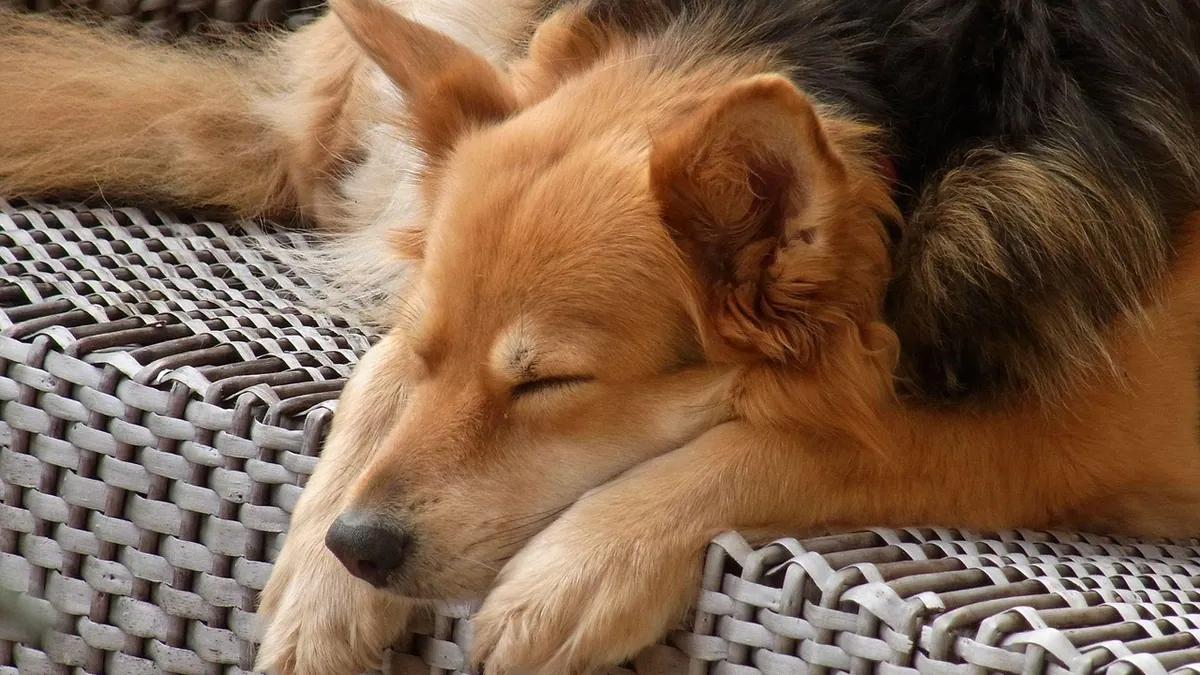
A normal dog breathing rate at rest is roughly 10 to 30 breaths per minute, and the exact number matters less than what is normal for your individual dog. Counting breaths while your dog sleeps gives you a baseline you can compare against every day. A rise in that number can be the first sign of a heart or lung problem, often before your dog acts sick.
This article is educational and is not a substitute for veterinary diagnosis or treatment.
Quick Answer
- Count breaths when your dog is asleep or fully relaxed, not after play, meals, or a walk.
- Watch the chest rise and fall for a full 30 seconds, then multiply by two to get breaths per minute.
- A resting rate of about 10 to 30 breaths per minute is typical for most healthy adult dogs [1].
- Write the number down with the date and time so you can spot a trend over days, not just one reading.
- Call your veterinarian if the resting rate is clearly higher than your dog's usual baseline, especially if it stays up for more than a day.
What Normal Dog Breathing Looks Like
A relaxed dog breathes quietly through the nose with the chest and belly moving gently. You should not see the ribs pulling in hard, the neck stretching out, or the belly pumping with effort. The lips and gums stay pink, and your dog is comfortable lying down.
When dogs are hot, excited, or in pain, they pant. Panting is fast, open-mouthed breathing, and it is normal after exercise or in warm weather. Panting is not the same as a resting breathing rate, so do not count breaths while your dog is panting. Wait until your dog is calm and cool.
Sleep is the best time to measure. A sleeping dog has a slow, steady pattern that is easy to count. Research on sleeping dogs found that simple video and audio recordings taken from a phone matched manual breath counting closely, with average errors of only about one to two breaths per minute [2]. That tells you a quiet room and careful watching are enough to get a useful number.
Dog Breathing Rate Chart by Size
| Dog size | Typical resting rate | Notes |
|---|---|---|
| Small (under 20 lb) | About 15 to 30 breaths per minute | Small dogs often sit at the higher end |
| Medium (20 to 50 lb) | About 12 to 25 breaths per minute | Most dogs fall in this range |
| Large (over 50 lb) | About 10 to 20 breaths per minute | Big dogs tend to breathe slower at rest |
These ranges are general guides [1]. Your dog's personal baseline is the number that matters most. A dog who always rests at 16 and suddenly sits at 30 is a concern even though 30 is still within the broad normal range.
How to Count Your Dog's Breathing Rate
Step by Step
- Pick a quiet time, ideally when your dog is asleep or resting on their side.
- Watch the chest or the belly, whichever moves more clearly.
- Count one breath each time the chest rises and falls back down.
- Count for 30 seconds, then double the number.
- Repeat once to check your count, then record the lower or average number.
Do this at the same time each day, such as just before bed. Keep a simple log in a notebook or phone note. Owners who track daily often catch small upward trends that a single vet visit would miss.
Common Counting Mistakes
Counting while your dog is awake and alert can add several breaths per minute. Counting during panting gives a meaningless number. Counting for only 10 seconds and multiplying by six magnifies small errors. If your dog moves, snores, or dreams, start over.
If you want a more detailed walkthrough, see How to Check Your Dog's Respiratory Rate and Effort at Home.
Why Your Dog's Breathing Rate Matters
Breathing rate is one of the few vital signs you can measure accurately at home without equipment. It reflects how well the heart and lungs are working together. When the heart fails to pump efficiently, fluid builds in the lungs and the body breathes faster to compensate. When lung disease narrows the airways, breathing rate climbs as well.
Veterinarians use resting respiratory rate as a home monitoring tool for dogs with heart disease and chronic lung conditions. A sustained increase above your dog's baseline is a common early warning that a condition is worsening, sometimes a day or more before other signs appear. That early signal lets your vet adjust treatment before a crisis.
Breathing rate also changes with pain, fever, stress, anemia, and heat. In a study of dogs walking in hot, sunny conditions, breathing rate jumped from about 47 breaths per minute at rest to as high as 374 breaths per minute during walks with high radiant heat [3]. That is normal cooling behavior, not disease, but it shows how strongly environment affects the number.
Causes of a Changed Breathing Rate
| Cause | Typical clues | How urgent |
|---|---|---|
| Normal panting or heat | Open mouth, fast breathing, settles within minutes in cool air | Not urgent |
| Pain or stress | Restless, tense, fast rate that calms when comfortable | See vet soon if it persists |
| Heart disease with fluid buildup | Rising sleeping rate, cough, tiring on walks, fainting | Call vet same day |
| Pneumonia or lung infection | Cough, fever, nasal discharge, low appetite | Call vet same day |
| Airway collapse or obstruction | Honking cough, noisy breathing, blue gums | Emergency now |
| Fluid around the lungs | Fast shallow breathing, weakness, standing with elbows out | Emergency now |
| Anemia or internal bleeding | Pale gums, weakness, fast rate at rest | Emergency now |
| Heat stroke | Heavy panting, wobbling, vomiting, temperature over 104 F | Emergency now |
A single fast reading is often nothing. A pattern of faster breathing at rest over two or three days deserves a phone call. If your dog is struggling to breathe, do not wait for a trend.
Red Flags That Mean Emergency
Go to an emergency clinic now if you see any of these:
- Gums that are blue, gray, or white
- Breathing with the mouth open while resting, or a rate that keeps climbing
- Standing with the elbows turned out and the neck stretched forward
- Belly pumping hard with every breath
- Collapse, weakness, or inability to lie down
- A resting rate above 40 breaths per minute that does not settle [1]
- Coughing up pink frothy fluid
These signs point to severe oxygen shortage. Minutes matter. Call the clinic while you are on the way so the team can prepare.
What You Can Do at Home While You Wait
Keep your dog calm and quiet. Activity raises the breathing rate and makes it harder to judge. Move your dog to a cool, well-ventilated room and offer small sips of water if they are alert and swallowing normally.
Do not give any medication unless your veterinarian prescribed it for this problem. Human drugs and leftover pet medicines can cause harm. Never force pills into a dog who is struggling to breathe.
Count and record the resting rate every few hours and write down the time. Take a short video of your dog breathing so the vet can see the pattern. Bring your log to the visit. If your dog's condition worsens while you wait, call back or go in immediately.
For a broader home check, see How to Check Your Dog's Vital Signs at Home: Temperature, Pulse, and Respiration.
What Your Veterinarian Will Check
Your vet will start with a full physical exam, listening to the heart and lungs with a stethoscope and checking gum color, pulse, and temperature. They will ask about your dog's normal breathing rate and any changes you have logged.
Depending on findings, they may recommend chest X-rays to look at heart size and lung fluid, blood work to check for infection or anemia, and an ultrasound of the heart. In some cases, they measure breathing rate continuously in the hospital. A study of dogs in intensive care found that camera-based monitoring recorded lower rates than bedside counting, with median rates of 30 versus 34 breaths per minute [4]. That gap shows how much handling and stress can inflate a reading, and why calm home counts are so useful.
If your dog needs oxygen or intensive care, the team may use mechanical ventilation. Research in ventilated dogs with lung disease found that higher mechanical power, a measure combining breathing rate and other ventilator settings, was linked to worse survival [5]. Your vet will adjust support based on how your dog responds.
Monitoring at Home Over Time
Daily resting respiratory rate is one of the most useful numbers you can collect. Measure at the same time each day, ideally during sleep, and log it. Call your vet when the rate rises by more than about 10 breaths per minute above your dog's baseline and stays there, or when it climbs steadily for two days.
Newer tools are making home monitoring easier. A wireless harness tested in hospitalized dogs tracked breathing rate with strong correlation to manual counts, though individual readings varied enough that it does not replace your eyes [6]. A smart garment under study captured breathing patterns in Labradors and Boxers with over 94 percent accuracy in classifying activity and breed differences [7]. A wearable sensor using ballistocardiography also tracked breathing rate in awake and anesthetized dogs with good correlation to a standard heart monitor [8]. These devices may help in the future, but for now, a quiet room and a 30-second count remain the simplest and most reliable method.
If your dog has a heart condition, ask your vet what target rate to watch for. For more on tracking a dog with a chronic condition, see How to Monitor Your Senior Dog's Heart Rate at Home.
Limitations and When to Contact a Veterinarian
Home counting has limits. It cannot tell you why breathing changed, and it cannot measure oxygen levels. Some dogs breathe fast from stress alone, and some serious problems start with subtle changes. Individual cases always need a veterinarian to sort out.
Call your veterinarian the same day if the resting rate is clearly above your dog's baseline, if your dog coughs more than usual, or if they tire faster on walks. Go to an emergency clinic now for blue gums, open-mouth breathing at rest, collapse, or a rate that keeps rising despite rest. Schedule a routine visit if you simply want to confirm your counting technique or set a monitoring plan for a dog with known heart or lung disease.
Frequently Asked Questions
What is a normal dog breathing rate?
Most healthy adult dogs breathe about 10 to 30 times per minute at rest [1]. Small dogs tend to be at the higher end and large dogs at the lower end. Your dog's own sleeping baseline is the most useful reference.
Can I count my dog's breathing rate while they are sleeping?
Yes, sleep is the best time to count. A sleeping dog is calm and still, so the number reflects true resting effort. If your dog twitches or dreams, wait a minute and start again.
Why is my dog breathing fast while resting?
Pain, stress, fever, heat, heart disease, and lung disease can all raise the resting rate. A single fast reading after activity or excitement is usually normal. A rate that stays high across several rest periods deserves a call to your vet.
Does panting count as a breathing rate?
No, panting is a cooling behavior and gives a much higher number than a true resting rate. Wait until your dog has cooled down and closed their mouth before counting. For more on this, see Dog Breathing Fast While Sleeping: Normal or a Problem?.
How often should I check my dog's breathing rate?
Once daily is enough for most dogs, ideally at the same time each night. Dogs with heart or lung disease may need checks two or three times a day. Bring your log to every veterinary visit so trends are easy to see.
Related Articles
- Canine Respiratory Rate Assessment: Techniques and Interpretation
- How to Check Your Dog's Respiratory Rate and Effort at Home
- Dog Breathing Fast While Sleeping: Normal or a Problem?
- How to Check Your Dog's Vital Signs at Home: Temperature, Pulse, and Respiration
- How to Monitor Your Senior Dog's Heart Rate at Home
- Veterinary Blood Pressure Measurement: Methods and Interpretation
- How Do Dogs Breathe? Normal Rates and Warning Signs
- Dog Breathing Patterns: What's Normal and What's Not
- Dog Breathing Once a Second: Normal Rate or Worry?
References
- Resting Respiratory Rates - Reference Values and Conversion Tables. Merck Veterinary Manual.
- Audio and video nearables for monitoring respiratory rate in sleeping dogs. Scientific reports, 2025.
- Cool and safe walks: heat stress threshold for domestic dogs living in hot and sunny regions. International journal of biometeorology, 2026.
- Respiratory rate and breathing pattern in dogs and cats in intensive care units and the value of camera surveillance. The Journal of small animal practice, 2025.
- Retrospective Evaluation of the Association Between Mechanical Power and Outcome in Mechanically Ventilated Dogs from a Multicenter Database (2019-2025): 76 Cases. Journal of veterinary emergency and critical care (San Antonio, Tex. : 2001), 2026.
- Validation of Wireless Harness for Measuring Respiratory Rate, Heart Rate, and Body Temperature in Hospitalized Dogs. Veterinary sciences, 2025.
- Smart Garment for Continuous Respiration Monitoring in Canines. ACS sensors, 2026.
- Clinical Application of Monitoring Vital Signs in Dogs Through Ballistocardiography (BCG). Veterinary sciences, 2025.