Dog Breathing Once a Second: Normal Rate or Worry?
By Dr. Zubair Khalid, DVM, MS, PhD ·
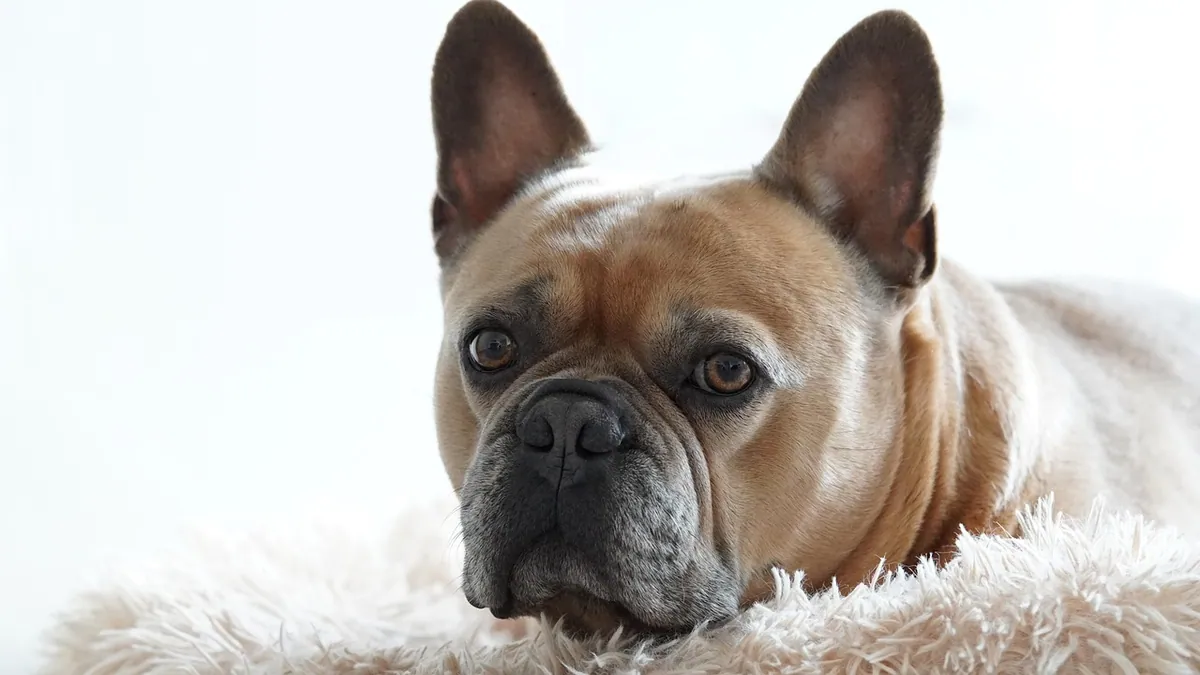
A dog breathing once per second is breathing about 60 times a minute, which is roughly double the top of the normal resting range for dogs. That pace can be harmless if your dog just finished sprinting around the yard, but it deserves attention if it happens while your dog is resting or asleep. This article is educational and is not a substitute for veterinary diagnosis or treatment.
Quick Answer
- A normal resting respiratory rate for dogs is 12 to 30 breaths per minute, so once per second (about 60 per minute) is above normal at rest [1].
- Count breaths when your dog is calm, asleep, or lying still, not right after play, food, or a walk.
- Panting, excitement, heat, and exertion all raise the rate, so a fast rate during activity is often expected [1].
- A resting rate near or above 60 per minute, especially with labored breathing, gum color changes, or a dog that will not settle, is a reason to call your veterinarian or an emergency clinic now.
- Write your counts down with the time of day so your veterinarian can see a trend instead of a single number.
What Dog Breathing Once per Second Looks Like
Breathing rate is the number of breaths per minute. One breath is one full cycle of air moving in and out. When you watch your dog's chest, that is one rise and one fall. A dog breathing once per second is completing about 60 of those cycles every minute.
Healthy dogs breathe through the nose or the mouth. Air gets warmed, humidified, and filtered on the way to the lungs, where oxygen is exchanged for carbon dioxide [1]. When your dog is resting, breathing should be slow and deep. When your dog is stressed, excited, exercising, or cooling down on a hot day, breathing gets faster and often shifts to open-mouth panting [1].
Normal Dog Breathing Rate
The accepted normal resting respiratory rate for dogs is 12 to 30 breaths per minute [1]. A sleeping dog often sits at the low end of that range. A relaxed dog watching the room may sit in the middle. Anything above 30 while your dog is truly at rest is worth counting again and writing down.
One detail that surprises many owners: how you measure changes the number. In a study of dogs in intensive care, the median respiratory rate was 30 per minute when measured by camera surveillance versus 34 per minute when measured at the cage side [2]. Simply having a person nearby can nudge breathing faster. That is why home counting works best when your dog does not know you are watching.
Why Counting at Home Matters
Your dog's breathing rate at home, when relaxed, is one of the most useful numbers you can bring to a veterinary visit. Continuous monitoring of respiratory rate helps detect breathing and heart conditions early [3]. Smartphone-based audio and video methods for counting breaths in sleeping dogs have shown good agreement with manual counting, with video methods coming within about one breath per minute of the reference count [3]. You do not need an app to get useful data. Your eyes and a timer are enough.
If your dog often breathes fast during sleep, see Dog Breathing Fast While Sleeping: Normal or a Problem?.
Main Causes of Fast Breathing in Dogs
Fast breathing has many causes, and the urgency depends on context. Here is a practical way to sort them.
| Cause | Typical clues | How urgent |
|---|---|---|
| Exercise, excitement, or heat | Fast breathing during or right after activity, settles within minutes at rest | Usually not urgent if your dog calms down |
| Pain or anxiety | Pacing, trembling, panting at rest, unable to settle | Call your vet, same day if it continues |
| Respiratory disease | Wheezing, snorting, whistling, coughing, abdominal effort | Urgent, call today |
| Heart or circulatory problems | Fast resting rate that stays high, weakness, fainting | Emergency |
| Heat stress during walks | Heavy panting, seeking shade, slowing down | Emergency if it does not improve with cooling |
| Fever or systemic illness | Lethargy, not eating, fast rate at rest | Call your vet, same day |
Heat and Exercise
Heat is a major driver of fast breathing. In a study of dogs walked outdoors in a hot, sunny region, walks at high radiant heat load pushed respiratory rates from roughly 47 breaths per minute up to as much as 374 breaths per minute, along with large rises in coat and skin temperature and much more water drinking [4]. Rectal temperature stayed in a narrow range in that study, so a normal body temperature does not rule out heat stress from a walk [4]. If your dog is breathing once per second after a walk on a warm day, stop, get into shade or air conditioning, offer water, and let your dog rest.
Pain and Anxiety
Panting and fast breathing are common with pain and anxiety. A dog in discomfort may pace, pant, and refuse to lie down. Anxiety can look similar. If your dog is shaking along with the panting, Dog Shaking and Panting: Is It Anxiety or a Medical Emergency? walks through how to tell them apart. For a closer look at panting as a pain signal, see Is My Dog's Panting a Sign of Pain or Just Anxiety?.
Breathing That Looks Like Pulsing
Some owners describe the belly or chest moving in a pulsing rhythm. That is often normal abdominal effort during breathing, especially in deep sleep. What matters is the rate and the effort. A pulsing look with a rate above 30 at rest, or with the belly pulling in hard with each breath, is a reason to call your veterinarian.
Red Flags That Make It an Emergency
Call an emergency clinic right away if you see any of these:
- Open-mouth breathing at rest in a dog that normally breathes through the nose
- Abdominal effort, meaning the belly contracts hard with each breath [1]
- Noisy breathing such as wheezing, snorting, or whistling [1]
- Blue, gray, or pale gums
- A dog that cannot stand or is collapsing
- A resting rate that stays above 30 and keeps climbing despite rest
- Breathing that gets worse when your dog lies flat
Respiratory distress in dogs can worsen quickly. If your dog is weak or unable to stand, lay your dog on its stomach with a pillow under the chin and neck extended, keep the car cool with air conditioning on the way in, and speak softly to help your dog stay calm [1]. Heat can trigger more panting and make breathing harder, so cooling the car matters [1].
What You Can Do at Home While You Wait
Stay calm and keep the environment quiet. Stress and heat both raise breathing rate, so a cool, calm room gives you the cleanest information and helps your dog [1].
- Count for a full 60 seconds. Watch the chest rise and fall. Each rise and fall is one breath.
- Count only at rest. Wait at least 10 to 15 minutes after activity, food, or excitement.
- Repeat the count two or three times and write down each number with the time.
- Check the gums. They should be pink. Press gently and watch the color return.
- Offer water in small amounts if your dog is hot.
- Do not force your dog to lie down if that makes breathing worse.
- Do not give any medication unless your veterinarian prescribed it for this problem.
If your dog is stable and the rate is mildly high, a same-day call to your veterinarian is reasonable. If your dog is struggling, go now.
What Your Veterinarian Will Check
Your veterinarian will start with the basics: respiratory rate, breathing pattern, heart rate, gum color, and temperature. They will listen to the lungs and airway. The lower airway branches to catch particles and trigger the cough reflex, so abnormal sounds there can point to specific problems [1].
Depending on what they find, expect some of these:
- Chest X-rays to look at the lungs and heart
- Blood work to check for infection, anemia, and organ function
- Pulse oximetry or other oxygen measurement
- Heart evaluation if a heart problem is suspected
- A monitor or harness for ongoing vital sign tracking
Wireless harnesses that measure respiratory rate, heart rate, and body temperature have shown strong correlation with manual measurements in hospitalized dogs, though individual readings can vary enough that they do not replace hands-on checks [5]. Fur length affected respiratory rate and temperature readings in that study, so your veterinarian will interpret device data alongside an exam [5].
If your dog has a chronic condition, your veterinarian may ask you to track resting respiratory rate at home between visits. That number often changes before your dog looks sick.
Monitoring and Prevention
The single best habit you can build is a weekly resting respiratory rate. Pick a time when your dog is asleep or deeply relaxed. Count for 60 seconds. Log the number. Over weeks, you will learn your dog's personal baseline, which is more useful than any single reading.
Keep walks smart in hot weather. Walk early or late, choose shade, carry water, and watch for heavy panting or slowing down [4]. If your dog pants heavily on mild days, mention it at your next visit.
Watch for coughing that shows up now and then, since airway irritation can change breathing over time. Dog Coughing Once in a While: Normal or a Sign of Illness? can help you decide when a cough needs a look.
If your dog pants far more than usual for no clear reason, Dog Panting Excessively: When to Worry covers the common triggers and when to call.
Limitations and When to Contact a Veterinarian
Home counting has limits. You cannot hear the lungs, measure oxygen levels, or see the heart on an X-ray. A normal count does not rule out disease, and a high count does not always mean something serious. Individual cases need a veterinarian who can examine your dog.
Call your veterinarian the same day if your dog has a resting rate above 30 that stays high, a new cough, mild lethargy, or panting that seems out of proportion to the situation.
Go to an emergency clinic now if you see open-mouth breathing at rest, hard abdominal effort, noisy breathing, blue or pale gums, collapse, or a rate that keeps climbing despite rest and cooling [1].
Schedule a routine visit if you have logged several high resting counts over a week, even if your dog seems fine otherwise. Trends matter, and early detection is the whole point of tracking [3].
Frequently Asked Questions
Is a dog breathing once per second always an emergency?
No. If your dog just ran, played, or got excited, that rate can be normal and should settle within a few minutes of rest. If the rate stays near that level while your dog is calm or asleep, call your veterinarian.
Can I count my dog's breathing while my dog is asleep?
Yes, and that is the best time. Sleeping counts are the most consistent because activity, stress, and heat are not inflating the number. Count for a full minute and write it down.
Does a fast breathing rate mean my dog is in pain?
Not always, but pain is a common cause of panting and restlessness in dogs. If your dog is pacing, trembling, and cannot settle, treat that as a reason to call your veterinarian instead of waiting it out.
Should I use a phone app to track my dog's breathing?
You can, but you do not have to. Simple manual counting at home gives your veterinarian useful data. If you use a device, bring the readings to your visit so your veterinarian can interpret them with an exam.
Can hot weather alone make my dog breathe this fast?
Yes. Heat and exercise can push breathing far above the resting range, and a normal body temperature does not rule out heat stress from a walk [4]. Cool your dog down, offer water, and let your dog rest. If breathing does not settle, call your veterinarian.
Related Articles
- Dog Breathing Fast While Sleeping: Normal or a Problem?
- Dog Panting Excessively: When to Worry
- Dog Shaking and Panting: Is It Anxiety or a Medical Emergency?
- Dog Coughing Once in a While: Normal or a Sign of Illness?
- Is My Dog's Panting a Sign of Pain or Just Anxiety?
- Dog Vomiting Once and Acting Normal: Should You Wait or Call?
- Normal Dog Breathing Rate: How to Count and Interpret
- Dog Breathing Patterns: What's Normal and What's Not
- Why Is My Dog Breathing Fast and Shallow?
References
- Recognizing and responding to canine respiratory distress. Cornell University College of Veterinary Medicine.
- Respiratory rate and breathing pattern in dogs and cats in intensive care units and the value of camera surveillance. The Journal of small animal practice, 2025.
- Audio and video nearables for monitoring respiratory rate in sleeping dogs. Scientific reports, 2025.
- Cool and safe walks: heat stress threshold for domestic dogs living in hot and sunny regions. International journal of biometeorology, 2026.
- Validation of Wireless Harness for Measuring Respiratory Rate, Heart Rate, and Body Temperature in Hospitalized Dogs. Veterinary sciences, 2025.