How Do Dogs Breathe? Normal Rates and Warning Signs
By Dr. Zubair Khalid, DVM, MS, PhD ·
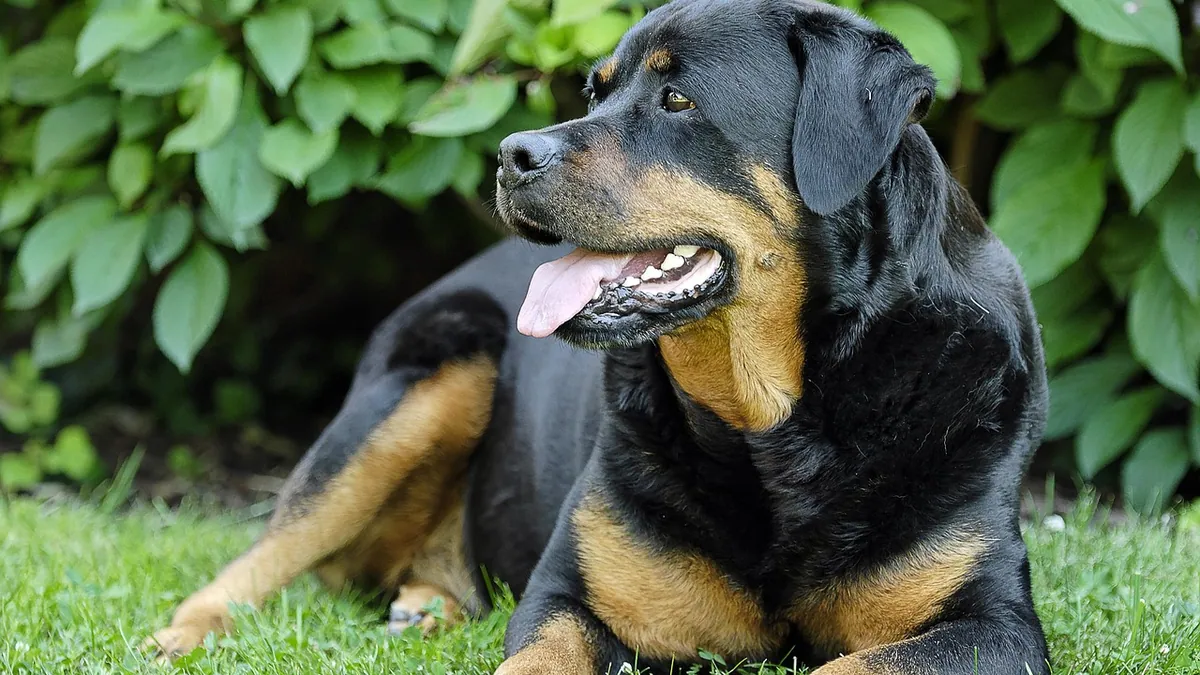
Dogs breathe by pulling air through the nose, where it is warmed, filtered, and sampled by scent receptors, then moving it down the windpipe into the lungs. At rest, most healthy dogs take roughly 15 to 30 breaths per minute, and you should barely see the effort. Panting after exercise or in heat is normal, but fast breathing at rest, noisy breathing, or blue gums is not.
This article is educational and is not a substitute for veterinary diagnosis or treatment.
Quick Answer
- Count breaths while your dog is asleep or calmly resting. One breath equals one chest rise and fall.
- A normal resting rate for most adult dogs is about 15 to 30 breaths per minute. Sleeping dogs breathe slower and more evenly than awake dogs.
- Dogs normally breathe through the nose at rest. Mouth breathing and panting are normal during exercise, heat, stress, or excitement.
- A resting rate clearly above your dog's normal baseline, especially with effort, noise, or a stretched-out neck, needs a call to your vet.
- Breathing that looks labored, gums that look blue or gray, or a dog who cannot settle means go to an emergency clinic now.
What Normal Breathing Looks Like in Dogs
Do dogs breathe through their nose?
Yes, at rest dogs breathe almost entirely through the nose. The nasal passages warm and humidify incoming air and trap particles before they reach the lungs. Dogs also use the nose for scent, and a dog who suddenly switches from nose breathing to mouth breathing at rest is telling you something changed.
Do dogs breathe through their mouth?
Dogs can breathe through the mouth, and they do it a lot. Panting is the main way dogs dump heat, since they have few sweat glands. Open-mouth breathing is expected after a run, on a hot day, during car rides, or when your dog is excited or anxious. What matters is the context. A dog panting after fetch is normal. A dog panting while lying still in a cool room is not.
How do dogs normally breathe?
Normal breathing is quiet, smooth, and easy. The chest and belly move gently. You should not hear wheezing, whistling, or a rasping sound, and you should not see the belly pulling in hard with each breath. The neck stays relaxed, not stretched forward.
How do dogs breathe so fast, and what rate is normal?
Breathing rate is the number of breaths per minute. For dogs in an intensive care unit, the median rate was 30 breaths per minute when measured by camera surveillance and 34 breaths per minute with traditional cage-side checks [1]. Those are hospitalized dogs under stress, so a calm dog at home is usually slower.
The best baseline is your own dog's sleeping rate. Smartphone-based audio and video methods can track breathing in sleeping dogs with good agreement to manual counting, with video from a side view coming closest to the reference method [2]. That means you can learn a lot by simply watching and counting at home. If you want a step-by-step method, see How to Check Your Dog's Vital Signs at Home: Temperature, Pulse, and Respiration.
One caution about gadgets. A wireless harness for hospitalized dogs tracked heart and breathing rates with strong overall correlation to manual measurement, but individual readings varied enough that the limits of agreement exceeded clinical thresholds, and fur length affected the results [3]. Treat any device reading as a trend, not a diagnosis.
Main Causes of Abnormal Breathing
Breathing changes fall into a few big buckets: the airway, the lungs, the heart, the body's oxygen-carrying capacity, and plain old heat or stress. The clues often point to the bucket.
| Cause | Typical clues | How urgent |
|---|---|---|
| Heat stress or overheating | Heavy panting after a walk or time outside, seeking shade, drinking a lot | Urgent if it does not settle with rest and cooling |
| Pain or anxiety | Fast shallow breathing with pacing, trembling, or a tucked tail | Same-day call if it persists |
| Upper airway problem (nasal, throat, or windpipe) | Noisy breathing, snoring, honking cough, worse on the leash | Same-day to urgent |
| Lung disease (pneumonia, fluid, inflammation) | Fast breathing at rest, cough, tired on walks, belly effort | Urgent |
| Heart disease | Fast or labored breathing at rest, coughing at night, fainting | Urgent |
| Anemia or internal bleeding | Pale gums, weakness, fast breathing with little effort | Emergency now |
| Heatstroke | Collapse, thick drool, bright red gums, confusion | Emergency now |
Heat deserves special attention. In one study of dogs walking outdoors in a hot, sunny region, walking when the black-globe temperature (a measure of radiant heat) rose above 35 °C pushed breathing rates from about 47 to 374 breaths per minute, along with large jumps in coat and skin temperature and water intake [4]. Rectal temperature stayed in a narrow 38 to 39 °C range in that study, which is a reminder that a normal body temperature does not rule out dangerous heat load. If your dog is panting that hard, stop the walk and cool them down.
Red Flags That Mean an Emergency
Call an emergency clinic or go in now if you see any of these:
- Gums, tongue, or lips that look blue, gray, or white
- Breathing that is obviously hard work: belly pumping, elbows out, neck stretched straight
- A resting rate that is far above your dog's normal and does not come down with rest
- Standing with the front legs spread and the head low, refusing to lie down
- Collapse, weakness, or a dog who cannot get comfortable
- Loud rasping or gasping sounds
- A distended belly with rapid breathing, especially in a large deep-chested dog
- Heavy panting that continues after you move your dog into air conditioning and offer water
If your dog stops breathing, start CPR and get to a vet immediately. The steps are covered in How To Do Cpr On A Dog.
What You Can Safely Do at Home
- Count the rate. Watch the chest for a full 30 seconds and multiply by two, or count for a full minute for accuracy. Write it down with the time.
- Note the pattern. Is the breathing quiet or noisy? Is the effort easy or hard? Is the neck relaxed or stretched?
- Check the gums. They should be pink and moist. Press and release to see how fast color returns.
- Move your dog to a cool, quiet room. Offer water. Remove the leash and any tight harness.
- Keep your dog calm. Your own panic raises theirs. Sit nearby and speak softly.
- Do not force water into the mouth of a dog who is struggling to breathe. That risks choking.
- Do not give any medication for breathing trouble unless your veterinarian prescribed it for this situation. Doses are calculated by your vet based on your dog's weight and health.
If your dog has a known heart or lung condition, your vet may have given you a target resting rate and a plan for when to call. Follow that plan first.
What Your Veterinarian Will Check
Your vet starts with the basics: rate, effort, noise, gum color, and how the chest moves. They will listen to the heart and lungs with a stethoscope and feel the pulse and the windpipe.
From there, testing depends on what they find. Common next steps include:
- Pulse oximetry or a blood gas to measure oxygen levels
- Chest X-rays to look at the heart size, lung fields, and fluid
- Bloodwork to check for anemia, infection, and organ function
- An ultrasound of the heart or chest
- A sedated exam of the throat and airway if a blockage or collapse is suspected
For dogs with serious lung disease who need a breathing machine, veterinarians use calculated oxygen measures to judge severity. In one study of ventilated dogs with primary lung disease, higher oxygenation index values and lower PaO2/FiO2 ratios were linked to death, and the authors concluded that dog-specific thresholds are needed [5]. That is specialist-level care, but it shows how seriously vets treat breathing that does not respond to basic support.
Monitoring at Home and Prevention
Learn your dog's sleeping rate when they are healthy. Count it a few nights in a row and keep a note in your phone. That number is your early warning system. A rise of even a few breaths per minute above baseline, repeated over two or three checks, is worth a call.
If your dog pants in their sleep or wakes up breathing hard, that pattern has its own guide: Dog Breathing Fast While Sleeping: Normal or a Problem?.
Other habits that protect breathing:
- Walk in the early morning or late evening when it is cooler. Test the pavement with your hand.
- Keep flat-faced breeds (bulldogs, pugs, Boston terriers) out of heat and heavy exercise. They have less room in the airway.
- Keep your dog at a healthy weight. Extra body fat makes every breath more work.
- Avoid smoke, strong cleaners, and aerosol sprays around your dog.
- Treat dental disease. Chronic mouth infection can affect the heart and airways over time. Bad breath is often the first clue, and it is covered in Bad Breath Causes For Dogs.
- Follow your vet's schedule for heart and lung checkups if your dog has a known condition.
Limitations and When to Contact a Veterinarian
Home breathing checks are a screening tool, not a diagnosis. You cannot see the lungs, hear fluid, or measure oxygen at home. Every individual case needs a veterinarian who can examine your dog in person.
Use these timing rules:
- Emergency now: blue or white gums, collapse, gasping, a dog who cannot lie down, or a resting rate that is dramatically above normal and not improving.
- Same day: a new cough, a resting rate clearly above your dog's baseline, noisy breathing that started today, or panting that continues in a cool room.
- Routine visit: a slow change in exercise tolerance, a new snore, or a mild cough that has lasted more than a few days.
When in doubt, call. Veterinary staff would much rather answer a question than see a dog who waited too long.
Frequently Asked Questions
Is it normal for my dog to breathe through the mouth while resting?
No, that is not typical. A healthy dog at rest breathes through the nose with the mouth closed. Mouth breathing at rest can point to pain, anxiety, heat, or a problem in the nose, throat, or lungs, so have your vet check it.
How many breaths per minute should a sleeping dog take?
Most healthy adult dogs breathe about 15 to 30 times per minute at rest, and often slower than that in deep sleep. Your dog's own sleeping rate is the number that matters most. Count it when they are well so you have a baseline.
Why does my dog breathe fast but seem fine?
Fast breathing with normal energy can come from heat, excitement, pain, or a mild illness that is not obvious yet. If the rate stays high while your dog is calm and cool, treat it as a reason to call your vet.
Can I check my dog's breathing with a phone app or camera?
You can, and side-view video of a sleeping dog has matched manual counting closely in research [2]. Just remember that home devices show trends, not diagnoses. A single odd reading is less meaningful than a pattern over several days.
What if my dog's breathing sounds wet or gurgly?
Wet or gurgly sounds suggest fluid or secretions in the airway and need prompt veterinary attention. Keep your dog calm and quiet, avoid forcing water, and call your vet or an emergency clinic right away.
Related Articles
- Dog Breathing Fast While Sleeping: Normal or a Problem?
- How to Check Your Dog's Vital Signs at Home: Temperature, Pulse, and Respiration
- Bad Breath Causes For Dogs
- How To Do Cpr On A Dog
- Dog Has Bad Breath Causes: Veterinary Guide to Canine Halitosis
- Is Bad Breath In Dogs A Sign Of Illness
- Normal Dog Breathing Rate: How to Count and Interpret
- Dog Breathing Patterns: What's Normal and What's Not
- Dog Breathing Problems: Signs and When to Seek Emergency Care
References
- Respiratory rate and breathing pattern in dogs and cats in intensive care units and the value of camera surveillance. The Journal of small animal practice, 2025.
- Audio and video nearables for monitoring respiratory rate in sleeping dogs. Scientific reports, 2025.
- Validation of Wireless Harness for Measuring Respiratory Rate, Heart Rate, and Body Temperature in Hospitalized Dogs. Veterinary sciences, 2025.
- Cool and safe walks: heat stress threshold for domestic dogs living in hot and sunny regions. International journal of biometeorology, 2026.
- Retrospective Assessment of the Oxygenation Index in Dogs Undergoing Mechanical Ventilation for Primary Pulmonary Parenchymal Disease. Journal of veterinary emergency and critical care (San Antonio, Tex. : 2001), 2026.