Dog Eye Not Producing Tears, Blinking, or Dilating
By Dr. Zubair Khalid, DVM, MS, PhD ·
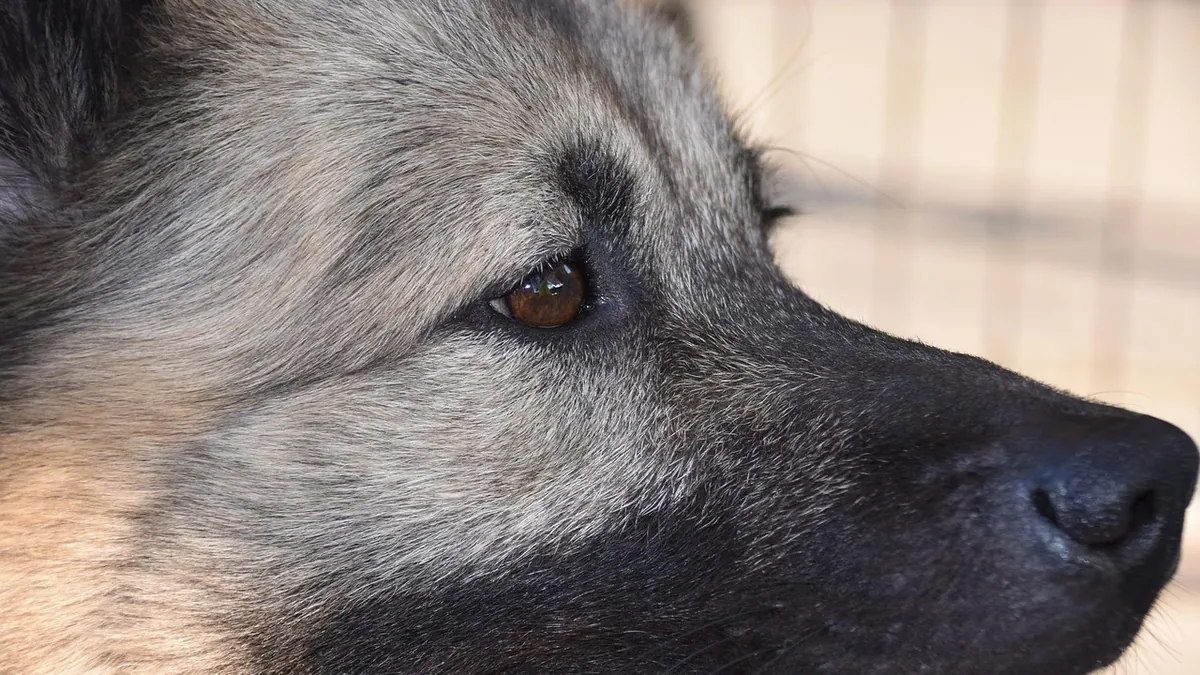
A dog eye not producing tears is often a sign of dry eye, while an eye that will not blink or a pupil that will not dilate usually points to a nerve or brain problem. These three signs can appear together or alone, and each one deserves a veterinary exam. This article is educational and is not a substitute for veterinary diagnosis or treatment.
Quick Answer
- A healthy dog eye stays moist, blinks every few seconds, and the pupil shrinks in bright light and widens in dim light [1].
- Dry eye (keratoconjunctivitis sicca, or KCS) means the tear glands are not making enough watery tears, and it is common in dogs [2].
- A pupil that stays wide in bright light or a lid that does not blink can mean damage to the nerves that control the eye.
- Any sudden change in pupil size, a fixed pupil, or an eye that cannot blink is an emergency. Go to a veterinarian now.
- Never put human eye drops or leftover pet medicine in your dog's eye unless your veterinarian tells you to.
What These Three Signs Look Like
A dog eye not producing tears
Normal tears do more than keep the eye wet. They carry oxygen and nutrients to the cornea, wash away debris, and fight infection [1]. When tear production drops, the eye surface dries out, and the cornea can become inflamed, cloudy, or scratched.
You may notice a dull or dry look to the eye, thick yellow or green discharge, redness, squinting, or frequent pawing at the face. Some dogs with dry eye have a sticky, mucoid discharge instead of watery tears. Others seem fine at first because the eye compensates for a while.
A dog eye not blinking
Blinking spreads tears across the cornea and clears irritants. A dog that stops blinking may hold the eye open, stare, or keep the lid partly closed. The cornea can dry out fast when the lid does not sweep across it.
A reduced blink is sometimes called a weak or absent palpebral reflex. That reflex is the automatic blink you see when something touches the inner corner of the eye. If your dog does not blink when the eye is touched, the nerve pathway that carries the signal may be interrupted.
A dog pupil not responding
The pupil is the black opening in the center of the iris, the colored part of the eye [1]. In a dark room the pupil gets bigger to let in more light. In bright light it gets smaller [1]. This is controlled by muscles in the iris and by nerves that connect the eye to the brain.
If one pupil stays large while the other shrinks, or if both pupils stay fixed no matter the light, that is abnormal. A pupil that will not dilate in a dark room is also a warning sign. These changes are not something you can treat at home.
Main Causes of a Dog Eye Not Producing Tears, Not Blinking, or Not Dilating
| Cause | Typical clues | How urgent |
|---|---|---|
| Dry eye (KCS) | Thick discharge, redness, squinting, dull cornea, low tear test | See a vet within a day or two |
| Cherry eye | Red swollen mass at the inner corner, pus-like discharge | See a vet soon |
| Tear duct or tear gland disorder | Excess watering or dryness, often from infection, a foreign object, or trauma [2] | See a vet soon |
| Nerve damage (facial nerve) | Drooping eyelid, no blink, drooling on one side | Emergency if the eye cannot close |
| Nerve damage (third eyelid or pupil nerves) | One pupil fixed and wide, drooping lid, sunken eye | Emergency |
| Brain or spinal problem | Pupil changes plus wobbling, head tilt, weakness, or seizures | Emergency |
| Medications or toxins | Recent ivermectin or similar drug, tear production drops [3] | Call your vet or poison control right away |
| Trauma or scratch | Sudden squinting, cloudiness, blood in the eye | Emergency |
Dry eye in dogs
Dry eye is an immune-mediated disorder in many dogs. The body attacks its own tear glands, so the watery part of the tear film drops [4]. Tear protein levels are also different in dogs with KCS, with total protein higher than in healthy dogs [4]. This matters because the tear film is not just water. It is a mix of water, mucus, oil, and proteins that protect the cornea.
Dry eye is especially common in Shih Tzu dogs, and it can range from mild to severe based on how much tear production remains [5]. Dogs with severe dry eye can show glandular changes on ultrasound, including a more uneven texture and bright spots in the tear gland tissue [5].
Dry eye is not the only reason for a dog eye not producing tears. Atopic dermatitis (the itchy skin allergy) is linked to altered tear production. In one study, 21 of 47 atopic dogs had tear test values outside the normal range in at least one eye [6]. So allergies and eye dryness can travel together.
Cherry eye and tear duct problems
The tear gland sits at the top outer edge of the eye and makes the watery part of tears [2]. The nasolacrimal ducts drain tears from each eye into the nose [2]. Problems with these structures can cause either too many tears or too few [2].
Cherry eye is a common disorder in young dogs and in certain breeds, including the American Cocker Spaniel, Lhasa Apso, Beagle, Pekingese, and English Bulldog [2]. The gland of the nictitating membrane slips out of place and sticks out as a red, swollen mass near the lower eyelid [2]. A pus-filled discharge may also appear [2]. The swelling can go down for short periods, but the gland often stays dislocated [2].
Nerve problems that stop blinking or pupil movement
The nerves that control blinking and pupil size run from the brain to the eye. Damage anywhere along that path can cause a dog eye not blinking or a dog pupil not responding. Causes include head or eye trauma, inner ear disease, tumors, and inflammatory conditions. In many dogs the exact cause is not found, and this is not well established in veterinary research.
A pupil that stays wide and does not react to light is a serious finding. It can mean pressure inside the eye is dangerously high, the retina is damaged, or a nerve is compressed. It can also be the first sign of a brain problem. Do not wait to see if it improves on its own.
Medications and toxins
Some drugs can reduce tear production. In a study of 128 mixed-breed dogs, a single routine dose of systemic ivermectin lowered tear production within 36 hours, with an average drop of about 4.38 mm/min on the Schirmer tear test [3]. The researchers suggested that even at recommended doses, ivermectin may push some dogs toward subclinical dry eye [3]. If your dog is on ivermectin or a similar medication and the eyes look dry, call your veterinarian.
Red Flags That Make It an Emergency
Go to an emergency veterinary hospital right away if you see any of these:
- A pupil that is fixed, widely dilated, or different in size from the other eye.
- An eye that cannot blink or close, especially with a drooping eyelid or face.
- Sudden cloudiness, a blue or white haze, or a bulging eye.
- Blood inside the eye or a visible wound.
- Your dog is pressing the head against walls, circling, having a seizure, or cannot stand.
- The eye looks painful and your dog is screaming, pawing, or refusing to be touched near the face.
These signs can mean glaucoma, a deep corneal ulcer, nerve damage, or a brain problem. Time matters for saving vision.
What You Can Safely Do at Home While Waiting
- Keep your dog calm and away from other pets. A dog that cannot blink may scratch the eye by rubbing it.
- Do not touch the eye or try to force the eyelid open.
- Do not use human eye drops, red-eye remedies, or old prescription drops. Some contain drugs that can harm a dog's eye.
- If your veterinarian has already prescribed a lubricant or tear stimulant, use it exactly as directed.
- Note the time each sign started and which eye is affected. Take a short video of the eye in bright and dim light. This helps your vet see the pupil response.
- Bring a list of all medications, including flea, tick, and heartworm products, plus any recent deworming.
If your dog's eye is dry and your vet has approved a plain lubricating gel, you can apply it as directed. Do not reach for a product that contains a steroid unless your vet has checked the cornea first. Steroids can make a corneal ulcer much worse.
What Your Veterinarian Will Check and Test
Your vet will start with a full eye exam. They will look at the eyelids, the conjunctiva, the cornea, the iris, and the pupil [1]. They will check the blink reflex and watch how the pupil reacts to a light.
Tear production test
The Schirmer tear test uses a small strip of paper placed at the lower eyelid for one minute. It measures how many millimeters of tears soak up the strip. A result of 15 mm/min or higher is generally normal, while lower values suggest dry eye [7][5]. Values are grouped into early, moderate, and severe dry eye based on how low they fall [5].
The order of testing does not change the result much. A study of 122 eyes found no significant difference in tear production or eye pressure whether the tear test or the pressure test was done first [8]. So your vet can run the tests in whatever order is practical.
Other tests
- Fluorescein stain: a yellow dye that shows scratches and ulcers on the cornea.
- Tear film breakup time: measures how long the tear film stays stable [7].
- Eye pressure (tonometry): checks for glaucoma or low pressure.
- Corneal thickness scan: dogs with dry eye have a thicker corneal epithelium, with a median of 105.0 micrometers compared with 73.0 micrometers in healthy dogs [7].
- Schirmer tear test in atopic dogs: because allergies can change tear production, your vet may test tear production in dogs with chronic skin allergies [6].
- Blood work and imaging: if a nerve or brain problem is suspected, your vet may recommend blood tests, an MRI, or a referral to a veterinary ophthalmologist or neurologist.
Prevention and Monitoring
- Know your breed's risk. Shih Tzu dogs are among the most affected by dry eye [5]. Breeds prone to cherry eye include the American Cocker Spaniel, Lhasa Apso, Beagle, Pekingese, and English Bulldog [2].
- Watch for early clues. A little extra goop, redness, or squinting can be the first sign. Learn what normal discharge looks like by reading about Dog Eye Goop Clear and Eye Goop In Dogs.
- Keep up with rechecks. Dry eye is often lifelong. Your vet will repeat the tear test to see if treatment is working.
- Ask about tear testing if your dog starts a new medication that can dry the eyes, such as ivermectin [3].
- Protect the eye during anesthesia. Tear production drops under general anesthesia, and taping the eye closed works better than a lubricant gel alone in at least one species studied [9]. Ask your vet what they do to protect the eyes during procedures.
- If one eye only is affected, read Dog Eye Goop In One Eye to understand why one-sided signs need a closer look.
Limitations and When to Contact a Veterinarian
This guide cannot tell you what is wrong with your dog's eye. Only a veterinarian who examines your dog can do that. Individual cases need a veterinarian.
Call for a same-day or next-day appointment if you see dry-looking eyes, thick discharge, mild redness, or a slight change in blinking. Go to an emergency clinic now for a fixed or unequal pupil, an eye that cannot close, sudden cloudiness, a bulging eye, or any sign of head or brain trouble. If you are unsure, call your veterinarian and describe what you see. It is always safer to have the eye checked than to wait.
Frequently Asked Questions
Can dry eye in dogs cause blindness?
Yes, untreated dry eye can lead to corneal damage and vision loss over time. The cornea depends on tears for oxygen and protection, so a dry surface is fragile. With early treatment, most dogs keep their vision and comfort.
Why is my dog's pupil not responding to light?
A pupil that does not react can mean nerve damage, high pressure inside the eye, retinal disease, or a brain problem. It is not a wait-and-see sign. Have your dog examined the same day, and go to an emergency clinic if the pupil is fixed and wide.
What does it mean if my dog is not blinking?
A dog that stops blinking may have a problem with the facial nerve or the muscles around the eye. Without blinking, the cornea dries and can ulcerate quickly. This needs urgent care, especially if the eyelid droops or the face looks uneven.
Is cherry eye the same as dry eye?
No, they are different problems. Cherry eye is a dislocated tear gland that appears as a red mass at the inner corner of the eye [2]. Dry eye is a lack of tear production [2]. A dog can have both, and cherry eye itself can sometimes lead to dry eye.
Can allergies make my dog's eyes dry?
They can change tear production. In one study, nearly half of the dogs with atopic dermatitis had tear test values outside the normal range in at least one eye [6]. If your dog has itchy skin and eye changes, ask your vet about a tear test.
Related Articles
- Dog Eye Goop Clear
- Eye Goop In Dogs
- Dog Eye Goop In One Eye
- Dog Eye Discharge Goop
- Why Are My Dog's Eyes Red?
- Dog Eye Injury: Redness, Swelling, or Discharge?
- Dry Eye in Dogs: Symptoms, Causes, and Treatment
- Cloudy, Foggy, or Oozing Dog Eye: Causes and Next Steps
- Vision Loss in Dogs: Signs, Causes, and What to Do
References
- Eye Structure and Function in Dogs - Dog Owners. Merck Veterinary Manual.
- Disorders of the Nasal Cavity and Tear Ducts in Dogs - Dog Owners. Merck Veterinary Manual.
- Systemic Ivermectin Administration Reduces Aqueous Tear Production and Affects Ocular Surface Health in Clinically Healthy Dogs. Veterinary ophthalmology, 2026.
- Tear Protein Alteration in Dogs with Keratoconjunctivitis Sicca. Animals : an open access journal from MDPI, 2026.
- Ultrasound of the Lacrimal Gland in Healthy Shih Tzu Dogs and with Dry Eye Disease. Veterinary medicine international, 2024.
- Tear production as measured by Schirmer tear test-1 in dogs with atopic dermatitis. The Canadian veterinary journal = La revue veterinaire canadienne, 2025.
- Evaluation of the Cornea of Dogs With Dry Eye Disease Using Spectral Domain Optical Coherence Tomography. Veterinary ophthalmology, 2026.
- Effect of Order of Testing on Intraocular Pressure and Tear Production Measurement in Dogs. Veterinary ophthalmology, 2026.
- Exploring Lacrimal Gland Tear Production in Sheep under General Anesthesia: Examining the Potential Impact of Utilizing 1% Hyaluronic Acid Ophthalmic Gel. Life (Basel, Switzerland), 2024.