Cat Eye Pupils and Vision: What Owners Should Know
By Dr. Zubair Khalid, DVM, MS, PhD ·
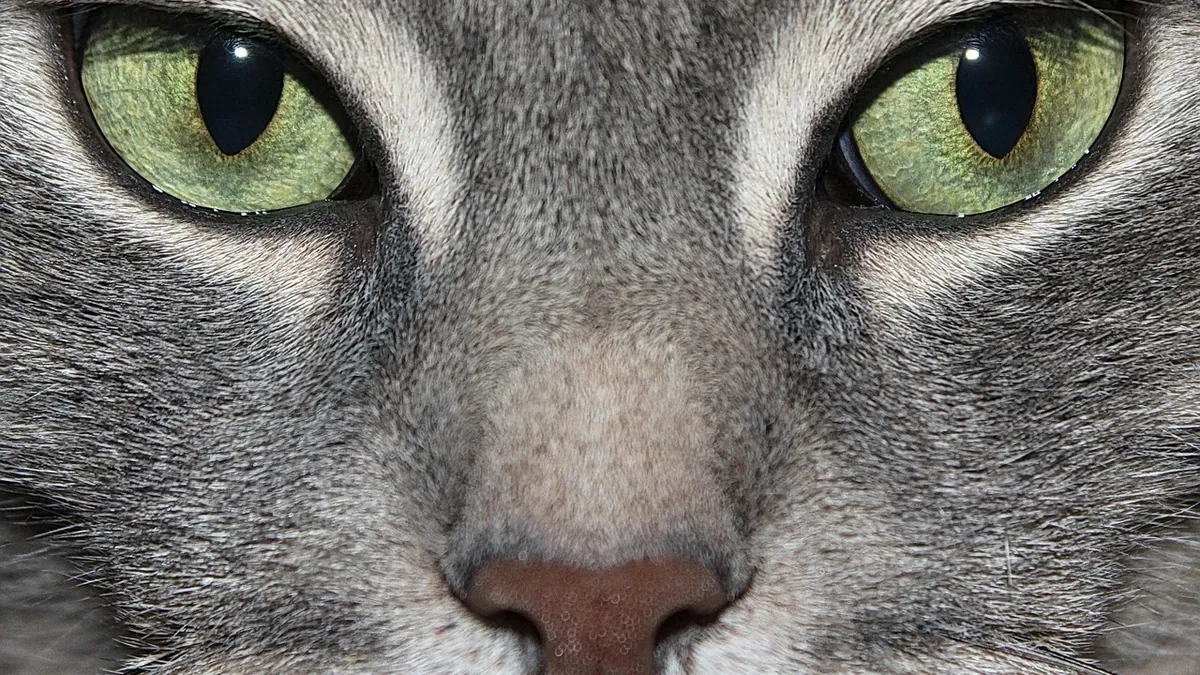
Cat eye pupils are the black centers of your cat's eyes, and they widen or narrow mainly to control how much light reaches the retina. In most healthy cats, both pupils look the same size and react quickly when light changes. When pupil size, shape, or reaction becomes uneven or stuck, it can be an early clue to pain, high blood pressure, or eye disease.
This article is educational and is not a substitute for veterinary diagnosis or treatment.
Quick Answer
- A normal cat pupil is a vertical slit in bright light and a wide oval or round shape in dim light [1].
- Both pupils should match each other and shrink when you shine a light into either eye.
- A pupil that stays wide, stays pinpoint, or differs from the other eye is a reason to call your veterinarian.
- Sudden vision loss, a cloudy eye, or a pupil that does not react at all needs urgent care.
- Never give human eye drops or pain medicine to a cat. Some are toxic, and the dose must be calculated by your veterinarian.
What Normal Cat Eye Pupils Look Like
The colored part of the eye is the iris, and the pupil is the opening in its center [1]. A circular sphincter muscle inside the iris tightens or relaxes to change pupil size [1]. In dim light the pupil enlarges to let in more light, and in bright light it becomes smaller to let in less [1].
Cats have a vertical slit pupil instead of the round pupil people have. This shape gives fine control over light entry, which suits a hunter that is active at dawn and dusk. When your cat is relaxed indoors, the pupils are usually narrow slits. In a dark room, during play, or when your cat is frightened or excited, they open wide.
Pupil size also shifts with arousal and with some medications. A study of 28 cats using a portable pupillometer found that pupil measurements were feasible in 97 percent of cats, and that opioid pain medication can affect pupil size and the pupillary light reflex [2]. That is one reason your veterinarian may check the pupils before and after giving certain drugs.
Pupil size does not appear to change how adoptable a cat looks. In a survey of 624 Australian adults, adoptability scores varied with coat color and eye shape but not with pupil size [3]. So a wide-eyed look in a shelter photo is not working against your cat.
Cat Eye Vision: How Your Cat Sees
Cat eyes work much like human eyes [1]. Light passes through the clear cornea, then through the pupil, and lands on the retina at the back of the eye [1]. The cornea protects the front of the eye and helps focus light on the retina [1].
Cats see well in low light and detect movement quickly. They rely less on fine detail and color than people do. This is why a cat with slowly worsening vision can still find the food bowl, jump on the couch, and seem completely normal at home. Vision loss often hides until it is advanced.
The pupil also plays an active role in how the retina responds to light. Research in mice and humans shows that the pupillary light reflex itself drives activity in retinal cells and can create a faint perceived dimming when the pupil constricts [4]. This suggests the pupil does more than simply open and close a window for light [4].
Cat Pupil Changes: What Is Normal and What Is Not
Normal changes happen fast and match the situation. Your cat's pupils should shrink within a second or two when a bright light hits the eye, and both eyes should respond together. If you shine a light into one eye, the other pupil should also narrow.
Changes that deserve attention include:
- One pupil larger than the other (anisocoria)
- Both pupils stuck wide in a bright room
- Both pupils stuck as tiny pinpoints
- A pupil that does not shrink when light is shined into the eye
- A pupil that changes size on its own, back and forth, with no light change
- A pupil that looks cloudy, hazy, or has a white or yellow reflection behind it
Some of these are harmless quirks. Others point to pain, nerve problems, high blood pressure, or disease inside the eye. Because you cannot tell which is which from the outside, a veterinary exam is the safe next step.
Main Causes of Pupil and Vision Changes
| Cause | Typical clues | How urgent |
|---|---|---|
| Normal light and mood response | Both pupils equal, shrink with light, change with play or fear | Not urgent |
| Pain or stress | Wide pupils, hiding, squinting, reduced appetite | See a vet soon |
| High blood pressure | Sudden wide pupils, bleeding in the eye, sudden blindness | Emergency |
| Uveitis (inflammation inside the eye) | Squinting, tearing, cloudy eye, small pupil, light sensitivity | Same day |
| Glaucoma (high pressure inside the eye) | Cloudy cornea, enlarged eye, fixed wide pupil, pain | Emergency |
| Nerve or brain problem | One pupil larger, head tilt, circling, wobbling, delayed pupil reflex | Emergency |
| Iris melanosis or melanoma | Dark spots or thickening on the iris, changing eye color | See a vet soon |
| Retinal disease | Wide pupils, bumping into things, reluctance to jump | See a vet soon |
| Medication effect | Pupil change after a drug or procedure | Call your vet |
Glaucoma is a serious example. A four-year-old Siberian tiger with advanced glaucoma had persistent wide pupils, absent pupillary light reflexes, and eye pressures of 48 to 52 mmHg, along with irreversible vision loss [5]. Domestic cats can develop similar pressure-related damage, and the pain is real. A newer pilot study found that a topical eye drop lowered eye pressure in normal cats and cats with feline congenital glaucoma without a significant effect on pupil size or signs of irritation [6]. Treatment options exist, but they must be chosen and dosed by a veterinarian.
Nerve and brain causes matter too. A 2-year-old Abyssinian cat with inner ear disease and feline atopic syndrome showed a delayed pupillary light reflex along with a head tilt, circling, and a medial strabismus [7]. That case shows how a pupil finding can be one piece of a larger neurologic picture [7].
Iris changes are another reason to look closely at the eye. A study of 76 cats used anterior segment imaging to tell iris melanosis from iris melanoma, and melanomas were significantly thicker than normal or melanotic irides [8]. Dark spots on the iris are common and often benign, but a spot that grows or changes the shape of the pupil needs evaluation [8].
Red Flags That Mean Emergency
Call an emergency veterinary hospital right away if you see any of these:
- Sudden blindness, such as bumping into furniture or refusing to move
- One pupil much larger than the other, especially with a head tilt or wobbling
- A pupil that does not react to light at all
- A cloudy, blue, or blood-tinged eye
- An eye that looks bigger than the other
- Squinting, pawing at the eye, or heavy tearing with a pupil change
- A white, yellow, or green glow in the pupil in normal room light
- Collapse, seizures, or confusion along with a pupil change
These signs can mean glaucoma, retinal detachment, bleeding inside the eye, or a neurologic problem. Time matters for saving vision and relieving pain. If you are unsure whether it is an emergency, call your veterinarian or a pet poison control hotline for guidance.
What You Can Safely Do at Home
You cannot treat a pupil problem at home, but you can gather useful information and keep your cat comfortable.
- Check both pupils in the same lighting. Look at your cat's eyes in a bright room and in a dim room, and note whether the two pupils match.
- Watch for vision clues. Does your cat hesitate at stairs, miss jumps, or walk with its head low? These can signal vision loss.
- Keep the environment predictable. Leave night lights on, keep furniture in place, and block stairs if your cat seems unsteady.
- Do not use human eye drops. Some cause harm in cats, and the correct product depends on the diagnosis.
- Do not give any pain medication unless your veterinarian prescribes it. Many human pain drugs are toxic to cats.
- Take a photo or short video. A clip of the pupils in different light helps your veterinarian see what you saw.
- Note the timeline. When did you first notice the change? Was it sudden or gradual? This shapes the urgency.
If your cat has eye discharge along with the pupil change, see Cat Eye Discharge: When Should You Worry? for guidance on what different types of discharge can mean. If you see a pink or white membrane across the eye, Cat Third Eyelid Showing Why explains common reasons. For a general overview of feline eye anatomy and care, see Cat Eyes: Understanding Feline Vision, Common Eye Problems & Care Tips.
What Your Veterinarian Will Check
Your veterinarian will start with a full physical exam and a focused eye exam. Expect these steps:
- Pupillary light reflex testing. A light is shined into each eye to see how quickly and how completely the pupil narrows, and whether the other eye responds too.
- Pupil size comparison. The veterinarian measures or estimates both pupils in the same lighting to confirm whether one is truly larger.
- Menace response and vision testing. A hand is moved toward the eye to see if your cat blinks, which gives a rough sense of vision.
- Fluorescein stain. A yellow dye shows scratches or ulcers on the cornea.
- Eye pressure measurement. A tonometer measures pressure inside the eye. High pressure points toward glaucoma, and low pressure can point toward uveitis.
- Slit lamp exam. A magnified light exam looks at the iris, lens, and front of the eye in detail.
- Dilated retinal exam. Drops widen the pupil so the veterinarian can see the retina at the back of the eye.
- Blood pressure measurement. High blood pressure is a common cause of sudden pupil changes and blindness in older cats.
- Blood work. Testing can look for underlying disease that affects the eyes.
- Imaging. In some cases, ultrasound of the eye or advanced imaging of the head helps find the cause.
Some tests require dilating drops, which will leave your cat's pupils wide for several hours. Your cat may squint in bright light afterward. Keep the room dim and avoid bright sunlight until the effect wears off.
Prevention and Monitoring
You cannot prevent every eye problem, but regular checks help you catch changes early. Cornell veterinarians note that most cats with vision problems have eye disease as their primary disorder, and that most are middle-aged or elderly cats whose vision loss has been progressing for years [9]. Earlier diagnosis usually means more treatment options [9].
Build a simple routine:
- Look at both eyes once a week in good light. Compare pupil size, color, and clarity.
- Watch for behavior changes. A cat that stops jumping, misses food, or startles easily may be losing vision.
- Keep senior cats on a schedule. Cats over 8 years old benefit from blood pressure checks and eye exams at least once a year.
- Control underlying disease. If your cat has high blood pressure, kidney disease, or diabetes, follow your veterinarian's monitoring plan.
- Limit eye trauma. Keep sharp objects, chemicals, and dangling strings out of reach, and supervise play with wands and lasers.
- Act early. A pupil change that lasts more than a few minutes, or that comes with squinting or behavior changes, deserves a call.
Limitations and When to Contact a Veterinarian
This article covers common patterns, but every cat is different. Only a veterinarian who examines your cat can tell you what a specific pupil change means for your pet.
Contact your veterinarian the same day if you notice a pupil that stays larger or smaller than the other, a pupil that reacts slowly, new squinting, or a change in your cat's willingness to jump or climb.
Go to an emergency clinic now if your cat suddenly cannot see, has a pupil that does not react to light, has a cloudy or enlarged eye, or shows a head tilt, circling, or wobbling along with the eye change.
Schedule a routine visit if you have noticed a slow change over weeks, such as a dark spot on the iris, mild cloudiness, or occasional pupil differences that come and go.
Frequently Asked Questions
Why do my cat's pupils get so big at night?
Pupils enlarge in dim light to let in more light, which is normal [1]. Wide pupils can also reflect excitement, fear, or pain. If the pupils stay wide in a bright room or only one side is wide, call your veterinarian.
Is it normal for my cat's pupils to be different sizes?
No, unequal pupil size is not normal and should be checked. It can come from eye inflammation, nerve problems, high blood pressure, or brain disease. A veterinarian can measure both pupils and test the light reflex to narrow down the cause.
Can a cat see well with wide pupils?
Wide pupils let in more light, which helps in dim settings, but they do not correct the underlying problem. A cat with constantly wide pupils may have pain, high blood pressure, or retinal disease. Vision testing at the clinic gives a clearer answer.
Do cats lose vision as they get older?
Some vision loss is tied to age-related eye disease, and many cats with vision problems are middle-aged or older [9]. Gradual loss often goes unnoticed because cats adapt well. Yearly eye exams for senior cats help catch problems sooner.
Should I use human eye drops on my cat?
No. Never put human eye drops or ointments in your cat's eyes unless your veterinarian prescribes them. Some products are harmful to cats, and the right treatment depends on the exact diagnosis. Call your veterinarian first.
Related Articles
- Cat Eyes: Understanding Feline Vision, Common Eye Problems & Care Tips
- Cat Eye Discharge: When Should You Worry?
- Cat Eye Injury: Signs, First Aid, and When to See the Vet
- Cat Third Eyelid Showing Why
- Cat Eye Discharge: Normal or Infection?
- Cat Eye Conjunctivitis Treatment
- Sudden Blindness in Cats: Why Dilated Pupils Matter
- Cat Vision Loss and Blindness: Signs and Causes
- Cataracts in Cats: Symptoms and What Causes Them
References
- Eye Structure and Function in Cats - Cat Owners. Merck Veterinary Manual.
- Infrared pupillometry to measure pupil light reflex in awake cats: Feasibility and evaluation pre- and post-opioid administration. Research in veterinary science, 2026.
- The Influence of Cat Coat Colour, Eye Shape, and Pupil Size on Ratings of Adoptability Based on a Standardised Online Image, in an Australian Sample. Animals : an open access journal from MDPI, 2026.
- Pupil size modulation drives retinal activity in mice and shapes human perception. Nature communications, 2025.
- Glaucoma in a Siberian Tiger (Panthera tigris altaica) Maintained Under Human Care: A Case Report. Animals : an open access journal from MDPI, 2026.
- Topical Omidenepag Isopropyl Lowers Intraocular Pressure in Normal and Glaucomatous Cats: A Pilot Study. Veterinary ophthalmology, 2026.
- Feline atopic syndrome: An insight into its effects on the central nervous system through vestibular disease. The Canadian veterinary journal = La revue veterinaire canadienne, 2025.
- Practicability and Effectiveness of Anterior Segment Optical Coherence Tomography (AS-OCT) of the Feline Iris as a Potential Biomarker for Iris Melanoma: A Study of 76 Cases. Veterinary ophthalmology, 2026.
- Feline Vision Problems: A Host of Possible Causes. Cornell University College of Veterinary Medicine.