Cat Breathing Hard Through the Nose: Stuffy Nose Causes
By Dr. Zubair Khalid, DVM, MS, PhD ·
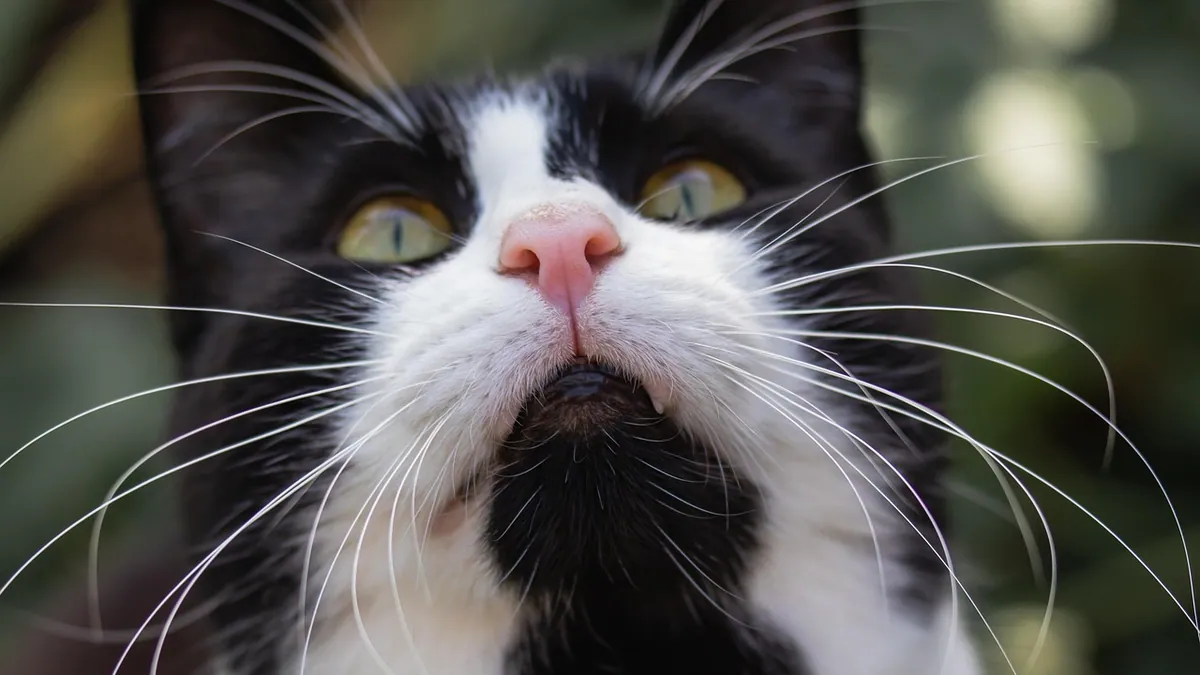
A cat breathing heavy through the nose usually has some kind of blockage or swelling in the nasal passages, and the most common reasons are infections, inflammation, polyps, and other growths. When air cannot move freely through the nose, you may hear snoring, whistling, or a wet congested sound, and your cat may start breathing with an open mouth. Some of these causes are mild and treatable, while others need urgent care.
This article is educational and is not a substitute for veterinary diagnosis or treatment.
Quick Answer
- A stuffy nose in cats is often caused by viral or bacterial infection, inflammation of the nasal lining, polyps, or masses [1][2].
- Noisy breathing that gets worse over days to weeks deserves a veterinary visit, even if your cat still eats and plays.
- Open-mouth breathing, blue gums, or a cat who cannot settle to rest is an emergency, so go to a vet right away.
- Do not give human cold medicines, decongestants, or leftover antibiotics to a cat. Many are toxic or useless for the real cause.
- Keep the nose clean with a warm damp cloth and run a humidifier while you wait for your appointment.
What a Stuffy Nose Looks Like in a Cat
A cat with a blocked nose breathes differently. You may hear a snuffle, a whistle, or a rattling sound with each breath. Some cats snore loudly when they sleep, and some paw at their face because the pressure feels odd [1]. The discharge can start clear and turn thick and mucus-like if bacteria move in [1].
Owners often describe this as a cat breathing like a stuffy nose, or a cat breathing out hard through the nose. You might also notice a cat breathing in hard, with the sides of the chest pulling in more than usual. That extra effort is called labored inhalation, and it is a recognized sign of nasal disease [1].
What Normal Breathing Looks Like
A healthy cat at rest breathes quietly through the nose. You should not hear much at all from across the room. Normal resting breathing in cats is generally under about 30 breaths per minute, though this varies with sleep, stress, and temperature. Count the breaths when your cat is calm and asleep for the most reliable number.
Cats are obligate nasal breathers for most of their daily life. They prefer to breathe through the nose, so when the nose is blocked, they cope by breathing faster, breathing harder, or opening the mouth. Open-mouth breathing in a cat is never normal at rest and always deserves attention.
Why Is My Cat Breathing Heavy Through the Nose?
There are many possible causes, and they can look similar at home. The table below groups the main ones by what you might see and how quickly you should act.
| Cause | Typical clues | How urgent |
|---|---|---|
| Viral upper respiratory infection (feline herpesvirus, calicivirus) | Sneezing, clear then cloudy discharge, watery eyes, often after a stressful event or a new cat in the home [1][2] | See a vet within a day or two |
| Bacterial infection or Mycoplasma | Thick yellow or green discharge, bad nasal odor, ongoing congestion [2] | See a vet within a day or two |
| Chronic rhinosinusitis (inflammation) | Long-term sneezing that comes and goes, snoring, reverse sneezing [1] | Routine visit, sooner if worse |
| Nasal polyps or masses | One-sided congestion, facial swelling, a lump on the nose bridge, bloody discharge [1] | See a vet soon, within days |
| Fungal rhinitis | A visible lump on the bridge of the nose, chronic discharge that does not respond to antibiotics [1] | See a vet soon |
| Nasopharyngeal stenosis | Loud stertor, strong effort to breathe in, chronic noisy breathing [3] | See a vet soon |
| Bone or structural disease | Chronic congestion with limb pain or other bone signs, confirmed on imaging [4] | See a vet soon |
| Rare infections (such as Prototheca) | Long history of discharge, sneezing, and swelling of the nose that keeps spreading [5] | Urgent, specialist care likely |
Infection and Inflammation
Inflammation of the nasal lining, called rhinitis, and inflammation of the sinuses, called sinusitis, often happen together [1]. This is one of the most common upper respiratory problems in cats [1]. When the nasal passages stop working well, they also stop filtering dust and germs, so the lungs get exposed to more debris and microorganisms [1].
Feline herpesvirus shows up much more often in cats with rhinitis than in healthy cats, and Mycoplasma species, especially Mycoplasma felis, are also found more often in cats with nasal disease [2]. That does not mean every sneeze is an infection, but it does mean testing and treatment matter when signs drag on.
Polyps, Masses, and Narrowing
A polyp is a benign growth, while a mass may be benign or cancerous. Both can block airflow on one or both sides. A lump on the bridge of the nose is a classic clue for fungal rhinitis [1]. Nasopharyngeal stenosis is a narrowing of the passage behind the nose, and it causes chronic stertor and increased effort to breathe in [3].
Structural and Rare Causes
Some cats have nasal congestion tied to bone changes instead of infection or cancer. One report described a young cat with severe thickening of the nasal turbinates and near-blockage of the nasal passages from diffuse osteosclerosis, with no infectious or neoplastic cause found [4]. Rare infections also occur. A case of granulomatous rhinitis caused by Prototheca wickerhamii spread from the nose into the skull over more than a year despite treatment [5]. These are uncommon, but they show why a stuffy nose that does not improve needs a real diagnosis.
If your cat is also sneezing with a runny nose, see Why Is My Cat Sneezing So Much And Has A Runny Nose. If the breathing turns into coughing or wheezing, Cat Coughing Sneezing covers those patterns.
Red Flags That Mean Emergency
Some signs mean you should stop reading and call an emergency clinic now.
- Open-mouth breathing at rest, especially with the neck stretched out.
- Blue, gray, or pale gums and tongue.
- Breathing that is fast and shallow and keeps getting worse.
- Your cat cannot lie down or settle, or is pacing and panicking.
- Collapse, weakness, or a dazed look.
- A sudden swelling on the face or nose that is growing quickly.
Dyspnea, which means difficult breathing, is a common reason cats land in the emergency room [6]. In one review of severely dyspneic cats, respiratory causes accounted for about a third of cases, and pleural effusion (fluid around the lungs) was present in 39% of the cats [6]. That is a reminder that noisy nasal breathing can sometimes sit on top of a deeper problem.
If your cat is breathing with an open mouth and you are not sure why, Why Is My Cat Breathing open-mouthed? Feline Asthma & Respiratory Crisis explains the difference between a stuffy nose and a true respiratory crisis.
Safe Things You Can Do at Home While You Wait
Home care does not cure the cause, but it can make your cat more comfortable until the appointment.
- Wipe the nose with a warm, damp cloth to clear crusts. Use a fresh corner for each nostril.
- Run a cool-mist humidifier in the room where your cat sleeps. Steam from a warm shower can help too, with your cat in the room but not in the water.
- Offer soft, smelly food warmed slightly. Cats with a blocked nose often lose interest in food because they cannot smell it.
- Keep the air free of smoke, strong cleaners, scented candles, and dusty litter.
- Keep your cat indoors and away from other cats if infection is possible.
- Do not use human decongestants, antihistamines, or pain relievers. Many are toxic to cats, and the dose your cat needs is set by your veterinarian based on weight and health.
- Do not stop or start antibiotics on your own. The wrong antibiotic can hide the real problem.
If your cat stops eating for more than a day, or refuses water, call your vet. Cats who cannot smell their food can slide into not eating quickly, and that adds a second problem on top of the first.
What Your Veterinarian Will Check and Test
Your vet starts with the history. When did the noise begin? Is it one-sided or both sides? Is there discharge, and what color? Does your cat sneeze, paw at the face, or snore [1]?
Next comes the physical exam. Your vet listens to the chest, checks the gums for color, feels the face and neck for swelling, and looks at the eyes. Conjunctivitis often comes along with upper respiratory inflammation [1].
Depending on what they find, your vet may recommend:
- Nasal swabs with PCR testing for herpesvirus, calicivirus, Mycoplasma, Bordetella, and Chlamydia [2].
- Blood work to check overall health and look for signs of infection or other disease.
- Imaging of the nose and skull. Radiography can help identify nasopharyngeal stenosis, and rhinoscopy remains the definitive test for that condition [3].
- Advanced imaging such as CT when structural disease is suspected, as in the osteosclerosis case where CT showed severe turbinate thickening and near-blockage [4].
- Biopsy of a mass or swollen area. In the Prototheca case, the diagnosis came from histopathology and genotypic analysis of biopsy samples [5].
Treatment depends on the cause. Viral infections are supported with fluids, nutrition, and sometimes antivirals. Bacterial involvement may need a specific antibiotic. Polyps are often removed. Fungal disease needs antifungal therapy, which can be long and sometimes causes side effects [5]. Your vet calculates every dose from your cat's weight and health, so never guess at home.
Preventing and Monitoring Nasal Problems
You cannot prevent every cause, but you can lower the odds and catch problems early.
- Keep vaccines current, especially for feline herpesvirus and calicivirus.
- Reduce stress. Stress can trigger herpesvirus flare-ups in cats who carry it.
- Keep the home smoke-free and use dust-free litter.
- Weigh your cat monthly and note any drop.
- Track breathing at rest. Count breaths for 15 seconds and multiply by four, then write it down.
- Watch for changes in the sound of the breath, the amount of discharge, or the appetite.
If your cat has chronic rhinitis, expect good days and bad days. Sneezing may come and go [1]. A reverse sneeze, which is a short rapid inhalation to clear the nose, can look alarming but is usually brief [1]. Call your vet if the episodes get longer, more frequent, or come with open-mouth breathing.
Bad breath along with nasal discharge can point to a dental or sinus problem, which Why Does My Cat's Breath Smell? explains. Coughing that ends in a gag can also be confused with nasal trouble, and Cat Coughing and Gagging: Causes and Urgency helps you tell them apart.
Limitations and When to Contact a Veterinarian
This article cannot tell you what is causing your cat's breathing. Only a veterinarian who examines your cat can do that, and individual cases always need a veterinarian's judgment.
Call an emergency clinic now if your cat is breathing with an open mouth at rest, has blue or pale gums, is gasping, cannot settle, or has collapsed. These are signs of severe dyspnea, which is a common emergency presentation in cats [6].
Call your vet the same day if your cat has a sudden worsening of nasal noise, a new facial swelling, bloody nasal discharge, or has stopped eating.
Schedule a routine visit soon if the noisy breathing has lasted more than a few days, keeps coming back, or comes with sneezing and discharge that will not clear. Chronic nasal congestion is a common complaint in cats, and the causes range from treatable inflammation to conditions with a poorer outlook [4].
Frequently Asked Questions
Is it normal for a cat to breathe out hard through the nose?
No, it is not normal for a cat to breathe out hard through the nose at rest. Some noise during sleep or after play can be harmless, but steady effort with every breath usually means something is narrowing or blocking the airway. Have your vet listen to your cat's breathing and check the nose.
Can a cat breathe through its mouth if its nose is stuffed?
Yes, a cat can switch to mouth breathing when the nose is blocked, but it is a sign of trouble instead of a normal habit. Cats are built to breathe through the nose, so open-mouth breathing at rest means the blockage is significant. Treat this as a reason to call your vet right away.
How long does a cat cold with a stuffy nose last?
Most simple viral upper respiratory infections improve within one to two weeks with supportive care, but this varies a lot by cat. If signs last longer than about ten days, get worse, or keep returning, your vet should look for chronic rhinosinusitis, bacterial involvement, or a structural cause. Cats with herpesvirus can have flare-ups for life.
Will a humidifier fix my cat's stuffy nose?
A humidifier can loosen crusts and make your cat more comfortable, but it does not treat the underlying cause. It works best as a support while your vet diagnoses and treats the real problem. Keep the mist cool, clean the unit often, and never add oils or menthol products.
Can I give my cat human cold medicine for a stuffy nose?
No, never give human cold medicine to a cat. Many common decongestants, antihistamines, and pain relievers are toxic to cats, and the correct drug and dose depend on the diagnosis and your cat's weight. Ask your veterinarian before giving anything, including supplements.
Related Articles
- Why Is My Cat Sneezing So Much And Has A Runny Nose
- Why Does My Cat's Breath Smell?
- Cat Coughing Sneezing
- Why Is My Cat Breathing open-mouthed? Feline Asthma & Respiratory Crisis
- Cat Coughing and Gagging: Causes and Urgency
- Cat Bad Breath Drooling
- Kitten Stuffy Nose: Safe Ways to Help Breathing
- Noisy Breathing in Cats: Causes of Congested Sounds
- Cat Breathing Through the Mouth or Blocked Nose: What to Do
- Feline Upper Respiratory Infections: Causes, Transmission, and Treatment
References
- Rhinitis and Sinusitis in Cats - Cat Owners. Merck Veterinary Manual.
- EXPRESS: Detection of Mycoplasma species and respiratory pathogens in cats with rhinitis and healthy cats. Journal of feline medicine and surgery, 2026.
- Radiographic Characteristics of Feline Nasopharyngeal Stenosis. Veterinary radiology & ultrasound : the official journal of the American College of Veterinary Radiology and the International Veterinary Radiology Association, 2025.
- Diffuse Osteosclerosis in a Young Cat Presenting With Chronic Nasal Congestion: A Case Report. Veterinary medicine and science, 2025.
- Granulomatous rhinitis with intracranial invasion caused by Prototheca wickerhamii in a cat. The Journal of veterinary medical science, 2026.
- Emergency Dyspnea in 258 Cats: Insights from the French RAPID CAT Study. Veterinary sciences, 2025.