Should a Cat's Nose Be Wet or Dry? What's Normal
By Dr. Zubair Khalid, DVM, MS, PhD ·
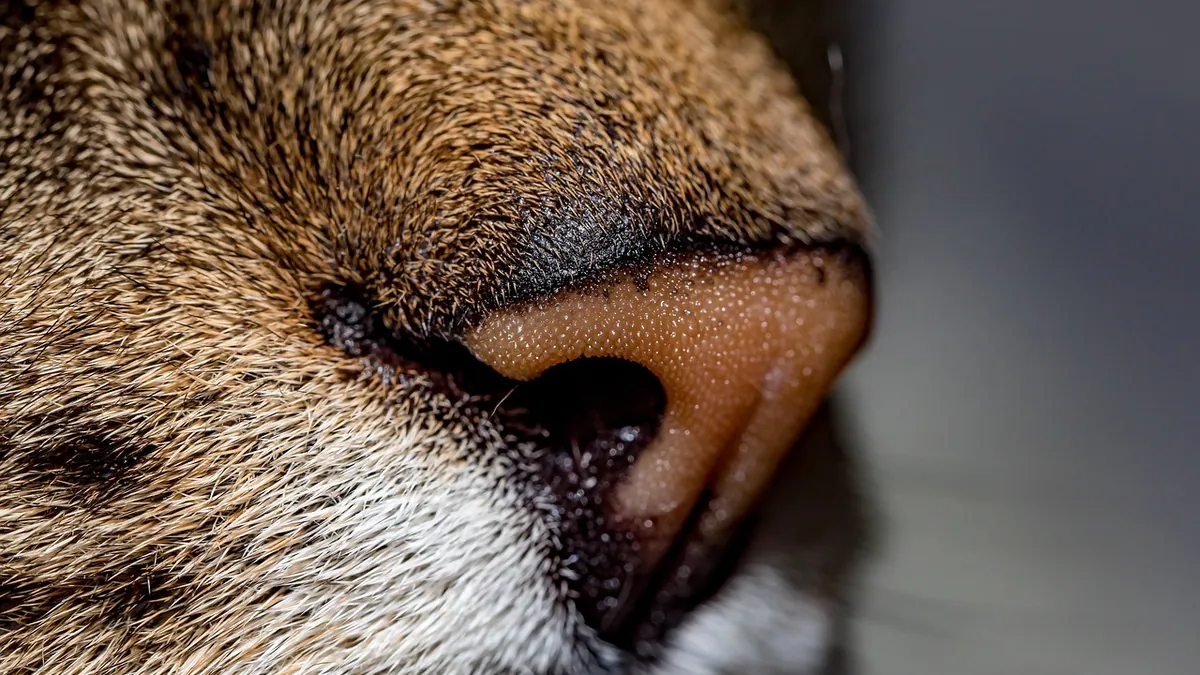
Are cats noses supposed to be wet? Most of the time, yes. A healthy cat's nose is often cool and slightly damp, but a dry nose by itself does not mean your cat is sick. Nose moisture changes throughout the day, and many perfectly healthy cats wake up with a warm, dry nose.
This article is educational and is not a substitute for veterinary diagnosis or treatment.
Quick Answer
- A wet or dry nose is a weak health signal on its own. Look at your cat's energy, appetite, breathing, and discharge instead.
- Normal noses can be wet, dry, cool, or warm at different times of day, depending on sleep, room temperature, and activity.
- Clear, watery discharge with occasional sneezing often points to a mild upper respiratory issue, which is common in cats.
- Thick yellow or green discharge, bloody discharge, trouble breathing, or a cat that stops eating needs a vet visit.
- Never give your cat human cold medicine, decongestants, or leftover antibiotics. Some are toxic to cats.
What a Cat's Nose Looks Like and What Counts as Normal
A cat's nose is a small, complex structure. The nasal cavities inside are surprisingly roomy. In one CT study of 56 cats, the average total nasal cavity volume was about 6.74 mL, with the left and right sides nearly equal in size [1]. Male cats in that study had larger nasal cavities than females, about 8.3 mL versus 5.8 mL [1]. This is anatomy, not health, but it helps explain why nasal problems can affect one side or both.
So what makes a cat's nose wet in the first place?
- A thin layer of mucus. The lining of the nose produces mucus that traps dust, pollen, and germs.
- Tears draining into the nose. Tears flow through a duct that empties inside the nose, so a cat with watery eyes often has a wet nose too.
- Licking. Cats groom their faces and lick their noses, which adds moisture.
- Condensation. A cool nose can collect a little moisture from the air, especially in humid weather.
A normal nose can be:
- Cool and damp
- Warm and dry, especially after a nap
- Slightly wet on one side
- Dry in a heated room or on a cold, dry day
What matters is the pattern. A nose that is suddenly much wetter than usual, or one that stays crusty and dry for days along with other signs, is worth a closer look.
Are Cats Noses Supposed to Be Wet or Dry? What Changes Mean
Owners often ask whether a dry nose means fever. It does not work that way. There is no reliable link between nose temperature or moisture and body temperature in cats. A cat with a fever can have a wet nose, and a cat with a normal temperature can have a dry one.
Instead, watch for these paired signs:
| Nose finding | What it often means |
|---|---|
| Dry nose, normal appetite and energy | Usually normal |
| Dry, cracked nose with crusting | Dry air, dehydration, or skin issue |
| Wet nose with clear watery drip | Mild irritation or early viral infection |
| Wet nose with thick yellow or green mucus | Possible bacterial involvement |
| Wet nose with blood | Trauma, foreign body, or serious nasal disease |
| Dry nose plus lethargy and no eating | Needs veterinary attention |
If your cat has a runny nose along with watery eyes, that combination is common with upper respiratory infections. You can read more about that pattern in Cat Runny Nose Watery Eyes.
Main Causes of a Wet or Dry Cat Nose
Upper Respiratory Infections
This is the most common reason a cat's nose runs. In a study of 46 cats with rhinitis and 37 healthy cats, feline herpesvirus was found in 39.1% of the cats with rhinitis compared to 8.1% of healthy cats [2]. Mycoplasma species were also more common in sick cats, found in 28.3% of rhinitis cases versus 5.4% of healthy controls [2]. Mycoplasma felis appeared in 21.7% of rhinitis cases and in none of the healthy cats [2].
These infections often start with clear discharge and sneezing. They can turn into thick, colored discharge if bacteria join in.
Chronic Rhinitis
Some cats develop long-term nasal inflammation. Chronic rhinitis is one of the most common upper respiratory diseases in cats, and in cats it is often thought to follow an earlier viral infection [3]. Signs include clear to pus-like discharge from one or both nostrils, and sometimes nosebleeds [3]. Diagnosis usually requires ruling out other causes first, including tumors, fungal infections, dental disease, parasites, polyps, and foreign bodies [3].
Silent Nasal Disease
Here is something many owners do not know. Nasal changes can exist even when a cat seems fine. In a study of 81 animals that died and were examined, 82.7% had at least one microscopic change in the nasal cavity [4]. Idiopathic lymphoplasmacytic rhinitis was the most common finding in both dogs and cats, seen in 67.2% of those with changes [4]. In cats, neutrophilic rhinitis was the second most common change, at 26.3% [4].
This does not mean your cat is secretly ill. It means the nose can have low-grade inflammation without obvious signs. A dry nose alone is not proof of anything.
Environmental and Everyday Causes
- Dry indoor heat in winter
- Low humidity
- Dust, smoke, or strong scents
- A recent nap or long grooming session
- Dehydration from not drinking enough
Cause Table
| Cause | Typical clues | How urgent |
|---|---|---|
| Normal variation | Dry after sleep, wet after grooming, cat acts fine | Not urgent |
| Mild viral infection | Clear discharge, sneezing, mild eye watering | Vet visit within a few days |
| Bacterial involvement | Thick yellow or green discharge, bad smell | Vet visit within 24 to 48 hours |
| Chronic rhinitis | Long-term discharge, sneezing, one or both nostrils | Routine vet visit |
| Foreign body | Sudden one-sided discharge, pawing at face, sneezing fits | Same-day vet visit |
| Tumor or polyp | One-sided blockage, bloody discharge, facial swelling | Prompt vet visit |
| Fever or systemic illness | Lethargy, not eating, hiding, fast breathing | Same-day or emergency |
Red Flags That Make It an Emergency
Call an emergency clinic right away if your cat has any of these:
- Open-mouth breathing or obvious effort to breathe
- Blue or gray gums or tongue
- Collapse or extreme weakness
- Heavy bleeding from the nose that does not stop
- A nose that is suddenly deformed or swollen
- Severe pain when you touch the face
- A known or suspected toxin exposure
Cats are obligate nose breathers when they eat and rest, so a blocked nose can become serious fast. If your cat cannot smell food, it may stop eating, which is dangerous within a day or two.
For coughing or gagging that you are not sure about, see Is My Cat Dry Heaving Or Coughing and Cat Is Dry Coughing.
Safe Things You Can Do at Home While You Wait
You cannot diagnose your cat at home, but you can make it more comfortable and gather useful information.
- Keep the air moist. Run a cool-mist humidifier in the room where your cat sleeps.
- Wipe the nose gently. Use a warm, damp cotton ball or soft cloth. Wipe away crusts without picking at them.
- Offer warm, smelly food. Warming canned food slightly can help a cat with a stuffy nose smell it.
- Keep water fresh. Offer multiple bowls, or try a water fountain.
- Reduce irritants. No smoking indoors, no strong air fresheners, no scented candles near your cat.
- Track the signs. Note when the nose is wet or dry, what the discharge looks like, and whether your cat is eating, drinking, and using the litter box.
Do not give any medication without veterinary guidance. Human decongestants, pain relievers, and cold remedies can be toxic to cats. Antibiotics are also not a simple fix. In chronic rhinitis, antibiotics are debated and do not lead to complete resolution on their own [3].
What Your Veterinarian Will Check and Test
Your vet will start with a full physical exam, including the nose, mouth, eyes, ears, and lymph nodes. They will ask about discharge color, duration, sneezing, appetite, and any recent stress or new cats in the home.
Depending on what they find, they may recommend:
- Nasal swabs. These can be tested for Mycoplasma species, feline herpesvirus, feline calicivirus, Bordetella bronchiseptica, and Chlamydia species [2].
- Bacterial culture. A study comparing samples from nasal discharge, the nasal cavity, and nasal biopsy found positive cultures in 80%, 92%, and 75% of samples respectively, but agreement between sites was only moderate at best [5]. This means where the sample comes from matters, and results must be read alongside the exam.
- Imaging. X-rays or CT can look for polyps, tumors, or fluid buildup.
- Biopsy. If other causes are ruled out, a biopsy of the nasal lining may be needed to confirm chronic rhinitis [3].
- Blood work. This checks for dehydration, infection, and organ function.
Treatment depends on the cause. For chronic rhinitis, the foundation of long-term care often includes nasal lavage, inhalation therapy, and mucolytic medications to improve mucus clearance [3]. Some cats also respond to anti-inflammatory drugs such as corticosteroids or nonsteroidal anti-inflammatory drugs [3]. Your vet will calculate any dose based on your cat's weight and health.
Prevention and Monitoring
You cannot prevent every nasal problem, but you can lower the odds and catch issues early.
- Keep vaccinations current. Core vaccines reduce the severity of common viral infections.
- Reduce stress. Stress can trigger herpesvirus flare-ups in carrier cats.
- Control humidity. Aim for comfortable indoor humidity, especially in winter.
- Check the nose daily. A quick look during cuddle time is enough.
- Watch eating and drinking. A cat that stops eating needs attention fast.
- Keep sick cats separate. If you have multiple cats, isolate a cat with a runny nose until your vet advises otherwise.
- Note one-sided signs. Discharge from only one nostril is more suspicious for a foreign body, polyp, or tumor.
If your cat sneezes often along with watery eyes, see Why Is My Cat Sneezing So Much And Watery Eyes. If you see repeated gagging or retching, see My Cat Keeps Dry Heaving But Nothing Comes Out.
Limitations and When to Contact a Veterinarian
This article cannot tell you what is wrong with your individual cat. Only a veterinarian who examines your cat can do that. Use the timing below as a guide.
Emergency now:
- Trouble breathing, open-mouth breathing, or blue gums
- Collapse, seizures, or severe weakness
- Heavy nosebleed that will not stop
- Suspected poisoning or toxin exposure
Same day or within 24 hours:
- Thick yellow or green nasal discharge
- Blood in the nasal discharge
- Not eating for more than 24 hours
- Facial swelling or pain
- Sudden one-sided nasal blockage
Routine visit within a few days:
- Clear discharge lasting more than 3 to 5 days
- Dry, crusty nose that does not improve with humidification
- Chronic sneezing or snoring that is getting worse
- Any change in your cat's normal nose moisture that comes with other signs
If you are unsure, call your vet. A phone call is cheaper than waiting too long.
Frequently Asked Questions
Should I worry if my cat's nose is dry?
Usually no. A dry nose is common after sleep, in dry air, or in a warm room. It only matters if it comes with other signs like not eating, lethargy, or thick discharge.
Why is my cat's nose wet all the time?
A wet nose is normal and comes from mucus, tears draining into the nose, and grooming. If the wetness is new and comes with sneezing or discharge, it may be an upper respiratory issue.
Can a dry nose mean my cat has a fever?
No. Nose moisture and temperature are not reliable signs of fever in cats. A veterinarian needs to take your cat's temperature to know for sure.
Is a cold, wet nose a sign of good health?
Not exactly. A cool, damp nose is common in healthy cats, but many healthy cats also have warm, dry noses. Behavior and appetite tell you more than nose temperature.
When should I call the vet about my cat's nose?
Call if the discharge is thick, colored, or bloody, if your cat stops eating, or if breathing changes. Clear discharge lasting more than a few days also deserves a call.
Related Articles
- Is My Cat Dry Heaving Or Coughing
- Cat Is Dry Coughing
- Cat Runny Nose Watery Eyes
- Why Is My Cat Sneezing So Much And Watery Eyes
- My Cat Keeps Dry Heaving But Nothing Comes Out
- Why Is My Cat Sneezing So Much And Has A Runny Nose
- Dry Nose in Cats: What It Means and When to Worry
- Are Cat Ears Supposed to Be Warm? Normal vs Fever Signs
- Do Cats Sweat? How Cats Cool Down in Heat
References
- Computed Tomographic Volumetric Analysis of the Nasal Cavities in Domestic Cats (Felis catus) and Anatomical Implications for Intranasal Drug Delivery. Anatomia, histologia, embryologia, 2026.
- EXPRESS: Detection of Mycoplasma species and respiratory pathogens in cats with rhinitis and healthy cats. Journal of feline medicine and surgery, 2026.
- Chronic rhinitis in dogs and cats - an overview of etiology, diagnostics and therapy. Tierarztliche Praxis. Ausgabe K, Kleintiere/Heimtiere, 2025.
- Morphological changes in the nasal cavity of dogs and cats submitted to routine post-mortem examination: a systematic investigation. Journal of comparative pathology, 2025.
- Comparison of bacterial culture results obtained from three different sampling locations in dogs and cats with chronic nasal disease. New Zealand veterinary journal, 2024.