Cat Breathing Through the Mouth or Blocked Nose: What to Do
By Dr. Zubair Khalid, DVM, MS, PhD ·
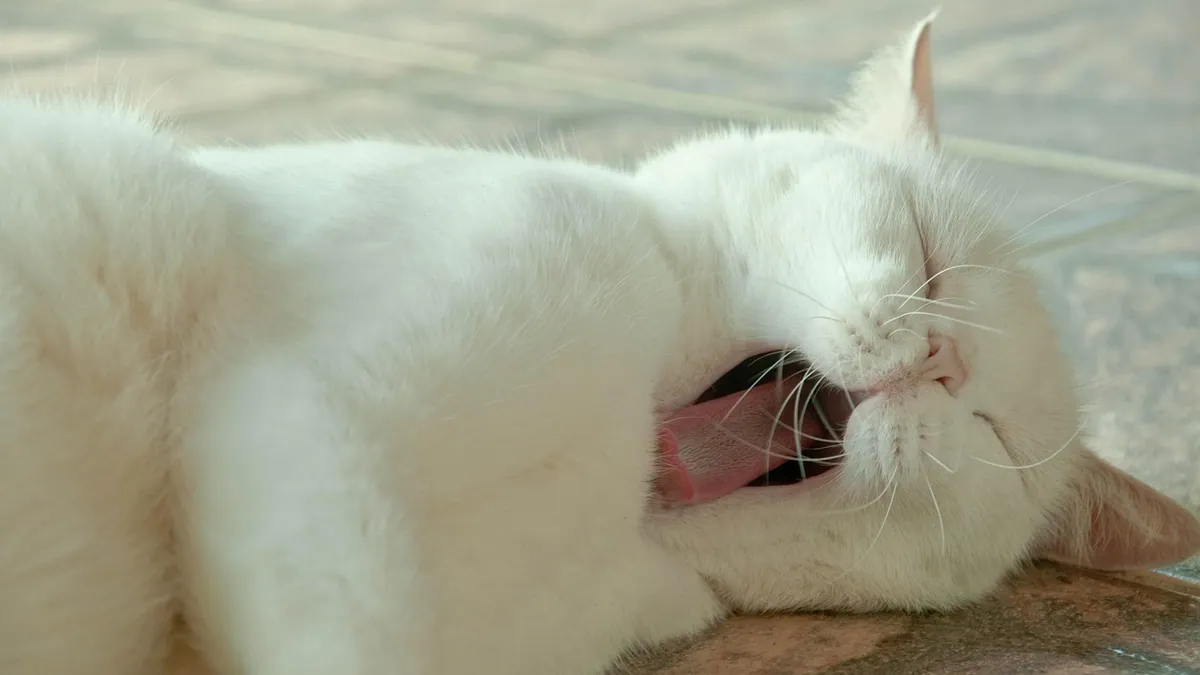
Cats are designed to breathe through their noses. When a cat not breathing through nose starts breathing through the mouth instead, or when the nose seems blocked, that is a sign the upper airway is not working the way it should. Some causes are mild and treatable, but others can become life threatening within hours, so this problem always deserves a prompt call to your veterinarian.
This article is educational and is not a substitute for veterinary diagnosis or treatment.
Quick Answer
- Mouth breathing in a cat is not normal and should be treated as urgent until your veterinarian says otherwise.
- A blocked nose from rhinitis or sinusitis often comes with sneezing, nasal discharge, snoring, and pawing at the face [1].
- Open-mouth breathing at rest can mean a physical blockage, such as a mass narrowing the nostril, that only surgery can fix [2].
- Do not put anything in your cat's nose, do not use human decongestants, and do not wait to see if it improves overnight.
- If your cat is breathing with an open mouth, has blue or gray gums, or will not wake up, go to an emergency clinic now.
What Mouth Breathing and a Blocked Nose Look Like
A healthy cat breathes quietly through the nose with the mouth closed. You should not hear much at all when your cat is resting. Normal resting breathing is calm and effortless.
A cat with a nasal problem may:
- Breathe with the mouth slightly open, especially at rest
- Make a snoring or rattling sound while breathing
- Sneeze often, or sneeze in bursts that come and go
- Have clear, cloudy, or colored discharge from one or both nostrils
- Paw at the face or rub the nose against furniture
- Have watery eyes or red, inflamed tissue around the eyes
- Make a short, rapid snorting inhalation, sometimes called a reverse sneeze, to try to clear the nose [1]
Some cats with chronic nasal disease develop a lump on the bridge of the nose, which can point to a fungal infection [1]. Others may have narrowing of one nostril from a mass, which shows up as open-mouth breathing even when the cat is calm [2].
When breathing is normal
A cat that just finished playing hard may pant briefly. A cat in a hot car or after a stressful car ride may also pant for a short time. That is different from a cat sitting quietly with an open mouth and working to pull air in. If the mouth breathing continues after a few minutes of rest, treat it as a problem.
Main Causes of a Cat Not Breathing Through the Nose
The table below groups the most common reasons a cat struggles to move air through the nose. The urgency column tells you how fast you need to act.
| Cause | Typical clues | How urgent |
|---|---|---|
| Rhinitis or sinusitis (inflammation of the nose or sinuses) | Sneezing, nasal discharge, snoring, pawing at the face, watery eyes [1] | Same-day vet visit |
| Secondary bacterial infection on top of rhinitis | Discharge turns thick and mucus-like instead of clear [1] | Same-day vet visit |
| Fungal rhinitis | Lump on the bridge of the nose, chronic discharge [1] | Prompt vet visit, often needs imaging |
| Nasal mass or hamartoma | One-sided blockage, open-mouth breathing at rest, narrowed nostril [2] | Urgent, often surgical |
| Nasal stenosis (narrowed nasal opening) | Chronic open-mouth breathing, history of nose surgery [3] | Urgent, may need reconstruction |
| Laryngeal paralysis | Loud inspiratory noise, severe trouble breathing, distress [4] | Emergency |
| Heart disease, fluid around the lungs, or chest masses | Fast or labored breathing, weakness, collapse [5] | Emergency |
Rhinitis and sinusitis
Rhinitis is inflammation of the mucous membranes inside the nose. Sinusitis is inflammation of the sinus lining. They often happen together, which vets call rhinosinusitis [1]. These are common upper respiratory problems in cats.
When the nasal passages are damaged, the nose cannot filter dust and germs the way it should. That sends heavier loads of debris and microorganisms into the lungs [1]. This is one reason a long-standing nasal problem can lead to deeper airway disease.
Blockages and masses
A physical blockage can narrow or close off a nostril. In one reported case, a 6-year-old Siamese cat had a mass called a nasal hamartoma that blocked the left nostril and caused open-mouth breathing at rest. Imaging showed the left nostril was 48% narrower than the right. Surgery widened the opening by 45% compared with before surgery, and two years later the mass had not come back and the cat was breathing much better [2].
Another report described a cat with complete nasal stenosis, meaning the nasal opening had closed, after revision surgery for brachycephalic airway syndrome. The cat had chronic open-mouth breathing. Surgeons rebuilt a new nasal opening using a graft from the mouth and a temporary stent. The opening stayed patent and the cat breathed comfortably afterward [3].
Laryngeal and lower airway problems
Laryngeal paralysis is uncommon in cats but can be life threatening because it blocks the upper airway. In a group of eight cats with this condition, all arrived with severe trouble breathing and a loud inspiratory noise, and all needed emergency surgery after medical treatment failed [4].
Problems lower down, such as heart disease, fluid around the lungs, or tumors, can also make a cat work hard to breathe. In one large review of 258 severely dyspneic cats, respiratory causes made up 33% of cases, cardiac causes 25%, and traumatic and neoplastic causes 21% each. Pleural effusion (fluid around the lungs) was present in 39% of the cats [5]. Male cats were overrepresented in the cardiac and respiratory groups [5].
If your cat is open-mouth breathing and you are not sure why, see Why Is My Cat Breathing open-mouthed? Feline Asthma & Respiratory Crisis.
Red Flags That Mean Emergency Care Now
Go to an emergency clinic immediately if you see any of these:
- Open-mouth breathing that continues while the cat is resting
- Blue, gray, or pale gums, lips, or tongue
- Breathing that is fast, deep, and obviously labored
- A loud raspy or whistling sound with every breath
- The cat is gasping, stretching the neck out, or sitting with elbows out
- The cat collapses or cannot stand
- The cat is breathing but not waking up
- The cat is limp, unresponsive, or having seizures
A cat that is breathing but not waking up needs emergency care right away. That combination can mean severe oxygen deprivation, shock, or a neurologic problem. Do not wait for an appointment. Call ahead so the team can prepare.
If your cat is struggling to breathe in general, more detail is in Cat Difficulty Breathing: Emergency Signs and What to Do.
Safe Things You Can Do at Home While You Wait
Your main job is to keep your cat calm and get veterinary help fast. Stress makes breathing worse.
- Keep the carrier ready and the car cool. Panting cats overheat easily.
- Handle your cat gently. Do not scruff, restrain, or chase.
- Keep the room quiet and dim. Turn off loud TVs and keep other pets away.
- Do not put anything in the nose. No saline sprays, no oils, no human decongestants.
- Do not give any medication unless your veterinarian prescribed it for this problem.
- Wipe discharge from the outside of the nose with a soft damp cloth if your cat allows it.
- Note the time symptoms started and what you have seen. This helps the vet.
- If your cat is unconscious or not breathing, call the clinic while you start CPR if you have been trained.
Never use human cold medicines, antihistamines, or nasal sprays in a cat. The dose and ingredients are not made for cats, and some are toxic. Your veterinarian calculates any medication dose from your cat's weight and health.
What Your Veterinarian Will Check and Test
Your vet will start with the basics, because a cat in respiratory distress cannot handle a long exam.
- History. When did the mouth breathing start? Is it worse at rest or with activity? Any sneezing, discharge, or prior nose surgery?
- Breathing pattern. Rate, effort, noise, and whether the cat is using the belly muscles to breathe.
- Nose exam. Looking for discharge, swelling, a lump on the bridge of the nose, or a narrowed nostril [1][2].
- Mouth and throat exam. Checking for masses, ulcers, or anything blocking airflow.
- Airway exam. In some cases, light anesthesia is used to watch the vocal folds move, which is how laryngeal paralysis is confirmed [4].
- Imaging. X-rays or CT can show nasal masses, sinus disease, or chest problems. CT was used to measure how much a mass narrowed a cat's nostril [2].
- Bloodwork. To look for infection, organ problems, or other disease.
- Sampling. If a mass or fungal infection is suspected, the vet may take a biopsy or swab.
Because dyspneic cats often cannot tolerate extra tests right away, your vet may treat first and test once your cat is more stable [5]. That is normal and expected.
Prevention and Monitoring
You cannot prevent every nasal problem, but you can lower the odds and catch trouble early.
- Keep vaccinations current. Upper respiratory infections are a common trigger for rhinitis.
- Keep your cat indoors. This reduces trauma, fights, and exposure to infectious disease.
- Watch for early signs. Occasional sneezing is fine. Daily sneezing with discharge is not.
- Track the discharge. Clear discharge that turns thick and colored often means a secondary bacterial infection [1].
- Watch the nose shape. A new lump on the bridge of the nose needs a vet visit [1].
- Watch breathing at rest. Count breaths for 15 seconds and multiply by four. Know your cat's normal number.
- After nose surgery, follow recheck instructions closely. Narrowing can develop over weeks to months [3].
- If your cat has a flat face (brachycephalic), talk to your vet about airway monitoring. These cats can develop severe nasal narrowing after surgery [3].
If your cat also has bad breath or drooling, that can point to a mouth or dental problem that affects breathing and eating. See Why Does My Cat's Breath Smell? and Cat Bad Breath Drooling.
Limitations and When to Contact a Veterinarian
This article cannot tell you what is wrong with your cat. Only a veterinarian who examines your cat can do that. Individual cases need a veterinarian, and the timing matters.
Contact your veterinarian the same day if:
- Your cat has new nasal discharge, sneezing, or snoring
- Your cat is pawing at the face or has watery eyes
- Your cat's breathing sounds different but is not yet distressed
- Your cat has a lump on the bridge of the nose [1]
Go to an emergency clinic now if:
- Your cat is breathing with an open mouth at rest
- Your cat's gums are blue, gray, or pale
- Your cat is gasping, collapsing, or cannot get comfortable
- Your cat is breathing but not waking up
- Your cat has a loud raspy noise with every breath [4]
Schedule a routine visit if:
- Your cat has long-standing nasal discharge that comes and goes
- Your cat snores most nights
- Your cat had nose surgery in the past and you notice new narrowing [3]
Frequently Asked Questions
Is it normal for a cat to breathe through its mouth?
No, it is not normal for a cat to breathe through its mouth while resting. Cats are nose breathers by design, so mouth breathing usually means the nose or upper airway is blocked or inflamed. A brief pant after hard play or a hot car ride can be normal, but it should stop within a few minutes of rest.
Can a blocked nose in a cat clear up on its own?
Sometimes mild rhinitis improves with supportive care, but you cannot tell from home whether the cause is simple or serious. A clear discharge that turns thick and colored often means a bacterial infection has set in [1]. A mass or narrowed nostril will not clear on its own and usually needs surgery [2][3].
What if my cat is breathing but not waking up?
That is an emergency. A cat that is breathing but not waking up may have severe oxygen deprivation, shock, or a brain problem. Call an emergency clinic while you head there, and keep your cat warm and still on the way.
Should I use a humidifier or saline drops for my cat's stuffy nose?
A cool-mist humidifier in the room is generally safe and may help loosen secretions. Do not put saline drops, oils, or human decongestants in your cat's nose unless your veterinarian tells you to. Your vet will decide what is safe and what dose fits your cat.
How fast can a nasal problem become an emergency in cats?
It can happen within hours. Laryngeal paralysis and other upper airway blockages can cause severe distress quickly, and cats with these problems often need emergency surgery [4]. If your cat's breathing changes suddenly, do not wait for a regular appointment.
Will my cat need surgery for a blocked nose?
Not always. Many cats with rhinitis or sinusitis are managed with medication and monitoring. Surgery is reserved for physical problems like masses, severe narrowing, or a collapsed nasal opening [2][3]. Your veterinarian will use imaging and an exam to decide.
Related Articles
- Why Is My Cat Breathing open-mouthed? Feline Asthma & Respiratory Crisis
- Cat Difficulty Breathing: Emergency Signs and What to Do
- Why Does My Cat's Breath Smell?
- Cat Breathing Fast While Sleeping: When to Worry
- Cat Bad Breath Drooling
- Cat Bad Breath and Drooling: When to See the Vet
- Cat Breathing Hard Through the Nose: Stuffy Nose Causes
- Kitten Stuffy Nose: Safe Ways to Help Breathing
- Cat Breathing Through Mouth and Sneezing: Causes
- Bacterial Respiratory Infections in Cats: Etiology, Diagnosis, and Treatment
References
- Rhinitis and Sinusitis in Cats - Cat Owners. Merck Veterinary Manual.
- Nasal hamartoma causing stenosis and partial obstruction in a Siamese cat. Australian veterinary journal, 2026.
- Surgical reconstruction using a mucosal graft and temporary nasal stent in a cat with severe nasal stenosis. The Canadian veterinary journal = La revue veterinaire canadienne, 2026.
- Transoral Endoscopic-Assisted Partial Arytenoidectomy as a Treatment for Laryngeal Paralysis in Eight Cats. Animals : an open access journal from MDPI, 2026.
- Emergency Dyspnea in 258 Cats: Insights from the French RAPID CAT Study. Veterinary sciences, 2025.