Why Is My Rat Chirping? Small Pet Sounds Explained
By Dr. Zubair Khalid, DVM, MS, PhD ·
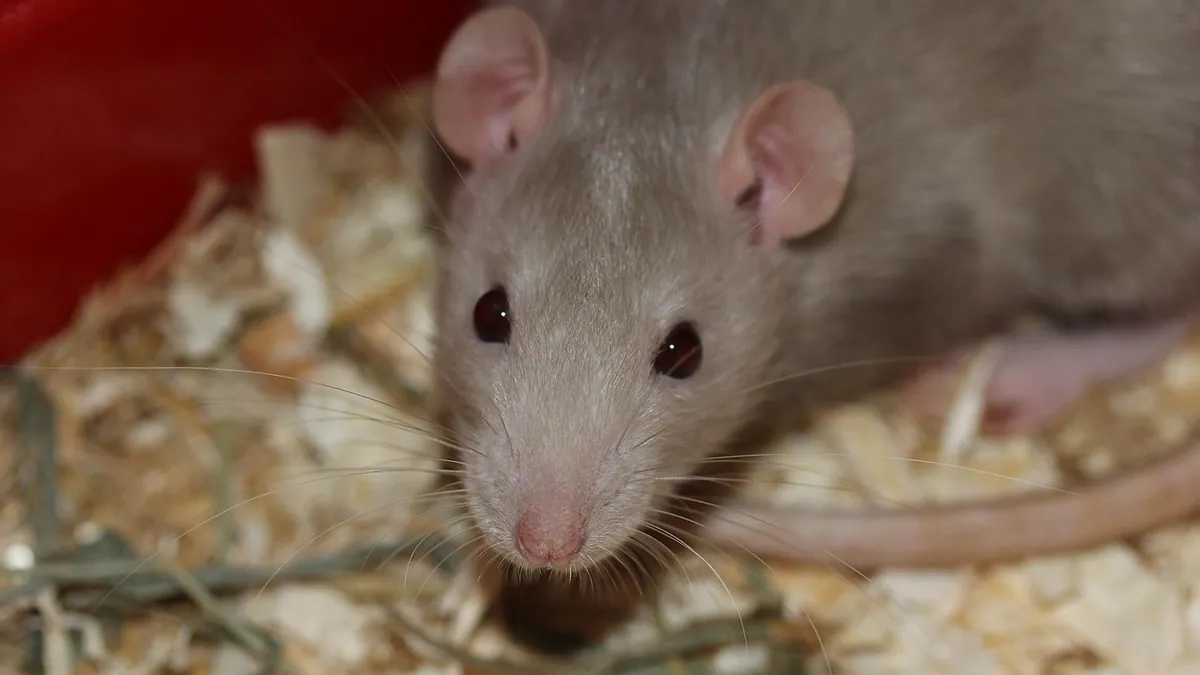
A rat that chirps is usually making a normal sound, and most chirping falls into a few clear categories: happy and excited vocalizations, stress or pain calls, and breathing noises that need a vet. Rats are social talkers, so sound is one of their main ways to communicate with you and with each other. This article is educational and is not a substitute for veterinary diagnosis or treatment.
Quick Answer
- Rats make both audible sounds (squeaks, chirps, clicks) and ultrasonic calls that human ears cannot hear, and these carry different meanings depending on context [1].
- Many chirps and squeaks are normal. Rats emit high-frequency calls during social contact and low-frequency calls linked to general arousal and movement [1].
- Happy, excited rats often produce 50-kHz calls, including "trill" and "flat" subtypes that appear tied to positive or negative feelings [2].
- A rat that chirps while breathing hard, wheezing, or sitting still may have a respiratory problem, which is common and serious in rats.
- Sudden chirping after a change, a new cage mate, or handling is often stress, not illness, but you should still watch breathing and appetite.
Why Is My Rat Chirping? Normal Reasons First
Rats are vocal animals, and most of what they say is not meant for human ears. Researchers divide rat sounds into high-frequency ultrasonic vocalizations (USVs, above what people can hear) and low-frequency vocalizations (LFVs, below 10 kHz) [1]. The two types come from different behavioral states, which is a big clue when you are trying to read your pet.
Happy and excited sounds (rat happy sounds)
When a rat expects something good, such as food, a familiar companion, or playtime, it often emits 50-kHz calls [2][3]. These are the closest thing rats have to a happy noise. In one study, female rats anticipating access to a familiar social partner emitted more 50-kHz calls [2]. A food-reward setup also reliably triggers these appetitive calls in anticipation of a palatable treat [3].
Within the 50-kHz range, researchers describe subtypes. The "trill" call tends to track positive affect, while the "flat" call appears to track negative affect [2]. You will not hear most of these without special equipment, but you may notice your rat getting chatty and active right before feeding or when a cage mate returns.
Social chatter and fast back-and-forth
Rats also trade calls quickly during social contact. In freely moving pairs, vocal exchanges peak at roughly 50 to 250 milliseconds between individuals, which is faster than you could consciously respond [4]. This looks like a real conversation, not random noise. If your rat chirps or squeaks during grooming, wrestling, or cuddling with a buddy, that is often normal social talk.
Arousal and movement sounds
Low-frequency calls are different. They correlate with general arousal, happen early in inhalation, and are strongly linked to locomotion [1]. In plain terms, a rat on the move and wound up may make low sounds that have more to do with being active than with any specific emotion. A chirp during a burst of running or exploring fits this pattern.
Baby rats and distress calls
Very young rats emit ultrasonic calls when separated from the nest, and these act as a signal that brings the mother back [5]. This is isolation distress, not contentment. Pups separated from the nest for a few hours produce these calls, and the quantity and acoustic features change as the pup develops [5]. If you are hand-raising or weaning pups, expect calling when they are alone.
Medical Causes to Rule Out
Not every chirp is behavioral. Some sounds come from the airway itself, and those need a veterinarian.
Respiratory disease
Rats are prone to mycoplasma respiratory infections, and noisy breathing is a classic sign. A chirping, clicking, or rattling sound that happens with each breath, especially when your rat is resting, points toward the lungs or upper airway instead of a happy mood. Look for porphyrin (red-brown discharge) around the eyes and nose, hunched posture, and reduced appetite. These rats need prompt veterinary care.
Pain or discomfort
A rat in pain may vocalize, especially when handled or when moving a sore limb. Pain calls tend to be sharp and tied to a specific action, such as being picked up or urinating. If your rat chirps only when you touch a certain area, treat that as a pain signal until a vet says otherwise.
Stress and anxiety
Stress changes vocal behavior. In young rats exposed to early life stress, overall call emission dropped on a specific postnatal day, and certain call types were selectively reduced and shortened [5]. In adult rats, chronic treatments did not change 50-kHz call emission much in one study, so the link between mood and calling is not simple [2]. What this means for you: a sudden change in how much your rat vocalizes can reflect stress, but it is not a reliable mood meter on its own.
Neurologic or other internal problems
Some rats chirp or click with no breathing issue at all. If the sound comes with head tilt, circling, seizures, or a sudden change in balance, that is a neurologic sign and needs a vet visit. Do not wait to see if it passes.
When Chirping Becomes a Problem
A single chirp is rarely a problem. A pattern is what matters.
- Timing. Chirping only at feeding or playtime is usually normal. Chirping at rest, at night, or continuously is more concerning.
- Breathing effort. Watch the belly and flanks. Visible effort, open-mouth breathing, or a stretched-out neck are emergencies.
- Appetite and weight. A rat that stops eating or loses weight needs a vet, whatever the sound means.
- Behavior change. Hiding, aggression, or a sudden drop in activity alongside new sounds deserves a check.
- Duration. A new sound that lasts more than a day or two should be evaluated.
What to Do Step by Step
Step 1: Listen and log it
Note when the sound happens, what your rat is doing, and how long it lasts. Record a short video with your phone. Breathing sounds often show up on video even when you cannot hear them clearly in the moment. This log helps your vet a lot.
Step 2: Check the basics
Look at your rat's eyes, nose, and fur. A healthy rat has clear eyes, a clean nose, and a smooth coat. Check the cage for ammonia smell, which irritates airways. Clean bedding more often if the smell is strong.
Step 3: Improve the environment
Rats need company, space, and things to do. Provide a cage mate if your rat lives alone (unless your vet advises otherwise), hiding spots, chew items, and daily out-of-cage time. Predictable routines reduce stress. Feed at the same times each day so your rat's excited calls stay tied to normal events.
Step 4: Support a stressed rat
If a recent change triggered the chirping, give your rat time. Keep handling calm and brief at first. Add a hide box and a piece of your worn clothing for scent comfort. Watch for improvement over several days.
Step 5: Call your vet for breathing or pain signs
If you suspect respiratory disease or pain, do not try home remedies. Rats decline fast when breathing is affected. Book a visit the same day if you can.
Step 6: Track progress
After treatment or a change, keep your log going. Note whether the sound gets better, worse, or stays the same. Bring the log to follow-up visits.
What Not to Do
- Do not punish your rat for making noise. Rats do not understand punishment, and it will only add stress. Stress can change vocal behavior, which makes the problem harder to read [5].
- Do not assume every chirp is happiness. Happy 50-kHz calls exist, but so do distress and breathing sounds [2][5].
- Do not use scented sprays or air fresheners near the cage. These irritate rat airways and can worsen breathing signs.
- Do not wait on breathing changes. Respiratory disease in rats can progress quickly. A day of waiting can matter.
- Do not rely on internet sound charts alone. Rat hearing and human hearing do not match, so you cannot judge a call by ear the way a lab can [1].
Other Small Pets: Why Is My Guinea Pig, Hamster, or Rabbit Chirping?
Owners often search the same question across species, so here is a quick comparison. The underlying rule is the same: context decides meaning.
Why is my guinea pig chirping?
Guinea pigs make a distinctive chirp that sounds like a bird. It is uncommon and not well understood, and it can happen when a guinea pig is startled, hungry, or simply excited. Because it is rare, any guinea pig that chirps repeatedly, especially with poor appetite or labored breathing, should see a vet. For more on guinea pig sounds, see Guinea Pig Squeaking Noise.
Why is my hamster chirping?
Hamsters chirp, squeak, and click for many of the same reasons rats do: excitement, fear, pain, or breathing trouble. A hamster that chirps while active and eating is usually fine. A hamster that chirps at rest with a wet nose or noisy breathing needs a vet.
Why is my rabbit chirping?
Rabbits are usually quiet, so a chirping or clicking sound is worth attention. Rabbits grind their teeth softly when content (sometimes called tooth purring) and grind loudly when in pain. A true chirp or click during breathing can signal a respiratory problem. Rabbits hide illness well, so early vet care matters.
If you also live with dogs, some of the same principles apply to reading distress sounds. See Dog Whining All the Time: What Is Your Dog Trying to Tell You? and Why Is My Dog Shaking? for comparison.
When to Involve a Veterinarian or Behavior Professional
Call your veterinarian if your rat chirps with any breathing change, stops eating, loses weight, or shows pain when handled. A certified behavior professional can help if the chirping is tied to stress, aggression, or a cage-mate conflict that you cannot resolve. Behavior problems and medical problems often overlap, so start with a vet exam to rule out disease first.
Limitations and When to Contact a Veterinarian
Rat vocal behavior is an active research area, and much of what is known comes from laboratory settings, not home cages [1][2][4]. That means no sound chart can tell you exactly what your rat feels. Your veterinarian has to examine your individual rat to know what is going on.
Contact a veterinarian the same day if you see:
- Noisy or labored breathing, especially at rest
- Open-mouth breathing or a stretched-out neck
- Red-brown discharge from the nose or eyes
- Refusing food or water for more than a few hours
- A new chirp or click that lasts more than a day
Go to an emergency clinic now if your rat:
- Breathes with obvious effort and cannot settle
- Collapses, gasps, or turns blue-gray at the gums
- Has a seizure or sudden loss of balance
- Is unresponsive or limp
Book a routine visit if the chirping is mild but persistent, if you notice gradual weight loss, or if a new cage mate triggered ongoing conflict. If you ever suspect your pet ate something toxic, call the ASPCA Animal Poison Control Center at (888) 426-4435 or the Pet Poison Helpline at (855) 764-7661 right away.
Frequently Asked Questions
Is a chirping rat always happy?
No. Some chirps are happy, especially the 50-kHz calls rats make when they expect food or a familiar companion [2][3]. Other chirps come from stress, pain, or breathing problems [5]. Watch the context, the breathing, and your rat's appetite to tell them apart.
Can rats hear their own ultrasonic calls?
Yes. Rats produce and respond to ultrasonic calls, and their auditory system helps shape those calls. One study found that auditory cortex neurons fire before and during vocalizations, and interfering with that cortex changed how long calls lasted [6]. So rats both make and monitor their own sounds.
Do rats chirp when they are in pain?
They can. Pain calls tend to be sharp and tied to a specific movement or to being handled. If your rat chirps only when you touch a certain spot, treat it as a pain signal and see a vet.
Should I worry if my rat only chirps at night?
Not automatically. Rats are most active at night, and low-frequency calls are linked to arousal and movement, which peak during active periods [1]. If the chirping comes with normal eating, grooming, and activity, it is likely behavioral. If you also hear clicking or wheezing, get it checked.
Can stress change how much my rat vocalizes?
Yes. Young rats exposed to early life stress showed changes in both the number and the acoustic features of their calls, including shifts in frequency and duration [5]. In adult rats, the picture is less clear, since some treatments did not change 50-kHz calling much [2]. A sudden change in vocal output is worth watching either way.
Related Articles
References
- Differential association of high- and low-frequency rat vocalizations with breathing and locomotion during social interactions. Behavioural brain research, 2026.
- 50-kHz ultrasonic vocalization subtypes emitted by female rats anticipating same-sex social interaction. Physiology & behavior, 2026.
- Anticipatory Food-Reward Elicitation of Appetitive Ultrasonic Vocalizations in Laboratory Rats and Mice. Journal of visualized experiments : JoVE, 2026.
- Rapid inter-individual vocal interactions in freely behaving rats revealed by acoustic source localization. Behavioural brain research, 2026.
- Developmental trajectories of isolation-induced ultrasonic vocalizations in rat pups exposed to early life stress. Behavioural brain research, 2026.
- Auditory cortex modulates call duration in rats. Communications biology, 2026.