Why Does My Rabbit Nibble, Nudge, or Nip Me?
By Dr. Zubair Khalid, DVM, MS, PhD ·
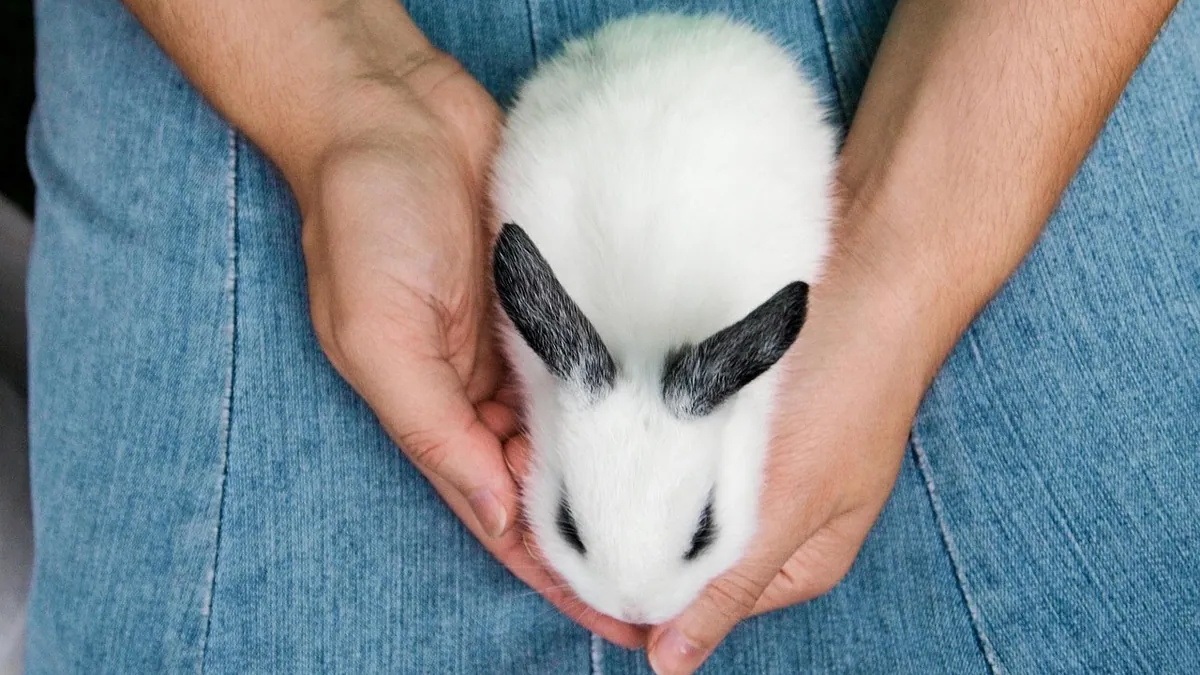
Rabbit teeth are for grinding hay, not for testing your skin, but a nibble, nudge, or nip is one of the most common things owners ask about. Most of the time, a rabbit nibbles you because it is grooming you, asking for attention, or exploring something new with its mouth. The behavior usually means your rabbit is comfortable with you, though a hard nip that draws blood or happens with a growl needs a closer look.
This article is educational and is not a substitute for veterinary diagnosis or treatment.
Quick Answer
- A soft, quick nibble or a gentle nudge with the nose is usually affection or a request for attention, food, or petting.
- Rabbits explore the world partly with their mouths, so light mouthing on clothing or skin can be normal investigation.
- A nip that pinches, breaks skin, or comes with a lunge, growl, or flattened ears is a signal, not affection.
- Never hit, flick, or yell at a rabbit for nipping. That raises stress and can make biting worse.
- Give your rabbit daily enrichment, a predictable routine, and a safe way to say "stop," such as a firm "no" and walking away.
Why Does My Rabbit Nibble Me?
Rabbits are prey animals, so they read the world through scent, sound, and touch. Their mouths are part of that toolkit. Understanding the intent behind the contact helps you respond correctly.
Affectionate grooming
Rabbits groom each other to build and maintain social bonds. A rabbit that nibbles your arm, shirt, or hair in small, quick motions is often treating you like a bonded companion. The pressure is light, the rabbit is relaxed, and it may pause to nuzzle or lick you between nibbles. This is the classic answer to why does my rabbit nibble me, and it is usually a good sign.
Nudging for attention
A nudge is a push with the nose, not a bite. Your rabbit may nudge your hand to ask for pets, nudge your leg to ask you to move, or nudge a food bowl to ask for a refill. Rabbits learn fast which nudges get a reaction, so a nudge that works once tends to come back.
Mouthing during exploration
Rabbits investigate new textures with their lips and front teeth. A new sweater, a ring, or a scab can all get a test nibble. This is curiosity, not aggression. It is also why you should keep small objects, cords, and toxic plants out of reach.
Hormonal and territorial behavior
An unaltered rabbit may nip during mounting, circling, or guarding a cage or favorite spot. This is more common in intact rabbits and often improves after spaying or neutering. Talk to your veterinarian about timing for the procedure if your rabbit is not yet fixed.
Stress and overstimulation
A rabbit that has had enough petting may nip to end the interaction. Rabbits are highly sensitive to environmental stress, and stress from housing conditions can increase behavioral problems such as aggression [1]. Watch for a stiff body, ears pinned back, or a sudden freeze before the nip.
Pain or illness
A rabbit in pain may nip when handled or approached. Dental disease, ear infections, arthritis, and skin problems are common culprits. Any sudden change in a normally gentle rabbit deserves a veterinary exam.
Medical Causes to Rule Out Before Training
Behavior plans fail when an underlying medical problem is missed. Your veterinarian can check for the following.
- Dental disease: overgrown molars, sharp points, or abscesses make chewing and being handled painful.
- Ear infection: head tilt, scratching, or pain when the ears are touched.
- Arthritis or spinal pain: reluctance to move, a hunched posture, or nipping when picked up.
- Skin parasites or infection: itching, hair loss, or scabs that make touch unpleasant.
- Reproductive disease: uterine problems in unspayed females can cause pain and behavior changes.
- Vision or hearing loss: a rabbit that cannot sense you approaching may nip out of startle.
Rabbits hide illness well because they are prey animals. A rabbit that nibbles only in certain situations, such as during nail trims or when its belly is touched, may be telling you something hurts.
When Nibbling Becomes a Problem
A behavior crosses into a problem when it causes pain, injury, or fear in anyone in the home. Warning signs include:
- Nips that break skin or leave bruises.
- Lunging, growling, or charging before the bite.
- Nipping that happens every time you enter the room or reach into the cage.
- A rabbit that used to be gentle and has become suddenly aggressive.
- Nipping directed at children, guests, or other pets.
A single hard nip is not a diagnosis. A pattern of nipping that gets worse over weeks is. The earlier you redirect it, the easier it is to change.
How to Redirect Nipping Step by Step
1. Read the body language first
Learn what your rabbit looks like when relaxed versus tense. A relaxed rabbit has soft ears, a calm gaze, and loose posture. A tense rabbit may freeze, flatten its ears, thump, or turn away. For a full breakdown, see Understanding Rabbit Behavior: Body Language and Vocalizations. Responding to early signals prevents most nips.
2. Say "no" and disengage
When a nip happens, say "no" in a low, firm voice and stop interacting for 10 to 20 seconds. Do not pull away fast, which can feel like a game. Do not hit or chase. Removing your attention is the consequence that matters to a social rabbit.
3. Reward the behavior you want
When your rabbit nudges gently or sits calmly, offer a small food reward and gentle petting. Rabbits repeat what earns attention. If you only react to nips, you teach your rabbit that nipping is the fastest way to get you.
4. Offer appropriate outlets
Rabbits need to chew, dig, and explore. Provide untreated wood blocks, cardboard, hay, and safe chew toys. A rabbit with nothing to do will find something, and that something may be your baseboards or your fingers. For safe options, read Rabbit Chewing Wood.
5. Build a predictable routine
Feed, clean, and play at similar times each day. Predictability lowers stress. Environmental enrichment is the modification of an animal's surroundings to meet its behavioral needs, and it helps prevent behavioral frustration and negative emotional states [1]. Simple, inexpensive materials can make a real difference [1].
6. Use calm handling
Support the chest and hindquarters when you pick up your rabbit, and keep sessions short. If your rabbit struggles, put it down and try again later. Forced handling teaches a rabbit that hands predict bad things.
7. Consider pheromone support
Rabbit appeasing pheromone is a topical product studied for helping rabbits adjust to new or stressful situations [2]. It is not a fix for aggression, but it may lower baseline stress during changes like a move or a new cage setup. Ask your veterinarian whether it fits your situation.
8. Train with positive reinforcement
Rabbits can learn simple cues such as "come," "up," and "touch." Training gives you a way to redirect energy and gives your rabbit mental work. A structured plan is outlined in Rabbit Behavior Training.
What Not to Do
- Do not hit, flick, or spray your rabbit. Punishment increases fear and can escalate biting.
- Do not yell or chase. A prey animal that feels cornered will defend itself.
- Do not grab your rabbit by the scruff or ears.
- Do not assume a nip is "just what rabbits do." It is a behavior you can change.
- Do not isolate your rabbit as punishment. Rabbits are social and need company.
- Do not ignore a sudden behavior change. Pain and illness are common causes.
Environment and Enrichment Basics
A rabbit's housing affects behavior more than most owners expect. Warm conditions change how rabbits behave. In one study, rabbits exposed to warmer temperatures sprawled more often while self-grooming and exploratory behavior decreased and inactivity increased [3]. Keep your rabbit's space at a comfortable room temperature and provide a cool, shaded area in summer.
Give your rabbit enough room to stand up, stretch, hop, and lie fully extended. Add hiding spots, a litter box, and daily supervised time outside the enclosure. Rotate toys so the environment stays interesting. These steps reduce boredom, which is a common driver of nipping and destructive chewing.
When to Involve a Veterinarian or Behavior Professional
Contact your veterinarian if:
- The nipping started suddenly in a rabbit that was previously gentle.
- Your rabbit shows signs of pain, such as drooling, not eating, or grinding its teeth.
- The nip broke skin or the behavior is getting worse despite training.
- Your rabbit is unspayed or unneutered and shows hormonal behavior.
- You are unsure whether the behavior is medical or behavioral.
A veterinarian can rule out pain and illness first. If your rabbit is healthy, ask for a referral to a veterinarian who focuses on behavior or a certified behavior professional who works with rabbits. Bring notes on when the nipping happens, what you did, and how your rabbit responded. That record speeds up the process.
Limitations and When to Contact a Veterinarian
This guide covers common patterns, but every rabbit is an individual. A behavior that looks like affection in one rabbit can be pain in another. Only a veterinarian who examines your rabbit can tell the difference.
Contact a veterinarian the same day if your rabbit stops eating, drools, has trouble chewing, or shows a sudden change in personality. Seek emergency care now if your rabbit has a wound from a bite, is bleeding, is struggling to breathe, or has a swollen face or jaw. Schedule a routine visit if the nipping is new, mild, and your rabbit is otherwise acting normally.
If you are unsure how urgent the situation is, call your veterinarian's office and describe what you see. They can tell you whether to come in now or wait.
Frequently Asked Questions
Is it normal for a rabbit to nibble on me?
Yes, light nibbling is normal and often affectionate. Rabbits groom bonded companions with small mouth movements, and they explore new textures with their lips and teeth. A soft nibble with a relaxed body is usually nothing to worry about.
How do I stop my rabbit from nipping?
Say "no" in a firm, low voice and stop interacting for a short time. Reward gentle nudges and calm behavior with treats and petting, and give your rabbit daily chew toys and exercise. Consistency matters more than intensity.
Does a rabbit nudge mean it loves me?
A nudge usually means your rabbit wants something, such as attention, food, or for you to move. It can also be a friendly greeting. Either way, it shows your rabbit is comfortable enough to communicate with you directly.
Can a rabbit nip because it is in pain?
Yes, pain is a common reason for a sudden change in behavior. Dental problems, ear infections, and arthritis can all make a rabbit nip when approached or handled. Have your veterinarian examine your rabbit if the behavior is new.
Should I punish my rabbit for nipping?
No. Punishment increases fear and can make biting worse, especially in a prey animal that already feels threatened. Redirect the behavior with training, enrichment, and a calm response instead.
Related Articles
- Understanding Rabbit Behavior: Body Language and Vocalizations
- Rabbit Behavior Training
- Rabbit Chewing Wood
- Litter Training Your Pet Rabbit
- Why Is My Rabbit Licking or Biting Me? Behavior Explained
- Why Does My Rabbit Thump or Growl at Me?
- Why Does My Rabbit Grunt or Vibrate When I Pet Him?
References
- Environmental Enrichment in Rabbit Husbandry: Comparative Impacts on Performance and Welfare. Animals : an open access journal from MDPI, 2024.
- Crossing the comfort zone: rabbit appeasing pheromone enhances acclimation to a novel environment. Frontiers in veterinary science, 2026.
- Impact of different controlled temperature and humidity conditions on the behaviour, posture and spatial needs in fattening rabbits. Frontiers in veterinary science, 2025.