Is My Ferret Depressed? Signs and How to Help
By Dr. Zubair Khalid, DVM, MS, PhD ·
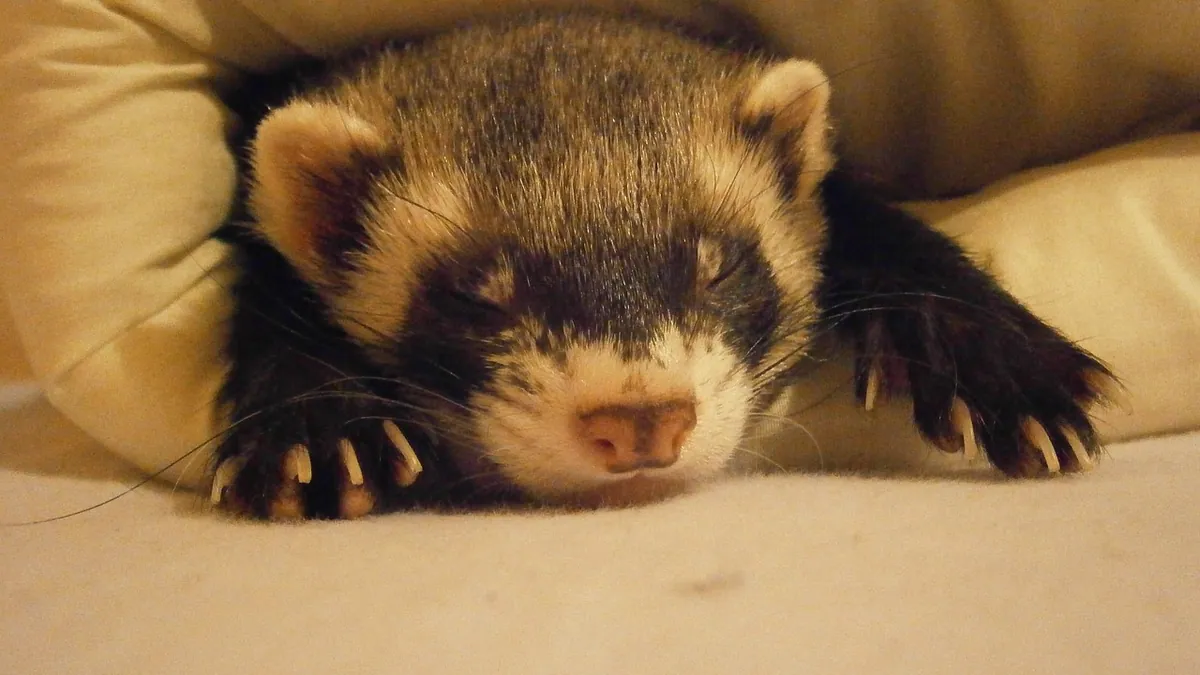
Is my ferret depressed? Maybe, but in ferrets the answer is rarely simple sadness. Most of the time, a ferret who seems "down" is either bored, sick, or both, and the two can look almost identical from the outside. If you want to know how to tell if my ferret is depressed, start by treating every sudden behavior change as a possible medical problem first.
This article is educational and is not a substitute for veterinary diagnosis or treatment.
Quick Answer
- Ferrets can show depression-like behavior, and most owners believe ferrets are capable of boredom, but true clinical depression is not a diagnosed condition in this species [1].
- Sudden lethargy, weakness, or appetite loss is a medical red flag, not a mood. These signs appear with gastrointestinal disease, lung lobe torsion, and many other serious conditions [2][3].
- Long-term low activity with pacing, wall scratching, or excessive sleeping usually points to boredom and poor enrichment, not sadness [1].
- Ferrets are social and are commonly housed in pairs, so a lone ferret with little interaction is at higher risk for stress and boredom-related behaviors [4].
- The fix is usually two-track: a veterinary exam to rule out illness, plus real changes to housing, enrichment, and daily out-of-cage time [1][5].
Why Ferrets Act "Depressed" (Normal Reasons First)
Ferrets sleep a lot. In one behavioral study of pair-housed ferrets, inactivity made up about 89% of their overall activity budget [4]. If your ferret sleeps 18 hours a day and then plays hard for an hour, that is normal ferret life, not depression.
Ferrets are also crepuscular, meaning they are most active around dawn and dusk. If you work all day and only see your ferret during your own quiet evening, you may be catching the sleepiest part of their schedule and missing the active windows.
Season and light matter too. Ferrets respond to day length with changes in coat, weight, and activity. A ferret who slows down in fall and winter may simply be following a normal seasonal pattern.
Boredom is the other common explanation. In a survey of 621 ferret owners, 93% believed ferrets can experience boredom, and owners identified scratching at enclosure walls and excessive sleeping as the top behavioral signs of it [1]. Repetitive pacing, yawning, and resting with eyes open were also reported, though those signs overlap with other states [1]. Owners who doubted ferrets could get bored provided slightly but significantly fewer types of enrichment [1]. That is a useful clue: enrichment is not optional, it is part of basic care.
Medical Causes to Rule Out First
This is the part most owners skip, and it is the part that matters most.
Gastrointestinal disease
Ferrets commonly develop gastrointestinal disease from both infectious and noninfectious causes, and the clinical signs are often vague [2]. Lethargy, anorexia, vomiting, diarrhea, and melena (black, tarry stool) are all listed as possible signs [2]. Notice that lethargy and not eating are on that list. A ferret who "seems depressed" and has stopped eating may have a stomach or intestinal problem, not a mood problem [2].
Heart and lung problems
A 3-year-old ferret was brought in after 24 hours of lethargy, weakness, and anorexia and was found to have a twisted lung lobe with secondary pneumothorax and pleural effusion [3]. That ferret was also tachypneic, painful, dehydrated, pale, and obtunded on exam [3]. The lesson is blunt: a ferret who is suddenly weak and off food can be in a life-threatening state within a day [3].
Other common ferret diseases
Older ferrets are prone to hormonal and metabolic diseases that change behavior before they change anything else. Two you should know about are Ferret Adrenal Disease Signs and Ferret Insulinoma Signs. Both can cause low energy, weakness, or a change in personality that looks like sadness.
Pain and dental disease
Ferrets hide pain well. A ferret with a sore mouth, an injured limb, or chronic rib fractures may just go quiet [3]. Any ferret who stops playing, stops eating hard food, or resents being handled needs a hands-on exam.
When Lethargy Becomes a Real Problem
Ferret lethargy is a symptom, not a diagnosis. The question is not "is my ferret lazy" but "is this different from my ferret's normal baseline, and how fast did it change."
Use these distinctions:
- Normal: sleeps most of the day, wakes for play, eats, drinks, urinates, defecates, and interacts with you.
- Boredom: long stretches of inactivity, wall scratching, pacing, over-sleeping, and low interest in toys or people [1].
- Illness: sudden onset, weakness, wobbliness, not eating, vomiting, diarrhea, black stool, trouble breathing, or a ferret who is hard to wake [2][3].
A slow drift into boredom can be fixed at home. A sudden drop into lethargy needs a veterinarian.
What to Do Step by Step
Step 1: Book a veterinary exam
Do this first, especially if the change came on fast or your ferret is not eating. A detailed history plus a thorough physical exam and a systematic diagnostic plan are the keys to a correct diagnosis in ferrets with vague signs like lethargy and anorexia [2]. Bring notes on when the behavior started, what your ferret eats, stool appearance, and any vomiting [2].
Step 2: Fix the housing basics
Ferrets are social animals that are commonly pair-housed, and smaller cages have been linked to more stress- or boredom-related behaviors in some species [4]. If your ferret lives alone in a small cage with few options, that is the first thing to change.
Aim for a larger, multi-level enclosure with tunnels, hide boxes, and a litter area away from the sleeping area. If you can, consider a compatible ferret companion. Introduce new ferrets carefully and supervise early interactions.
Step 3: Add real enrichment
Owners who believed ferrets get bored provided more types of enrichment, and that is the pattern to copy [1]. Rotate items so nothing becomes wallpaper:
- Tunnels and tubes, including crinkly ones
- Dig boxes with safe, dust-free material
- Puzzle feeders and food-hiding toys (food hiding was reported in 75.4% of ferrets in one international survey, so this is natural behavior) [5]
- Ball pits, paper bags, and cardboard boxes
- Safe, supervised time with novel objects
Step 4: Increase out-of-cage time
Daily free-roaming and environmental enrichment are common in pet ferret husbandry, and most surveyed ferrets were housed indoors [5]. Free-roam time in a ferret-proofed room gives your ferret control over their environment, which is what boredom is really about.
Step 5: Keep a routine and a log
Ferrets do better with predictable feeding, play, and sleep times. Write down daily food intake, stool quality, activity level, and play duration for two weeks. This log is genuinely useful to your veterinarian and it helps you see whether your changes are working.
Step 6: Check the diet and preventive care
Feeding and husbandry practices vary a lot between countries, and preventive veterinary care is common among ferret owners [5]. Make sure your ferret is on an appropriate ferret diet, has fresh water, and is current on the preventive care your veterinarian recommends. If you are new to the species, start with this Ferret Care Guide for Beginners.
What Not to Do
Do not punish a quiet ferret. Scruffing, yelling, or withholding attention will not fix lethargy and can make a sick or stressed ferret worse.
Do not assume it is just boredom. Boredom and illness overlap heavily. Excessive sleeping is a reported boredom sign, but lethargy and anorexia are also signs of gastrointestinal disease and of a life-threatening lung problem [2][3]. Get an exam before you decide it is only boredom.
Do not wait to see if it passes. Ferrets can decline quickly. One ferret went from 24 hours of lethargy to a diagnosis of lung lobe torsion with pneumothorax [3].
Do not add a second ferret without a plan. A companion can help, but a bad introduction creates stress for both animals [4].
Do not skip enrichment because you think ferrets cannot get bored. Owners who doubted ferret boredom gave fewer enrichment types, and that is the opposite of what these animals need [1].
When to Involve a Veterinarian or Behavior Professional
Call your veterinarian if the behavior change has lasted more than a few days, if your ferret is eating less, or if you cannot identify an obvious environmental cause.
If you have already ruled out medical problems and your ferret still paces, scratches at the enclosure, or over-sleeps, ask your veterinarian for a referral to a veterinarian who works with small mammals or a certified behavior professional. Behavior problems in other species follow similar patterns, and the general approach to identifying them is outlined in How Do I Know If My Dog Has Behavior Problems.
Limitations and When to Contact a Veterinarian
No article can tell you whether your individual ferret is sick. That requires a physical exam, a history, and often lab work or imaging [2]. Individual cases need a veterinarian.
Emergency now (go to an emergency clinic):
- Trouble breathing, open-mouth breathing, or blue gums [3]
- Sudden collapse, extreme weakness, or a ferret you cannot rouse [3]
- Pale gums, cold body, or severe dehydration [3]
- Repeated vomiting, bloody diarrhea, or black tarry stool [2]
- Straining to urinate or not urinating
Same day:
- Stopped eating for 12 to 24 hours [2][3]
- Sudden lethargy or wobbliness [3]
- Vomiting more than once [2]
- Obvious pain when handled [3]
Routine visit within a few days:
- Gradual drop in activity over weeks
- Sleeping more than usual with no other signs
- Pacing, wall scratching, or loss of interest in toys [1]
- Any behavior change in a ferret over 3 years old
Frequently Asked Questions
Can ferrets get depressed?
Ferrets can show behavior that looks like depression, and most owners believe ferrets experience boredom, but depression is not a well-defined diagnosis in this species [1]. In practice, vets look for medical and environmental causes first. If both are addressed and the behavior continues, a behavior professional can help.
Do ferrets get depressed when they are alone?
Ferrets are social animals and are commonly pair-housed, so a lone ferret with limited interaction is at higher risk for stress and boredom-related behaviors [4]. That does not mean every solo ferret is unhappy, but it does mean you need to provide more social contact and enrichment. Consider a compatible companion if your setup allows it.
How much sleep is normal for a ferret?
A lot. In one study, inactivity made up about 89% of the activity budget in pair-housed ferrets [4]. The concern is not total sleep, it is a change from your ferret's normal pattern. Excessive sleeping was also one of the top behaviors owners linked to boredom [1].
Is ferret lethargy always a sign of depression?
No. Lethargy is a nonspecific sign that appears with gastrointestinal disease, and it was the presenting complaint in a ferret with a life-threatening lung lobe torsion [2][3]. Treat new or sudden lethargy as a medical issue until a veterinarian says otherwise. Slow, long-term low activity is more likely to be boredom [1].
What enrichment helps a bored ferret most?
Variety matters more than any single toy. Owners who believed ferrets get bored offered more types of enrichment, and food hiding and digging are natural ferret behaviors worth supporting [1][5]. Rotate tunnels, dig boxes, puzzle feeders, and supervised free-roam time, and change the setup regularly so it stays interesting.
Related Articles
- Ferret Adrenal Disease Signs
- Ferret Insulinoma Signs
- Ferret Care Guide for Beginners
- Ferret Veterinary Care: What to Expect and How to Prepare
- How to Tell If Your Ferret Is Sick: Early Warning Signs
- Why Is My Ferret Lethargic? Causes and Red Flags
- Why Is My Ferret Not Eating? Causes and When to Act
References
- Pet Owner Perception of Ferret Boredom and Consequences for Housing, Husbandry, and Environmental Enrichment. Animals : an open access journal from MDPI, 2022.
- Ferret Gastroenterology. The veterinary clinics of North America. Exotic animal practice, 2025.
- Right cranial lung lobe torsion in a domestic ferret (Mustela putorius furo). Veterinary radiology & ultrasound : the official journal of the American College of Veterinary Radiology and the International Veterinary Radiology Association, 2025.
- Behavioral Evaluation of Laboratory-housed Ferrets (Mustela Putorius Furo) in Different Enclosure Sizes. Journal of the American Association for Laboratory Animal Science : JAALAS, 2023.
- Feeding and Husbandry Practices in Pet Ferrets (Mustela putorius furo): A Cross-Sectional International Study. Veterinary medicine and science, 2026.