How to Tell If Your Ferret Has a Blockage
By Dr. Zubair Khalid, DVM, MS, PhD ·
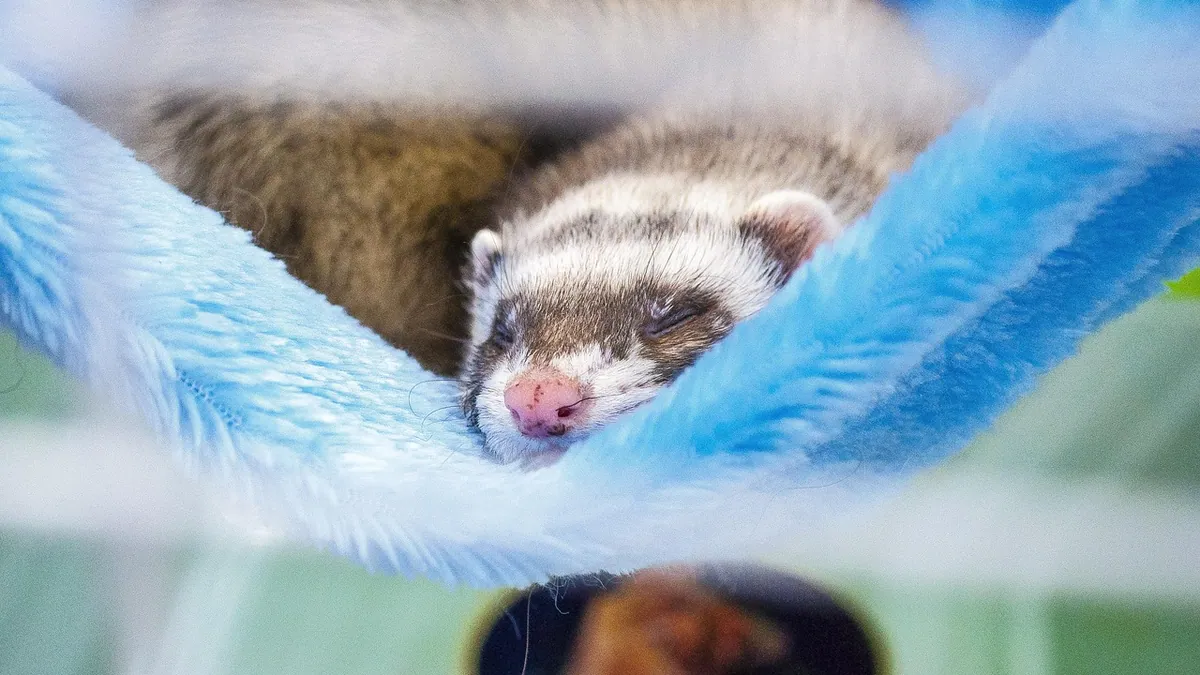
If you are asking how to tell if my ferret has a blockage, the earliest clues are usually a ferret that stops eating, stops passing stool, and starts vomiting or retching. Ferrets hide illness until they are very sick, so these signs often mean the problem is already advanced [1]. This article is educational and is not a substitute for veterinary diagnosis or treatment.
Quick Answer
- A ferret with an intestinal blockage typically stops eating and stops defecating, and may cough, choke, or vomit as the disease advances [1].
- Vomiting or diarrhea lasting more than 24 hours needs a veterinary visit because ferrets dehydrate and weaken quickly [1].
- Any ferret that is lethargic or has a sudden behavior change should be seen by a veterinarian [1].
- Suspected blockages are same-day emergencies. Do not wait to see if your ferret passes the object on its own.
- Do not give human medications, laxatives, or home remedies. Your veterinarian will decide on treatment, and any drug dose is calculated from your ferret's weight and health.
What a Blockage Looks Like and What Is Normal
A gastrointestinal foreign body is any object your ferret swallowed that cannot move through the digestive tract. Ferrets are curious, playful, and built to chew and dig, so they swallow things they should not. Common offenders include foam, rubber, sponge, fabric, hair ties, earplugs, small toy parts, and pieces of bedding.
The classic picture of a blockage is a ferret that was fine yesterday and today wants nothing to do with food. Many owners notice the litter box first. A ferret with a blockage stops defecating, or produces only tiny, stringy, or mucus-covered stools [1]. Vomiting may follow, and some ferrets make choking or coughing sounds that owners mistake for a hairball or a cold [1].
Normal ferret digestion is fast and predictable. A healthy ferret eats frequently, drinks, plays in short bursts, and passes stool several times a day. Ferret stool is normally small, tubular, and brown. An occasional soft or irregular stool is usually not a problem [1]. The pattern that matters is a change from your ferret's normal routine that lasts more than a few hours.
Because ferrets hide signs of illness or discomfort until the illness is advanced, a sick ferret can rapidly become critically ill [1]. That is why a ferret that seems "a little off" deserves a call to your veterinarian the same day.
Main Causes of a Ferret Blockage and Other Reasons a Ferret Stops Pooping
Not every ferret that stops eating or pooping has a swallowed object. Gastrointestinal disease in ferrets is common and can be noninfectious or infectious, and the clinical signs are often nonspecific, including lethargy, anorexia, vomiting, diarrhea, and melena (dark, tarry stool) [2]. A detailed history, physical examination, and a systematic diagnostic approach are the keys to a correct diagnosis [2].
The table below compares the most likely causes and how quickly each one needs attention.
| Cause | Typical clues | How urgent |
|---|---|---|
| Gastrointestinal foreign body (blockage) | Sudden loss of appetite, no stool, vomiting, retching, coughing or choking sounds, known or suspected access to foam, rubber, fabric, or small objects [1] | Emergency now. Same-day veterinary care. |
| Esophageal foreign body or stricture | Regurgitation, vomiting, trouble swallowing, signs of esophagitis, sometimes a history of recent surgery to remove a foreign body [3] | Emergency now. |
| Infectious or inflammatory gastrointestinal disease | Lethargy, anorexia, vomiting, diarrhea, dark tarry stool, often vague and gradual [2] | Same-day to urgent, depending on severity. |
| Cholecystitis (gallbladder inflammation) | Nonspecific signs, sometimes yellowing of the skin or eyes, abnormal bile duct and gallbladder findings on ultrasound [4] | Urgent. Needs imaging and lab work. |
| Insulinoma | Weight loss, weakness, dragging of the hind legs, sometimes seizures [1] | Emergency if weak or seizuring. See Ferret Insulinoma Signs. |
| Urinary or ureteral stones | Straining to urinate and defecate, blood in stool, rectal prolapse, anemia, elevated creatinine [5] | Emergency now. |
A ferret that ate something is not always a surgical case, but you cannot tell from the outside. Some objects pass. Others lodge in the esophagus, stomach, or intestine and cause damage, dehydration, and tissue injury within hours to days [1][3]. The only way to know is an examination and imaging.
Red Flags That Make This an Emergency
Call your veterinarian or an emergency clinic right away if you see any of the following.
- Vomiting or diarrhea for more than 24 hours [1]
- No stool for 12 to 24 hours, especially with vomiting or no appetite [1]
- Repeated retching, choking, or coughing sounds [1]
- A ferret that is lethargic, weak, or has a sudden behavior change [1]
- Bloody droppings or dark, tarry droppings [1]
- A body temperature above 105°F (40.5°C), burns, or frostbite [1]
- Straining to urinate or defecate, or a rectal prolapse [5]
- Dragging of the hind legs, collapse, or seizures, which can point to low blood sugar from an insulinoma [1]
Some of these signs overlap with other emergencies. A ferret that is straining in the litter box may have a urinary stone instead of a gut blockage, and both are emergencies [5]. A ferret that is weak and wobbly may have an insulinoma instead of a blockage [1]. You do not need to sort this out at home. Your veterinarian will.
What You Can Safely Do at Home While You Wait
Your main job is to get your ferret to the veterinarian quickly and avoid making things worse.
- Remove access to the suspected object. If you know or suspect what your ferret ate, put it out of reach and take a photo or bring a sample with you. Your veterinarian will want to know the material, size, and how long ago it happened.
- Do not force food or water. A ferret with a possible blockage may vomit and aspirate if you push food. Offer nothing by mouth unless your veterinarian tells you to.
- Do not give human medications. Never give laxatives, anti-nausea drugs, pain relievers, or hairball remedies. Ferret drug doses are calculated by the veterinarian from your pet's weight and health, and some human medicines are toxic to ferrets.
- Keep your ferret warm and quiet. Use a small carrier with soft bedding. Avoid handling that stresses the abdomen.
- Note the timeline. Write down when your ferret last ate, last passed stool, and when vomiting started. This history helps your veterinarian decide how urgent the case is [2].
- Call ahead. Tell the clinic you suspect a blockage. Emergency clinics can prepare for a ferret that may need imaging or surgery.
If your ferret is unresponsive, having trouble breathing, or seizuring, go to the nearest emergency hospital now. Do not wait for a call back.
What Your Veterinarian Will Check and Test
Your veterinarian will start with a full history and physical examination. They will ask about diet, recent access to foreign objects, and any change in stool or appetite [2]. They will feel your ferret's abdomen for a firm mass, gas-filled loops of bowel, or pain. They will check hydration, gum color, heart rate, and body temperature.
Next comes imaging. Radiographs (X-rays) and ultrasound are the standard tools for looking at the ferret gastrointestinal tract [2]. Some foreign bodies show up clearly on X-rays. Others, like foam or fabric, may not, which is why ultrasound and contrast studies are sometimes needed. In one report of three ferrets with esophageal foreign bodies, veterinarians used esophagoscopy, barium-contrast esophagography, or both to find the problem and assess the damage to the esophagus [3].
Blood work and urinalysis help your veterinarian assess dehydration, organ function, and blood sugar. These tests also help rule out other causes of the same signs, such as insulinoma or kidney disease [1][6]. If your ferret is older, your veterinarian may also consider chronic gastrointestinal disease and cancers, which are common in ferrets over 3 years of age [6].
Treatment depends on what is found. Some esophageal foreign bodies can be removed with an endoscope [3]. Others require surgery. Esophageal stricture, a narrowing that can form after a foreign body or surgery, may be treated with endoscopic balloon dilation and sometimes a stent [3]. Your veterinarian will discuss the options, risks, and costs for your ferret's specific case.
Preventing the Next Blockage
Prevention is mostly about controlling what your ferret can reach. Ferrets are natural chewers and diggers, so the safest home is one where small swallowable items never touch the floor.
- Ferret-proof room by room. Get down on the floor and look for foam, rubber, sponge, fabric scraps, hair ties, earplugs, and small toy parts. Our guide to Ferret-Proofing Your Home walks through the common trouble spots.
- Choose safe bedding and toys. Avoid loose foam, shredded rubber, and toys with small detachable pieces. Supervise play with any new toy.
- Keep trash and laundry closed. Bathroom trash, kitchen scraps, and laundry baskets are common sources of swallowed objects.
- Feed a ferret-appropriate diet. A hard kibble diet is normal for most ferrets, and two of three ferrets in one report returned to a regular hard kibble diet after treatment for esophageal foreign bodies [3]. Ask your veterinarian what diet fits your ferret.
- Schedule regular checkups. Ferrets are considered geriatric at 3 years of age, and twice-yearly physical examinations with additional testing can find problems early and lead to prompt treatment [6]. Bloodwork, urinalysis, dental examination, and imaging including radiographs and ultrasonography should be performed at least annually [6].
- Watch the litter box daily. Knowing your ferret's normal stool pattern is the fastest way to spot a blockage early.
If you also have dogs at home, parasite and infectious disease questions come up often. Our articles on How Do I Know If My Dog's Got Worms and How Do I Know If My Dog Has Rabies cover those topics, though they do not apply to ferret blockages.
Limitations and When to Contact a Veterinarian
This article cannot tell you whether your specific ferret has a blockage. Only a veterinarian who examines your ferret and reviews imaging can do that. Individual cases need a veterinarian, and the timing matters as much as the diagnosis.
Contact your veterinarian the same day if your ferret:
- Has vomited more than once or has had diarrhea for more than 24 hours [1]
- Has not passed stool in 12 to 24 hours
- Is eating less or refusing food
- Seems lethargic or has any sudden behavior change [1]
- Has dark, tarry, or bloody droppings [1]
Go to an emergency clinic now if your ferret:
- Is vomiting repeatedly and cannot keep anything down
- Is weak, collapsing, or seizuring [1]
- Is straining to urinate or defecate, or has a rectal prolapse [5]
- Has a body temperature above 105°F (40.5°C) [1]
- Is having trouble breathing
Schedule a routine visit if your ferret is stable but you have noticed a gradual change in appetite, stool, or energy. Ferrets over 3 years old benefit from twice-yearly examinations and at least annual bloodwork, urinalysis, and imaging [6]. Chronic gastrointestinal disease and cancers become more common with age, and early detection gives you more options [6].
Frequently Asked Questions
How long can a ferret live with a blockage?
Not long. A ferret with an intestinal blockage stops eating and defecating, and may cough, choke, or vomit as the disease advances [1]. Dehydration and weakness can set in quickly. Treat this as a same-day emergency, not something to watch over a weekend.
What should I do if my ferret ate something?
Call your veterinarian or an emergency clinic immediately. Bring the object or a photo of it, and tell them the size, material, and how long ago your ferret swallowed it. Do not induce vomiting or give any medication at home.
Can a ferret pass a blockage on its own?
Sometimes a small object passes, but you cannot predict which ones will. Objects that lodge in the esophagus or intestine can cause inflammation, stricture, or tissue damage [3]. Only imaging and a veterinary examination can show whether your ferret needs endoscopic removal or surgery.
Why is my ferret vomiting but still pooping?
Vomiting with normal stool can happen early in a blockage, or it can point to other problems such as gastrointestinal infection, inflammation, or an esophageal issue [3][2]. Any ferret with vomiting that lasts more than 24 hours should be evaluated by a veterinarian [1].
Is a ferret blockage always caused by a swallowed object?
No. Ferrets commonly present with gastrointestinal disease from both noninfectious and infectious causes, and the signs can look the same as a blockage [2]. Other conditions, including gallbladder inflammation and urinary stones, can also cause vomiting, straining, or appetite loss [4][5]. Your veterinarian will use history, examination, and testing to sort out the cause.
Related Articles
- Ferret-Proofing Your Home
- Ferret Insulinoma Signs
- How to Tell If Your Ferret Is Sick: Early Warning Signs
- Signs Your Ferret Is Dying: What to Expect and Do
- Why Is My Ferret Drooling? Causes and When to Worry
References
- Emergencies of Ferrets - All Other Pets. Merck Veterinary Manual.
- Ferret Gastroenterology. The veterinary clinics of North America. Exotic animal practice, 2025.
- Diagnosis and treatment of esophageal foreign body or stricture in three ferrets (Mustela putorius furo). Journal of the American Veterinary Medical Association, 2017.
- Domestic ferrets (Mustela putorius furo) with cholecystitis commonly show hyperbilirubinemia and common bile duct dilation, gallbladder sludge, and gallbladder wall thickening on ultrasound. American journal of veterinary research, 2025.
- Ureteroneocystostomy for treatment of struvite urolithiasis in a ferret. Journal of the American Veterinary Medical Association, 2023.
- Geriatric Ferrets. The veterinary clinics of North America. Exotic animal practice, 2020.