Keratin Buildup on Dog Skin and Paws: Causes and Treatment
By Dr. Zubair Khalid, DVM, MS, PhD ·
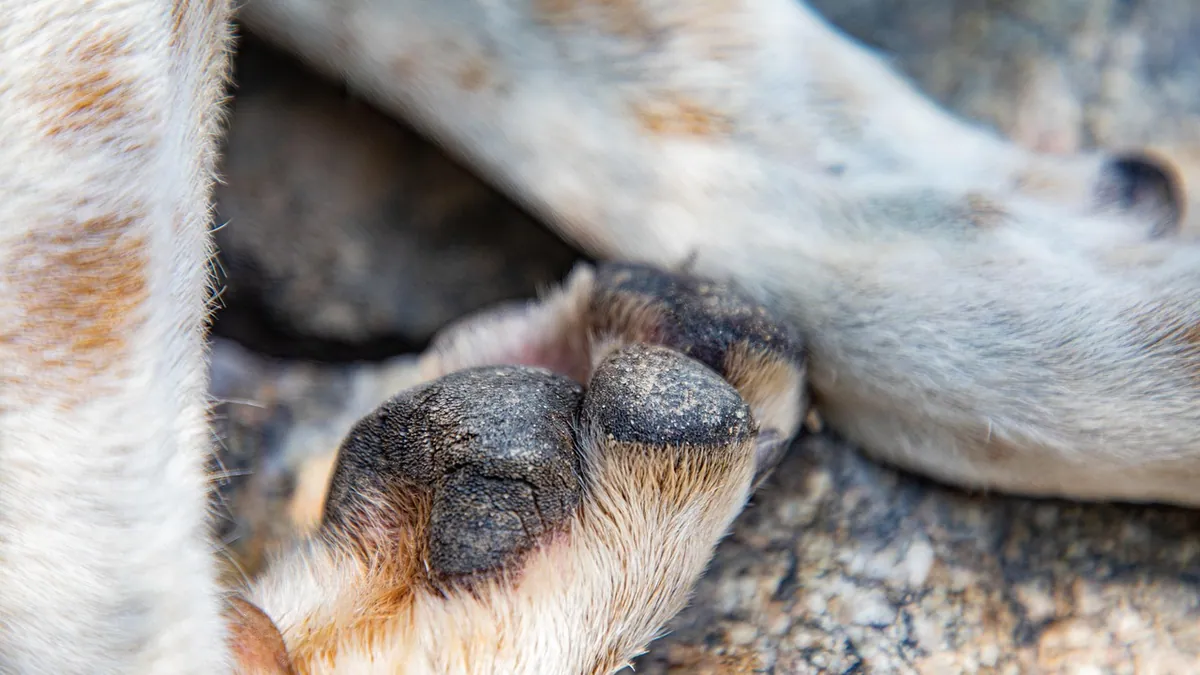
Keratin is the protein that builds your dog's outer skin, hair, and nails. When the body makes too much of it or sheds it poorly, you see thickened, crusty, or lumpy areas on the skin, paw pads, or nose. Most of these changes are cosmetic and manageable at home, but some growths need a veterinarian to check them. This article is educational and is not a substitute for veterinary diagnosis or treatment.
Quick Answer
- Keratin is a normal structural protein. Buildup happens when skin cells renew faster than they shed, which can be inherited, caused by pressure or trauma, or linked to another skin disease [1][2].
- Rough, cracked paw pads (paw pad hyperkeratosis) and crusty noses (nasal hyperkeratosis) are the two most common spots owners notice.
- A small, firm, horn-like lump on the skin is often a harmless keratin bump, but any fast-growing, bleeding, or changing growth should be tested.
- Daily or twice-daily softening balms can reduce crusts and discomfort, and one study showed measurable improvement in nasal hyperkeratosis over 60 days [3].
- Never cut or pick off thick keratin at home. You can cause bleeding and infection.
What Is Keratin Buildup on Dog Skin?
Keratin is the main protein in the outermost skin layer, the epidermis. Skin cells called keratinocytes are made near the base of the epidermis and move upward as they mature. By the time they reach the surface, they form a compact layer of dead, keratin-rich cells that holds in water and salts and keeps out irritants and germs [1]. This top layer sheds and replaces itself continuously.
Keratin buildup means that process is out of balance. Either the skin is producing new cells too fast, or old cells are not shedding normally, or both. The result is a thicker, harder surface than usual. Your veterinarian may call this hyperkeratosis. It is a description, not a single disease. Many different conditions can produce it [2].
The three patterns owners see most
Skin lumps. Small, firm, raised bumps that feel like a piece of hard wax or a tiny horn. They are usually the color of your dog's skin or slightly darker.
Paw pad overgrowth. The pads become rough, cracked, or covered in feathery flaps of hard tissue. This is called paw pad hyperkeratosis [4].
Nasal keratosis. The top of the nose becomes dry, crusty, and sometimes fissured. This is nasal hyperkeratosis, and in its uncomplicated form it is often considered a cosmetic issue [3].
Signs Owners Notice
Keratin problems are usually visible before they cause trouble. Watch for:
- Hard, rough, or cracked paw pads, sometimes with flaps of tissue at the edges
- A dry, crusty, or scaly nose, especially along the top and sides
- Small firm lumps on the body that do not hurt when touched
- Thickened, leathery skin in areas of pressure or friction
- Limping, reluctance to walk on hot or rough ground, or licking at the paws
- Crusts that crack and bleed, or a bad smell from the affected area
Paw discomfort often shows up as licking. If your dog is constantly working at the feet, see Dog Licking Paws Ointment for practical ways to manage that habit while you sort out the cause.
Causes and Risk Factors
Keratin buildup has many possible drivers. Some are harmless. Others need treatment.
Inherited cornification disorders
Some dogs are born with flaws in the proteins, enzymes, or lipids that build the outer skin layer. These are called cornification disorders, and they range from mild to severe [2]. Researchers have identified specific gene variants behind some cases. In one Labrador Retriever with thickened pads on all four feet, whole genome sequencing found a new variant in the GJB6 gene, which was not present in either parent [4]. A separate condition called phloiokeratosis causes tree bark-like skin lesions and is linked to variants in the SUV39H1 gene, inherited as an X-chromosomal semi-dominant trait [5].
Pressure, friction, and trauma
Repeated wear on hard surfaces can thicken paw pads over time. This is the body's normal response to mechanical stress. It can also be acquired after repeated trauma, infection, cancer, or inflammatory skin disease [4].
Zinc-responsive dermatosis
A form of parakeratotic hyperkeratosis has been described in French Bulldogs, with crusting on the ear flaps and sometimes the nasal bridge, scrotum, or tail. In one report, 8 of 12 dogs that received oral zinc supplementation improved or fully resolved, including 4 that responded to zinc alone [6]. This is a specific diagnosis, so do not start zinc on your own.
Other skin disease
Anything that inflames the skin can change how it renews. Dermatitis is the general term for skin inflammation, and it can come from irritants, burns, allergens, trauma, or infection (bacterial, viral, parasitic, or fungal) [7]. The skin's response shows up as itching, scaling, redness, thickening, pigment change, odor, oiliness, or hair loss [7]. If your dog has redness and itching along with the crusts, a rash may be the real problem. See Dog Skin Rash on Paws: Causes and Treatment.
Age and genetics
Cell replacement rate is influenced by nutrition, hormones, tissue factors, immune cells in the skin, and genetics [1]. Older dogs and certain breeds tend to show more of it. Some drugs and ongoing inflammation also alter normal cell growth and keratinization [1].
| Pattern | Typical look | Common drivers | First step |
|---|---|---|---|
| Skin lumps | Firm, small, horn-like bumps | Benign keratin cysts, age, friction | Monitor size, photograph monthly |
| Paw pad overgrowth | Rough, cracked, feathered pads | Genetics, hard surfaces, trauma, infection | Soften pads, check for limping |
| Nasal keratosis | Dry, crusty, fissured nose | Idiopathic or familial | Twice-daily emollient balm |
| Widespread crusting | Scaly, thickened skin with odor | Dermatitis, zinc-responsive disease, cornification disorder | Veterinary exam and testing |
How It Is Diagnosed
Your veterinarian starts with a history and a hands-on exam. Useful questions include when you first noticed the change, whether it is spreading, and whether your dog seems uncomfortable.
For a skin lump, the usual first test is a fine needle aspirate. A small needle collects cells, which are examined under a microscope. This is quick and usually well tolerated. If the result is unclear, or if the lump is growing or unusual, your veterinarian may recommend a biopsy, which removes a piece of tissue for lab analysis.
For paw pad or nasal changes, diagnosis focuses on finding an underlying cause. Skin scrapings can rule out mites. Tape preparations and cytology can look for bacteria or yeast. Blood work may be needed if a body-wide disease is suspected, since dermatitis can be associated with internal disease [7].
If a cornification disorder is suspected, your veterinarian may discuss genetic testing. Several specific gene variants are now known to cause these conditions in dogs [4][5]. Testing is not available for every form, and a normal result does not rule out the problem.
Treatment Options
Treatment depends on what is causing the buildup. There is no single fix.
Softening and moisturizing at home
For paw pads and noses, emollient balms are the mainstay. In a 60-day study of dogs with familial or idiopathic nasal hyperkeratosis, a topical emollient balm applied twice daily significantly reduced a global dermatological score, with reductions of about 45% at day 30 and 55% at day 60 as rated by investigators, and about 54% and 62% as rated by owners [3]. The balm also improved dryness, thickening, and crusting [3].
Practical tips for home softening:
- Apply a pet-safe emollient balm or pad cream to clean, dry skin.
- Use it twice daily at first, then taper to once daily or every other day as the skin improves.
- Wipe off excess so your dog does not lick it all away.
- Keep your dog off hot pavement and rough gravel while the pads heal.
- Do not soak the paws for long periods unless your veterinarian tells you to.
Treating the underlying cause
If infection is present, your veterinarian will treat it. Topical products like antibiotic ointments, corticosteroid preparations, medicated shampoos, and topical insecticides are common tools [8]. Local ointments, gels, and sprays should be used sparingly so your dog does not lick off excessive amounts, and you should follow your veterinarian's instructions closely [8].
Medicated shampoos are often used for specific skin conditions. Wash your dog with a cleansing shampoo and rinse well first, because medicated shampoos often do not lather or cleanse well on their own and work best on a clean coat [8].
If zinc-responsive dermatosis is diagnosed, your veterinarian may prescribe oral zinc. In the French Bulldog report, most dogs that received zinc improved, and some responded to zinc alone [6]. The dose and form matter, so let your veterinarian set it.
Support for the skin barrier
Ceramides are fats that help organize the outer skin layer. In laboratory and dog studies, a specific ceramide complex improved the structure of the outer skin layer and increased markers of barrier formation [9]. This is a promising area, but it is not a stand-alone cure for every keratin problem. Ask your veterinarian whether a barrier-supporting product fits your dog's situation.
What not to do
Do not cut, peel, or file off thick keratin. You can cause bleeding, pain, and infection. Do not use human callus removers or medicated patches on your dog. Do not assume a lump is harmless just because it has been there a while.
Recovery, Outlook, and Long-Term Management
The outlook depends on the cause.
Inherited cornification disorders are usually managed, not cured. You will likely be caring for the skin long term. Many dogs do well with consistent moisturizing and regular veterinary checkups [2].
Nasal hyperkeratosis often improves steadily with daily balm use, and the study above showed continued gains through 60 days [3]. Some dogs need ongoing maintenance to keep the nose comfortable.
Paw pad hyperkeratosis may wax and wane with the seasons and with how much time your dog spends on hard surfaces. Softening, padding, and booties during rough weather can help.
Zinc-responsive cases can improve substantially with supplementation, and some resolve completely [6]. Your veterinarian will decide whether the zinc needs to continue long term.
Skin lumps that are confirmed benign usually just need monitoring. Take a photo with a ruler next to the lump every month so you can track changes objectively.
If your dog has sensitive or reactive skin on top of the keratin problem, barrier care and gentle products matter more. See Sensitive Skin Treatment For Dogs and Dog With Sensitive Skin.
Prevention
You cannot prevent a genetic condition. You can reduce triggers and catch problems early.
- Keep paw pads conditioned during dry, cold, or hot months.
- Avoid prolonged walking on hot asphalt, salted sidewalks, and sharp gravel.
- Dry the paws and the skin folds after baths, swimming, or wet walks.
- Feed a complete and balanced diet. Nutrition affects how fast skin cells turn over [1].
- Treat skin infections and allergies promptly so chronic inflammation does not thicken the skin [7].
- Check your dog's body monthly. Run your hands over the paws, nose, ears, and trunk.
- Ask your veterinarian about breed-specific risks if you have a French Bulldog, Labrador Retriever, or another breed with known cornification issues [4][6].
Limitations and When to Contact a Veterinarian
Most keratin buildup is manageable, but you cannot tell a harmless lump from a serious one by look or feel alone. Individual cases need a veterinarian to examine and, when needed, test.
Contact an emergency clinic now if:
- A growth is bleeding heavily and will not stop
- Your dog is struggling to breathe, collapsing, or seems suddenly very ill
- A paw or nose lesion is deeply infected with swelling, pus, or a foul smell and your dog is lame
Call for a same-day or next-day appointment if:
- A lump has grown quickly over days to weeks
- A lump changes color, ulcerates, or starts to bleed on its own
- Your dog is limping, refusing to walk, or licking a paw constantly
- The nose or pads are cracked and painful
- You see new lumps appearing in several places at once
Schedule a routine visit if:
- A lump has been stable for months but you want it checked
- Home softening has not helped after a few weeks
- You want guidance on the right balm, shampoo, or supplement for your dog
Frequently Asked Questions
Are keratin lumps on dogs dangerous?
Most small, firm, slow-growing keratin bumps are benign, but no one can confirm that without testing. Your veterinarian can perform a fine needle aspirate in the exam room to check the cells. Any lump that grows fast, bleeds, or changes appearance should be sampled right away.
Can I cut off the thick skin on my dog's paw pads?
No. Cutting or peeling thick pad tissue can cause bleeding, pain, and infection. Softening balms, padded surfaces, and booties are safer ways to manage the buildup. If the pads are severely overgrown, your veterinarian can trim them safely.
How long does it take for a crusty nose to improve with balm?
Many dogs show visible improvement within a month of twice-daily use, with continued gains over the next month. One study found significant score reductions at both 30 and 60 days of treatment. If the nose is not improving after several weeks, ask your veterinarian to recheck for an underlying cause.
Is keratin buildup contagious to my other pets?
No. Keratin buildup is not an infection, so it does not spread between dogs. However, some of the conditions that cause it, such as certain skin infections or parasites, can be contagious. Your veterinarian can tell you whether your dog needs treatment to protect other pets.
Should I give my dog zinc supplements for crusty skin?
Only if your veterinarian diagnoses a zinc-responsive condition and sets the dose. Zinc can be helpful for specific cases, but too much zinc is harmful. Never start a supplement based on appearance alone.
Does diet affect keratin buildup?
Nutrition is one of several factors that influence how quickly skin cells are replaced, along with hormones, immune cells, and genetics. A complete and balanced diet supports normal skin renewal, but diet alone will not fix an inherited cornification disorder. Ask your veterinarian whether a diet change is worth trying for your dog.
Related Articles
- Dog Skin Rash on Paws: Causes and Treatment
- Skin Growths On Dogs: Comprehensive Veterinary Reference Guide
- Dog Licking Paws Ointment
- Sensitive Skin Treatment For Dogs
- Dog With Sensitive Skin
- Dog Skin Bumps: Comprehensive Veterinary Reference Guide
- Blackheads on Dogs: Paws, Belly, Nipples and Skin
- Dog Paw Zit or Pimple: Causes and When to Worry
- Bump on Your Dog's Paw or Paw Pad: Causes and Care
References
- Structure of the Skin in Dogs - Dog Owners. Merck Veterinary Manual.
- Ichthyosis and hereditary cornification disorders in dogs. Veterinary dermatology, 2021.
- Evaluation of the Interest in and Tolerance of a Topical Emollient in the Management of Canine Nasal Hyperkeratosis: An Open-Label, Prospective, Uncontrolled Pilot Study. Veterinary sciences, 2025.
- GJB6 missense variant in a Labrador Retriever with paw pad hyperkeratosis. Animal genetics, 2026.
- Phloiokeratosis is a new ichthyosiform hyperkeratotic cornification disorder in dogs with SUV39H1 variants. Scientific reports, 2026.
- Pinnal Parakeratotic Hyperkeratosis Consistent With Zinc-Responsive Dermatosis in 16 French Bulldogs. Veterinary dermatology, 2026.
- Dermatitis and Dermatologic Problems in Dogs - Dog Owners. Merck Veterinary Manual.
- Treatment of Skin Disorders in Dogs - Dog Owners. Merck Veterinary Manual.
- Optimization of a Canine-Specific Ceramide Complex and Evaluation of Its Effects on In Vitro and In Vivo Canine Skin. Animals : an open access journal from MDPI, 2026.