Dog Paw Zit or Pimple: Causes and When to Worry
By Dr. Zubair Khalid, DVM, MS, PhD ·
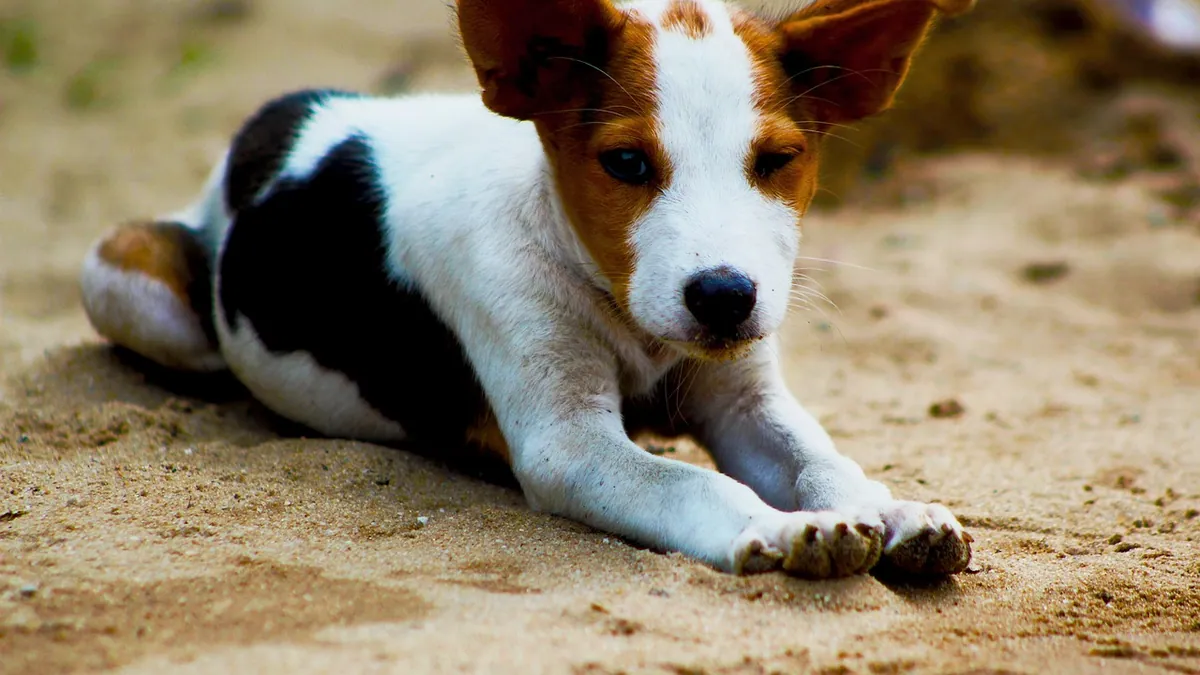
A dog paw zit is a small raised bump on the paw, and most owners notice it because their dog starts licking that foot more than usual. In many cases it turns out to be a hair follicle infection, a cyst, or a pocket of pus from a foreign body, and some of these need veterinary care to heal. This article is educational and is not a substitute for veterinary diagnosis or treatment.
Quick Answer
- A single small bump that is not painful, not growing, and not making your dog limp can often be watched for a few days.
- Any bump that is red, swollen, draining pus, or bleeding is more likely to be an infection or abscess and needs a vet visit.
- Licking is the engine that keeps paw bumps going, so stopping the licking matters as much as treating the bump.
- Never squeeze, pop, or lance a bump on your dog's paw at home.
- See a vet the same day if your dog is limping badly, has a fever, or has swelling that is spreading up the leg.
What a Dog Paw Zit Looks Like and What Is Normal
Paw bumps show up in a few predictable places. They can sit on the top of the paw, between the toes (the interdigital space), along the pad edges, or right at the nail bed. Some look like a tiny pimple with a white or dark center. Others look like a firm pea under the skin, a soft fluid-filled swelling, or a crusty scab that keeps coming back.
Normal paw skin is the same color as the rest of your dog's coat or slightly darker, and it should be dry and intact. Mild pinkness after a long walk on hot pavement or rough ground can be normal for a day. What is not normal is a bump that stays for more than a week, gets bigger, or changes from a firm lump to a soft, squishy one.
Dogs with skin disease often show a cluster of signs instead of one. Dermatitis is a general term for skin inflammation, and it can appear as itching, scaling, redness, thickening of the skin, darkening, odor, oily coat, or hair loss [1]. On a paw, that same process can produce a bump that looks like a zit.
Common Causes of a Dog Paw Zit or Pimple
Folliculitis and Bacterial Pyoderma
Folliculitis is inflammation of the hair follicles, and on the paw it can look exactly like a pimple. Bacteria that normally live on the skin can overgrow when the skin barrier is damaged by licking, moisture, or allergies. In one review of dogs with hyperadrenocorticism (a hormonal disease) seen by a dermatology referral practice, superficial bacterial pyoderma was found in 22 of 30 dogs, or 73%, and pododermatitis (paw skin inflammation) was an uncommon but reported finding [2]. That tells you two things. Paw infections often travel with a body-wide skin problem, and they are worth investigating instead of just treating the surface.
Allergies and Allergic Pododermatitis
Allergic skin disease is one of the most common reasons dogs see a dermatologist, and the paws are a favorite target [3]. Itchy paws lead to licking, licking leads to red swollen skin, and swollen skin traps moisture and bacteria. Airborne allergy diagnosis is based on age, breed, signs, and history instead of a single test, and other causes must be ruled out first [4]. If your dog has itchy paws, you may find useful detail in Dog Paw Allergies: Signs, Causes, and Treatment and Dog Skin Rash on Paws: Causes and Treatment.
Interdigital Furuncles (Boils Between the Toes)
A furuncle is a deep infection around a hair follicle, and between the toes it can swell into a painful red boil. These are common in short-coated breeds with webbed feet and in dogs with allergies. They often start as a small bump and become a draining sore. Flooring may play a role in some environments. In a study of 373 dogs in commercial breeding facilities, a veterinary dermatologist identified wet paws in 12.6% of dogs, calluses in 11.26%, redness in 6.97%, and matted paw fur in 6.17%, and pododermatitis and interdigital furuncles were among the conditions found [5].
Dog Paw Abscess and Foreign Bodies
A dog paw abscess is a walled-off pocket of pus. The usual story is a small puncture from a thorn, splinter, grass awn, piece of glass, or gravel. The wound seals over, bacteria multiply, and a few days later the paw is swollen, hot, and painful. Some abscesses burst on their own and drain thick yellow or bloody fluid. Others need to be opened and flushed by a veterinarian.
Dog Paw Cyst
A cyst is a closed sac under the skin. Epidermoid cysts are non-cancerous lesions lined with keratinizing skin cells and filled with keratin, and the dermal form is common in dogs [6]. A cyst on the paw usually feels like a firm, round, movable lump. It may sit there quietly for months, or it may become inflamed and look like a zit. A rare intraosseous epidermoid cyst inside the bone of a toe has been reported in a dog with chronic pododermatitis, and the report stresses that these must be told apart from bone tumors, which often need more extensive surgery [6]. That is a good reason not to assume a lump on a toe is harmless.
Yeast Overgrowth
Malassezia pachydermatis is a yeast that normally lives on dog skin, but it can overgrow and act as an opportunistic pathogen, causing dermatitis and paw inflammation [7]. In a study of the interdigital fold, samples from dogs with pododermatitis before treatment had higher yeast cell counts, more colony-forming units, and more genetic copies of the yeast than samples from healthy dogs [7]. Yeast infections tend to be greasy, musty-smelling, and itchy, and they often come with brownish discharge in the nail folds.
Other Lumps That Can Mimic a Zit
Warts, histiocytomas, mast cell tumors, and other skin growths can appear on a paw. A callus from lying on hard flooring is another possibility, and calluses were found in 11.26% of dogs in the breeding facility study [5]. Because paws are hard to examine closely, any lump that does not resolve deserves a professional look.
| Cause | Typical clues | How urgent |
|---|---|---|
| Folliculitis or bacterial pyoderma | Small red pimples, crusts, odor, often several spots | Routine visit, sooner if spreading |
| Allergic pododermatitis | Itchy paws, licking, redness between toes, seasonal or year-round | Routine visit with a plan for itch control |
| Interdigital furuncle | Painful red boil between toes, may drain | Same day to a few days |
| Foreign body abscess | Sudden swelling, heat, pain, limping, pus | Same day |
| Cyst | Firm round lump, slow growing, not painful at first | Routine visit to confirm the type |
| Yeast overgrowth | Greasy, musty smell, brown discharge, itching | Routine visit |
| Growth or tumor | Firm lump, changing size, bleeding, ulcerated | Same day to a few days |
Red Flags That Make a Paw Bump an Emergency
Some paw problems cannot wait. Go to an emergency clinic now if you see any of these.
- Swelling that spreads above the paw onto the leg, or red streaks moving up the limb.
- A paw that is hot, extremely painful, or that your dog will not let you touch at all.
- Sudden severe limping or a paw held completely off the ground.
- Bleeding that does not stop after a few minutes of gentle pressure.
- A deep cut, a visible foreign object stuck in the paw, or a nail torn away from the bed.
- Fever, shaking, vomiting, or a dog that seems dull and not interested in food.
- A lump that has doubled in size in a few days, or one that is black, ulcerated, or oozing.
If you are unsure whether a toxin or a wound needs urgent care, call your veterinarian or a pet poison hotline right away. Do not wait to see if it improves overnight.
What You Can Safely Do at Home While You Wait
Home care is about comfort and preventing more damage, not about curing the bump.
- Stop the licking. An Elizabethan collar or a soft recovery cone is the single most useful thing you can do. Licking keeps bacteria in the skin and turns a small pimple into a big problem. For more on this cycle, see Dog Licking Paws Cause and Dog Licking Paw Causing Infection.
- Keep the paw clean and dry. Rinse with plain lukewarm water after walks, then pat dry, including between the toes. Moisture between the toes feeds yeast and bacteria [5][7].
- Check for foreign bodies in good light. Look between the toes, along the pad edges, and around each nail. If you can see a splinter and it lifts out easily with tweezers, remove it. If it is embedded, leave it and call your vet.
- Use a clean sock or bootie outdoors. This keeps dirt out and keeps your dog from licking. Change it if it gets wet.
- Do not squeeze, pop, or lance anything. You can push infection deeper and cause serious damage.
- Do not apply human acne creams, hydrogen peroxide, rubbing alcohol, or essential oils. Dogs lick these off and can get sick.
- Do not give any medication unless your veterinarian prescribed it. Your vet calculates the dose from your dog's weight and health, and human pain relievers can be toxic to dogs.
If your dog is limping, keep walks short and on soft ground. If your dog is licking constantly despite a cone, call your vet sooner.
What Your Veterinarian Will Check and Test
Your vet will start with the history. When did you first notice the bump? Is your dog licking, limping, or chewing? Has this happened before? Any change in food, bedding, or flooring? Then comes the hands-on exam of all four paws, not just the sore one, plus the nails, pads, and the skin between the toes.
Common tests include:
- Cytology. A small sample is pressed onto a slide and examined under a microscope to look for bacteria and yeast. This is how conditions like Malassezia overgrowth are confirmed [7].
- Skin scraping or tape prep. These check for mites and surface debris.
- Culture and sensitivity. Used when the infection is deep, recurring, or not responding to treatment.
- Fine needle aspirate. Cells are pulled from a lump to see whether it is a cyst, inflammation, or a tumor. This is especially important for lumps on the toes, where cysts must be told apart from bone tumors [6].
- Imaging. X-rays help if a foreign body, bone involvement, or a deep abscess is suspected.
- Allergy workup. Because airborne allergy diagnosis relies on age, breed, signs, and history, your vet will rule out other causes first and may then discuss testing to identify allergens for immunotherapy [4].
- Blood work. If infections keep returning or your dog has other signs like increased drinking or a pot belly, your vet may check for underlying disease. In one case series, pruritus was the most common history finding in 26 of 30 dogs with hyperadrenocorticism, or 87%, and pyoderma was the most common exam finding [2].
Treatment depends on what is found. Options include medicated shampoos, sprays, or wipes, oral or topical antibiotics, antifungal therapy, and itch control. A newer topical spray containing hydroxymethoxyiodobenzyl glycolamide pelargonate, a TRPV1 channel antagonist, produced more than 50% improvement in itch and lesion scores in dogs with allergic pododermatitis over 28 days of twice-daily use [3]. Your veterinarian will decide whether a product like this fits your dog.
Preventing and Monitoring Paw Bumps
Prevention is mostly about the small daily habits that keep paw skin healthy.
- Dry the paws after every walk, bath, or swim. Wet paws were the most common finding in the breeding facility study at 12.6% [5].
- Trim the fur between the pads if it stays matted or damp. Matted paw fur was found in 6.17% of dogs in that same study [5].
- Check all four paws weekly. Run your fingers between the toes and press gently along the pads. You will catch most problems when they are small.
- Manage allergies with your vet. Uncontrolled itch means ongoing licking and ongoing infections [4][3].
- Keep nails at a healthy length and watch for ingrown nails.
- Consider flooring. Hard, abrasive, or constantly wet surfaces can irritate paws, and flooring substrate has been linked to paw abnormalities in kenneled dogs [5].
- Photograph any lump with a ruler or coin next to it. Compare weekly. A clear record helps your vet decide how worried to be.
If a bump is still there after two weeks, or if it comes back after treatment, it needs another look. Recurring paw infections often point to an underlying allergy, yeast problem, or hormonal disease instead of a one-time accident [7][2]. For dogs that lick nonstop, Dog Licking Paws Excessively: When to Worry and What to Do walks through the behavior and medical angles.
Limitations and When to Contact a Veterinarian
This article covers common patterns, but no article can tell you what a specific lump on your specific dog is. Only a veterinarian who can see, feel, and sample the bump can do that. Individual cases need a veterinarian.
Contact your veterinarian the same day if your dog is limping, has a swollen or hot paw, has pus or blood coming from the bump, or seems painful when the paw is touched. Go to an emergency clinic now if the swelling is spreading up the leg, if there is heavy bleeding, if a foreign object is deeply embedded, or if your dog has a fever, vomiting, or sudden collapse. Book a routine visit within a week or two for a small, stable, non-painful bump that is not bothering your dog, and sooner if it is growing or changing.
Frequently Asked Questions
Can I pop a dog paw zit?
No. Popping a bump on a paw pushes bacteria deeper into the tissue and can turn a small pimple into a serious abscess. It also hurts, and your dog may bite out of pain. Let your veterinarian decide whether a bump needs to be opened and drained.
Is a dog paw zit always an infection?
No. Bumps on paws can be folliculitis, cysts, calluses, warts, allergic reactions, or tumors. A cyst is a non-cancerous sac filled with keratin, and it can look very much like a pimple [6]. Because the causes range from harmless to serious, a bump that does not clear up should be examined.
Why does my dog keep getting pimples on the same paw?
Repeat bumps in one spot usually mean an ongoing trigger, such as allergies, yeast overgrowth, moisture between the toes, or a foreign body that was never removed. Yeast counts are higher in the interdigital folds of dogs with paw inflammation than in healthy dogs [7]. Your vet can sample the area to find the trigger instead of treating the surface again and again.
How long should I wait before calling the vet?
Call right away if your dog is limping, in pain, or has swelling or discharge. For a small bump with no other signs, a few days of keeping the paw clean and dry plus a cone to stop licking is reasonable. If it is still there after a week, or if it is growing at any point, book a visit.
Are paw bumps more common in certain dogs?
Yes. Dogs with allergies, short coats, webbed feet, or heavy body weight tend to have more paw problems, and dogs in wet or abrasive flooring environments show more paw abnormalities [5]. Age and sex were also linked to some paw findings in that study [5]. Breed and allergy history are part of how your vet builds the diagnosis [4].
Related Articles
- Dog Paw Allergies: Signs, Causes, and Treatment
- Dog Skin Rash on Paws: Causes and Treatment
- Dog Licking Paws Cause
- Dog Licking Paws Excessively: When to Worry and What to Do
- Dog Licking Paw Causing Infection
- Dog Paw Licking: When Is It a Problem?
- Bump on Your Dog's Paw or Paw Pad: Causes and Care
- Lump on Your Dog's Paw or Paw Pad
- Bump Between Your Dog's Toes: Causes and When to Worry
References
- Dermatitis and Dermatologic Problems in Dogs - Dog Owners. Merck Veterinary Manual.
- Retrospective Case Series of Patients with Hyperadrenocorticism Presenting to a Referral Dermatology Practice. Journal of the American Animal Hospital Association, 2025.
- Efficacy and tolerance of a novel topical TRPV-1 channel antagonist in dogs with allergic pododermatitis. Veterinary dermatology, 2023.
- Allergies in Dogs - Dog Owners. Merck Veterinary Manual.
- A cross-sectional study to investigate associations between flooring substrates and prevalence of limb and paw abnormalities of dogs housed in commercial breeding facilities. Frontiers in veterinary science, 2025.
- Intraosseous epidermoid cyst in the digit of an atopic dog with chronic pododermatitis: case report. Brazilian journal of veterinary medicine, 2026.
- Study of the variation of the Malassezia load in the interdigital fold of dogs with pododermatitis. Veterinary research communications, 2023.