Cat Paw Balm and Lotion: Safe Moisturizers for Dry Paws
By Dr. Zubair Khalid, DVM, MS, PhD ·
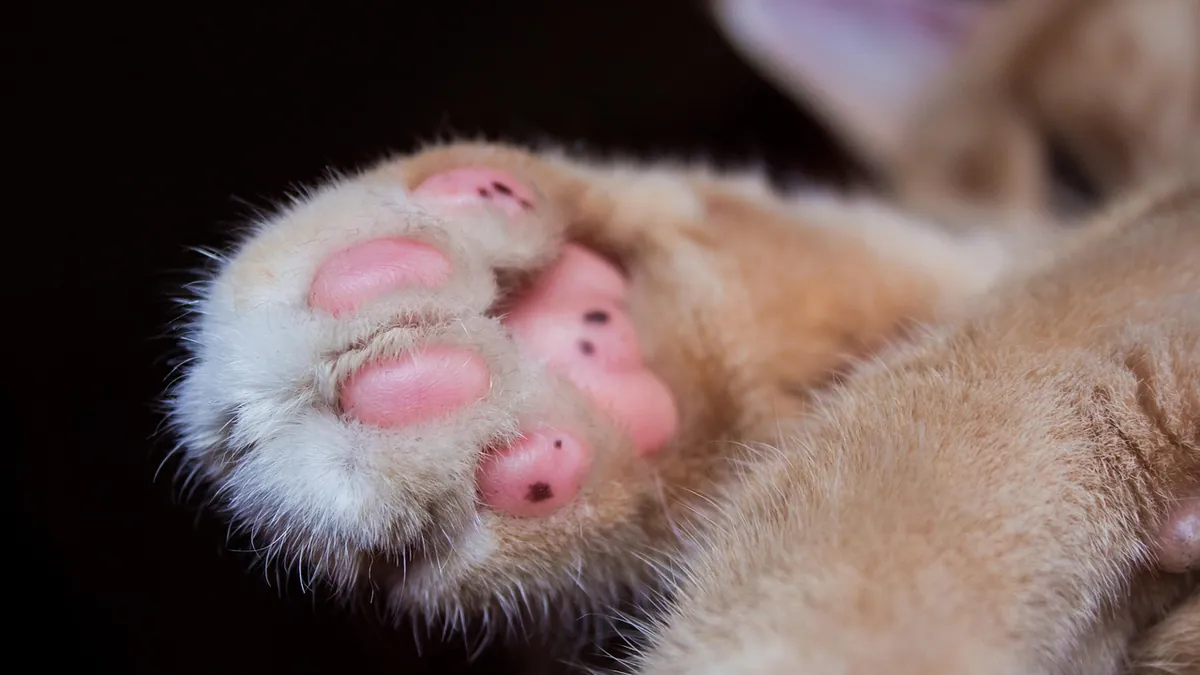
A cat paw balm can safely moisturize dry, cracked paw pads if you choose pet-safe ingredients and keep the product where your cat cannot lick it off in large amounts. Many human lotions, creams, and lip balms contain ingredients that are toxic to cats, so the product you reach for matters as much as how you apply it. This article is educational and is not a substitute for veterinary diagnosis or treatment.
Quick Answer
- Plain, food-grade oils and butters (coconut oil, shea butter, olive oil) are generally safe in small amounts if your cat licks a little off.
- Never use human lotions or lip balms that contain zinc oxide, essential oils (especially tea tree, eucalyptus, citrus, peppermint), camphor, menthol, or salicylates.
- Apply a thin layer and distract your cat with food or play for 10 to 15 minutes so the balm absorbs before grooming.
- Cracked, bleeding, swollen, or foul-smelling pads are not a moisturizer problem. They need a veterinary exam.
- If your cat swallows a human product, call your veterinarian or a pet poison hotline right away.
What Makes a Cat Paw Balm Safe
Ingredients to look for
A safe cat paw moisturizer contains a short list of simple, edible fats. Coconut oil, shea butter, olive oil, and beeswax are common bases. These soften the tough keratin of the paw pad without adding drugs or fragrances. Because cats groom their feet, anything you put on a paw ends up in the mouth, so "safe to eat in tiny amounts" is the right standard.
Some commercial paw products also include sodium hyaluronate, a form of hyaluronic acid. In a study of Ragdoll cats, dietary sodium hyaluronate combined with eggshell membrane was associated with improved skin elasticity and lower transepidermal water loss, which is a measure of how much moisture escapes through the skin [1]. That finding was about eating the ingredient, not rubbing it on paws, so treat it as background instead of proof that a topical product works.
Ingredients to avoid
Human hand lotion, body cream, and lip balm are made for people who do not lick their hands. Common problem ingredients include:
- Zinc oxide (diaper creams, sunscreen)
- Essential oils such as tea tree, eucalyptus, citrus, peppermint, and wintergreen
- Camphor and menthol (muscle rubs, lip balms)
- Salicylates (some exfoliating creams)
- Fragrances, dyes, and parabens
- Corticosteroids unless prescribed by your vet
Cats are poor at metabolizing many of these compounds, and a cat paw lip balm borrowed from your purse can cause drooling, vomiting, wobbliness, or worse. When in doubt, do not apply it.
Why "natural" does not mean safe
Essential oils are natural and still dangerous to cats. So is tea tree oil, which is a common ingredient in "pet-safe" marketing. Read the full ingredient list, not the front label. If you cannot identify every ingredient, skip it.
How to Apply a Cat Paw Moisturizer Step by Step
Step 1: Check the paws first
Look at each pad in good light. Note cracks, cuts, swelling, discharge, or a bad smell. Take a photo so you can compare over the next few days. If you see open sores or bleeding, stop and book a vet visit instead of reaching for balm.
Step 2: Clean and dry
Wipe the paws with a warm, damp cloth to remove litter dust, dirt, and urine. Pat dry. Moisturizer traps whatever is underneath it, so a clean pad absorbs better and stays healthier.
Step 3: Apply a thin layer
Warm a pea-sized amount between your fingers and massage it into the pads. More is not better. A thick layer stays greasy, collects litter, and gives your cat more to lick off.
Step 4: Distract for 10 to 15 minutes
Offer a small treat, a wand toy, or a food puzzle. This gives the balm time to soak in. If your cat is food-motivated, this is the easiest part of the whole routine. Just keep portions small, and if your cat has diabetes, choose low-carb options from our guide to safe treats for diabetic cats.
Step 5: Wipe off the excess
After the wait, gently blot any remaining grease with a paper towel. This reduces how much your cat ingests.
Step 6: Repeat as needed
For routine dryness, once daily for a few days is often enough, then taper to two or three times a week. Your veterinarian can tell you what schedule fits your cat.
Paw Care Schedule and Product Comparison
| Situation | How often | Product type | Watch for |
|---|---|---|---|
| Mild dryness, indoor cat | 2 to 3 times weekly | Plain coconut oil or shea butter | Greasy litter clumps, licking |
| Dry winter paws | Once daily for 5 to 7 days | Pet-labeled paw balm, short ingredient list | No improvement after a week |
| Cracked pads with no bleeding | Once daily, vet-guided | Vet-recommended balm | Pain when walking |
| Bleeding, swelling, or discharge | Do not self-treat | None | See a vet now |
| Paw licking after application | Stop and reassess | None | Drooling, vomiting, wobbliness |
When Dry Paws Are a Sign of Something Else
Paw pad disease
Cracked pads are sometimes the first visible sign of a deeper problem. A study of paw biopsies from cats found granulomatous inflammation containing silica, the main ingredient in traditional clay cat litter, along with plasma cell pododermatitis in most of the samples [2]. Affected cats had chronic or intermittent pad swelling, ulceration, bleeding, or draining tracts, especially on the front paws [2]. That pattern does not respond to moisturizer. It needs a diagnosis.
Growths and vascular lesions
Not every pad lump is dry skin. A case report described a 5-year-old cat with a purple, depressed lesion on a metatarsal pad that ulcerated and caused pain, and histopathology showed a non-neoplastic vascular proliferation [3]. Topical beta-blocker treatment controlled the ulceration [3]. This is rare, but it shows why a changing pad lesion deserves a professional look.
Urine and moisture damage
Pads and the skin around them can also break down from constant wetness. A study of urine scalding in dogs and cats found that all affected animals had urinary incontinence or a genital conformational issue, and lesions ranged from white papules and plaques to open ulcers, with secondary bacterial infection in some cases [4]. If your cat leaks urine or has wet hindquarters, the skin problem is a symptom, not the disease.
Allergic reactions
If your cat develops hives, facial swelling, vomiting, or trouble breathing after a product touches the paws, that is an emergency. First aid guidelines for acute allergy and anaphylaxis in dogs and cats exist precisely because these reactions can progress quickly [5]. Call your veterinarian or an emergency clinic immediately.
If your cat is limping or holding a paw up, see our guide to cat limping paw for what to check at home.
Common Mistakes Owners Make
- Using human lip balm on paws. It often contains camphor, menthol, or zinc, all of which cats should not ingest.
- Applying a thick layer. It collects litter and gets licked off.
- Treating cracked pads for weeks without a diagnosis. Underlying disease will not improve with balm.
- Ignoring litter type. Clay litters are dusty and, in rare cases, linked to inflammatory pad lesions [2].
- Skipping the vet because the paws "look a little better." Partial improvement can hide a real problem.
- Letting a cat with diabetes free-feed treats during the distraction step. Portion control matters.
- Using a product with essential oils because the label says "natural."
Supplies and Setup That Matter
Keep a small paw care kit in one place:
- A pet-labeled balm with five or fewer recognizable ingredients
- Soft cloths for cleaning
- A food puzzle or favorite toy for the distraction step
- A phone camera for tracking changes
- A note with your vet's number and a pet poison hotline number
Litter choice also matters. If your cat has repeated pad irritation, ask your vet whether a low-dust or non-clay litter is worth trying. Diet plays a role in skin barrier health too. A study in Ragdoll cats found that a combination of dietary sodium hyaluronate and eggshell membrane was linked to better coat and skin measures, including lower transepidermal water loss [1]. If your cat eats dry food only, our article on dry cat food explains how moisture and nutrient content affect skin and coat.
Never share medicated creams between pets or between you and your cat. A veterinarian calculates any medicated dose from your cat's weight and health status, and topical drugs absorb through paw pads and skin.
Limitations and When to Contact a Veterinarian
Home paw care has real limits. Moisturizer helps surface dryness. It does not treat infection, immune disease, foreign material in the tissue, tumors, or urinary problems.
Contact your veterinarian the same day if you see:
- Bleeding or open sores on a pad
- Swelling, heat, or a bad smell
- A draining tract or pus
- Sudden limping or refusal to walk
- Drooling, vomiting, or wobbliness after licking a product
Go to an emergency clinic now if your cat has facial swelling, hives, difficulty breathing, collapse, or repeated vomiting after exposure to a balm or lotion. Acute allergic reactions can worsen quickly [5].
Schedule a routine visit if dryness has not improved after one to two weeks of consistent, correct use, if only one paw is affected, or if your cat keeps licking the paws. Your veterinarian may recommend testing, a change in litter, or a prescription product. Every cat is different, and individual cases need a veterinarian who can examine the paws in person.
Frequently Asked Questions
Can I use coconut oil as a cat paw balm?
Yes, plain coconut oil is generally safe in small amounts because it is edible. Apply a thin layer, let it absorb, and blot the excess so your cat does not lick off a large amount. Stop if you see vomiting, diarrhea, or greasy stool.
Is human lip balm safe for cat paws?
Usually no. Many lip balms contain camphor, menthol, zinc oxide, or salicylates, which cats should not swallow. Choose a pet-labeled product with a short ingredient list instead.
Why does my cat keep licking the balm off?
Cats groom their paws as a normal habit, and a greasy or scented product invites extra licking. Use a thinner layer, distract your cat for 10 to 15 minutes after applying, and avoid anything with fragrance.
How long until dry paws improve?
Mild dryness often improves within a few days of daily care. If the pads are still cracked after one to two weeks, or if you see bleeding, swelling, or discharge, stop home treatment and see your vet.
Can cracked paws mean a serious disease?
Sometimes yes. Chronic pad swelling, ulceration, and draining tracts have been linked to inflammatory reactions around silica from clay litter and to plasma cell pododermatitis [2]. Rare vascular lesions can also appear as painful pad sores [3]. A vet exam and possibly a biopsy are the only way to know.
Related Articles
- Safe Treats For Diabetic Cats
- My Cat Dry Heaves A Lot
- Dry Cat Food
- Cat Limping Paw
- Cat Treats
- Dog Paw
- Dry Paw Pads in Cats: Causes and Home Care
- Cat Paw Allergy: Why Paws Itch and How to Soothe Them
- Home Remedies for Cat Dry Skin and Itching
References
- Dietary sodium hyaluronate and eggshell membrane improve skin barrier function and coat health in Ragdoll cats. Frontiers in veterinary science, 2026.
- Cutaneous silica-associated (cat litter) granulomas in the paws of 13 domestic cats. Veterinary pathology, 2026.
- A Case of Slow Progressive Cutaneous Angiomatosis on a Cat Metatarsal Pad Treated by a Topical Beta-Blocker. Veterinary dermatology, 2026.
- Clinical and histopathological features of urine scalding in dogs and cats. Veterinary pathology, 2026.
- RECOVER Guidelines: First Aid. Evidence, Treatment Recommendations, Knowledge Gap Analysis, and Clinical Guidelines for Acute Allergy and Anaphylaxis in Dogs and Cats. Journal of veterinary emergency and critical care (San Antonio, Tex. : 2001), 2026.