Dry Paw Pads in Cats: Causes and Home Care
By Dr. Zubair Khalid, DVM, MS, PhD ·
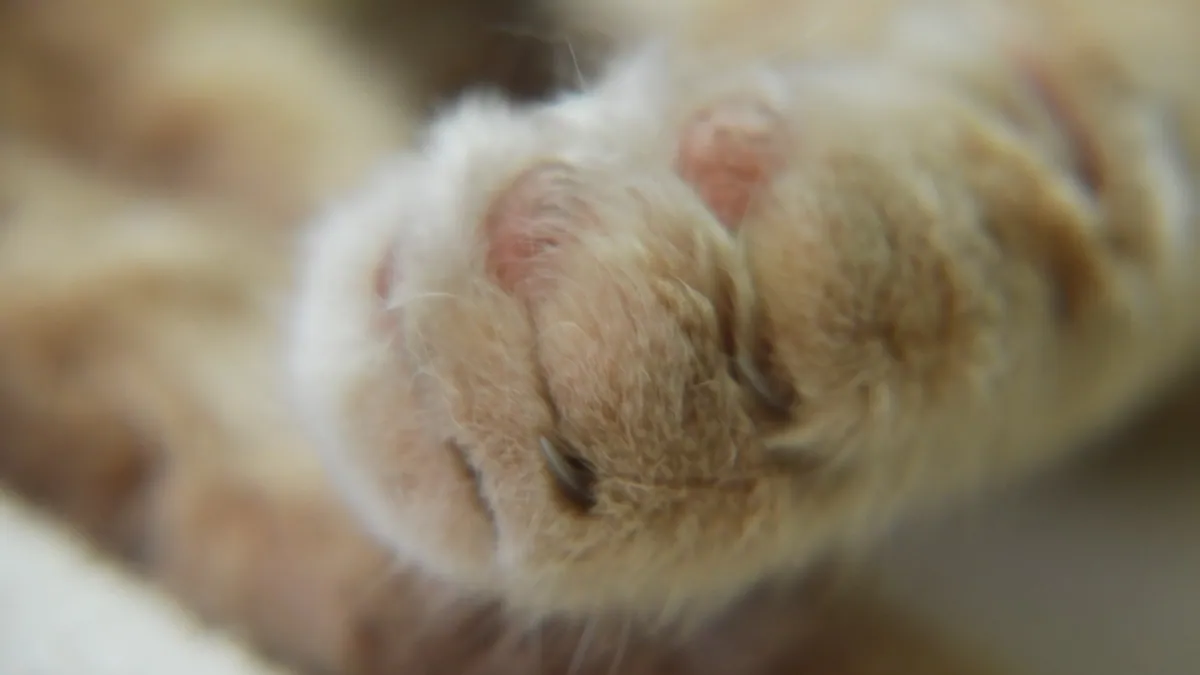
Dry paw pads in cats are common and often harmless. The pads can feel rough or look flaky when the air is dry, when a cat walks on hot or rough surfaces, or when an allergy or skin condition is at work. Most mild dryness responds to simple home care, but cracking, swelling, bleeding, or limping needs a veterinarian.
This article is educational and is not a substitute for veterinary diagnosis or treatment.
Quick Answer
- Normal paw pads are soft, slightly textured, and cool to the touch. Mild flaking without pain, swelling, or limping is usually simple dryness.
- Stop using any human lotion, oil, or medicated cream unless a veterinarian approves it. Cats lick their paws and swallow whatever is on them.
- A pet-safe paw balm made for cats can help mild dryness, but only if your cat tolerates it and does not lick it off constantly.
- Red flags that need same-day care include limping, bleeding cracks, swelling, a bad smell, or pads that look burned or blistered.
- Any cat that will not put a paw down, cries when you touch the paw, or has a fever needs emergency care.
What Dry Paw Pads in Cats Look Like and What Is Normal
A healthy paw pad is a cushion of tough skin with a slightly pebbled surface. It should feel pliable, not stiff or crusty. Color varies with the cat. Most pads are pink, gray, or black, and some cats have mixed colors on different paws.
Mild dryness shows up as flaking, a rough texture, or small surface lines. Your cat walks normally, jumps normally, and does not pull the paw away when you touch it. The pad may look a little dull but there is no swelling, no open crack, and no discharge.
Cats regulate paw temperature as they move. In a small study of healthy cats, paw pad temperature rose significantly in the forelimbs after a 6-minute walking test compared with baseline [1]. That normal warmth after activity is not the same as the hot, swollen pad of a burn or infection.
Paw pads also carry sensory feedback that helps cats walk smoothly. When that feedback is blocked, cats show movement changes, which is why a painful pad can alter how your cat stands and walks [2]. If your cat is shifting weight or refusing to bear weight, the pad is likely painful, not just dry.
What Causes Dry Paw Pads in Cats?
Many things can make a cat's paw pads dry or cracked. Some are simple and some are medical. The table below groups the main causes by what you would typically see and how quickly you should act.
| Cause | Typical clues | How urgent |
|---|---|---|
| Dry air, low humidity, winter heat | Mild flaking on all pads, no limping, no swelling | Home care, routine visit if it persists |
| Hot pavement or surfaces | Recent outdoor or windowsill exposure, pain, redness, blistering | Same-day or emergency if blistered or painful |
| Contact irritants (cleaning products, salt, fertilizer) | Sudden redness, licking, chewing, sometimes swelling | Same-day if painful or spreading |
| Allergies (environmental or food) | Itching, hair loss, redness, sometimes rash on paws and belly | Routine visit, sooner if infected |
| Plasma cell pododermatitis | Soft, swollen, sometimes painful pads, often multiple paws, may ulcerate | Routine to same-day depending on pain |
| Silica (clay cat litter) granulomas | Long-term or repeated pad swelling, ulcers, bleeding, or draining tracts, often front paws | Routine visit for biopsy and treatment |
| Infection (bacterial or fungal) | Bad smell, discharge, crusting, swelling, pain | Same-day |
| Growths or vascular lesions | A lump, purple or depressed spot, ulceration, pain | Routine to same-day depending on appearance |
Dermatitis is a general term for skin inflammation, and it can come from irritants, burns, allergens, trauma, or infection [3]. Signs can include itching, scaling, redness, thickening, color changes, oiliness, odor, and hair loss [3]. Dry, cracked paw pads in cats can be the first visible part of any of these problems.
Plasma cell pododermatitis is a specific paw pad disease that causes swelling and sometimes ulceration. In a study of 13 cats with silica-associated granulomas in the paws, 10 of the 13 biopsies also had evidence of plasma cell pododermatitis [4]. The lesions often included chronic or intermittent pad swelling, ulceration, bleeding, or draining tracts, particularly in the front paws [4]. This is a reminder that long-standing pad changes are not always simple dryness.
Silica is common in traditional clay-based cat litter, and it can trigger granulomatous inflammation in the skin of the paws [4]. If your cat has repeated pad swelling or non-healing sores, tell your veterinarian what litter you use.
Rarely, a cat can have a structural paw pad problem from birth. One report described a one-year-old cat with duplicated paw pads on the top of all four limbs, covered by thick keratinized material [5]. This is uncommon, but it shows that pad abnormalities can have a developmental cause.
Other rare pad lesions include vascular growths. A case report described a 5-year-old cat with a purple depressed lesion on a metatarsal pad that ulcerated and caused pain, and topical beta-blocker treatment prevented recurrence of ulceration [6]. Any new lump, color change, or non-healing sore on a pad deserves a veterinary look.
Red Flags That Make It an Emergency
Some paw pad problems cannot wait. Call your veterinarian or an emergency clinic right away if you see any of these:
- A pad that is blistered, charred, or peeling after contact with a hot surface or chemical.
- Bleeding that does not stop with gentle pressure.
- A paw that is swollen, hot, and painful to touch.
- Your cat will not bear weight on the leg, or holds the paw up constantly.
- Crying, growling, or pulling away when you touch the paw.
- A bad smell, pus, or green or yellow discharge.
- A deep crack that goes through the pad.
- Fever, lethargy, not eating, or hiding more than usual.
- A sudden purple, black, or rapidly growing spot on a pad.
Burns and chemical injuries can worsen over hours. Do not apply ointments or wrap the paw tightly before a veterinarian sees it, because some products can trap heat or irritate the tissue further.
Safe Things You Can Do at Home
Home care is for mild dryness with no pain, swelling, or limping. If your cat has any red flag, skip home care and call your veterinarian.
Check the paws gently
Look at all four paws in good light. Compare the pads side to side. Note any crack, swelling, color change, or discharge. Press lightly. If your cat pulls away, stop and treat it as painful.
Clean and dry the paws
Rinse the paws with plain lukewarm water if your cat walked through salt, fertilizer, or a cleaning product. Pat dry with a soft cloth. Do not scrub or use alcohol, hydrogen peroxide, or harsh soaps on the pads.
Use a cat-safe paw balm
A paw pad balm for cats can soften mild dryness. Choose a product labeled for cats and read the ingredient list. Avoid balms with essential oils, tea tree, citrus, wintergreen, or human pain relievers. Cats lick their paws, so anything you apply will likely be swallowed.
Apply a thin layer and distract your cat for a few minutes. If your cat licks it off right away, the balm will not help much and may cause stomach upset. Stop using it if you see drooling, vomiting, or more licking.
For general guidance on balm use and ingredients, see Dog Paw Balm: When and How to Use It for Dry or Irritated Paws. The same safety rules apply to cats, but never use a dog product unless your veterinarian says it is safe for your cat.
Manage the environment
Run a humidifier in dry months. Keep your cat away from hot pavement, hot metal, and hot car surfaces. Use pet-safe ice melt or rinse paws after walks. If litter seems to irritate the paws, ask your veterinarian about switching to a low-dust or non-clay option.
Prevent licking and chewing
If your cat is constantly licking a paw, a soft cone or a veterinary-approved recovery collar can break the cycle while you wait for an appointment. Licking adds moisture and bacteria, which can turn mild dryness into an infection.
Watch for other skin signs
Paw problems often come with other skin changes. If you also see a rash, redness, or hair loss on the paws or between the toes, see Cat Skin Rash on Paws: Causes and Home Care. If your cat is retching or gagging, that is a separate problem and you can read about it in Dry Heaving In Cats.
What Your Veterinarian Will Check and Test
Your veterinarian will start with a full history. They will ask about litter, outdoor access, cleaning products, recent walks, diet, and how long the pads have looked dry. They will examine all four paws and the rest of the skin.
Common tests include:
- Skin scraping or tape prep to look for mites, yeast, or bacteria.
- Cytology to check for infection and inflammatory cells.
- Fungal culture if ringworm is suspected.
- Allergy testing or a diet trial if allergies are likely.
- Biopsy for long-standing swelling, ulcers, or suspected plasma cell pododermatitis or granulomas.
In the silica-associated granuloma study, diagnosis came from surgical biopsies of the paws or paw pads [4]. That means some pad problems cannot be diagnosed by look alone. A biopsy is a small procedure and often the fastest way to get a clear answer.
If your cat has a growth or a purple lesion, your veterinarian may recommend removal or a topical treatment. The cat with the metatarsal pad lesion was treated with a topical beta-blocker, which prevented recurrence of ulceration [6]. Treatment choices depend on the exact diagnosis.
Prevention and Monitoring
Prevention starts with knowing your cat's normal pads. Check them once a week. Look for changes in color, texture, or shape. Early changes are easier to treat.
Keep the environment safe. Avoid hot pavement, harsh cleaners, and irritating litters. Use a humidifier when the air is dry. Trim long fur between the toes if it traps moisture or debris, but leave enough for protection.
If your cat has a diagnosed skin condition, follow the treatment plan exactly. Many paw problems come back if treatment stops too soon. Keep follow-up visits, especially if your cat needed a biopsy or has plasma cell pododermatitis.
Track what helps and what does not. Note the season, the litter brand, and any new products. This information helps your veterinarian find the trigger faster.
Limitations and When to Contact a Veterinarian
This article cannot tell you what is causing your cat's paw problem. Only a veterinarian can examine the pads, run tests, and make a diagnosis. Individual cases need a veterinarian, and the timing depends on the signs.
Contact your veterinarian the same day if you see swelling, discharge, a bad smell, a deep crack, or a cat that is licking one paw constantly. Go to an emergency clinic now if the pad is burned, blistered, bleeding heavily, or your cat will not bear weight, is crying in pain, or has a fever. Schedule a routine visit if the dryness is mild but has lasted more than a week, keeps coming back, or comes with itching or hair loss.
Frequently Asked Questions
Can I use coconut oil on my cat's dry paw pads?
Coconut oil is sometimes used as a home moisturizer, but it is not a proven treatment for paw pad disease. Cats lick their paws, so they will swallow most of it, and too much oil can cause stomach upset or diarrhea. Ask your veterinarian before using any oil or balm on your cat.
Why are my cat's paw pads peeling?
Peeling can come from dryness, a burn, a chemical irritant, or an infection. If the peeling is painful, widespread, or comes with redness or discharge, it needs a veterinary exam. Mild flaking on all pads without pain is more likely simple dryness.
Is plasma cell pododermatitis painful for cats?
It can be. The pads may become soft, swollen, and sometimes ulcerated, and some cats limp or resist having their paws touched. In one study, 10 of 13 cats with silica-associated paw granulomas also had evidence of plasma cell pododermatitis [4]. Treatment can reduce discomfort, so early diagnosis matters.
Should I wrap my cat's paw if it is cracked?
Do not wrap a cracked paw at home unless your veterinarian instructs you. A tight bandage can cut off circulation, trap moisture, and hide worsening infection. Keep the paw clean and dry, prevent licking, and get veterinary care for deep cracks.
Can dry paw pads in cats be a sign of a serious illness?
Most dry paw pads are not a sign of serious illness. However, long-term swelling, ulcers, bleeding, or draining tracts can point to conditions like silica-associated granulomas or plasma cell pododermatitis [4]. Any pad change that does not improve with simple care should be checked by a veterinarian.
Related Articles
- Cat Skin Rash on Paws: Causes and Home Care
- Dry Heaving In Cats
- Dry Cough In A Cat
- What To Do When Your Cat Is Dry Heaving
- Dog Paw Balm: When and How to Use It for Dry or Irritated Paws
- Cat Is Dry Coughing
- Why Are My Cat's Paw Pads Cracked? Causes and Care
- Cat Paw Balm and Lotion: Safe Moisturizers for Dry Paws
- Cat Bump on the Paw Pad: Causes and When to Worry
References
- Thermal imaging evaluation of the felines paw pad temperature before and after walking: A pilot study. Veterinarni medicina, 2021.
- Electrical Stimulation of Distal Tibial Nerve During Stance Phase of Walking May Reverse Effects of Unilateral Paw Pad Anesthesia in the Cat. Motor control, 2023.
- Dermatitis and Dermatologic Problems in Cats - Cat Owners. Merck Veterinary Manual.
- Cutaneous silica-associated (cat litter) granulomas in the paws of 13 domestic cats. Veterinary pathology, 2026.
- Dorsal duplication of paw pads in the four limbs of a cat. Veterinary dermatology, 2023.
- A Case of Slow Progressive Cutaneous Angiomatosis on a Cat Metatarsal Pad Treated by a Topical Beta-Blocker. Veterinary dermatology, 2026.