Turtle Eggs: Incubation Time and Hatching Guide
By Dr. Zubair Khalid, DVM, MS, PhD ·
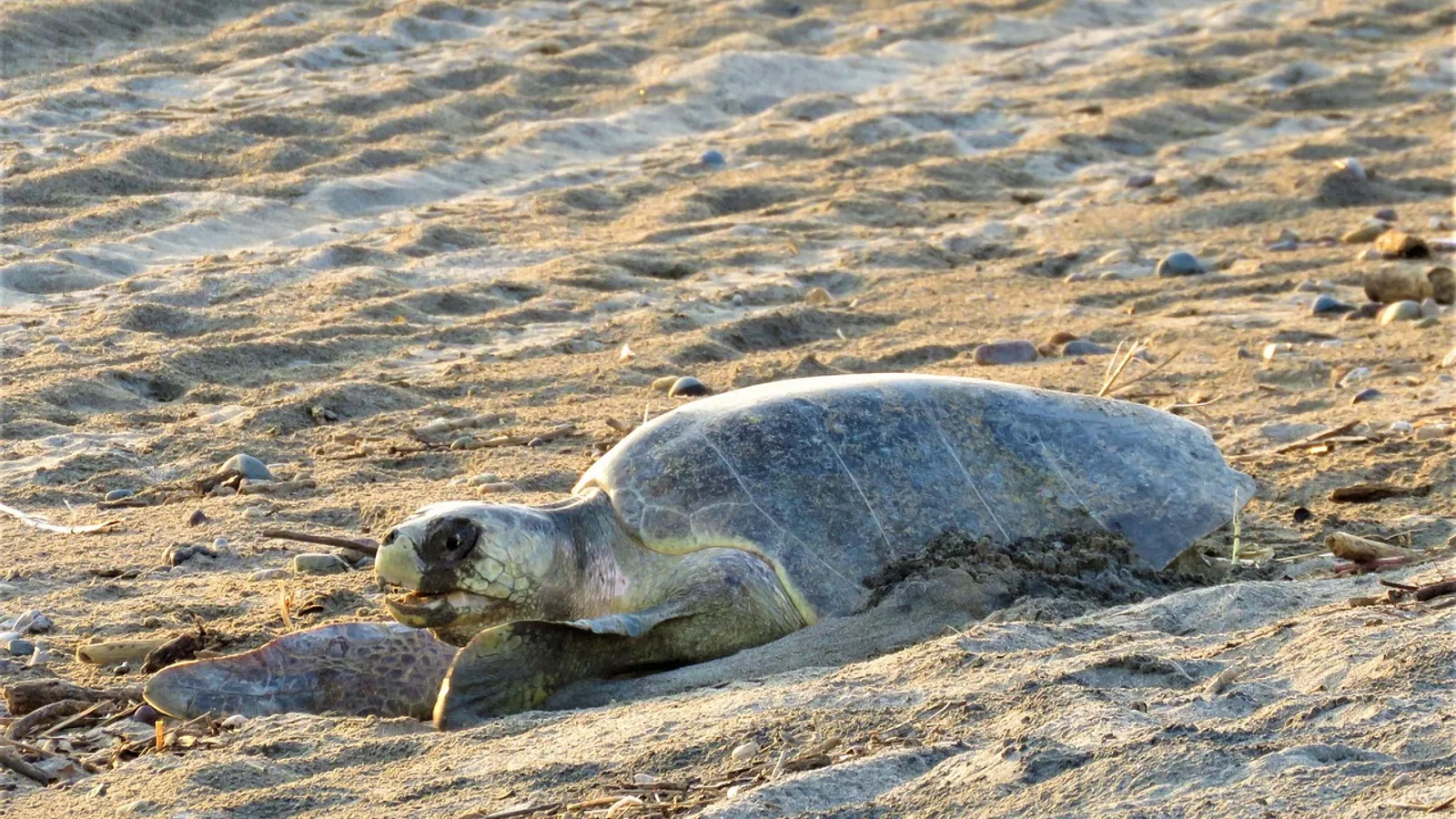
How long do turtle eggs take to hatch? For most common North American species, expect 60 to 90 days for slider and painted turtles, 70 to 90 days for box turtles, and 80 to 100 days for snapping turtles. Sea turtle clutches hatch in roughly 45 to 70 days. Those ranges are not fixed. Incubation length shifts with temperature, substrate moisture, and species, and the same clutch can hatch a week earlier or later depending on how warm the nest runs [1][2].
This guide covers what happens inside a turtle egg, how to set temperature and humidity, how to build and monitor a nest, and how to recognize the point where a keeper should stop intervening and call a veterinarian.
This article is educational and is not a substitute for veterinary diagnosis or treatment.
At a Glance
| Species group | Typical incubation | Target temperature | Target humidity | Notes |
|---|---|---|---|---|
| Slider and painted turtles | 60 to 90 days | 28 to 30 C (82 to 86 F) | 80 to 90 percent | Flexible-shelled eggs, moisture-sensitive |
| Box turtles | 70 to 90 days | 28 to 30 C (82 to 86 F) | 80 to 90 percent | Cooler nests run longer, warmer nests shorter |
| Snapping turtles | 80 to 100 days | 28 to 30 C (82 to 86 F) | 80 to 90 percent | Longest of the common North American species |
| Sea turtles | 45 to 70 days | 29 to 31 C (84 to 88 F) | 80 to 90 percent | Median 59 days in one multi-year Maldives dataset |
Do not rotate eggs after laying. Do not let incubation temperature climb above 32 C (about 90 F).
Do Turtles Lay Eggs?
Yes. Every turtle species lays eggs. There is no live-bearing turtle. Females dig a nest cavity, deposit a clutch, cover it, and leave. Parental care ends at the nest rim.
That single fact drives almost every practical decision a keeper makes. The egg is on its own from the moment it is buried. Temperature, moisture, gas exchange, and physical orientation are the only variables that matter after laying, and the embryo has no way to compensate for a bad nest.
Nest construction varies by species. Freshwater turtles dig flask-shaped chambers in soil or sand, often 10 to 20 cm deep. Sea turtles excavate deeper body pits on beaches, and the eggs sit below the surface in a column that can be 40 to 70 cm deep. Nest depth matters because it buffers temperature swings and sets how much water reaches the clutch [3].
Clutch size also varies widely. Leatherback nests in one Grenada study averaged about 81 eggs per nest [3]. Smaller freshwater species may lay only a handful. The number of eggs changes the thermal profile of the nest because embryos generate metabolic heat, and larger clutches run warmer than small ones [4][5].
What Happens Inside a Turtle Egg
A turtle egg is a closed system with three jobs: hold water in, let gases move, and keep the embryo oriented. The shell is either rigid (sea turtles, some tortoises) or flexible and leathery (most freshwater turtles and box turtles). Flexible-shelled eggs exchange water with the substrate far more readily than rigid-shelled eggs, which is why moisture control matters more in freshwater species [6].
Water uptake is not constant. In red-eared sliders, egg mass changed relatively little during the first third of development regardless of how wet or dry the substrate was. During the final two-thirds, egg mass became highly sensitive to moisture. Short episodes of very wet or very dry substrate permanently altered how the eggshell responded to water later, changed shell shape and volume, and shifted hatchling mass [6]. A single dry week at the wrong time can follow the hatchling for life.
Temperature does two things at once. It sets how fast the embryo develops, and in many species it sets the sex of the hatchling. Warmer incubation accelerates development, and in painted turtles, warm temperatures shortened incubation duration directly [1]. In Chinese soft-shelled turtles, populations from different latitudes responded differently to the same temperatures, with northern embryos developing faster at low temperatures than southern ones [2]. There is no single universal development rate.
Metabolic heat is real. A finite element model of flatback sea turtle nests showed that embryos themselves warm the clutch, and models that ignored that heat missed observed temperatures [5]. This matters in a home incubator with a large clutch: the eggs can run warmer than the air around them.
Temperature-Dependent Sex Determination
In many turtles, incubation temperature during a specific window decides whether the hatchling becomes male or female. This is temperature-dependent sex determination, or TSD [1][7].
The general pattern for many species is that lower incubation temperatures produce males and higher temperatures produce females, with a pivotal temperature near 28 to 30 C where the sex ratio is roughly even. The pivotal temperature is species-specific and is not identical across turtles. In olive ridley nests, temperatures near the pivotal value were exceeded during 6 to 21 percent of the thermosensitive period, which started around days 9 to 15 and ended around days 33 to 37 of incubation [4]. That window is short relative to total incubation, and it is the period that matters most for sex ratio.
The mechanism is epigenetic. In red-eared sliders, the histone demethylase KDM6B shows temperature-dependent, sexually dimorphic expression in early embryos before the gonad is even distinct. Knocking down Kdm6b at 26 C, a male-producing temperature, triggered male-to-female sex reversal in more than 80 percent of surviving embryos. KDM6B promotes the male sex-determining gene Dmrt1 by removing a repressive histone mark near its promoter [7].
Sex and temperature also act independently on other traits. In painted turtles, experimental decoupling of gonadal sex from incubation temperature showed that warm incubation accelerated development, and that male offspring hatched sooner than female offspring even when temperature was held constant [1]. Sex and temperature are two separate inputs, not one.
For a keeper, the practical takeaway is that temperature control during the middle third of incubation is a sex-ratio decision, whether or not that was the intent.
Species-Specific Incubation Ranges
Slider and painted turtles: 60 to 90 days
Red-eared sliders and painted turtles are the most commonly incubated freshwater species in captivity. Their flexible-shelled eggs are moisture-sensitive, and substrate moisture during the last two-thirds of development has lasting effects on hatchling size and shell characteristics [6]. Painted turtle development accelerates at warmer temperatures, and incubation duration varies with both temperature and offspring sex [1].
Box turtles: 70 to 90 days
Box turtle eggs follow a similar thermal profile to sliders and painteds but tend to run slightly longer. Cool nests push toward the upper end of the range. Warm nests near 30 C shorten incubation.
Snapping turtles: 80 to 100 days
Snapping turtle clutches take the longest of the common North American species. Plan for the full range and do not assume a clutch is dead at day 85.
Sea turtles: 45 to 70 days
Sea turtle incubation is shorter and tightly tied to beach temperature. In a multi-year Maldives dataset covering more than 1,000 green turtle nests, median incubation was 59 days with a standard deviation of about 4.8 days, and median hatching success was about 91 percent [8]. Loggerhead incubation durations in Greece have been decreasing over 25 years of monitoring, which is consistent with warming sand [9].
A note on model versus reality
Laboratory development-rate models consistently overestimate incubation period compared with nests measured in the field [10]. Do not treat any published day count as a deadline. Treat it as a window.
Temperature and Humidity Targets
Temperature
Aim for 28 to 30 C (82 to 86 F) for most freshwater and box turtle species. This range sits near the pivotal temperature for sex determination in many turtles and supports normal development without pushing into the lethal zone.
Do not exceed 32 C. In loggerhead sea turtles incubated at 11 constant temperatures between 27 and 33 C, no hatchlings survived to testing at 32 C or above in either study year [11]. High-temperature mortality is not a subtle effect.
Cold is also a problem. Loggerhead hatchlings incubated at 27 C showed decreased locomotor abilities compared with warmer incubation groups [11]. The safe zone is genuinely a zone, not a floor.
Humidity
Target 80 to 90 percent relative humidity for most nests. In practice, this means a substrate that holds shape when squeezed but does not drip. Substrate moisture, not just air humidity, is what the egg actually experiences, and in sliders it directly controls water uptake, eggshell shape, and hatchling mass [6].
Why both matter together
A hot and severely dry substrate produced smaller hatchlings in one controlled study, though shell scute patterns were not overtly affected [12]. Heat and dryness compound each other. A wet nest buffers temperature swings. A dry nest does not.
Hatching Timeline Table by Species
| Species group | Incubation range | Target temp | Target humidity | Thermosensitive window | Hatchling notes |
|---|---|---|---|---|---|
| Red-eared slider | 60 to 90 days | 28 to 30 C | 80 to 90 percent | Middle third | Moisture-sensitive shell, variable hatchling mass [6] |
| Painted turtle | 60 to 90 days | 28 to 30 C | 80 to 90 percent | Middle third | Warm temps shorten incubation, males hatch sooner [1] |
| Box turtle | 70 to 90 days | 28 to 30 C | 80 to 90 percent | Middle third | Longer at cool temps |
| Snapping turtle | 80 to 100 days | 28 to 30 C | 80 to 90 percent | Middle third | Longest common North American range |
| Green sea turtle | 45 to 70 days | 29 to 31 C | 80 to 90 percent | Days 9 to 37 | Median 59 days in Maldives monitoring [8] |
| Loggerhead sea turtle | 45 to 70 days | 29 to 31 C | 80 to 90 percent | Days 9 to 37 | No survival at 32 C or above [11] |
| Olive ridley sea turtle | 45 to 70 days | 29 to 31 C | 80 to 90 percent | Days 9 to 37 | Pivotal temp exceeded 6 to 21 percent of window [4] |
| Leatherback sea turtle | 45 to 70 days | 29 to 31 C | 80 to 90 percent | Days 9 to 37 | Nest depth strongly affects success [3] |
The Incubation Workflow
flowchart TD
    A[Eggs laid] --> B[Mark top of each egg]
    B --> C[Do not rotate]
    C --> D[Set substrate moisture]
    D --> E[Set incubator to 28 to 30 C]
    E --> F[Monitor temperature daily]
    F --> G{Above 32 C}
    G -->|Yes| H[Ventilate and cool]
    G -->|No| I[Continue monitoring]
    I --> J[Watch for pipping]
    J --> K[Move hatchlings to clean setup]
Step 1: Mark the eggs
Draw a small pencil mark on the top surface of each egg immediately after collection. Turtle embryos can be harmed by rotation after the early stages, and the mark lets you confirm orientation every time you handle the clutch. Never flip an egg.
Step 2: Do not rotate
Do not turn turtle eggs the way you would turn chicken eggs. There is no turning schedule. Once an egg is set, its orientation stays fixed.
Step 3: Set substrate moisture
Use a substrate that holds moisture without staying saturated. Squeeze a handful. It should clump and hold shape with no free water dripping out. This corresponds roughly to the 80 to 90 percent humidity target for most species.
Step 4: Set and hold temperature
Set the incubator to 28 to 30 C. Verify with an independent thermometer, not just the incubator display. Large clutches run warmer than the surrounding air because of embryonic metabolic heat, so a full incubator may need a slightly lower set point than a nearly empty one [5].
Step 5: Monitor daily
Check temperature at least once daily and moisture every few days. Log the readings. A written record is the only way to catch a slow drift before it affects the clutch.
Step 6: Do not open eggs
Do not assist with hatching unless a veterinarian advises it. Pipping is a slow process, and premature intervention is a common cause of preventable loss.
Step 7: Move hatchlings promptly
Once a hatchling is out and active, move it to a clean, separate setup with shallow water and a dry basking area. Hatchlings from shaded nests in one study were heavier and longer than those from unshaded nests, and shading improved survival indicators [13]. Post-hatch environment quality carries forward.
Common Mistakes
Rotating eggs after laying. The single most avoidable error. Mark the top and leave it up.
Letting temperature climb above 32 C. No loggerhead hatchlings survived to testing at 32 C or above in controlled incubations [11]. This is a hard ceiling, not a target to approach.
Ignoring substrate moisture in the last two-thirds of development. This is when slider eggs become most sensitive to moisture, and short-term extremes permanently change how the eggshell handles water [6].
Assuming a clutch is dead because it passed the expected date. Field-measured incubation periods are typically shorter than laboratory model predictions, and the models overestimate [10]. A clutch that runs long is not automatically a failed clutch.
Incubating a large clutch in a small space without checking temperature. Clutch size raises nest temperature measurably. Adding 30 to 40 eggs per nest raised average temperatures by about 0.7 C in olive ridley nests [4].
Keeping eggs too dry. A hot, severely dry substrate produced smaller hatchlings [12].
Leaving eggs in a flood-prone position. In green turtle nests on Mayotte, about 30 percent were flooded, and emergence success was 1 percent in flooded nests versus 85 percent in non-flooded nests. Early and late incubation phases were the most sensitive [14].
Troubleshooting
Temperature is drifting high. Increase ventilation, lower the ambient room temperature, and reduce clutch density. Do not open the incubator repeatedly, since that creates swings.
Substrate is drying out. Add water to the substrate around the eggs, not on top of them. Mist the container walls rather than the eggs.
Substrate is too wet. Reduce watering and improve drainage. Persistently saturated substrate can promote microbial growth on eggs, which is negatively associated with embryo development and hatching success in leatherbacks [3].
No pipping at the expected date. Confirm your temperature log has been stable. If it has, wait. Incubation windows are wide, and development rate varies with population and temperature history [2][10].
Eggs show discoloration or growth. Remove affected eggs only if they are clearly collapsed and moldy. Otherwise leave the clutch undisturbed and consult a veterinarian.
Hatchlings emerge weak or slow. Incubation temperature affects locomotor performance. Loggerheads incubated at 27 C showed decreased locomotor abilities, and temperature affected righting response, crawling speed, and swim activity across the tested range [11].
Welfare and Safety Points
Incubation conditions shape more than sex and size. In sea turtle hatchlings, the incubation environment influenced inflammatory response, body mass, carapace width, and survival, and hatchlings from shaded nests showed less intense inflammation and were heavier and longer [13]. Maternal factors also feed into offspring immune capacity, with hemolytic capacity positively associated with maternal hemolysis and body mass [15].
Nest contamination is a documented risk. Microplastics accumulate in nesting substrate at egg incubation depth and have been found in turtle eggs, yolks, and embryonic tissues, with sublethal effects including increased melanomacrophage activity in embryos [16]. Keep incubation containers clean and avoid reusing substrate from unknown sources.
Do not collect eggs from wild nests without the required permits. In the United States, sea turtles and most native turtles are protected, and possession or handling of eggs and hatchlings is regulated. If you find a nesting turtle or a disturbed nest, contact your state wildlife agency rather than moving eggs yourself.
When Hatchlings Are Not Thriving
Hatchling quality tracks incubation quality. In loggerheads, smaller hatchlings that emerged early were less likely to survive than larger ones, and hatchling carapace length correlated with egg diameter and incubation duration [17]. A hatchling that is small, slow to right itself, or reluctant to enter water is not simply "the runt." It may be a hatchling that developed under suboptimal conditions.
Provide shallow water, a dry basking zone, and correct thermal gradients from day one. If a hatchling will not eat, will not right itself, or shows swelling, discharge, or labored breathing, that is a veterinary matter.
Limitations and When to Contact a Veterinarian
No article can evaluate an individual clutch. Incubation outcomes depend on species, temperature history, substrate moisture, clutch size, and the specific developmental window in which any problem occurred. A veterinarian with reptile experience, such as a member of the Association of Reptilian and Amphibian Veterinarians, can assess a specific situation.
Contact a veterinarian if:
- A hatchling fails to right itself within a few hours of emerging
- A hatchling has a visibly abnormal shell, unabsorbed yolk, or an open umbilicus
- A hatchling refuses food for more than several days after absorbing its yolk
- A hatchling shows labored breathing, discharge, or swelling
- Eggs develop visible fungal or bacterial growth that spreads across the clutch
- You suspect the incubator exceeded 32 C at any point
- A female turtle shows straining, prolapse, or lethargy after laying
The Merck Veterinary Manual and VCA Animal Hospitals both maintain reptile care references that can help you describe the problem accurately when you call.
Frequently Asked Questions
How long do turtle eggs take to hatch?
It depends on species. Slider and painted turtles take 60 to 90 days, box turtles 70 to 90 days, snapping turtles 80 to 100 days, and sea turtles 45 to 70 days.
How long does a turtle egg take to hatch if it is kept cooler?
Cooler incubation lengthens development. Warm temperatures accelerate development, and cool temperatures slow it, so a nest near the low end of the safe range can run toward the upper end of the species range [1][2].
Do turtles lay eggs or give birth?
All turtles lay eggs. There are no live-bearing turtles. Females dig a nest, deposit the clutch, cover it, and leave.
What temperature should turtle eggs be incubated at?
Target 28 to 30 C (82 to 86 F) for most freshwater and box turtle species. Do not exceed 32 C, because no loggerhead hatchlings survived to testing at 32 C or above in controlled incubations [11].
What humidity do turtle eggs need?
Aim for 80 to 90 percent relative humidity. In practice, keep the substrate damp enough to hold shape when squeezed but not dripping, since substrate moisture directly affects water uptake and hatchling size in flexible-shelled eggs [6].
Can I rotate turtle eggs during incubation?
No. Mark the top of each egg at collection and keep that mark up. Rotation after laying can harm the embryo.
How do I know if turtle eggs are fertile?
Fertile eggs typically chalk over and develop a white patch within the first weeks. Infertile nests can be identified by the absence of normal developmental movement patterns over the course of incubation [18].
What happens if incubation temperature gets too high?
Above 32 C, survival drops sharply. Loggerhead hatchlings incubated at 32 C and above did not survive to testing in either study year [11]. High temperatures also shift sex ratios toward females during the thermosensitive window [4].
Related Articles
- Hatchery Egg Incubation and Hatching Techniques
- Incubation and Hatching of Poultry Eggs: Temperature, Humidity, and Turning
- How to Estimate Data Collection Time for Your Dissertation
- Hatching Egg Storage and Hatchery Sanitation
- How to Estimate Time for Each Phase of Your Thesis: A Data-Driven Approach
- How Much Time Should Each Dissertation Phase Take? A Data-Backed Breakdown
- How Long Do Duck Eggs Take to Hatch? Timeline
- How Long Do Fresh Eggs Last in the Fridge?
- How Long Does a Chicken Lay an Egg? Cycle Explained
Sources
- Sex and Incubation Temperature Independently Affect Embryonic Development and Offspring Size in a Turtle with Temperature-Dependent Sex Determination.
- Latitudinal and Temperature-Dependent Variation in Embryonic Development Rate and Offspring Performance in a Freshwater Turtle.
- Environmental and Nesting Variables Associated with Atlantic Leatherback Sea Turtle (Dermochelys coriacea) Embryonic and Hatching Success Rates in Grenada, West Indies.
- Temperature Conditions in Artificial Sea Turtle Nests: Toward Optimized Hatchery Management.
- An application of finite element analysis predicts unique temperatures and fates for flatback sea turtle embryos.
- Varying hydric conditions during incubation influence egg water exchange and hatchling phenotype in the red-eared slider turtle.
- The histone demethylase KDM6B regulates temperature-dependent sex determination in a turtle species.
- Between the Atolls: Sea Turtle Nesting in the Maldives from 2018 to 2024.
- Update of the Loggerhead Sea Turtle (Caretta caretta) Population Nesting in Koroni, Greece, Mediterranean.
- How well do embryo development rate models derived from laboratory data predict embryo development in sea turtle nests?
- Incubation temperature effects on hatchling performance in the loggerhead sea turtle (Caretta caretta).
- Effects of the egg incubation environment on turtle carapace development.
- The Incubation Environment Shapes the Inflammatory Response and Enables Expression of Maternal Effects on Sea Turtle Hatchling Body Size.
- Nest exposure to marine flooding and impacts on green turtle (Chelonia mydas) embryos under rapid sea level rise: The role of beach geomorphology and hydrodynamics.
- Maternal Traits Are Associated With Hemolytic Capacity in Sea Turtle Hatchlings, Independently of Systemic Immune Stimuli.
- Microplastics and sea turtle reproduction: A systematic review on nest contamination and developmental risks.
- An assessment of initial body size in loggerhead sea turtle (Caretta caretta) hatchlings in Turkey.
- The secret life of baby turtles: A novel system to predict hatchling emergence, detect infertile nests, and remotely monitor sea turtle nest events.