How Long Do Duck Eggs Take to Hatch? Timeline
By Dr. Zubair Khalid, DVM, MS, PhD ·
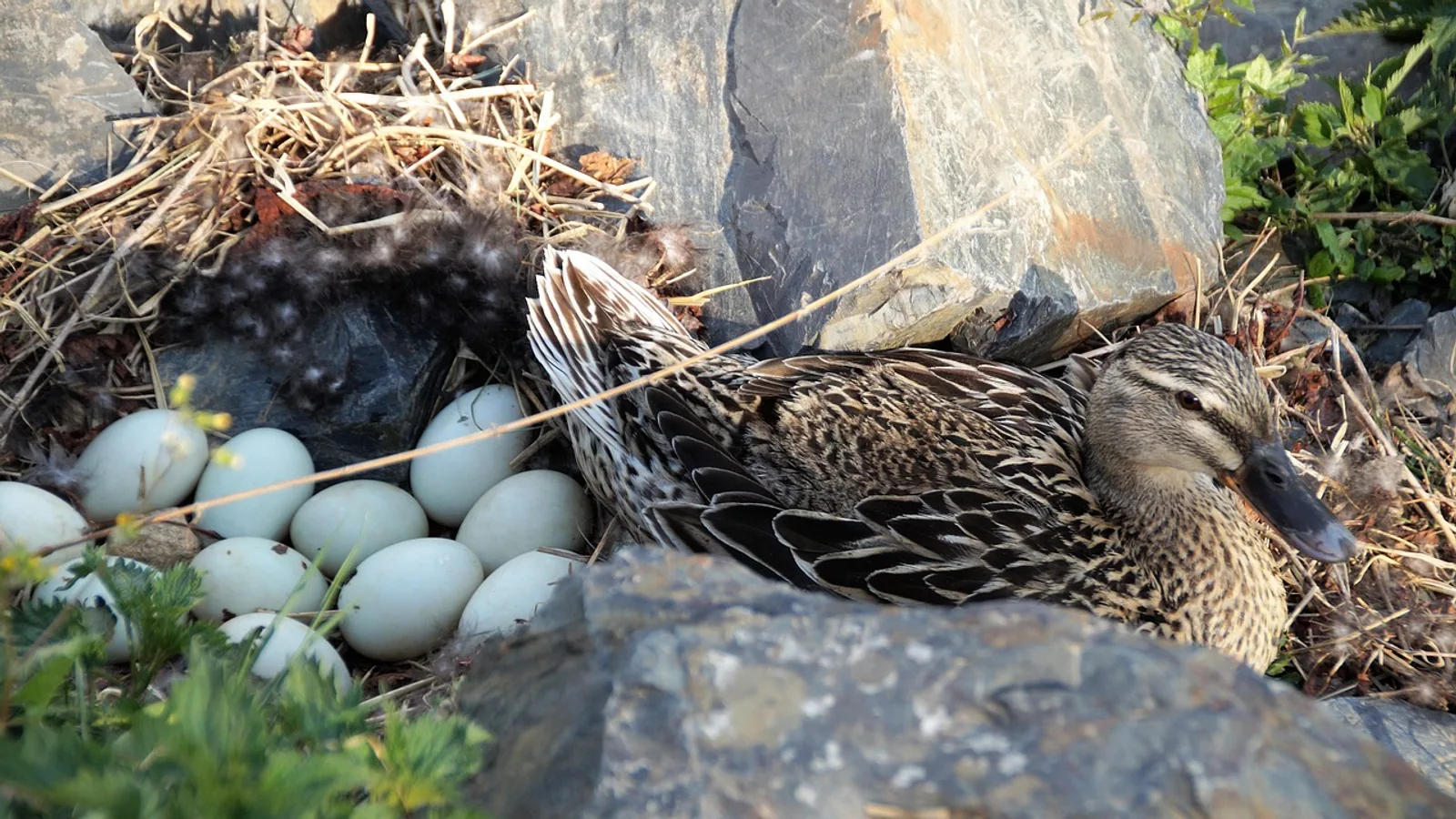
Most domestic duck eggs hatch in about 28 days of incubation. Muscovy ducks are the exception and typically need 35 days. That single number hides a great deal of biology, and the difference between a good hatch and a poor one usually comes down to how carefully temperature, humidity, and turning are managed across those four to five weeks.
This guide walks through the full incubation timeline for backyard duck eggs, day by day. It covers the forced-air incubator settings that most keepers use, the candling checkpoints that tell you whether an embryo is alive and growing, the lockdown period when you stop turning and raise humidity, and the small practices, like misting and cooling, that imitate what a brooding hen does naturally. It also explains why duck eggs are harder to hatch than chicken eggs and what that means for your expectations.
This article is educational and is not a substitute for veterinary diagnosis or treatment.
The Short Answer
A standard domestic duck egg, from breeds such as Pekin, Khaki Campbell, Cayuga, Indian Runner, or Welsh Harp, hatches after roughly 28 days of continuous incubation. A Muscovy egg hatches after roughly 35 days. Small variations of a day or two in either direction are normal, and the timing depends on breed, egg size, storage before incubation, and how stable your incubator conditions are.
Duck eggs are consistently harder to hatch than chicken eggs. Reported hatchability of duck eggs sits in the range of about 65 to 82 percent, which is lower than what commercial chicken hatches achieve [1]. That gap is not a flaw in your technique. It reflects the biology of the species, and it means you should plan for some eggs not to hatch even when everything is done correctly.
Why Duck Eggs Take Longer Than Chicken Eggs
The incubation period of any bird egg scales with the size of the egg and the developmental pace of the embryo inside it. Duck eggs are larger and have thicker shells than chicken eggs, and the duck embryo takes longer to reach the point where it can break out.
Development is not a smooth, uniform process. It moves through distinct phases, and each phase has different sensitivity to temperature and humidity. Early in incubation, the embryo is building its vascular network and the chorioallantoic membrane, the structure that lets it breathe through the shell. Turning the egg during this window supports that membrane's growth. A study on duck egg turning found that increasing the turning angle from 45 to 75 degrees accelerated chorioallantoic membrane development by about 17 hours and significantly reduced late embryonic mortality, from roughly 9.4 percent down to about 5.3 percent [2]. That is a meaningful improvement from a single mechanical change.
Later in incubation, the embryo's own metabolism becomes a heat source. A study of naturally incubated Muscovy duck eggs found that the surface temperature of the eggs rose to between 37.92 and 38.87 degrees Celsius after day 20 to 23, because the embryos were burning yolk fat and releasing more heat [3]. That is why incubator temperature sometimes needs to come down slightly in the final stretch rather than stay fixed.
The takeaway is that the 28-day figure is a total, not a constant. The conditions that suit the embryo on day 3 are not the conditions that suit it on day 24.
Incubator Setup Before You Start
Before any egg goes in, the incubator needs to be running and stable. A forced-air incubator, one with a fan that circulates air, is the standard choice for backyard hatching because it holds a uniform temperature throughout the cabinet. Still-air incubators require a slightly higher reading at the top of the cabinet, but the forced-air numbers below are the ones most keepers work with.
The target temperature for duck eggs in a forced-air incubator is 37.5 degrees Celsius, which is 99.5 degrees Fahrenheit. This is the same core figure used across poultry incubation, and it appears in the duck literature as a reference point. One study on duck embryos used 37.8 degrees Celsius as its baseline before testing a one-degree increase, which shows how narrow the working range is [4]. A shift of a single degree Celsius is enough to change gene expression in the developing duck embryo, so accuracy matters more than most beginners expect.
Humidity is the second variable. For days 1 through 25, aim for a wet-bulb equivalent of 55 to 60 percent relative humidity. For the final hatch window, raise it to 65 to 75 percent. Humidity controls how fast the egg loses water through the shell. Too dry and the embryo dehydrates or sticks to the shell membrane. Too wet and the air cell does not grow enough for the duckling to draw its first breath.
Turning is the third variable. Turn eggs 4 to 6 times daily through day 25, then stop. If you use an automatic turner, set it and confirm it is actually moving the eggs. If you turn by hand, mark one side of each egg with a pencil so you can track which side is up.
Storage Before Incubation
If you are collecting eggs before setting them, storage conditions affect the hatch. A study on long-stored eggs found that hatchability was highest when eggs were stored at 15 degrees Celsius, compared with 18 degrees Celsius, with 12 degrees Celsius intermediate, and that the improvement came from reduced early embryonic mortality [5]. That study was conducted on chicken eggs, so the exact figures should not be transplanted directly onto ducks, but the principle that cooler, stable storage protects the embryo is well established. Store eggs pointed end down, keep them cool but not cold, and set them within about a week if you can.
Day-by-Day Incubation Timeline
The table below summarizes the whole incubation period for a standard domestic duck. Muscovy keepers should read the same table but stretch the final stages, since Muscovies run about a week longer.
| Day range | Temperature (forced air) | Humidity | Turning | Candling and key events |
|---|---|---|---|---|
| Days 1 to 7 | 37.5 C (99.5 F) | 55 to 60 percent | 4 to 6 times daily | Candle on day 7 to confirm viability |
| Days 8 to 14 | 37.5 C (99.5 F) | 55 to 60 percent | 4 to 6 times daily | Candle on day 14 to check development |
| Days 15 to 24 | 37.5 C (99.5 F) | 55 to 60 percent | 4 to 6 times daily | Optional misting or cooling from around day 20 |
| Day 25 | 37.5 C (99.5 F) | Raise toward 65 percent | Final turn, then stop | Candle to look for internal pip |
| Days 26 to 28 | 37.2 to 37.5 C (99 to 99.5 F) | 65 to 75 percent | No turning, lockdown | External pip, then hatch |
| Muscovy days 1 to 30 | 37.5 C (99.5 F) | 55 to 60 percent | 4 to 6 times daily | Candle on days 7, 14, and about day 30 |
| Muscovy days 31 to 35 | 37.2 to 37.5 C (99 to 99.5 F) | 65 to 75 percent | No turning, lockdown | Internal pip, external pip, hatch |
Days 1 to 7: Establishing the Embryo
The first week is about survival. The embryo is small, the vascular network is forming, and the egg is most vulnerable to temperature swings. Keep the incubator closed as much as possible. Every time you open the lid, you lose heat and humidity, and it takes time to recover.
Candle on day 7. In a dark room, hold a bright, focused light against the blunt end of the egg. A viable embryo shows a small dark spot with a network of blood vessels radiating outward, often described as a spider pattern. A clear egg with no vessels is either infertile or died very early. Remove clears at this point so they do not decay and contaminate the incubator.
Days 8 to 14: Growth and Structure
By the second week, the embryo is taking recognizable shape. Limb buds form, the beak begins to develop, and the chorioallantoic membrane expands to line most of the inner shell. This is the structure that handles gas exchange for the rest of incubation.
Candle on day 14. You should see a much larger dark mass with clear blood vessels and a growing air cell at the blunt end. Movement may be visible. The air cell size is a useful humidity indicator. If it has barely grown since day 7, humidity is too high. If it has grown dramatically, humidity is too low.
Days 15 to 24: Rapid Growth
The embryo grows quickly in this window. By day 14 in Pekin ducks, the yolk sac is a substantial structure, and its weight and dry matter content change measurably across the incubation period [6]. The yolk is the duckling's fuel supply, and how efficiently it is absorbed affects hatch weight and early vigor.
From around day 20, some keepers begin misting the eggs with lukewarm distilled water and allowing them to cool briefly. This mimics the brooding hen, who leaves the nest to feed and defecate, exposing the eggs to cooler air and occasionally to rain or dew. A study on spraying duck eggs found that eggs sprayed with distilled water at 37 degrees Celsius had significantly higher hatching rates and significantly lower embryonic mortality than eggs sprayed with olive oil, ethanol, or nothing at all [1]. The same body of work supports water cooling of Muscovy eggs twice daily by spraying with distilled water at 18 to 20 degrees Celsius from day 20 onward, rather than starting at day 8 or 16 [3].
Treat misting and cooling as optional refinements. They help when done correctly and cause problems when done carelessly. If you mist, use clean distilled water, keep the spray light, and do not let the eggs sit cool for more than about 15 to 20 minutes.
Day 25: Lockdown Begins
Day 25 is the pivot point. Turn the eggs one final time, then stop turning entirely. Raise the humidity toward 65 to 75 percent. From this point forward, do not open the incubator unless you have no other choice.
Candle on day 25 to look for an internal pip. An internal pip is when the duckling breaks through the inner shell membrane into the air cell and begins breathing air for the first time. You may see the duckling's beak silhouetted in the air cell, and you may hear faint peeping or tapping if you hold the egg near your ear. This is a strong sign that hatching is close.
The reason for lockdown is simple. Once the duckling pips internally, it is breathing air from the air cell, and the humidity in the incubator directly affects whether the shell membrane stays soft enough for it to break through. Opening the lid drops humidity fast and can cause the membrane to dry and shrink around the duckling, trapping it.
Days 26 to 28: Hatch
External pipping, when the duckling breaks a small hole through the outer shell, usually follows the internal pip by 12 to 24 hours. From the first external pip to full hatch can take another 12 to 48 hours. Ducklings are slower to emerge than chicks, and they often rest for long stretches between efforts.
Resist the urge to help. A duckling that is assisted too early may still have unabsorbed yolk and can bleed or become infected. Intervene only if a duckling has been externally pipped for more than 48 hours with no progress, and even then, be conservative. If you are unsure, contact a veterinarian who works with poultry.
Once hatched, ducklings can stay in the incubator until they are dry and fluffed, usually 12 to 24 hours. They do not need food or water during that window because they are still absorbing the last of the yolk.
Muscovy Ducks: The 35-Day Exception
Muscovy ducks are a different species from the mallard-derived domestic ducks, and their incubation period reflects that. Plan on about 35 days from set to hatch.
The temperature and humidity targets are broadly the same, but the phases shift. Internal pip typically happens around day 32 to 33 rather than day 25. Lockdown should begin around day 30. The natural incubation study on Muscovies found that egg surface temperatures rose to 37.92 to 38.87 degrees Celsius after day 20 to 23, and it recommended maintaining 37.6 to 37.8 degrees Celsius until the allantois closes, then dropping to 37.2 to 37.5 degrees Celsius until transfer to the hatchery, and 36.7 to 37.0 degrees Celsius in the hatchery itself [3]. That staged reduction is a useful model for anyone incubating Muscovies artificially.
Muscovy hatchability in natural settings has been documented at around 0.76 in normal nests, with no significant difference between normal and dump nests [7]. That gives you a realistic benchmark. Even under a broody duck, roughly one in four eggs may not hatch.
Candling Checkpoints in Detail
Candling is the single most useful diagnostic tool a backyard keeper has. It tells you whether to keep an egg or pull it, and it gives you early warning if your incubator is off.
Day 7: Viability
Look for a small dark embryo and a clear network of blood vessels. No vessels means the egg is infertile or the embryo died in the first few days. Remove clears.
Day 14: Development
The embryo should now be a large dark mass occupying much of the egg, with a distinct air cell at the blunt end. Vessels should be thick and visible. If the mass looks small or the vessels are faint, the embryo may be developing slowly, which often points to a temperature that is running low.
Day 25: Internal Pip
This is the most important late check. Look for the duckling's beak in the air cell and for the shadowy movement of the head. If you see an internal pip on day 25, you are on schedule. If you see nothing, wait another day or two before concluding anything, since timing varies.
Common Mistakes and Myths
A few beliefs about duck egg incubation cause more harm than good.
The first is that you should help every duckling that seems stuck. Most stuck ducklings are simply slow, and most interventions do more harm than good. The second is that higher humidity is always safer. Excess humidity prevents the air cell from growing, and a duckling that cannot reach air inside the shell cannot survive the transition to breathing. The third is that turning is optional if you have a small batch. Turning is not optional. It supports membrane development and prevents the embryo from adhering to the shell, and the turning angle study shows that even the angle matters [2].
A fourth myth is that incubation temperature can be adjusted by feel or by watching the eggs. It cannot. Use a calibrated thermometer and hygrometer, and check them against a second instrument. The window between a good hatch and a failed one is about one degree Celsius [4].
What Still Is Not Fully Settled
Duck incubation science is less developed than chicken incubation science. The literature on ducks is thinner, and much of what backyard keepers rely on is extrapolated from chickens or from commercial mule duck production. One study on mule ducks noted directly that the literature on ducks is lacking compared with poultry generally [8]. That study also found that raising incubation temperature by 1.5 degrees Celsius for 10-day windows during development could push embryonic mortality as high as 24.5 percent, and that the effects depended heavily on which developmental window was disturbed [8].
Carbon dioxide is another area where the picture is incomplete. A study on Pekin duck eggs found that holding carbon dioxide at about 1 percent during the first 10 days of incubation, in a non-ventilated incubator, produced lower egg weight loss and lower embryonic mortality, plus higher hatchability and heavier ducklings at hatch, compared with standard ventilation [9]. That is a striking result, and it suggests that early incubation gas exchange deserves more attention than it usually gets in backyard setups. It is not yet a standard recommendation, and most home incubators are not built to control carbon dioxide.
Practical Implications for Backyard Keepers
Buy or borrow a reliable forced-air incubator and a separate calibrated thermometer and hygrometer. Do not trust the built-in gauge alone.
Set eggs within a week of laying when possible, store them cool and pointed end down, and handle them gently. Keep a written log of temperature, humidity, and turning times so you can compare hatches and spot patterns.
Plan for a hatch rate in the range of 65 to 82 percent for standard ducks [1]. If you set 10 eggs, expecting 6 to 8 ducklings is realistic. If you get fewer, review your temperature and humidity records before assuming the eggs were bad.
Do not open the incubator during lockdown. Prepare everything you need, including a brooder, before day 25 so you are not scrambling while the ducklings are pipping.
Limitations and When to Contact a Veterinarian
Incubation outcomes depend on factors that no article can assess for your specific flock, including the fertility of your drake, the age and nutrition of your hens, the accuracy of your equipment, and the genetics of your birds. Individual hatches vary, and a single poor result does not mean your method is wrong.
Contact a veterinarian who works with poultry if you see the following. A duckling that has been externally pipped for more than 48 hours with no progress and appears distressed. A duckling that hatches with an unabsorbed yolk sac, a swollen abdomen, or an inability to stand after 24 hours. Any duckling with labored breathing, discharge from the eyes or nostrils, or diarrhea in the first week of life. A pattern of repeated hatches where embryos die at the same stage every time, which usually points to a fixable incubator problem. A hen that is sitting on a nest and appears ill, stops eating, or has trouble standing, since prolonged incubation takes a real toll on the brooding bird.
Frequently Asked Questions
How long do duck eggs take to hatch?
About 28 days for standard domestic ducks and about 35 days for Muscovy ducks.
How long does a duck egg take to hatch if it was stored before incubation?
Storage length has little effect on the total incubation period once the egg is set. Storage conditions affect whether the embryo survives, not how long it takes to develop once incubation begins [5].
How long does it take duck eggs to hatch in a forced-air incubator?
The same 28 days, provided the temperature holds at 37.5 degrees Celsius and humidity stays in the 55 to 60 percent range until lockdown.
How long does it take a duck egg to hatch after it pips internally?
Internal pip usually happens around day 25 for standard ducks. External pip follows within 12 to 24 hours, and full hatch follows within another 12 to 48 hours.
How long does it take for duck eggs to hatch if the humidity was too high?
High humidity does not usually extend the incubation period. It prevents the air cell from growing properly, which can cause the duckling to drown or fail to pip at all.
Should I spray duck eggs during incubation?
Misting with distilled water has been shown to improve hatchability and reduce embryonic mortality in duck eggs compared with no spraying [1]. It mimics the brooding hen leaving the nest.
When do I stop turning duck eggs?
Stop turning on day 25 for standard ducks and around day 30 for Muscovies, then begin lockdown.
Can I help a duckling that is stuck in the shell?
Only in rare cases, and only after a long delay with no progress. Premature assistance can cause bleeding, infection, or death. Ask a poultry veterinarian before intervening.
flowchart TD
    A[Collect and store eggs] --> B[Set eggs in incubator]
    B --> C[Days 1 to 7 hold 37.5 C]
    C --> D[Candle on day 7]
    D --> E[Days 8 to 14 continue turning]
    E --> F[Candle on day 14]
    F --> G[Days 15 to 24 mist and cool]
    G --> H[Day 25 final turn and lockdown]
    H --> I[Raise humidity to 65 to 75]
    I --> J[Watch for internal pip]
    J --> K[External pip and hatch]
    K --> L[Dry ducklings in incubator]
Related Articles
- The Complete Timeline to Becoming a Veterinarian
- Duck Egg Production and Nest Management
- How Long Does Dog Anxiety Medication Take to Work?
- How to Estimate Data Collection Time for Your Dissertation
- Duck Farm Lighting: Photoperiod and Intensity for Egg Production
- Clinical Research Job Search Timeline
- Turtle Eggs: Incubation Time and Hatching Guide
- How Long Do Fresh Eggs Last in the Fridge?
- How Long Does a Chicken Lay an Egg? Cycle Explained
Sources
- EFFICACY OF SPRAYING DIFFERENT SOLUTIONS AT DIFFERENT INCUBATION PERIODS ON HATCHABILITY AND EMBRYONIC MORTALITY RATES OF LOCAL DUCK EGGS
- Improving duckling hatchability and quality by optimization of egg turning angle during incubation
- STUDY ON THE TEMPERATURE REGIME IN INCUBATION OF MUSCOVY DUCK EGGS I. STUDY ON TEMPERATURE REGIME IN NATURAL HATCHED MUSCOVY DUCK EGGS
- Evidence in duck for supporting alteration of incubation temperature may have influence on methylation of genomic DNA.
- Effects of flock age, storage temperature, and short period of incubation during egg storage, on the albumen quality, embryonic development and hatchability of long stored eggs
- Comparison of hatching egg characteristics, embryo development, yolk absorption, hatch window, and hatchability of Pekin Duck eggs of different weights
- Breeding biology of Muscovy duck Cairina moschata in natural incubation: the effect of nesting behavior on hatchability.
- Identification of different critical embryonic periods to modify egg incubation temperature in mule ducks.
- Effect of carbon dioxide during the early stage of duck egg incubation on hatching characteristics and duckling performance.