Why Is My Tortoise's Throat or Neck Moving?
By Dr. Zubair Khalid, DVM, MS, PhD ·
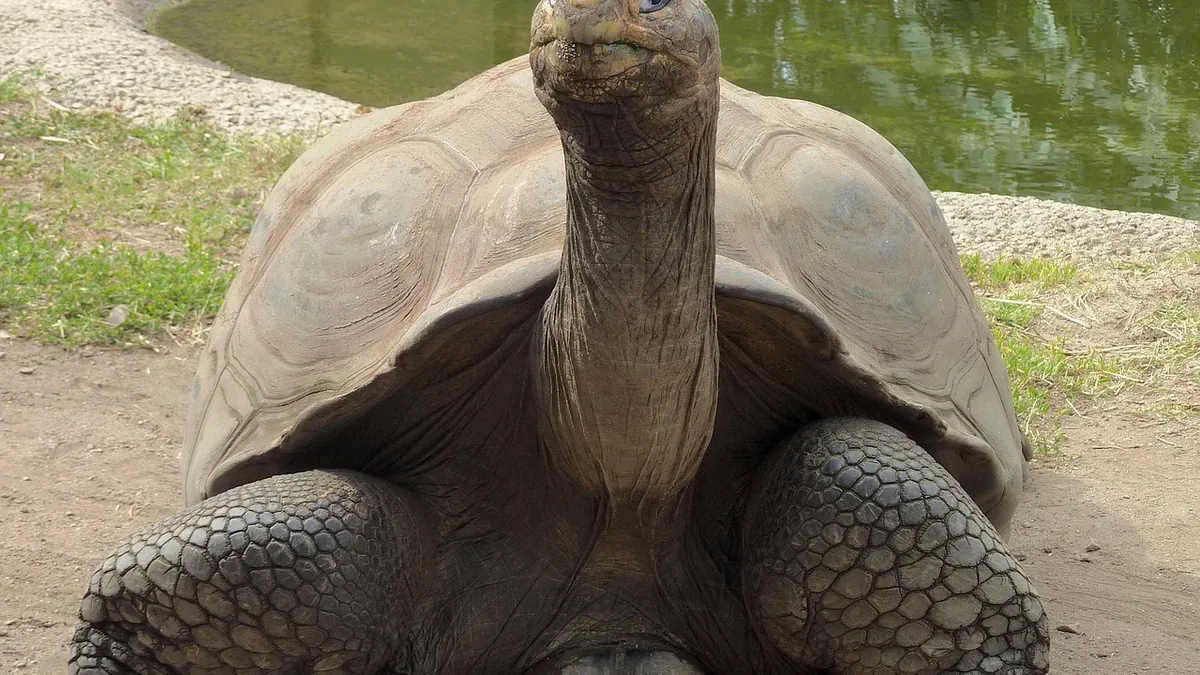
A moving throat or neck is usually normal in a tortoise. Tortoises do not have a diaphragm like mammals, so they push air in and out by moving their throat and limbs, which makes the neck and throat bob with each breath. You should worry when the movement is fast, strained, noisy, or paired with a gaping mouth, bubbles, or a swollen neck.
This article is educational and is not a substitute for veterinary diagnosis or treatment.
Quick Answer
- Slow, steady throat pulsing in a resting tortoise is normal breathing, not a sign of illness.
- A tortoise that stretches its neck up and pumps its throat hard may be too hot, too cold, or stressed.
- Fast breathing, open-mouth gaping, wheezing, clicking, or a runny nose points to a breathing problem that needs a vet.
- A swollen throat or neck can be fluid, an abscess, or a mass, and it needs prompt veterinary evaluation.
- Keep the enclosure at the correct temperature and humidity, and book a vet visit if the movement changes or your tortoise stops eating.
What Normal Tortoise Throat and Neck Movement Looks Like
Tortoise breathing does not look like a dog or cat breathing. There is no chest rise and fall the way you see in mammals. Instead, a tortoise moves air by expanding and contracting the throat and the muscles around the front legs. This is why the throat and neck often pulse or bob in a slow, regular rhythm.
A healthy tortoise at rest usually breathes slowly and quietly. You may see the throat move a few times, then pause, then move again. The neck may extend slightly with each breath. When a tortoise is warm and relaxed, this pattern is easy to miss unless you watch closely.
The movement can change with activity. A tortoise walking, climbing, or exploring may breathe faster. A tortoise that has just been handled or moved may pump its throat more for a short time. A tortoise soaking in warm water may also show more throat movement as it warms up.
Some tortoises also move the neck and throat when they swallow, when they retract the head, or when they are hissing. A hiss is a burst of air, not steady breathing. If your tortoise hisses when you pick it up and then settles, that is normal defensive behavior.
The key word is steady. Normal tortoise neck movement is smooth, quiet, and settles when the tortoise is calm. Abnormal movement is fast, jerky, noisy, or does not stop.
Why Is My Tortoise Throat Moving? Main Causes
Many things can make a tortoise's throat or neck move more than usual. Some are harmless. Some are serious. The table below groups the common causes and how urgent each one is.
| Cause | Typical clues | How urgent |
|---|---|---|
| Normal breathing | Slow, regular throat pulses, calm tortoise, normal appetite | Not urgent |
| Heat or overheating | Fast breathing, open mouth, neck stretched up, seeking shade | Urgent if it does not cool down |
| Cold stress | Slow, weak movement, lethargy, poor appetite, cool enclosure | See a vet soon |
| Stress or handling | Fast breathing that settles within minutes, hissing | Not urgent if it settles |
| Respiratory infection | Wheezing, clicking, bubbles from the nose, gaping, mucus | Same-day vet visit |
| Pneumonia | Labored breathing, neck pumping hard, refusal to eat, lethargy | Emergency |
| Swollen throat or neck | Visible swelling, soft or firm lump, trouble swallowing | Same-day vet visit |
| Abscess or mass | Firm lump, weight loss, changes over weeks | Vet visit soon |
| Fluid buildup (edema) | Soft swelling under the jaw or neck, often with other illness | Emergency |
Respiratory disease is a leading cause of illness and death in captive reptiles. In pet reptiles in Romania, pneumonia is a frequently seen problem, and poor husbandry, poor nutrition, and poor hygiene all raise the risk [1]. That pattern holds for tortoises too. Most breathing problems in pet tortoises start with something wrong in the enclosure.
Bacteria can act as primary pathogens or make existing disease worse [1]. In snakes with respiratory disease, infections are often mixed, meaning more than one germ is involved at the same time [2]. Mycoplasmas are known respiratory pathogens in tortoises, and they can cause long-term, stubborn breathing problems [2]. This is one reason a home remedy is a bad idea. You cannot guess which germ is involved, and the wrong treatment can make things worse.
Not every throat or neck problem is an infection. A tortoise can develop a mass in the body cavity that causes general illness, weight loss, and lethargy [3]. A growth in the throat or neck area can press on the airway and change how the tortoise breathes. In birds, a mass around the glottis and inside the trachea caused weeks of abnormal breathing sounds and severe breathing difficulty [4]. The same principle applies to reptiles. A physical blockage or mass in the airway changes breathing in ways that medicine alone cannot fix.
If your tortoise's breathing sounds wet or honking, some of the same warning signs appear in other species. You can read more about noisy airway sounds in Why Is My Dog Coughing And Honking and Why Does My Dog Have A Honking Cough. The species are different, but the lesson is the same. A new breathing noise is a reason to get a professional exam.
Normal Versus Abnormal: A Simple Check
Watch your tortoise for two full minutes while it rests. Count how many times the throat moves. Note whether the movement is smooth or jerky. Listen for any sound. Then check the enclosure temperature and humidity.
If the throat movement is slow, quiet, and regular, and your tortoise is eating, basking, and moving normally, this is likely normal tortoise breathing. If anything about the pattern has changed, treat it as a warning sign.
Red Flags That Make It an Emergency
Some signs mean your tortoise needs a veterinarian right away. Do not wait to see if it improves.
- Open-mouth breathing that continues after the tortoise cools down
- Gasping or stretching the neck up to pull in air
- Bubbles, foam, or mucus from the nose or mouth
- Wheezing, clicking, or crackling sounds with each breath
- A visibly swollen throat, jaw, or neck
- Refusing food for more than a few days
- Lethargy, weakness, or a tortoise that will not lift its head
- Weight loss or a soft, sunken look around the eyes
- Any breathing change that gets worse over hours, not days
Open-mouth breathing is the sign owners most often miss. A tortoise that gapes while basking may simply be too hot. A tortoise that gapes while resting in a cool spot is in trouble. Check the temperature first, then act.
Safe Things You Can Do at Home While You Wait
You cannot treat a respiratory infection at home. What you can do is remove the triggers and keep your tortoise stable until the appointment.
Check and Fix the Enclosure
Measure the temperature at the basking spot, the warm end, and the cool end. Measure humidity too. Most breathing problems in captive reptiles trace back to husbandry, nutrition, and hygiene [1]. Correcting these is the single most useful thing you can do.
Move the tortoise to a quiet, draft-free spot. Keep the enclosure at the correct temperature for the species. A cold tortoise cannot fight infection well. A too-hot tortoise breathes fast and stresses easily.
Keep It Clean and Calm
Clean the enclosure and replace soiled bedding. Reduce handling to a minimum. Stress makes breathing worse. Offer fresh water in a shallow dish the tortoise can reach without tipping.
Do Not Do These Things
Do not give any medication, including antibiotics, without a veterinarian. Do not use essential oils, herbal extracts, or grapefruit seed extract. These products have been tested against bacteria from reptile respiratory infections, but that research does not support using them on your pet at home [1]. Do not raise the temperature far above the normal range to "burn out" an infection. That can kill your tortoise.
Do not soak a struggling tortoise in deep water. A weak tortoise can drown.
If you are not sure whether the movement is normal, take a short video. A video of the breathing pattern is one of the most useful things you can bring to the appointment.
What Your Veterinarian Will Check and Test
A reptile-savvy veterinarian will start with a full physical exam. They will listen to the lungs, look inside the mouth, check the nares (nostrils) for discharge, and feel the neck and jaw for swelling or lumps.
They will ask about your setup. Be ready to describe the enclosure size, temperatures, humidity, lighting, diet, and cleaning schedule. Husbandry problems are a major driver of reptile pneumonia [1], so this history matters as much as the exam.
Testing may include:
- Oral or nasal swabs to look for bacteria, mycoplasmas, and viruses. In snakes, oral swabs combined with PCR and sequencing found mycoplasmas in every tested animal, plus serpentoviruses and other bacteria [2]. Mixed infections are common [2].
- Blood work to check organ function, calcium, and infection markers. In one tortoise with a body cavity mass, blood work showed low calcium and a mildly elevated liver enzyme [3].
- Imaging such as radiographs or ultrasound. Ultrasound helped find a 6 cm mass in a tortoise with a long history of diarrhea, appetite loss, and lethargy [3].
- Culture and sensitivity if bacteria are found, so the right antibiotic can be chosen.
Treatment depends on the cause. Bacterial infections need the correct antibiotic at a dose your veterinarian calculates from your tortoise's weight and health. Mycoplasma infections in tortoises are often managed long term. A mass or abscess may need surgery. Fluid in the neck may need drainage and treatment of the underlying disease.
Prevention and Monitoring
Most tortoise breathing problems are preventable. Focus on the basics.
Keep temperatures and humidity in the correct range for your species, day and night. Provide a proper temperature gradient so your tortoise can choose its spot. Use the right lighting, including UVB where the species needs it. Feed a balanced diet with the right calcium and phosphorus levels. Clean the enclosure often and remove waste promptly. Quarantine any new tortoise before it meets your others.
Weigh your tortoise monthly and write it down. Weight loss is often the first sign of illness, before breathing changes are obvious. Watch the throat and neck during rest, not just during handling. Learn what normal looks like for your tortoise so you notice small changes early.
If you keep other reptiles, watch them too. Respiratory infections can spread between animals, and mixed infections are common [2]. A new animal with a runny nose should be kept apart from the rest until a veterinarian clears it.
Some breathing changes come from the nervous system or the inner ear, not the lungs. If your tortoise also tilts its head or seems off balance, the same warning signs apply as in Why Is My Dog tilting head to one side? Vestibular Syndrome and Otitis Interna. And if you notice tail bobbing along with the throat movement, Why Is My Bird Tail Bobbing? Breathing Warning Signs explains why that sign matters in birds.
Limitations and When to Contact a Veterinarian
This article cannot tell you what is wrong with your individual tortoise. Only a veterinarian who examines your pet can do that.
Contact a veterinarian the same day if you see open-mouth breathing at rest, bubbles or mucus from the nose, wheezing or clicking, a swollen throat or neck, or a tortoise that has stopped eating.
Go to an emergency clinic now if your tortoise is gasping, cannot lift its head, is limp, or has been struggling to breathe for more than a few minutes. Breathing emergencies in reptiles can worsen quickly.
Schedule a routine visit if the throat movement seems slightly faster than usual but your tortoise is still eating and active. Bring your temperature and humidity records, a video of the breathing, and a note of any recent changes to diet, enclosure, or tank mates.
Frequently Asked Questions
Is a moving throat always a sign of illness in a tortoise?
No. A slow, steady throat pulse is how a healthy tortoise breathes. It becomes a concern when the movement is fast, noisy, strained, or comes with other signs like gaping, discharge, or appetite loss.
Can I treat my tortoise's breathing problem at home?
No. You can fix the enclosure and reduce stress, but you cannot diagnose or treat an infection at home. Using the wrong antibiotic or an untested home remedy can harm your tortoise and delay real treatment.
Why does my tortoise open its mouth while breathing?
It may be too hot, which is common during basking. If the mouth stays open while the tortoise rests in a cool area, or if you hear noise, that points to a breathing problem and needs a vet visit.
Does a swollen neck mean my tortoise has an infection?
Not always. Swelling can come from fluid, an abscess, or a mass. A veterinarian needs to examine and likely image the area to tell the difference and choose the right treatment.
How can I tell if my tortoise's breathing is getting worse?
Track it over time. Note the breathing rate at rest, any new sounds, appetite, weight, and activity level. If the rate climbs, new noises appear, or your tortoise stops eating, that is your signal to call the vet.
Related Articles
- Why Is My Tortoise Wheezing? Respiratory Signs to Watch
- Why Is My Turtle or Tortoise Making Noises?
- Why Is My Tortoise Not Moving? Causes and What to Do
References
- Antibacterial Activity of Some Essential Oils/Herbal Extracts Against Bacteria Isolated from Ball Pythons (Python regius) with Respiratory Infections. Antibiotics (Basel, Switzerland), 2025.
- Identifying Infectious Agents in Snakes (Boidae and Pythonidae) with and Without Respiratory Disease. Animals : an open access journal from MDPI, 2025.
- Case report: Intracoelomic neoplastic mass of undetermined origin in an Asia minor spur-thighed tortoise (Testudo graeca ibera). Frontiers in veterinary science, 2023.
- Laryngeal and oropharyngeal adenocarcinoma with pulmonary metastases in a common raven (Corvus corax). Tierarztliche Praxis. Ausgabe K, Kleintiere/Heimtiere, 2024.