Sick Turtle Shell: Soft, Flaking or Discolored Shells
By Dr. Zubair Khalid, DVM, MS, PhD ·
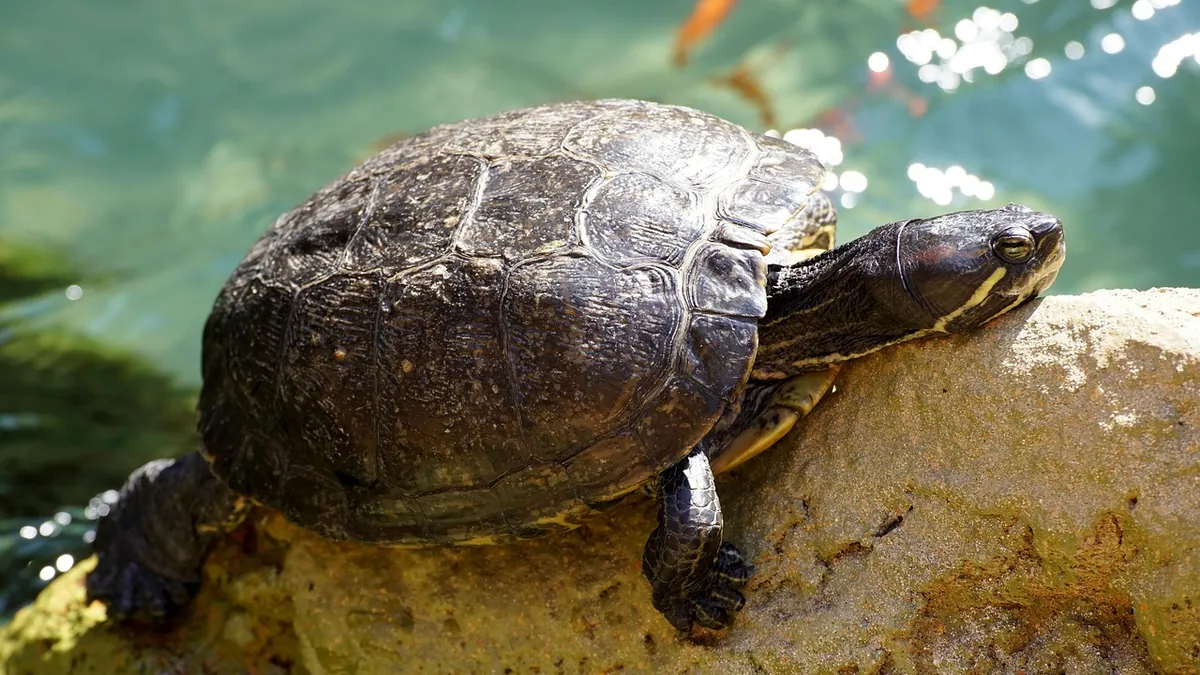
A sick turtle shell looks different from a healthy one in ways you can usually see and feel. A healthy shell is firm, smooth, and holds its shape, while a sick shell may be soft, crumbly, discolored, or foul-smelling. This article helps you tell normal shedding from shell rot, pyramiding, and metabolic bone disease, and explains the care each one needs.
This article is educational and is not a substitute for veterinary diagnosis or treatment.
Quick Answer
- A firm shell with thin, translucent flakes peeling off in small pieces is usually normal shedding, not disease.
- Softness, a bad smell, pitting, black or white patches, or exposed tissue under a lifted scute point to infection or metabolic bone disease and need a veterinary visit.
- Shell problems in captive turtles and tortoises are almost always linked to husbandry: wrong lighting, no UVB, poor diet, dirty water, or low temperatures.
- Do not pull off loose scutes, scrub lesions with harsh chemicals, or apply human ointments. Keep the turtle warm, clean, and dry until you see a vet.
- Metabolic bone disease can be present before the shell looks obviously soft, so early imaging matters [1].
What a Sick Turtle Shell Looks Like and What Is Normal
Normal shedding versus a problem
Turtles and tortoises shed the outer layer of their scutes in thin, dry flakes or sheets. The shell underneath should look smooth and slightly glossy. Shedding is usually gradual and even. If flakes lift in small translucent pieces and the shell below is hard and clean, that is normal.
A problem looks different. You may see:
- Soft or rubbery scutes that flex when you press gently
- Flaking that leaves raw, pink, or bleeding tissue
- White, gray, black, or green patches that do not wipe off
- A sunken, pitted, or crumbly surface
- A foul or sour smell
- Uneven, pyramid-shaped scutes that rise into peaks
Why shell health reflects overall health
The shell is living bone covered by keratin. Anything that affects bone, blood flow, or the immune system can show up in the shell. Bone infections and bone remodeling disorders in reptiles can cause visible deformity, swelling, and lameness [2][3]. That is why a shell change is often a whole-body problem, not a cosmetic one.
If you are still learning to spot the difference between shedding and infection, this guide on Pet Turtle Shell Rot Signs walks through the early clues.
Main Causes of a Sick Turtle Shell
| Cause | Typical clues | How urgent |
|---|---|---|
| Shell rot (bacterial or fungal infection) | Soft, pitted, smelly patches, white or black discoloration, tissue under lifted scutes | Urgent, see a vet within days |
| Metabolic bone disease | Soft shell, flexible jaw, swollen limbs, poor appetite, trouble walking | Urgent, same week |
| Pyramiding | Raised, cone-shaped scutes, often on the back | Routine visit, but act early |
| Trauma or burns | Cracks, dents, red or charred areas near a heat source | Emergency if open or bleeding |
| Abscess or bone infection | Firm swelling, lameness, reluctance to move | Urgent, same week |
| Normal shedding | Thin dry flakes, hard clean shell underneath | No visit needed |
Shell rot
Shell rot starts when bacteria or fungi get into damaged keratin or bone. It often begins as a small discolored spot and spreads into pitting and soft areas. In severe cases the infection reaches the bone itself. Bone infections in reptiles can be caused by bacteria or fungi and may require culture and targeted antibiotics [2]. A related case in a soft-shelled turtle showed that bacterial infection can cause severe tissue damage and immune changes in internal organs, which is why systemic infection matters [4].
Metabolic bone disease
Metabolic bone disease (MBD) is one of the most common disorders in captive chelonians [1]. It happens when calcium, phosphorus, vitamin D3, and UVB exposure fall out of balance. The body pulls calcium from bone, and the shell softens. Early MBD is hard to catch because signs can be vague and blood values may look normal early on, and plain radiographs are not very sensitive [1]. Advanced imaging such as spectral detector computed tomography can measure bone mineral density and help separate healthy tortoises from those with MBD [1].
Pyramiding
Pyramiding means the scutes grow upward into peaks instead of staying flat. It is linked to too much protein, too little calcium, low humidity, and inadequate UVB. It develops slowly and is not reversible, but you can stop it from getting worse. This is covered in more depth in the Red-Eared Slider Turtle Care: Pyramiding & Shell Health Management article.
Trauma, burns, and abscesses
Cracks from falls, bites from tank mates, and burns from unguarded heat lamps all damage the shell. Reptile bone can also develop abnormal remodeling with swelling and lameness, as seen in a boa with a Paget-like bone disorder that caused spinal rigidity and difficulty shedding [3]. The lesson for turtle owners is that bone disease can cause pain and reduced mobility, not just a cosmetic change.
Red Flags That Make It an Emergency
Call an exotic or reptile veterinarian right away if you see any of these:
- An open wound, crack, or bleeding shell
- A shell that smells foul or has pus-like discharge
- A turtle that cannot or will not move its legs
- A soft shell in a young turtle that is getting worse by the day
- Refusing food for more than a few days
- Labored breathing, open-mouth breathing, or bubbles from the nose
- Swelling of a limb or joint with lameness [2]
- A burn with blackened or charred tissue
These signs mean the problem may already involve bone, blood, or internal organs. Waiting can make treatment harder and more expensive.
Safe Things You Can Do at Home While Waiting
You cannot cure shell rot or MBD at home, but you can keep your turtle stable until the appointment.
- Keep it warm. Move your turtle to a clean, dry enclosure with a proper temperature gradient. Warmth supports the immune system.
- Keep it clean. Change water daily in aquatic setups. Use plain, dechlorinated water.
- Do not pick at the shell. Never pull off loose scutes or peel flaking pieces. You can tear healthy tissue and open a door for infection.
- Do not apply human creams or ointments. Many are toxic or trap moisture against the shell.
- Offer a balanced diet. Dark leafy greens, a quality commercial diet, and a calcium source. Do not guess at supplements.
- Check your lighting. Replace UVB bulbs on schedule, since output fades even when the bulb still glows.
- Photograph the shell. Take clear photos with good light and a ruler in frame. This helps your vet track change over time.
If your turtle lives in a tank, review the setup. The right bottom surface affects moisture, abrasion, and cleanliness, and this article on Turtle Tank Substrate: Choosing the Right Bottom for Your Turtle explains the options.
What the Veterinarian Will Check and Test
History and physical exam
Your vet will ask about diet, UVB lighting, temperatures, water quality, and how long the shell change has been present. They will examine the shell, limbs, jaw, eyes, and gait. They will press gently on scutes and look for pitting, discharge, and swelling.
Imaging
Radiographs are often the first step. They can show fractures, bone loss, and some infections. Computed tomography gives more detail. In sea turtles, radiographs and CT revealed multiple lytic bone lesions linked to infection and other causes [2]. In tortoises, spectral detector CT can measure bone mineral density and help distinguish healthy animals from those with MBD [1]. Your vet may also use CT-derived shell measurements to grade how severe shell softening is [1].
Blood work and cultures
Blood tests check calcium, phosphorus, and organ values. A high alkaline phosphatase can point to abnormal bone activity, as seen in a boa with a bone remodeling disorder [3]. If infection is suspected, your vet may take a swab or biopsy and send it for culture and sensitivity testing. In one sea turtle case, blood cultures identified a bacterium that responded to a specific antibiotic chosen after susceptibility testing [2]. That is why guessing at antibiotics at home is a bad idea.
Treatment
Treatment depends on the cause. It may include:
- Debridement of dead tissue
- Topical or systemic antibiotics or antifungals chosen by culture
- Pain medication
- Calcium and vitamin D3 correction
- UVB and diet overhaul
- Supportive fluids and nutrition
Your veterinarian will calculate any drug dose from your pet's weight and health status. Never use a dose you found online.
Prevention and Monitoring
Fix the husbandry first
Most shell disease in captivity traces back to the environment. Check these:
- UVB lighting. Replace bulbs per the manufacturer's schedule. UVB does not pass through glass or plastic.
- Temperature gradient. Provide a warm basking zone and a cooler area so your turtle can regulate.
- Diet. Match the species. Tortoises need high-fiber greens, turtles need variety, and both need appropriate calcium.
- Water quality. Filter and change water often. Dirty water fuels shell rot.
- Humidity. Some species need higher humidity to grow smooth shells.
- Space. A larger enclosure improves mobility and reduces stress.
Weigh and photograph regularly
Keep a simple log. Weigh your turtle monthly and take shell photos every few months. Small changes are easier to catch early.
Know your species
Care needs vary a lot. Box turtles have specific humidity and diet requirements, covered in the Box Turtle Care Guide. For a broader look at shell conditions, see Turtle Shell Diseases: Identification and Treatment.
Limitations and When to Contact a Veterinarian
This article cannot diagnose your turtle. Shell problems range from harmless shedding to life-threatening bone infection, and the signs overlap. Only a veterinarian who examines your pet can tell them apart.
Contact a veterinarian:
- Emergency now: open wound, bleeding, burns, trouble breathing, inability to move, or a shell that is collapsing.
- Same day or next day: foul smell, discharge, spreading discoloration, or a turtle that has stopped eating.
- Routine visit within a week: early pyramiding, mild flaking with a hard shell underneath, or a soft shell that is not getting worse.
If you are unsure, call your vet and describe what you see. It is always better to check.
Frequently Asked Questions
Is a soft turtle shell always a sign of illness?
No, but it is always worth checking. Hatchlings have some natural flexibility, and a small amount of give can be normal in very young animals. In older turtles and tortoises, a soft shell usually points to metabolic bone disease or infection and needs a veterinary exam.
Can shell rot heal on its own?
Mild surface rot can sometimes improve if you correct the environment, but it often spreads deeper into bone. Once infection reaches bone, it needs debridement and targeted medication. Do not wait to see if it clears up.
Why is my turtle's shell turning white?
White patches can be hard water stains, fungal growth, or dead keratin from infection. Try gently wiping with a soft, damp cloth. If the white area does not come off, feels soft, or smells bad, it is likely infection and needs a vet.
Does pyramiding hurt my turtle?
Pyramiding itself is a shape change, but the underlying husbandry problems that cause it can also weaken bone and affect health. It is not reversible, but correcting lighting, diet, and humidity can stop it from progressing.
How often should I check my turtle's shell?
Check the shell at least once a month during handling or cleaning. Look for new soft spots, color changes, smell, and uneven growth. Weigh your turtle monthly and note any drop in appetite or activity.
Related Articles
- Pet Turtle Shell Rot Signs
- Box Turtle Care Guide
- Turtle Tank Substrate: Choosing the Right Bottom for Your Turtle
- Turtle Shell Diseases: Identification and Treatment
- Red-Eared Slider Turtle Care: Pyramiding & Shell Health Management
- Softshell Turtle Care: Species, Habitat, and Health Management
- Why Is My Turtle Rubbing Its Shell or Has a Soft Shell?
- Why Is My Turtle Peeling? Shell and Skin Shedding
- Why Is My Tortoise Shell Soft? Causes and Treatment
- Turtle Herpesviruses
References
- Advancing bone health evaluation in Hermann's tortoises (Testudo hermanni) using spectral detector computed tomography. Frontiers in veterinary science, 2026.
- Osteolytic Lesions in a Sub-Adult Loggerhead Sea Turtle (Caretta caretta): A Case Report. Animals : an open access journal from MDPI, 2024.
- Paget-like bone remodeling disorder in a red-tailed boa (Boa constrictor constrictor): diagnosis and management. Journal of veterinary science, 2026.
- Characterization of ceRNA framework in the spleen of Chinese soft-shelled turtle (Pelodiscus sinensis) responding to Aeromonas hydrophila infection. Developmental and comparative immunology, 2026.