Treating a Sick Tortoise or Turtle: What Owners Can Do
By Dr. Zubair Khalid, DVM, MS, PhD ·
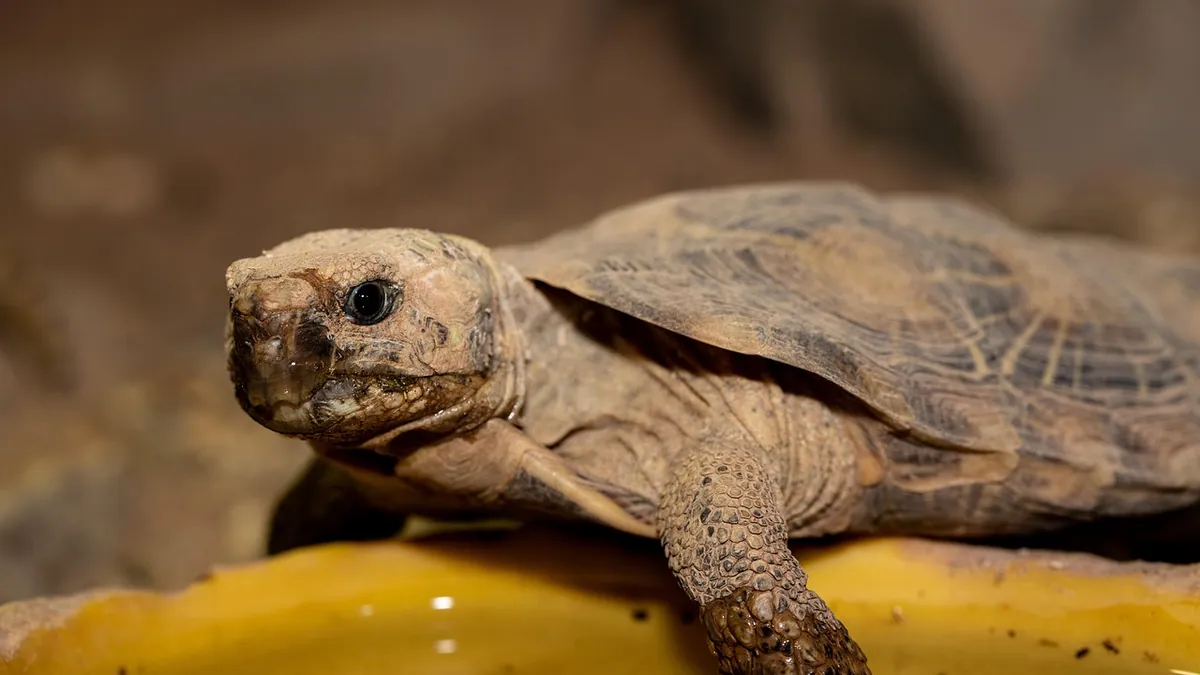
Sick tortoise treatment begins at home with three things you can safely control: a warm enclosure, clean water, and a close look at the habitat. Beyond that, most medications and injections belong in the hands of a veterinarian who treats reptiles. This article is educational and is not a substitute for veterinary diagnosis or treatment.
Quick Answer
- Warm the enclosure to the upper end of your species' preferred range. Sick reptiles use heat to boost immune function, a behavior called "behavioral fever" [1].
- Offer shallow, clean water for soaking and drinking. Dehydration makes many treatments unsafe, and reptiles must be properly hydrated before receiving antibiotics [1].
- Fix the basics first: temperature, lighting, humidity, diet, and cage cleaning. Poor husbandry, poor nutrition, and poor hygiene are leading drivers of respiratory disease in captive reptiles [2].
- Do not give antibiotics, vitamin injections, or dewormers on your own. Doses depend on species, weight, hydration status, and kidney function, and a veterinarian must calculate them.
- Call a reptile vet if your turtle or tortoise stops eating, has trouble breathing, has a soft shell, or shows a swollen or draining area. Chronic abscesses often need surgery, not just drugs [3].
What "Sick" Means in a Turtle or Tortoise
Reptiles hide illness well. In the wild, a visibly weak animal gets picked off, so turtles and tortoises often look normal until a problem is advanced. That means subtle changes matter.
A sick chelonian is usually an animal whose body is losing a fight it was already having. The cause is often the environment, not a random germ. When temperature, lighting, diet, or cleanliness drift out of range, the immune system weakens and common bacteria take hold [1][2].
This is why treatment almost always starts with the habitat. Medicine works better when the animal's body is finally set up to heal.
Signs Owners Notice First
Watch for these changes, and write down when each one started.
- Not eating, or eating much less than usual
- Weight loss, or a shell that feels lighter than it should
- Swollen, closed, or weeping eyes
- Bubbles, wheezing, or open-mouth breathing
- Nasal discharge or a clicking sound when breathing
- Soft, flexible, or misshapen shell
- Swelling, lumps, or a draining wound
- Lethargy, or staying in one spot for days
- Abnormal droppings, or no droppings
- Straining to pass urine or stool
Respiratory signs deserve special attention. Respiratory disease is a major cause of illness and death in captive reptiles, and pneumonia is commonly seen in pet reptiles in some regions [2]. A turtle that breathes with its mouth open is in trouble.
Causes and Risk Factors
Most sick pet turtles and tortoises got sick because something in their care was off. The main risk factors are:
Temperature too low. A reptile that cannot reach its preferred body temperature cannot mount a strong immune response [1].
Poor nutrition and missing UVB. Metabolic bone disease from calcium and vitamin D3 deficiency is common in pet reptiles [4]. Without UVB exposure, calcium absorption suffers, and shells and bones weaken [4]. Shell problems often trace back to this, and you can read more in Turtle Shell Diseases: Identification and Treatment.
Dirty water and dirty cages. Poor hygiene is a direct contributor to respiratory infections in captive reptiles [2].
Wrong humidity or substrate. Too dry, too wet, or moldy bedding all cause problems.
Stress from crowding or handling. Chronic stress suppresses immunity.
Untreated wounds and abscesses. In sea turtles, soft tissue abscesses tend to be thick and caseous and respond poorly to medication alone [3]. The same principle applies to many chelonians: a walled-off pocket of infection often needs to come out.
How a Veterinarian Diagnoses the Problem
A reptile vet starts with the history you provide. Bring notes on temperature, diet, lighting, and the timeline of symptoms. Bring photos of the enclosure if you can.
The exam includes weight, body condition, shell condition, eye and mouth checks, and listening to the lungs. The vet may also:
- Take blood to check calcium, protein, uric acid, and organ values. Reference ranges vary by species and age, and values like total protein can differ between juveniles and adults [4].
- Use imaging. Radiographs are common, and newer methods like spectral detector CT can measure bone mineral density and help distinguish healthy tortoises from those with metabolic bone disease, which is hard to catch early [5].
- Sample discharge or fluid from the lungs or a wound for culture.
- Test a fecal sample for parasites.
Diagnosis matters because the treatment for a soft shell is not the treatment for pneumonia. Guessing wastes time your pet does not have.
Sick Tortoise Treatment: What You Can Do at Home
Warm the Enclosure Correctly
Move the enclosure temperature toward the upper limit your species prefers [1]. Do this gradually, over a day or two, and keep a gradient so your pet can move away from the heat if it wants to. Use a reliable thermometer at both ends of the enclosure.
Do not guess. A basking spot that is too hot causes burns, and a tank that is too cool does nothing.
Hydrate
Offer a shallow dish the animal can climb into and out of safely. Soak many species in lukewarm, shallow water for short periods, always supervised. Never leave a weak animal unattended in water.
Hydration is not optional. Reptiles must be properly hydrated before they receive antibiotics, or kidney damage can result [1]. A veterinarian can give fluids by injection or by mouth to correct dehydration [1].
Fix the Habitat
Check these one at a time:
- UVB bulb: is it the right type, and has it been replaced on schedule?
- Basking temperature: measured, not assumed
- Humidity: matched to your species
- Substrate: clean, dry where it should be, damp where it should be
- Water: changed daily, bowl scrubbed
- Cage cleaning: regular, with reptile-safe disinfectants
- Diet: correct calcium and vitamin D3 support [4]
If you keep a Sulcata or a box turtle, species-specific numbers matter a lot. See Sulcata Tortoise Care Guide and Box Turtle Care Guide.
Support Feeding, With Your Vet's Guidance
Sick reptiles with a higher metabolic rate and no appetite may need assisted feeding or more frequent feeding [1]. Do not start this on your own. Tube or syringe feeding can raise uric acid levels, and high uric acid can deposit in the kidneys and cause kidney failure [1]. Ask your veterinarian before you change feeding frequency or start liquid feeding [1].
Keep Records
Track weight, food intake, droppings, and behavior daily. This is the single most useful thing you can bring to a vet visit.
What You Should Not Do at Home
Do not give antibiotics. You cannot buy the right drug, at the right dose, for the right species, without a diagnosis. Giving antibiotics to a dehydrated reptile can damage the kidneys [1]. Doses are calculated by a veterinarian based on weight, species, hydration, and organ function.
Do not give vitamin injections. Injectable vitamins can be toxic if the dose is wrong, and the real problem is often diet and UVB, not a missing shot [4].
Do not use herbal oils or extracts as treatment. Essential oils and plant extracts have been tested against bacteria from reptiles with respiratory infections, but this is laboratory research, not a home treatment plan [2]. Never put oils on a reptile's skin or in its water.
Do not try to cut out a lump or abscess. Abscesses in chelonians can be thick and walled off, and removing them takes surgical training, anesthesia, and control of bleeding [3]. A case report on a hawksbill turtle described surgical excision under local anesthesia with a radiofrequency electrosurgical unit, followed by oral antibiotics and an uneventful recovery with no recurrence over two months [3]. That outcome came from a surgical team, not a kitchen table.
Do not raise the temperature to extremes. "Upper limit preferred by the species" is not the same as "as hot as possible" [1].
Treatment Options a Veterinarian May Use
| Problem | Typical veterinary approach | Why it is not a home treatment |
|---|---|---|
| Dehydration | Fluids by injection or by mouth [1] | Route and volume depend on species and condition |
| Bacterial infection | Antibiotics, only after hydration is corrected [1] | Wrong dose or timing risks kidney damage [1] |
| Respiratory infection | Culture, antibiotics, habitat correction [2] | Bacteria vary, and resistance patterns differ [2] |
| Abscess or mass | Surgical excision, then antibiotics [3] | Needs anesthesia, bleeding control, and aftercare [3] |
| Metabolic bone disease | Calcium and vitamin D3 correction, UVB, diet changes [4] | Blood values guide the plan, and UVB raises calcium levels [4] |
| Shell disease | Debridement, cleaning, bandaging, husbandry repair | See Turtle Shell Diseases: Identification and Treatment |
| Parasites | Fecal testing, then targeted treatment | Drug choice depends on the parasite and the species |
For respiratory cases in particular, a vet may follow a structured protocol. A related guide is Sulcata Tortoise Care: Respiratory infection treatment protocol guide.
Recovery, Outlook, and Long-Term Management
Recovery in reptiles is slow. Expect weeks to months, not days. The two-month follow-up in the hawksbill case showed no complications or recurrence, which is a good outcome for a chronic abscess [3].
What helps most during recovery:
- Keep the enclosure at the warm end of the species range [1]
- Keep water clean and always available
- Keep handling to a minimum
- Finish every medication exactly as prescribed
- Return for rechecks, even when your pet looks better
- Weigh your pet weekly and record it
Long-term, think of your setup as the treatment. Welfare assessment frameworks for reptiles look at environment, nutrition, physical health, and behavior [6]. Those four areas are also your best checklist for keeping a recovered animal healthy.
Prevention
Prevention is cheaper and kinder than treatment.
- Build the enclosure around your species' needs, not around what fits on a shelf
- Replace UVB bulbs on schedule and provide proper calcium and vitamin D3 support [4]
- Keep water and surfaces clean, since hygiene is a major factor in preventing common reptile health problems [1][2]
- Feed a correct diet for the species and life stage
- Quarantine any new reptile before it meets your others
- Weigh your pet monthly so you catch weight loss early
- Find a reptile vet before you need one. Ask about their experience with reptiles and choose someone with an appropriate level of experience and interest [1]
Limitations and When to Contact a Veterinarian
Home care buys time. It does not replace a diagnosis, and individual cases need a veterinarian.
Call a reptile vet the same day if your turtle or tortoise:
- Has stopped eating for more than a few days
- Has nasal discharge, bubbling, or noisy breathing
- Has a soft or flexible shell
- Has a swollen area, lump, or draining wound
- Has not passed droppings in several days
- Is losing weight
Go to an emergency clinic now if your pet:
- Breathes with its mouth open or gasps
- Is limp, unresponsive, or cannot right itself
- Has prolapsed tissue from the cloaca
- Has a deep wound or heavy bleeding
- Was exposed to a toxin or overheated enclosure
Schedule a routine visit if:
- You are unsure whether the setup is correct
- Your pet is new and has never had a checkup
- You want a baseline weight and blood panel
Frequently Asked Questions
Can I treat my turtle at home without a vet?
You can safely manage warmth, hydration, cleanliness, and habitat corrections at home. You cannot safely diagnose an infection or choose a drug on your own. If symptoms last more than a day or two, or if breathing, eating, or shell condition changes, see a reptile vet.
Why can't I just buy antibiotics online?
Because the drug, dose, and timing all depend on your pet's species, weight, hydration, and kidney function. Reptiles must be properly hydrated before antibiotics, or kidney damage can result [1]. A veterinarian calculates the dose from your pet's specific situation.
Is a soft shell always metabolic bone disease?
No, but calcium and vitamin D3 deficiency is a common cause of metabolic bone disease in pet reptiles [4]. UVB exposure raises calcium levels in bearded dragons, which shows how directly lighting affects bone health [4]. A vet can confirm the cause with an exam, blood work, and imaging such as spectral detector CT [5].
How warm should I keep a sick tortoise?
Aim for the upper end of the range your species prefers, with a gradient so your pet can cool down if needed [1]. Sick reptiles deliberately seek warmer spots to create a behavioral fever [1]. Measure with a real thermometer instead of guessing.
Can an abscess in a turtle heal with medicine alone?
Often no. Soft tissue abscesses in sea turtles tend to be thick and caseous and respond poorly to medication, and surgical excision was the most effective approach in a reported case [3]. Many chelonian abscesses need to be removed, with antibiotics used afterward [3].
Related Articles
- Turtle Shell Diseases: Identification and Treatment
- Sulcata Tortoise Care Guide
- Box Turtle Care Guide
- Sulcata Tortoise Care: Respiratory infection treatment protocol guide
- Turtle Dove Care: A Guide for Pet Owners
- Hermann's Tortoise Care Guide
- Signs of a Sick Budgie, Cockatiel, Turtle, or Tortoise
- Why Is My Turtle or Tortoise Not Eating?
- Why Does My Tortoise Have Diarrhea? Causes and Care
- Turtle Herpesviruses
References
- Routine Health Care of Reptiles - All Other Pets. Merck Veterinary Manual.
- Antibacterial Activity of Some Essential Oils/Herbal Extracts Against Bacteria Isolated from Ball Pythons (Python regius) with Respiratory Infections. Antibiotics (Basel, Switzerland), 2025.
- Successful Surgical Excision of a Chronic Abscess in a Hawksbill Turtle (Eretmochelys imbricata): A Case Report. Veterinary sciences, 2025.
- Effect of different dietary supplements on the growth and blood parameters of bearded dragons (Pogona vitticeps). Acta veterinaria Hungarica, 2026.
- Advancing bone health evaluation in Hermann's tortoises (Testudo hermanni) using spectral detector computed tomography. Frontiers in veterinary science, 2026.
- Laying the groundwork for reptile welfare assessment in zoos and private keeping: A literature-based proposal. Animal welfare (South Mimms, England), 2025.