Red-Eyed Tree Frog Care: Habitat, Diet, and Health
By Dr. Zubair Khalid, DVM, MS, PhD ·
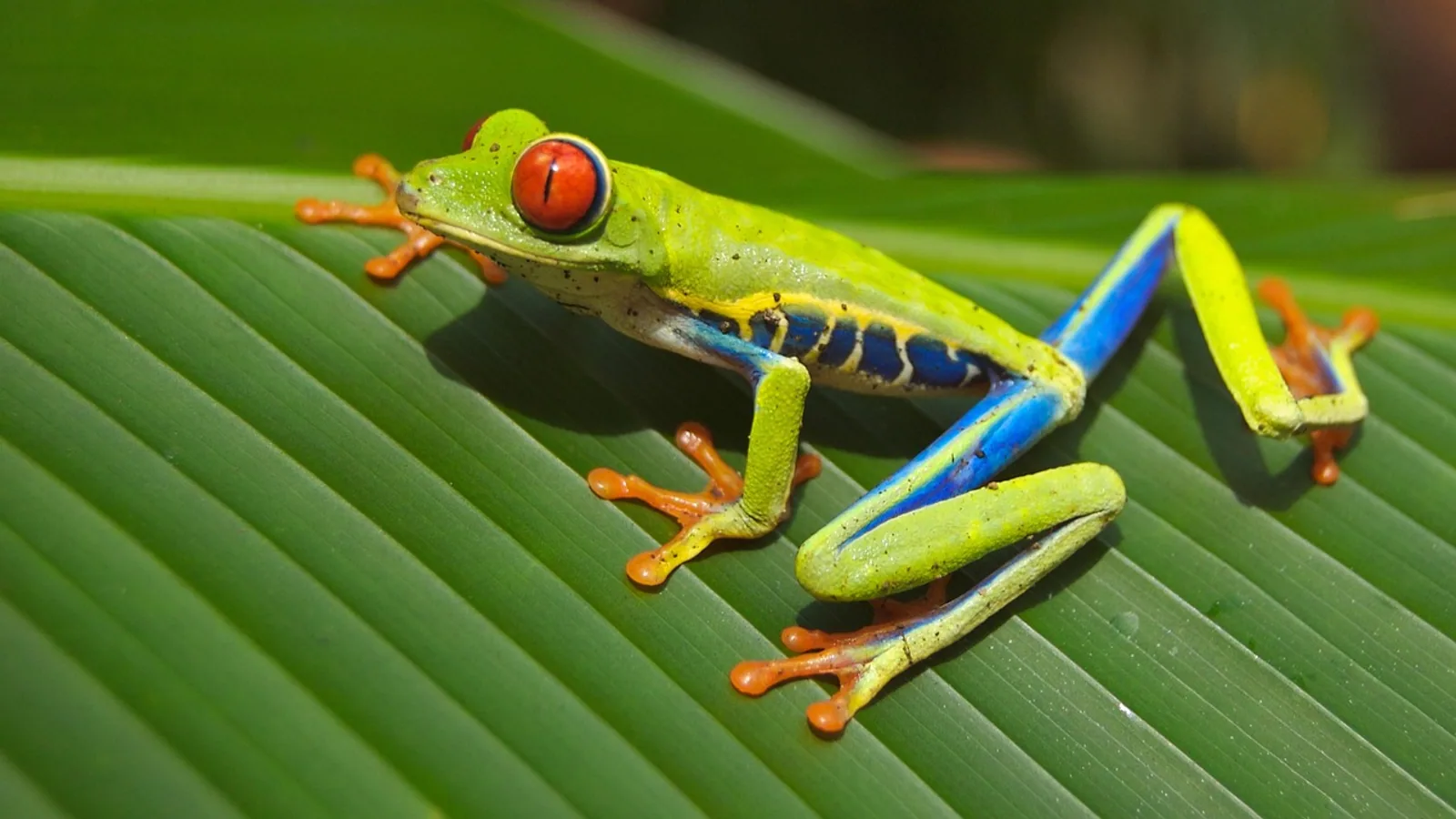
The red eyed tree frog (Agalychnis callidryas) is one of the most recognizable amphibians in the world. Its vivid green body, orange toes, and large red eyes make it a favorite in the pet trade and in zoological exhibits. In the wild, this species is native to the humid lowland forests of Central America. In captivity, it needs a specific combination of warmth, high humidity, vertical space, and live plant cover to stay healthy.
This guide gives you a practical, evidence-based plan for red-eyed tree frog care. It covers terrarium parameters, diet and supplementation, handling limits, and the health problems that most commonly affect captive A. callidryas. According to the ARAV (Association of Reptilian and Amphibian Veterinarians), amphibians are not small reptiles. They have permeable skin, unique physiology, and require specialized diagnostics. That distinction matters for every decision you make about housing and feeding.
This article is educational and is not a substitute for veterinary diagnosis or treatment.
At a Glance: Core Care Checklist
| Item | Target |
|---|---|
| Enclosure orientation | Vertical, at least 45 x 45 x 60 cm for a pair |
| Day temperature | 24 to 28 degrees C (75 to 82 degrees F) |
| Night temperature | 20 to 22 degrees C (68 to 72 degrees F) |
| Relative humidity | 60 to 80 percent |
| Lighting | Low-level UVB plus a 12-hour photoperiod |
| Diet | Gut-loaded crickets and roaches |
| Supplementation | Calcium and multivitamin dust 2 to 3 times weekly |
| Feeding frequency (adult) | Every 2 to 3 days |
| Handling | Minimal, moist hands, no sunscreen |
| Water | Dechlorinated, shallow bowl plus misting |
Why This Species Needs Specialized Care
Red-eyed tree frogs are arboreal. They live on leaves and branches above the ground, not on the forest floor. That single fact drives most of the housing requirements below. They need height, vertical climbing surfaces, and broad leaves to rest on during the day.
Their skin is thin, highly permeable, and rich in glands. It plays an active role in respiration, water balance, and immunity. A study of skin secretions from A. callidryas identified a novel antibacterial peptide (dermaseptin-AC) with activity against bacteria, which shows how chemically active their skin surface is [1]. Anything you put on your hands, or into the enclosure, can cross that skin barrier. That includes soap residue, lotions, sunscreen, and many household cleaners.
The skin also hosts a community of symbiotic bacteria that help defend against pathogens, including the amphibian chytrid fungus [2]. Captive conditions can shift that community. A study comparing captive and wild A. callidryas found that diet influences the culturable bacterial community on the skin. Frogs fed a carotenoid-enriched diet supported greater species richness and abundance of bacteria than frogs fed a carotenoid-free diet [2]. Carotenoid status is therefore not cosmetic. It is a measurable variable in immune-relevant skin ecology.
Housing the Red-Eyed Tree Frog
Enclosure Size and Type
A vertical enclosure of at least 45 x 45 x 60 cm (roughly 18 x 18 x 24 inches) is the practical minimum for a pair. If you keep more than two frogs, scale the footprint and the height rather than just the height. Glass or acrylic front-opening vivaria work well because they hold humidity. Mesh-topped screen cages lose moisture quickly and are a poor choice for a species that needs 60 to 80 percent relative humidity.
Orientation is not a preference. It is a species requirement. A wide, low enclosure encourages the frog to sit on the floor. A vertical enclosure encourages normal climbing and resting behavior and reduces stress.
Plant Cover: A Welfare Requirement, Not Decoration
Live or artificial plant cover is one of the most important parts of the enclosure. A controlled study of captive A. callidryas found measurable effects of plant provision on body size, growth rates, and cutaneous bacterial communities [3]. Frogs in planted areas were larger, grew faster, and carried different skin bacteria than frogs in bare enclosures. The same study also found a strong behavioral preference for planted over non-planted areas [3].
This is the single most cited piece of enclosure-design evidence for this species. It means your frog's cover is a fitness variable, not an aesthetic one. Provide:
- Live or artificial broad-leaf plants with horizontal resting surfaces
- Cork bark tubes or branches for vertical structure
- A dense canopy layer to give the frog a sense of concealment
- Leaf litter or a soil-based substrate that holds humidity
Substrate and Drainage
A soil-based substrate holds humidity and supports plant roots. A drainage layer at the bottom, separated by a mesh barrier, prevents waterlogging and anaerobic decay. Avoid gravel alone, which dries out and does not support plants.
Terrarium Parameter Table
| Parameter | Target Range | Monitoring Method |
|---|---|---|
| Daytime temperature | 24 to 28 degrees C (75 to 82 degrees F) | Digital probe thermometer placed in the basking zone and shaded area |
| Nighttime temperature | 20 to 22 degrees C (68 to 72 degrees F) | Same probe, checked after lights out |
| Relative humidity | 60 to 80 percent | Digital hygrometer, misting schedule log |
| UVB | Low-level UVB, 12-hour photoperiod | UVB meter or manufacturer replacement schedule |
| Photoperiod | 12 hours light, 12 hours dark | Timer |
| Water quality | Dechlorinated, shallow bowl | Chlorine or chloramine test strip |
| Enclosure size | At least 45 x 45 x 60 cm for a pair | Tape measure |
| Plant cover | Dense canopy, broad leaves | Visual inspection |
Lighting and UVB
Amphibians are nocturnal or crepuscular, but they still benefit from low-level UVB. In captivity, UVB supports vitamin D synthesis and calcium metabolism. It also drives plant growth, which supports the canopy cover this species needs. A 12-hour photoperiod gives a stable day and night cycle and supports normal circadian behavior.
Replace UVB bulbs on the manufacturer's schedule. Output fades even when a bulb still looks bright. A UVB meter gives you a direct reading. If you do not have one, follow the replacement interval exactly.
Water and Misting
Provide a shallow, dechlorinated water bowl. The bowl should be shallow enough that the frog can exit easily. Red-eyed tree frogs are not strong swimmers and can drown in deep water.
Mist once or twice daily to keep humidity in the target range. Mist the glass and leaves rather than spraying the frog directly. Use dechlorinated or RO water for misting. Tap water treated with a dechlorinator that also binds chloramine is acceptable.
Feeding the Red-Eyed Tree Frog
Staple Prey
Gut-loaded crickets and roaches are the staples. Gut-loading means feeding the insects a nutritious diet for 24 to 48 hours before offering them to the frog. This transfers nutrients from the insect gut to the frog.
Offer a variety of sizes appropriate to the frog's mouth. Prey should be no longer than the distance between the frog's eyes. Oversized prey risks choking and gastric impaction.
Feeding Schedule
| Life Stage | Frequency | Amount |
|---|---|---|
| Juveniles | Daily or every other day | Small prey, multiple items |
| Adults | Every 2 to 3 days | 2 to 4 appropriate-size prey items |
Adults do not need daily feeding. Overfeeding is a leading cause of obesity in captive red-eyed tree frogs.
Supplementation
Dust prey with a calcium and multivitamin powder 2 to 3 times weekly. The dust should coat the insect evenly. Use a calcium source with vitamin D3 if your frog has low UVB exposure, and a plain calcium source if UVB and diet are adequate. Your veterinarian can help you choose based on your setup.
Do not overdose. Fat-soluble vitamins accumulate and can be toxic. Follow the label and your veterinarian's guidance.
Handling: Minimal and Careful
Handling Limits
Keep handling to a minimum. Move the frog only when you need to clean the enclosure or perform a health check. Short, infrequent sessions reduce stress and skin disruption.
Technique
- Wet your hands with dechlorinated water before handling.
- Never apply lotion, sunscreen, or hand sanitizer before handling.
- Support the frog's body with an open palm rather than pinching.
- Keep sessions under a few minutes.
- Wash your hands thoroughly before and after.
Sunscreen and lotions can be absorbed through the skin and cause serious harm [1]. Even "natural" products are not safe for amphibians.
Why Handling Matters
Amphibian skin is permeable, glandular, and loaded with bioactive peptides [1]. Every contact can alter the skin's bacterial community. That community is part of the frog's immune defense [2]. Minimizing handling protects that layer.
Common Captive Health Problems
Chytridiomycosis
Chytridiomycosis is caused by the amphibian chytrid fungus. It attacks keratinized skin, disrupts water and electrolyte balance, and can be fatal. The symbiotic bacteria on amphibian skin provide natural protection against this pathogen [2]. Anything that disrupts that community, including poor diet, poor cover, or chronic stress, can increase susceptibility. A carotenoid-enriched diet supported greater bacterial richness and abundance on the skin of captive A. callidryas compared with a carotenoid-free diet [2]. That makes diet quality a preventive measure.
Signs to watch for:
- Lethargy or reluctance to move
- Abnormal posture
- Loss of righting reflex
- Excessive shedding or skin discoloration
- Weight loss
Any suspicion warrants immediate veterinary assessment. Do not attempt home treatment.
Metabolic Bone Disease
Metabolic bone disease (MBD) results from calcium and vitamin D imbalance. It causes soft or deformed bones, tremors, and difficulty climbing. Causes include:
- Inadequate UVB
- Absent or inconsistent calcium dusting
- Poor gut-loading of prey
- Inadequate vitamin D3
Prevention is straightforward. Follow the UVB and dusting schedule above and keep the enclosure parameters in the target range.
Obesity
Obesity is common in captive adults because owners feed daily. Red-eyed tree frogs are sit-and-wait predators and do not self-regulate intake well. Stick to the every 2 to 3 day adult schedule. Monitor body condition. A healthy red-eyed tree frog has a rounded but not distended abdomen.
Bacterial Dermatitis
Bacterial dermatitis causes redness, swelling, ulcers, or a foul odor. It is often secondary to dirty water, high humidity with poor ventilation, or skin trauma. Prevention depends on:
- Clean water changed daily
- Good ventilation without drying the enclosure
- Clean substrate and removal of waste
- Minimal handling
Eye Problems
A case report described a corneal dermoid in a wild male A. callidryas from Costa Rica [4]. The lesion replaced roughly 70 percent of the cornea with skin-like tissue. It was removed surgically by enucleation, and the frog recovered and was released [4]. Corneal dermoids are congenital lesions caused by a failure in ectodermal differentiation [4]. Any visible eye abnormality in a captive frog should be evaluated by a veterinarian. Do not assume an eye lesion is an infection or treat it with antibiotic drops without a diagnosis.
Step-by-Step Setup for a New Red-Eyed Tree Frog
- Choose a vertical enclosure of at least 45 x 45 x 60 cm for a pair.
- Install a drainage layer and a soil-based substrate.
- Add branches, cork bark, and broad-leaf plants for a dense canopy.
- Set up UVB and a 12-hour photoperiod timer.
- Install a digital thermometer and hygrometer.
- Establish a misting routine that keeps humidity at 60 to 80 percent.
- Provide a shallow dechlorinated water bowl.
- Source captive-bred prey and a calcium/multivitamin dust.
- Wait 1 to 2 weeks for the enclosure to stabilize before adding frogs.
- Plan a baseline veterinary visit with an amphibian-experienced veterinarian.
Equipment and Supplies: Selection Criteria
| Item | Selection Criteria |
|---|---|
| Enclosure | Vertical, front-opening, glass or acrylic, at least 45 x 45 x 60 cm for a pair |
| Substrate | Soil-based, moisture-retaining, free of fertilizers or pesticides |
| Plants | Live or artificial, broad leaves, no toxic species |
| UVB source | Low-level UVB rated for amphibians or tropical reptiles |
| Thermometer | Digital probe, placed at frog height |
| Hygrometer | Digital, placed at frog height |
| Water treatment | Dechlorinator that binds chloramine |
| Prey | Gut-loaded crickets and roaches from a clean source |
| Supplements | Calcium and multivitamin powder designed for amphibians |
Common Mistakes
- Using a horizontal enclosure. This species needs height.
- Skipping plant cover. Planted enclosures improved growth and supported a richer skin bacterial community in controlled studies [3].
- Feeding daily. This drives obesity.
- Handling often. Each contact disrupts the skin's barrier and microbiome [1][2].
- Using tap water without treatment. Chlorine and chloramine irritate skin and eyes.
- Skipping UVB. This contributes to metabolic bone disease.
- Treating skin or eye problems at home. Chytridiomycosis and bacterial dermatitis need a diagnosis.
- Mixing species. Do not cohouse red-eyed tree frogs with other amphibians.
Welfare and Safety Points
- Keep the enclosure in a quiet room away from foot traffic.
- Avoid picking the frog up for entertainment.
- Wash hands before and after any contact.
- Never release a captive frog into the wild.
- Quarantine any new frog for at least 30 days.
- Keep a written log of temperatures, humidity, feeding, and any behavioral changes.
- Source captive-bred animals whenever possible.
Limitations and When to Contact a Veterinarian
This guide covers normal care. Individual frogs can develop problems that need direct examination. Contact an amphibian-experienced veterinarian immediately if you see:
- Refusal to eat for more than a few days
- Weight loss or a visibly sunken abdomen
- Lethargy, weakness, or loss of righting reflex
- Abnormal posture or tremors
- Redness, swelling, ulcers, or foul odor on the skin
- Any visible eye abnormality
- Difficulty shedding or retained shed
- Respiratory signs such as open-mouth breathing or mucus
- Sudden death of a tankmate
Chytridiomycosis, metabolic bone disease, and bacterial dermatitis all require veterinary diagnosis. Do not attempt home treatment with antibiotics, antifungals, or supplements beyond the preventive schedule above. According to the ARAV, amphibians should be examined by a veterinarian with species-specific experience, and basic diagnostics such as skin swabs, radiographs, and blood work may be needed.
Reading the Frog: What Normal Actually Looks Like
Before you can recognize disease in a red eyed tree frog, you need a reliable mental image of health. Owners who can describe normal behavior in specific terms give their veterinarian far more useful information than owners who simply report that the frog "seems off." Building that baseline takes deliberate observation, ideally starting the day the frog arrives.
A healthy Agalychnis callidryas at rest adopts a compact posture with the limbs tucked close to the body and the eyes partially closed under a translucent lower lid. During the photoperiod, a healthy frog should be largely inactive and positioned high in the enclosure, often flattened against a broad leaf or the glass near the canopy. Activity during bright light is not automatically abnormal, but a frog that paces, sits exposed on the floor, or repeatedly climbs and falls is not behaving normally.
Color is a useful but frequently misinterpreted signal. Red eyed tree frogs can shift the intensity of their green coloration with light level, temperature, and arousal. A frog that is uniformly darker green at night and brighter during the day is behaving normally. A frog that develops patchy discoloration, a dull or grayish cast that persists across the day and night cycle, or localized dark or red areas is showing something that deserves evaluation. Photograph the frog under consistent lighting so you can compare over time rather than relying on memory.
Body condition is best assessed by looking at the frog from above and from the side. A healthy adult has a smooth, rounded outline with a slight taper toward the vent. The abdomen should be gently convex, not taut and distended, and not sunken with visible pelvic bones or a sharp ridge along the spine. Weighing the frog periodically on a small digital scale, even if you only record relative changes rather than absolute values, gives you an objective trend that is far more sensitive than visual inspection alone.
Feeding response is one of the earliest and most reliable indicators of trouble. A healthy red eyed tree frog orients toward moving prey, tracks it with head movement, and strikes with a rapid, coordinated lunge. A frog that ignores prey it would normally take, misses repeatedly, or takes prey and then spits it out is showing a clinical sign, not a personality quirk. Record the date you first notice any change in feeding response, because the duration of anorexia is one of the most important pieces of history your veterinarian will ask about.
Finally, observe the skin. Normal amphibian skin is moist, smooth, and free of raised nodules, ulcers, or adherent patches of unshed skin. The ventral surface should be pale and clean. Any focal redness, especially on the belly, thighs, or around the vent, is abnormal and should be documented with a photograph and a date.
Clinical Reasoning: How Amphibian Disease Actually Presents
One of the most common mistakes owners make is waiting for a specific, dramatic sign before seeking help. Amphibians do not present the way mammals do. They do not typically run fevers, they do not vomit, and they do not limp in obvious ways. Instead, they compensate silently until compensation fails, and then they deteriorate quickly.
The reason for this pattern lies in their physiology. Amphibians rely heavily on cutaneous respiration and on their skin for water and electrolyte balance. When the skin is compromised, whether by infection, trauma, or environmental insult, the consequences are systemic rather than local. A frog with chytridiomycosis may show no visible skin lesions at all in the early stages, yet it is already losing the ability to regulate sodium and potassium across the skin. The first thing an owner notices may be that the frog is sitting differently, or that it has stopped coming down to feed.
This is why the clinical reasoning for amphibians starts with the environment, not with the frog. When a frog presents with lethargy, weight loss, or loss of righting reflex, the differential list should be organized around four broad categories:
- Environmental failure. Temperature outside the target range, humidity persistently too low or too high, inadequate ventilation, or chronic exposure to untreated water.
- Nutritional failure. Inadequate calcium, inadequate vitamin D3, poor gut-loading of prey, or chronic overfeeding.
- Infectious disease. Chytridiomycosis, bacterial dermatitis, or secondary opportunistic infections.
- Traumatic or structural disease. Skin wounds, retained shed, or congenital lesions such as the corneal dermoid described in a wild A. callidryas [4].
These categories overlap. A frog kept at the low end of the temperature range may eat less, become immunosuppressed, and then develop a bacterial skin infection. A frog with metabolic bone disease may fall from a perch and sustain trauma. The veterinarian's job is to identify which problem is primary and which are consequences, because treating only the visible problem often fails.
Owners can support this process enormously by bringing structured information to the appointment. A written log of enclosure temperature and humidity over the preceding two weeks, the feeding schedule, the supplement schedule, the date of acquisition, and the date each clinical sign was first noticed gives the veterinarian a timeline to work from. Without that timeline, diagnosis becomes guesswork.
The Diagnostic Workflow: What to Expect at the Veterinary Visit
Many owners are surprised to learn how much can be done for a frog that weighs less than a AA battery. Amphibian medicine has advanced considerably, and a veterinarian with species-specific experience has a defined diagnostic pathway.
The visit begins with history and visual examination. The veterinarian will assess posture, mentation, body condition, skin integrity, and respiratory effort. They will examine the eyes, the oral cavity if the frog can be safely handled, and the limbs for deformities or fractures. They will palpate the coelomic cavity gently to assess for masses or fluid.
Skin diagnostics are central in amphibian medicine. A skin swab or scrape can be examined cytologically for bacteria, fungi, or inflammatory cells. For suspected chytridiomycosis, specific testing is required, and the veterinarian will explain which sample type and which laboratory method they are using. Because the skin's bacterial community is part of the frog's natural defense against pathogens such as chytrid [2], the veterinarian will also consider whether recent husbandry changes, diet changes, or handling have altered that community.
Imaging is feasible in amphibians. Radiographs can reveal metabolic bone disease, fractures, gastrointestinal obstruction, or retained eggs in females. The small size of A. callidryas makes positioning and technique important, which is one reason to seek a veterinarian who routinely works with amphibians rather than a general practitioner who sees them occasionally.
Blood work is possible but technically demanding in a frog of this size. When it is performed, it provides information about hydration, electrolyte status, and organ function. The veterinarian will weigh the value of the sample against the stress and risk of collection, and may defer blood work if the history and examination already point to a clear diagnosis.
The ARAV position that amphibians are not small reptiles is directly relevant here. Reptile diagnostic protocols, drug choices, and fluid plans do not transfer cleanly to amphibians. A veterinarian who treats amphibians as a distinct category will approach your frog differently, and that difference matters for outcomes.
Preparing for the Veterinary Visit
Preparation is not administrative busywork. It directly affects how much information the veterinarian can gather and how much stress the frog experiences.
Before the appointment:
- Confirm that the clinic sees amphibians and ask specifically whether the veterinarian has experience with anurans.
- Ask what records or samples they want. Some clinics request a fresh fecal sample, a photograph of the enclosure, or a water sample.
- Compile your husbandry log. Include temperature range over the last two weeks, humidity range, misting frequency, feeding dates and amounts, supplement dates, and the date each clinical sign appeared.
- Photograph the frog from above, from the side, and from below under consistent lighting. Bring these images, because a frog may look different in a clinic than it does at home.
- Photograph the enclosure as a whole, including lighting, plant cover, water bowl, and substrate.
- Write down your specific questions. It is easy to forget them in the moment.
During transport:
- Use a small, ventilated container with a damp paper towel or moist sphagnum moss for humidity.
- Keep the container insulated so the frog does not overheat or chill during transport.
- Do not transport the frog in the enclosure, and do not transport it with other animals.
- Keep the trip as short as possible and avoid leaving the container in a parked vehicle.
At the appointment:
- Be honest about husbandry. If the temperature has drifted, if you have missed supplement doses, or if you introduced a new animal without quarantine, say so. The veterinarian is not there to judge you. They are there to diagnose the frog.
- Ask what the working diagnosis is, what the diagnostic plan is, and what the treatment plan involves.
- Ask what signs would indicate improvement and what signs would indicate the frog is getting worse.
- Ask what you should change in the enclosure, and what you should not change during treatment.
Prevention: Building a System Rather Than Reacting to Problems
Prevention in amphibian medicine is largely a matter of consistency. The frog's physiology is tuned to stable conditions, and most captive disease arises from drift rather than from a single catastrophic error.
Environmental stability. Temperature and humidity should not swing widely across the day. A gradual drop at night is normal and appropriate. A sudden spike because a heat source was left on, or a sudden drop because a window was opened, is a stress event. Use a thermostat rather than relying on manual adjustment.
Water discipline. Change the water bowl daily. Use dechlorinated water for both the bowl and misting. If your municipal water supply uses chloramine, confirm that your dechlorinator binds it, because chloramine does not off-gas the way chlorine does.
Quarantine. Any new frog should be quarantined away from established animals for a minimum of 30 days, with separate equipment. Do not share nets, bowls, or misting bottles between quarantine and main enclosures without disinfection.
Feeder insect quality. Gut-load prey for 24 to 48 hours before offering. Source insects from a supplier with clean husbandry. Do not collect wild insects, which may carry pesticides or parasites.
Supplement consistency. Dusting is easy to forget. Keep the supplement container next to the feeder insect container so the two are used together. Track dusting dates in the same log you use for temperature and humidity.
Cover and complexity. The evidence that planted enclosures improved body size, growth rate, and skin bacterial communities in captive A. callidryas is one of the strongest husbandry findings available for this species [3]. Treat plant cover as a preventive intervention, not an optional decoration.
Handling hygiene. Wash hands thoroughly before and after any contact, and never handle the frog after applying lotion, sunscreen, or sanitizer [1]. If you must handle the frog, moisten your hands with dechlorinated water first.
Record keeping. A simple log with columns for date, temperature, humidity, feeding, supplementation, and observations takes two minutes a day. It is the single most useful thing you can bring to a veterinary appointment.
Prognosis: What Owners Should Understand About Outcomes
Prognosis in amphibian medicine depends heavily on how early the problem is identified and how completely the underlying cause can be corrected. This is not a reason for pessimism. It is a reason for early action.
Conditions caught early, when the frog is still eating and still maintaining posture, generally carry a better prognosis than conditions caught after the frog has stopped eating or lost its righting reflex. Environmental and nutritional problems often improve once the underlying husbandry issue is corrected, though structural damage such as bone deformity may be permanent. Infectious diseases vary widely in prognosis depending on the specific pathogen, the stage at diagnosis, and the frog's overall condition.
The corneal dermoid case in a wild A. callidryas is instructive in a different way. The lesion involved roughly 70 percent of the cornea and required surgical removal by enucleation, yet the frog recovered and was released [4]. That outcome reflects the resilience of the species when the problem is addressed definitively rather than managed with guesswork. It also reflects the value of a correct diagnosis. A corneal dermoid is a congenital structural lesion, not an infection, and no amount of antibiotic drops would have resolved it.
Owners should also understand that some conditions are managed rather than cured. Chronic metabolic bone disease may require ongoing husbandry correction and monitoring. A frog that has sustained organ damage may need lifelong attention to hydration and temperature. The veterinarian's role is to define what is achievable and to help you decide what is in the frog's interest.
Special Populations: Juveniles, Females, and New Acquisitions
Juveniles. Young red eyed tree frogs are growing rapidly and have higher metabolic demands than adults. They need more frequent feeding, smaller prey, and consistent calcium and vitamin D3 support. Growth deformities that appear in juveniles often reflect a husbandry gap in the first weeks after acquisition, which is why the setup should be stable before the frog arrives.
Females and reproductive activity. Sexually mature females may produce eggs even without a male present. Egg binding, or dystocia, is a recognized problem in captive anurans and can present as a distended abdomen, lethargy, or loss of appetite. Any female with a persistently swollen abdomen should be evaluated. Do not assume it is obesity.
New acquisitions. A newly acquired frog should be assumed to be carrying an infectious agent until proven otherwise. Quarantine for at least 30 days, use separate equipment, and monitor feeding, posture, and skin condition daily. Schedule a baseline veterinary visit during or immediately after quarantine if the frog's condition allows.
Geriatric frogs. Older captive frogs may show reduced feeding response, slower movement, and a tendency to remain in one location. These changes can be normal aging, but they overlap with the signs of several diseases. A veterinary assessment is warranted when the change is abrupt or when it is accompanied by weight loss.
Frogs with a history of poor husbandry. A frog acquired from a source with unknown or inadequate husbandry should be evaluated promptly rather than observed at home for weeks. The earlier a problem is identified, the more options remain available.
Evidence Limitations: What We Know and What We Do Not
Honest veterinary writing requires acknowledging where the evidence is thin. Much of what is recommended for captive A. callidryas is extrapolated from related species, from field observations, or from small captive studies rather than from large controlled trials. The study demonstrating that plant provision affected body size, growth rate, and skin bacterial communities in captive red eyed tree frogs is valuable precisely because such controlled husbandry studies are uncommon [3]. The finding that dietary carotenoids influenced the culturable skin bacterial community in captive A. callidryas is similarly important, and it also illustrates how much remains unknown about the functional consequences of those bacterial shifts [2].
The identification of dermaseptin-AC from A. callidryas skin secretions demonstrates that the species produces bioactive antimicrobial compounds, but it does not tell us how those compounds behave in a captive enclosure or how they interact with husbandry variables [1]. The corneal dermoid report describes a single wild animal, which limits how much we can generalize to captive populations [4].
What this means for owners is that care recommendations should be treated as a framework to be applied thoughtfully, not as a rigid protocol. When your frog's behavior or condition does not match the expected pattern, the framework should prompt you to seek evaluation rather than to assume you have made an error. The veterinarian's examination and diagnostic findings take precedence over general guidance, because they reflect the individual frog in front of them.
It also means that owners who keep detailed records are contributing something genuinely useful. A well documented husbandry history and a clear timeline of clinical signs help veterinarians make better decisions in a field where published evidence is limited.
When to Contact a Veterinarian: A Practical Trigger List
Do not wait for a frog to look critically ill. Contact an amphibian-experienced veterinarian if you observe any of the following:
- Refusal to eat for more than a few days, or a clear decline in feeding response
- Weight loss, a sunken abdomen, or visible pelvic bones
- Lethargy, weakness, or loss of righting reflex
- Abnormal posture, tremors, or difficulty climbing
- Redness, swelling, ulcers, or foul odor on the skin
- Any visible eye abnormality, including cloudiness, swelling, or a mass
- Difficulty shedding or retained shed
- Respiratory signs such as open-mouth breathing or mucus
- A distended abdomen in a female
- Sudden death of a tankmate
- Any change that persists for more than 48 hours without explanation
According to the ARAV, amphibians should be examined by a veterinarian with species-specific experience, and basic diagnostics such as skin swabs, radiographs, and blood work may be needed. Do not attempt home treatment with antibiotics, antifungals, or supplements beyond the preventive schedule described in this guide. The risks of inappropriate treatment in a frog with permeable skin are substantial, and an incorrect treatment can obscure the diagnostic picture your veterinarian needs.
This article is educational and is not a substitute for veterinary diagnosis or treatment.
Frequently Asked Questions
How big should a red-eyed tree frog terrarium be?
At least 45 x 45 x 60 cm for a pair, oriented vertically. This species is arboreal and needs height more than floor space.
What temperature should a red-eyed tree frog enclosure be?
24 to 28 degrees C (75 to 82 degrees F) during the day and 20 to 22 degrees C (68 to 72 degrees F) at night.
What humidity does a red-eyed tree frog need?
60 to 80 percent relative humidity. Mist once or twice daily and monitor with a digital hygrometer.
How often should I feed an adult red-eyed tree frog?
Every 2 to 3 days with 2 to 4 appropriately sized prey items. Juveniles need more frequent feeding.
Do red-eyed tree frogs need UVB?
Yes. Low-level UVB with a 12-hour photoperiod supports calcium metabolism and plant growth in the enclosure.
Can I handle my red-eyed tree frog?
Only when necessary. Use moist, dechlorinated hands and never apply lotion or sunscreen before handling.
What are the most common health problems in captive red-eyed tree frogs?
Chytridiomycosis, metabolic bone disease, obesity, and bacterial dermatitis are the most common. Eye abnormalities such as corneal dermoids have also been reported.
Why is plant cover important for red-eyed tree frogs?
Planted enclosures improved body size, growth rates, and skin bacterial communities in captive red-eyed tree frogs, and frogs show a strong behavioral preference for planted areas.
Related Articles
- Tree Frog Care Guide
- White's Tree Frog Care Guide
- White Tree Frog Care Guide
- Hamster Care Guide: Habitat, Diet, and Health
- Softshell Turtle Care: Species, Habitat, and Health Management
- Tomato Frog Care Guide
- Dutch Lop Rabbits: Care, Diet, and Health Guide
- What Do Foxes Eat? Diet by Season and Habitat
Further Reading
- First record of Colombian red-eyed tree frog Agalychnis terranova from the Sierra Nevada de Santa Marta, Colombia with a description of its advertisement call
- Amelogenin Evolution and Tetrapod Enamel Structure
Sources
- Identification and Rational Design of a Novel Antibacterial Peptide Dermaseptin-AC from the Skin Secretion of the Red-Eyed Tree Frog Agalychnis callidryas
- Ex situ Diet Influences the Bacterial Community Associated with the Skin of Red-Eyed Tree Frogs (Agalychnis callidryas)
- Impact of Plant Cover on Fitness and Behavioural Traits of Captive Red-Eyed Tree Frogs (Agalychnis callidryas)
- Diagnosis and Surgical Removal of a Corneal Dermoid in a Red-Eyed Tree Frog, Agalychnis callidryas (Anura, Hylidae), from the Tenorio Volcano, Costa Rica