Reptile UVB Lighting: A Complete Guide
By Dr. Zubair Khalid, DVM, MS, PhD ·
Key Takeaways
- UVB radiation is physiologically essential for reptiles to synthesize vitamin D3, which is critical for calcium absorption and preventing metabolic bone disease (MBD). Inadequate UVB leads to hypocalcemia, bone deformities, fractures, and potentially death.
- Linear fluorescent tubes (T5 HO and T8) are the most recommended UVB sources, offering consistent output and spectral quality, while compact fluorescents and most current LED UVB lamps are generally less effective or insufficient for vitamin D3 synthesis.
- The UV Index (UVI) quantifies UVB intensity, and the Ferguson Zone system classifies species' needs, requiring UVI measurement with a solar meter to establish appropriate basking spot levels and gradients within enclosures.
- Proper placement of UVB lamps is crucial, as output diminishes exponentially with distance; lamps should never be placed behind glass or acrylic, and mesh screens can significantly filter UVB.
- UVB lamps degrade over time, even if still emitting visible light, necessitating replacement every 6-12 months based on manufacturer specifications to maintain adequate output and prevent subclinical deficiencies.
- Metabolic Bone Disease (MBD) is preventable through a combination of appropriate UVB lighting, sufficient dietary calcium, and proper thermoregulation, with regular veterinary check-ups recommended for high-risk species.
Ultraviolet B (UVB) lighting is not just an accessory for captive reptiles; it is a physiological necessity. Without appropriate UVB exposure, reptiles cannot synthesize vitamin D3, leading to severe metabolic bone disease (MBD), immunosuppression, and reproductive failure. This comprehensive guide, written from a veterinary perspective, covers the science of UVB, lamp types, UV Index (UVI) measurement, placement, replacement schedules, and MBD prevention. Whether you keep a bearded dragon, leopard gecko, or tortoise, understanding these principles is critical for long-term health.
Quick Q&A
Question: Why is UVB lighting critical for reptiles, and what happens if it is inadequate?
Answer: UVB light enables reptiles to produce vitamin D3 in their skin, which is essential for calcium absorption. Without adequate UVB, reptiles develop hypocalcemia and metabolic bone disease (MBD), leading to bone deformities, fractures, lethargy, and death. Proper UVB lighting, combined with correct temperature gradients and dietary calcium, is the cornerstone of preventive reptile medicine.
Understanding UVB and Its Biological Role
Reptiles are ectothermic vertebrates that rely on environmental heat and light to regulate metabolism. Ultraviolet radiation is divided into UVA (315-400 nm), UVB (280-315 nm), and UVC (100-280 nm). UVB is the critical wavelength for photobiosynthesis of vitamin D3. When UVB photons strike the skin, they convert 7-dehydrocholesterol into previtamin D3, which then isomerizes to vitamin D3. This vitamin is transported to the liver and kidneys to become the active hormone calcitriol, which regulates calcium and phosphorus homeostasis.
In the wild, diurnal basking reptiles (e.g., bearded dragons, iguanas, many tortoises) receive high levels of UVB from direct sunlight. Nocturnal or fossorial species (e.g., leopard geckos, ball pythons) have lower UVB requirements but still benefit from low-level exposure. The Association of Reptilian and Amphibian Veterinarians (ARAV) emphasizes that UVB provision should mimic a species’ natural habitat as closely as possible. The Merck Veterinary Manual notes that inadequate UVB is the most common husbandry error leading to nutritional secondary hyperparathyroidism (NSHP), the primary form of MBD in captive reptiles.
Types of UVB Lighting
Several UVB lamp technologies are available, each with different spectral outputs, longevity, and safety profiles.
Fluorescent Tubes (Linear and Compact)
Linear fluorescent tubes (e.g., T5 and T8) are the most widely recommended UVB source for reptiles. T5 high-output (HO) tubes produce higher UVB intensity than T8 tubes and are more efficient. Compact fluorescent bulbs (coil or spiral) are less effective because their UVB output is often concentrated in a small area and degrades rapidly. ARAV guidelines advise avoiding compact fluorescents for diurnal basking species due to inconsistent output.
Mercury Vapour Bulbs
Mercury vapour bulbs (MVBs) produce both UVB and heat, making them suitable for large enclosures with basking species. They emit high UVI levels and require careful placement to prevent burns or overexposure. MVBs are often used for bearded dragons and large tortoises. However, they can produce UVC if the outer glass is damaged, so regular inspection is essential. VCA Animal Hospitals recommends MVBs only for experienced keepers who can measure UVI accurately.
Metal Halide Lamps
Metal halide lamps provide a full spectrum of light, including high UVB, and are often used in zoo and professional setups. They are expensive and require specialized ballasts. For most home keepers, they are not necessary.
LED UVB Lamps
True UVB LEDs are an emerging technology but currently lack the intensity and spectral quality needed for most diurnal reptiles. Most “UVB” LEDs on the market emit primarily UVA and are insufficient for vitamin D3 synthesis. ReptiFiles, an evidence-based husbandry resource, warns that LED UVB lamps should be avoided until independently verified.
UVI (UV Index) and Measuring UVB Output
The UV Index (UVI) is a standardized measure of UV radiation intensity. For reptiles, the Ferguson Zone system classifies species into four zones based on their natural UVB exposure:
- Zone 1 (UVI 0-0.7): Crepuscular or shade-dwelling species (e.g., leopard geckos, crested geckos).
- Zone 2 (UVI 0.7-1.0): Partial sun baskers (e.g., green iguanas, many skinks).
- Zone 3 (UVI 1.0-2.6): Open baskers (e.g., bearded dragons, uromastyx).
- Zone 4 (UVI 2.6-3.5+): Tropical sun baskers (e.g., some chameleons, savannah monitors).
Measuring UVI is essential for correct lamp placement. A solar meter (e.g., Solarmeter 6.5) is the gold standard. Without a meter, keepers risk either insufficient UVB (leading to MBD) or excessive UVB (causing photokeratoconjunctivitis, skin burns, and eye damage). The CVMA (Canadian Veterinary Medical Association) advises that all reptile enclosures should have a measured UVB gradient, with the highest UVI at the basking spot and lower levels in shaded areas.
Proper Placement and Distance
UVB output decreases exponentially with distance (inverse square law). For a typical T5 HO fluorescent tube, the recommended distance from the basking surface is 20-30 cm (8-12 inches). For MVBs, the distance is often 30-45 cm (12-18 inches). These distances vary by lamp brand and wattage.
The lamp should be placed above a mesh screen only if the mesh is wide (e.g., 1 cm openings) and not coated with UV-blocking materials. Glass and acrylic filters out nearly all UVB, so lamps must never be placed behind glass. The basking area should be directly under the lamp, with a thermal gradient across the enclosure. ARAV recommends that the UVB lamp cover at least one-third of the enclosure length for linear tubes.
Replacement Schedules
UVB lamps lose output over time even if they still emit visible light. Fluorescent tubes should be replaced every 6-12 months, depending on the manufacturer’s specifications. T5 HO tubes often last 12 months, while T8 tubes may need replacement at 6 months. Mercury vapour bulbs typically last 6-12 months. Compact fluorescents degrade faster and should be replaced every 3-6 months.
Keepers should log the installation date and use a solar meter to confirm output at replacement time. The European Food Safety Authority (EFSA) notes that lamp degradation is nonlinear; a lamp that appears bright may emit only 50% of its original UVB after 6 months. VCA Animal Hospitals recommends replacing lamps even if the reptile appears healthy, as subclinical vitamin D deficiency can develop insidiously.
Preventing Metabolic Bone Disease (MBD)
MBD is the most common preventable disease in captive reptiles. It results from a combination of inadequate UVB, insufficient dietary calcium, and improper calcium-to-phosphorus ratios. Clinical signs include:
- Soft, pliable mandible (rubber jaw)
- Swollen limbs or spinal kyphosis
- Pathological fractures
- Muscle tremors, tetany, or paresis
- Anorexia, lethargy, and egg binding in females
Prevention requires a three-pronged approach: UVB lighting, dietary calcium supplementation, and proper thermoregulation. The AVA (Australian Veterinary Association) recommends that all diurnal reptiles receive a UVB gradient with a basking UVI appropriate for their Ferguson Zone, plus a calcium supplement (with vitamin D3 for species that cannot use UVB, such as some nocturnal geckos). Regular veterinary check-ups, including radiographs and blood calcium levels, are advisable for high-risk species.
Species-Specific Considerations
Bearded Dragons (Pogona vitticeps)
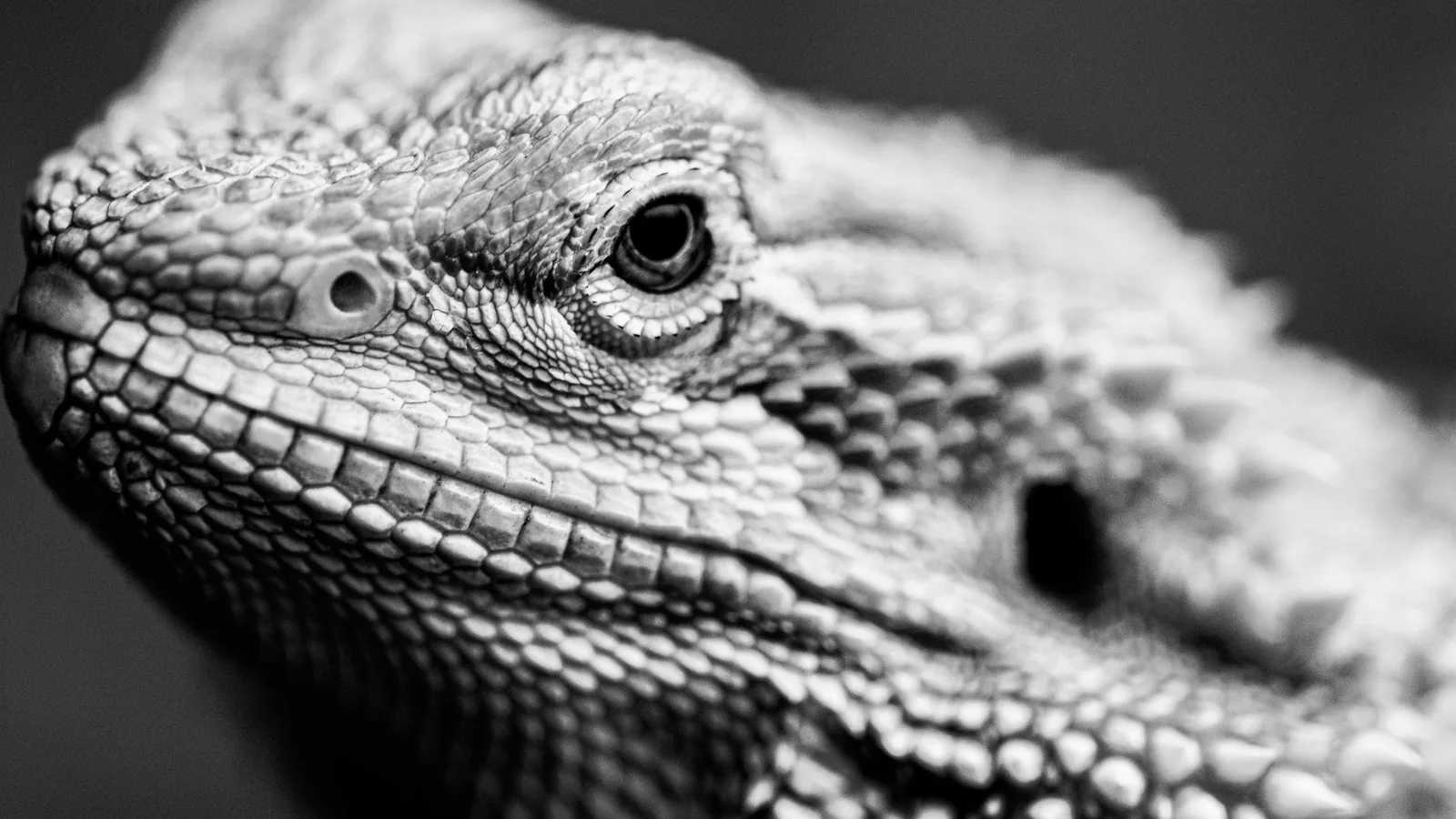
Bearded dragons are Zone 3-4 baskers. They require a T5 HO 10.0-12.0 UVB tube or a mercury vapour bulb. The basking spot UVI should be 3.0-4.0, with a gradient to 0 in the cool end. Juveniles need higher UVB exposure than adults due to rapid bone growth.
Leopard Geckos (Eublepharis macularius)
Leopard geckos are crepuscular and fall into Ferguson Zone 1. They benefit from low-level UVB (2-5% tube, UVI 0.5-0.7) to support vitamin D3 synthesis, though they can also obtain D3 from supplements. The Merck Veterinary Manual notes that many keepers successfully raise leopard geckos without UVB if dietary D3 is provided, but UVB is still considered optimal for welfare.
Red-Eared Sliders (Trachemys scripta elegans)
Aquatic turtles require UVB for shell health and calcium metabolism. A T5 HO 5.0-10.0 UVB tube should be placed over the basking platform, which must be dry and warm (30-32°C). The UVB must penetrate through the water only minimally; the turtle should bask directly under the lamp.
Ball Pythons (Python regius)
Ball pythons are nocturnal and have low UVB requirements. However, recent evidence suggests that even nocturnal reptiles benefit from low-level UVB (Zone 1) for circadian rhythm regulation and immune function. ReptiFiles recommends a 2-5% UVB tube for ball pythons, but this remains a topic of debate among veterinarians.
Regional Considerations
United States and Canada
In the US, the AVMA and AAHA emphasize preventive care through proper husbandry. Many exotic animal veterinarians are members of ARAV. In Canada, the CVMA publishes guidelines for reptile owners, including the use of solar meters. Keepers in northern latitudes (e.g., Alaska, Yukon) may need to rely entirely on artificial UVB year-round due to low natural sunlight.
Europe
The FVE (Federation of Veterinarians of Europe) and EFSA have issued opinions on animal welfare in captivity, highlighting UVB as a critical environmental enrichment. European keepers often use T5 HO lamps with specific spectral outputs (e.g., Arcadia, Zoo Med). The EU’s restrictions on mercury vapour bulbs (due to environmental regulations) may affect availability.
Australia
Australia has strict biosecurity laws regarding reptile imports, but native species (e.g., bearded dragons, blue-tongue skinks) are commonly kept. The AVA and DAFF (Department of Agriculture, Fisheries and Forestry) recommend UVB for all native reptiles. Australian keepers often use T5 HO lamps and are advised to measure UVI with a Solarmeter, as the intense Australian sun can cause overheating in outdoor enclosures.
Conclusion
UVB lighting is a non-negotiable component of responsible reptile husbandry. Understanding the biological role of UVB, selecting the appropriate lamp type, measuring UVI, placing the lamp correctly, and adhering to replacement schedules are all essential to prevent MBD and promote overall health. Veterinary organizations worldwide, including ARAV, AVMA, CVMA, AVA, and FVE, endorse these practices. Owners should consult a reptile-specialist veterinarian for species-specific advice and consider investing in a solar meter for precise UVB management. By providing proper UVB lighting, you can ensure your reptile thrives in captivity.
Related Clinical & Scientific Guides
- Signs of Illness in Reptiles and When to See a Vet
- Turtle Tank Water Quality: Maintaining a Healthy Aquatic Environment
- Milk Snake Care Guide
References
Association of Reptilian and Amphibian Veterinarians (ARAV). Reptile Lighting Guidelines. arav.org. Accessed 2025.
Merck Veterinary Manual. Nutritional Secondary Hyperparathyroidism in Reptiles. merckvetmanual.com. Accessed 2025.
VCA Animal Hospitals. UVB Lighting for Reptiles. vcahospitals.com. Accessed 2025.
ReptiFiles. Evidence-Based Reptile Husbandry: UVB Lighting Guide. reptifiles.com. Accessed 2025.
Canadian Veterinary Medical Association (CVMA). Reptile Care Position Statement. canadianveterinarians.net. Accessed 2025.
European Food Safety Authority (EFSA). Scientific Opinion on the Welfare of Reptiles in Captivity. efsa.europa.eu. 2023.
Australian Veterinary Association (AVA). Guidelines for Reptile Husbandry. ava.com.au. Accessed 2025.