Do Bearded Dragons Recognize Their Owners? Bonding Signs
By Dr. Zubair Khalid, DVM, MS, PhD ·
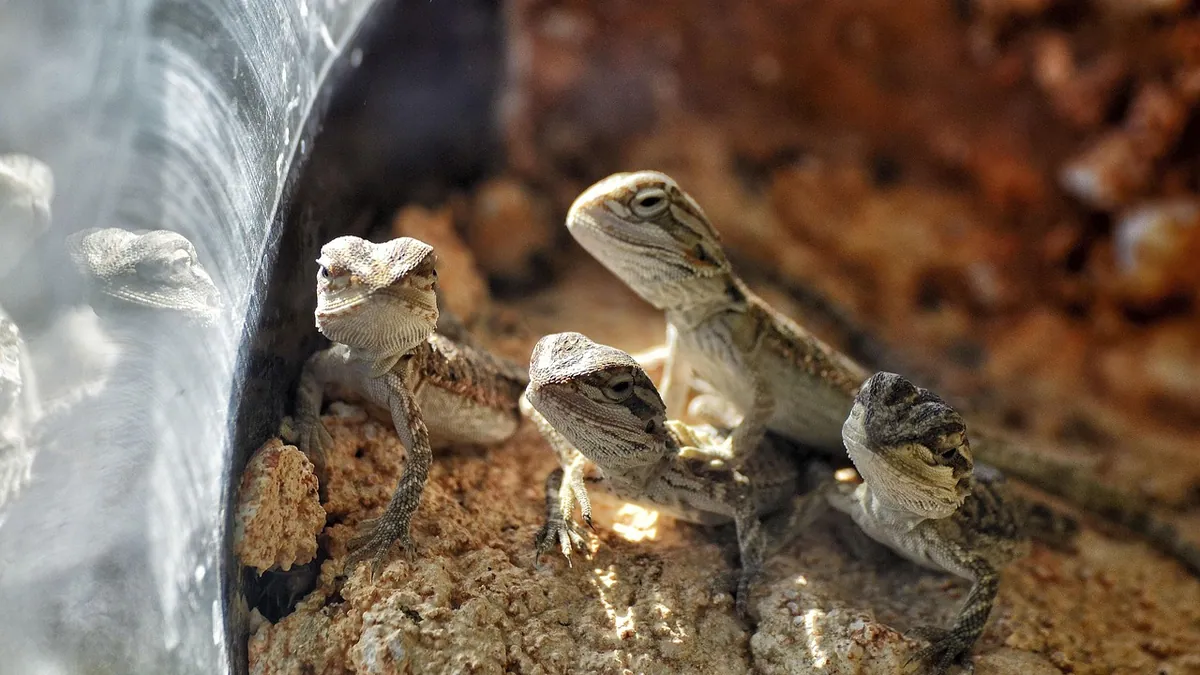
Do bearded dragons recognize their owners? In a limited way, yes. They can learn that a specific person is familiar and safe, mainly through smell, routine, and repeated calm handling. What they feel is not the same as a dog's attachment, so it helps to read their behavior realistically.
This article is educational and is not a substitute for veterinary diagnosis or treatment.
Quick Answer
- Bearded dragons can tell familiar people from unfamiliar ones, mostly by scent and repeated routine, not by name or face like a mammal would.
- Recognition is memory-based and can fade. In one lizard species, familiar-odor discrimination lasted two to three weeks after separation but was gone by six weeks [1].
- Signs of comfort include relaxed posture, slow blinking, climbing onto your hand, and steady appetite around you.
- Signs of stress include a black beard, gaping, hissing, flattening, or scrambling away. These mean back off, not that your pet hates you.
- Bonding is built with calm, short, predictable handling sessions and good husbandry, not with food bribes or forced cuddling.
Do Bearded Dragons Know Their Owners? What the Science Says
Reptile social recognition is real but narrow. Lizards use chemical cues from skin, feces, urine, and gland secretions to tell individuals apart [2]. A 2025 study on common wall lizards showed they can learn to associate prior experience with a specific individual's chemical signals, which is a basic form of individual recognition [2].
Tokay geckos show a similar skill. Both males and females could chemically tell a familiar mate from an unfamiliar one, and males responded more strongly to the familiar odor [1]. That tells us lizard brains do store social memories, at least for a while.
Bearded dragons are not the same species as wall lizards or tokay geckos, so we should not overstate what they can do. Still, the pattern is consistent across squamates: chemical communication drives territorial, reproductive, and social behavior [1]. Your dragon likely knows your scent and your handling pattern. Whether it "misses" you is a different question, and the honest answer is that we do not have evidence for that kind of emotional longing in bearded dragons.
Do Bearded Dragons Get Attached to Their Owners?
Attachment in the human sense means a lasting emotional bond that causes distress when the person is gone. There is no strong evidence bearded dragons form that kind of bond. What owners usually see is habituation and trust. Your dragon learns that your presence predicts food, warmth, and safety, so it stops treating you as a threat.
That is still meaningful. A dragon that stays calm on your hand, eats well around you, and does not flee is showing learned security. Calling that "attachment" is fine as long as you do not expect a dog-like greeting at the door.
Do Bearded Dragons Remember Their Owners?
They can remember a familiar person for a period of time, but the memory is not permanent. In tokay geckos, the ability to distinguish a familiar mate from an unfamiliar one held for two to three weeks after separation and disappeared by six weeks [1]. If your dragon has not seen you for a long stretch, expect a short re-acclimation period.
Memory also depends on how strong the association was. Daily handling, feeding, and a consistent scent build a stronger memory than occasional contact.
Do Bearded Dragons Miss Their Owners?
There is no evidence that bearded dragons miss people the way social mammals do. A dragon left with a competent caretaker may act completely normal, and that is not a sign of a broken bond. It means your pet is secure in its environment.
If you go away, keep the routine as close to normal as possible. Same lights, same feeding schedule, same handling style. That reduces stress more than any attempt to "remind" your dragon of you.
Normal Reasons Your Dragon Seems to Recognize You
Most recognition behaviors come from three ordinary sources.
Scent. Your dragon's chemosensory system is tuned to chemical signals [2][1]. Your soap, laundry, and skin oils form a scent profile it can learn.
Routine. Feeding at the same time, lights on a timer, and predictable handling create associations. Your dragon learns that a certain sequence of events means good things.
Habituation. Repeated neutral contact teaches your dragon that you are not a predator. This is the biggest driver of calm behavior in captive reptiles.
None of this requires affection. It requires consistency.
Medical Causes That Can Look Like Behavior Change
Sometimes a dragon that suddenly acts different is sick, not confused.
- Impaction. A dragon that stops eating, strains, or has not passed stool may have a blockage. See Bearded Dragon Impaction: Signs, Causes, and Veterinary Care.
- Pain or injury. Limping, flinching when touched, or refusing to move can mimic "not recognizing" you.
- Respiratory infection. Wheezing, mucus, or open-mouth breathing while resting needs prompt veterinary care.
- Parasites. Weight loss, diarrhea, or a dull appearance can change temperament.
- Metabolic bone disease. Weak limbs, tremors, or a soft jaw change how a dragon interacts with you.
A black beard is a common stress or pain signal. Learn what it means in Bearded Dragon Black Beard: What It Means and When to Worry and Bearded Dragon Black Beard Meaning.
When Recognition Behavior Becomes a Problem
A problem is any change that affects health or safety.
- Your dragon bites, latches, or hisses every time you approach.
- It stops eating or basking for more than a few days.
- It hides constantly and avoids all handling.
- It shows a black beard with gaping, flattening, or tail whipping.
- It becomes aggressive toward hands after years of calm behavior.
Sudden aggression in a previously calm dragon is a red flag for pain, illness, or a husbandry problem. Do not assume it is a personality change.
What to Do: Step by Step
Build Trust With Short, Calm Sessions
Start with five to ten minutes, two or three times a day. Sit near the enclosure and talk softly before you open it. Let your dragon come to your hand instead of grabbing it. End the session on a calm note, not after a struggle.
Use Scent and Routine
Handle with clean hands and no strong perfume. Keep feeding, lights, and handling at consistent times. Your dragon's recognition is built on these repeated cues [2][1].
Check the Environment First
Most behavior problems in captive reptiles trace back to the setup. Verify basking temperature, UVB bulb age, enclosure size, and substrate. A dragon that cannot thermoregulate properly will act stressed no matter how much you handle it.
Add Enrichment
Provide climbing branches, a hide, and safe items to explore. Enrichment reduces stress and makes handling less threatening. Learn what a wild dragon's day looks like in Understanding the Wild Bearded Dragon: Natural Habitat and Behavioral Insights.
Respect Refusal
If your dragon backs away, puffs, or black-beards, stop. Forcing contact teaches fear, not friendship. Try again later or the next day.
Track Changes
Keep a simple log of appetite, stool, shedding, and behavior. Patterns help your veterinarian find problems faster.
What Not to Do
- Do not punish. Reptiles do not learn from punishment the way mammals do. Hitting, spraying, or yelling only increases fear.
- Do not force handling. Holding a struggling dragon does not build a bond.
- Do not assume cuddling equals love. Bearded dragons tolerate handling. Tolerance is not the same as affection.
- Do not skip quarantine or vet checks. New dragons can carry parasites.
- Do not believe the myth that reptiles cannot learn anything. They can learn familiar scents and routines [2][1]. They just do it differently.
- Do not overfeed to win trust. Obesity causes real health problems.
When to Involve a Veterinarian or Behavior Professional
Call a reptile-experienced veterinarian if your dragon stops eating, loses weight, has abnormal stool, breathes with its mouth open at rest, or shows sudden aggression. These can signal pain or illness.
A certified behavior professional can help if handling has become dangerous or if you cannot identify a trigger. In most cases, though, the first step is a veterinary exam to rule out medical causes.
If you are new to the species, read Is a Bearded Dragon a Good Pet for Beginners? before you commit.
Limitations and When to Contact a Veterinarian
Reptile cognition research is still young. Most recognition studies focus on chemical cues in other lizard species, not bearded dragons specifically [2][1]. We can make reasonable inferences, but we cannot promise your dragon experiences a human-style bond.
Contact a veterinarian the same day if your dragon:
- Has not eaten for three or more days
- Has not passed stool in several days and is straining
- Shows a black beard with lethargy or gaping
- Has discharge from the nose or mouth
- Collapses, trembles, or cannot grip
Go to an emergency clinic now if your dragon:
- Is unresponsive or limp
- Has trouble breathing
- Has a prolapse or visible bleeding
- Was exposed to a toxin or overheated enclosure
Schedule a routine visit if you notice gradual weight loss, dull color, or a slow decline in activity.
Individual cases need a veterinarian who can examine your pet. No article can replace that.
Frequently Asked Questions
Do bearded dragons get excited when they see their owner?
Some do show increased activity when a familiar person approaches, usually because they associate that person with food or handling. This is a learned response, not proof of emotional attachment. If the excitement includes glass surfing or frantic behavior, check the enclosure and handling routine first.
Can a bearded dragon bond with two people?
Yes, a dragon can learn multiple familiar people through repeated calm contact. Recognition is based on scent and routine, so two consistent caretakers can both become "safe" figures [2][1]. The bond is likely stronger with whoever handles and feeds it most often.
Will my bearded dragon forget me if I go on vacation?
It may take a short time to re-acclimate, but most dragons settle back into routine within days. In one lizard species, familiar-odor memory lasted two to three weeks after separation and faded by six weeks [1]. Keep care consistent while you are away to make the return easier.
Why does my bearded dragon close its eyes when I pet it?
Slow eye closing during calm handling often signals relaxation, similar to a slow blink. It can also mean the dragon is tolerating touch without enjoying it. Watch the rest of the body. A relaxed dragon stays loose, while a tense one stiffens or pulls away.
Is it bad to handle my bearded dragon every day?
Daily handling is fine for most healthy dragons if sessions are short and calm. Watch for stress signs like a black beard, gaping, or scrambling. If those appear, cut back and let the dragon initiate contact instead.
Do bearded dragons recognize their name?
There is no evidence bearded dragons learn their name the way dogs do. They may respond to your voice tone, your scent, or the routine that follows. That is association, not name recognition.
Related Articles
- Bearded Dragon Impaction: Signs, Causes, and Veterinary Care
- Understanding the Wild Bearded Dragon: Natural Habitat and Behavioral Insights
- Is a Bearded Dragon a Good Pet for Beginners?
- Bearded Dragon Black Beard: What It Means and When to Worry
- Bearded Dragon Black Beard Meaning
- Bearded Dragon Care: Pyramiding & Shell Health Management
- Does My Bearded Dragon Like Me? Bonding Signs
- Do Bearded Dragons Like Being Pet? Handling and Bonding
- How to Tell If Your Bearded Dragon Is Happy
References
- Sex-specific discrimination of familiar and unfamiliar mates in the Tokay gecko. Animal cognition, 2024.
- Common wall lizards learn familiar-unfamiliar identity of conspecifics through chemical cues. Learning & behavior, 2025.